21 Mar 2025
6 Common Challenges in Oil and Gas ERP Implementation – A Comprehensive Guide

Shaun Bell



It’s not black gold or drilling rigs anymore. The oil and gas industry is a big behemoth run by efficiency, and now it comes alive in the oil and gas ERP. This digital refinery streamlines operations, cuts costs, and keeps the gears of this trillion-dollar industry turning. Having ERP without mobile, in today’s hyper-connected world, is like finding oil and not having a drilling rig! Renowned mobile app developers from a flutter app development company can help you implement an ERP system for your oil and gas app.
That’s where a custom mobile application development company would come into play, changing clunky old systems into sleek, on-the-go solutions. For example, a field operator updates pipeline reports in real-time, a manager tracks supply chains entirely from their smartphone, or even instant analytics on fuel consumption for executives. Gone are the days of drowning in spreadsheets or waiting hours for updates; now, with a custom mobile software development company, you will have everything at your fingertips.
Mobile-Integrated ERP: The Game Changer for Oil & Gas
Oil and Gas EPR with mobile integration can do everything from asset management to compliance tracking. Just picture it: crude oil coming to a high-tech refinery, moving potential into peak efficiency. Indeed, an iOS mobile app development company or app developers near me can detect catastrophe forecasts with AI-driven insights and predictive analytics before turning them into an inferno.
It’s about choosing the correct iOS mobile app development company so the business thrives instead of just surviving with its ERP system. It can be an IoT fit for real-time monitoring, logistics automation, or anything that matches the right technology partner to help transform the work processes from sluggish into supercharged. Web application development maintains critical importance for achieving smooth connectivity among different systems while maximizing their operational capabilities.
That’s it: the future-proof oil and gas company will have a mobile-driven ERP, developed by a custom mobile software development company. All others? Well, they may remain fossils in a world racing toward digital transformation!
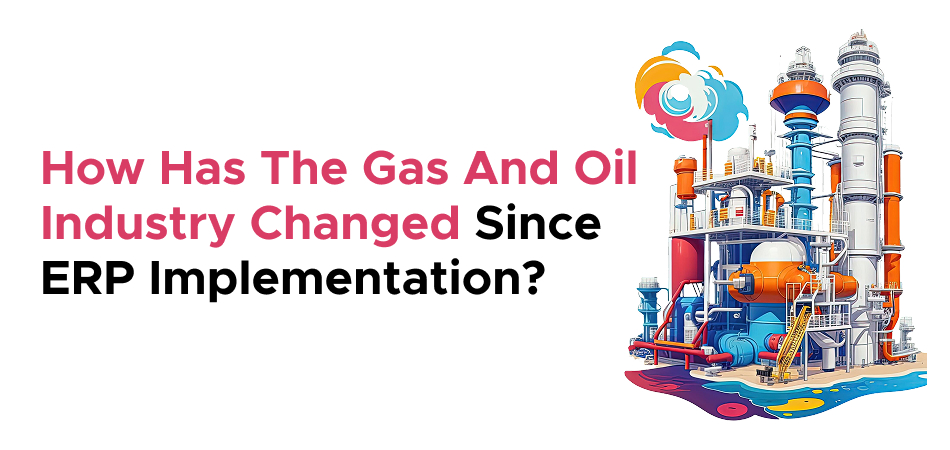
What Is ERP? How Has It Transformed The Oil And Gas Industry?
The oil and gas sector comprises several interconnected operational parts, from exploration phases to drilling operations and refining activities up to distribution stages. A robust system must exist to effectively run these processes by handling enormous data quantities, streamlining operational workflows, and enhancing decision-making capabilities. ERP functions as a system that provides solutions to organizations.
What Is ERP?
ERP is a unified software solution connecting different business segments, from finance to supply chain operations, human resources, and industrial functions. The system unites isolated data into a single platform, which allows live information exchange and automation capabilities. A renowned custom mobile software development company provides mobile-system enhancements which allow real-time decision-making through smooth mobile accessibility.
ERP transforms operations within the oil and gas industry through its ability to create efficiency in sites with diverse locations while meeting strict regulations and handling essential equipment management duties. Through its functionality, organizations can observe resource movements alongside field and production operations, thus producing lower operational expenses and higher operational effectiveness. App developers near me working for a renowned mobile app development service provide custom ERP solution development services that fulfill the requirements of individual industries.
How Has ERP Transformed the Oil and Gas Industry?
1. Enhanced Operational Efficiency
Operations need longer times because manual work combines with separate systems. The workplace automation capabilities of ERP systems decrease human mistakes and generate increased operational efficiency. Effective inventory management and drilling operations become seamless because mobile app developers from an IoT app development company help eliminate delay-based processes.
2. Real-Time Data Access
Field employees and managers can view real-time operational data through mobile integration. An ERP solution developed by a dependable mobile app company enables oil and gas staff to monitor pipelines and conduct logistics tracking and instant alert reception that minimizes operational interruptions. The crucial function of web application development consists of creating whole systems that achieve smooth integration between different technologies. Web application development serves as a fundamental operational tool to achieve uninterrupted platform-level connectivity.
3. Improved Compliance and Risk Management
Accurate compliance with safety and environmental regulations is mandatory for oil and gas companies. ERP systems help organizations in compliance by introducing automation for reporting incident tracking, and efficient documentation management. Mobile applications developed by dedicated mobile app developers from an IoT app development company introduce compliance tracking features that create more straightforward audits and inspections.
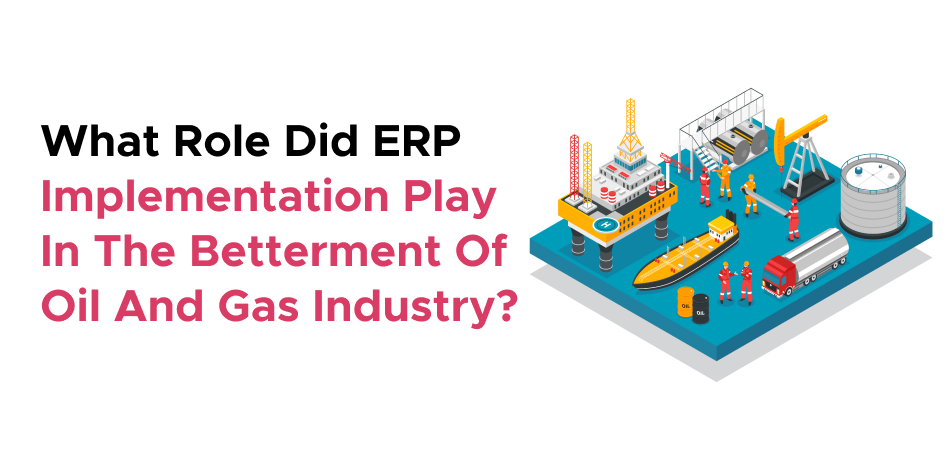
4. Optimized Asset and Maintenance Management
Executed properly, the breakdown of equipment materials leads to substantial financial expenses. AI and IoT-powered maintenance predictions within ERP systems lower the surprises resulting from equipment failings. This helps organizations limit downtime and prolong the lifespan of critical assets. Thus, dedicated mobile app developers from an IoT app development company can operate at peak efficiency while minimizing maintenance costs. App developers near me working in a dedicated e-scooter app development company provide custom ERP solution development services that fulfill the requirements of individual industries.
5. Supply Chain Management Optimized
The supply chains operated by oil and gas businesses rely on multiple levels of suppliers, such as contractors and logistics providers. Through its ERP system, an organization achieves procurement management capabilities, supply chain communication features, and inventory control methods that ensure the timely delivery of materials and equipment. AI predictions of customer demand will reduce stock shortages while optimizing inventory amounts, bringing cost reductions alongside streamlined business execution. A mobile software development company integrates smooth mobile access for system enhancement allowing users to make live decisions.
6. Better Financial Management and Forecasting
With large budgets, varied oil prices, and multiple project costs, the financial planning in oil and gas must be very accurate. ERP systems with excellent financial analytics, automated invoicing, and real-time budget tracking allows oil and gas companies to make data-backed financial decisions. Predictive analysis will enable them to forecast market trends and maximize investment returns. Web application development serves as a fundamental factor for achieving flawless integration between platforms. Mobile app development service allows clients to access their operations easily and maintains operational excellence.
What Is an ERP Implementation?
The ERP implementation process combines an ERP system’s integration with organizational operations for improved efficiency in data management and enhanced decision-making capabilities. The implementation process requires executives to choose their ERP software first while adapting it to fit their requirements; afterward, they must transfer data along with employee education before ongoing system assessments for peak operational results. App developers near me from a dedicated e-scooter app development company provide customization services for ERP solutions to fulfill unique industry requirements.
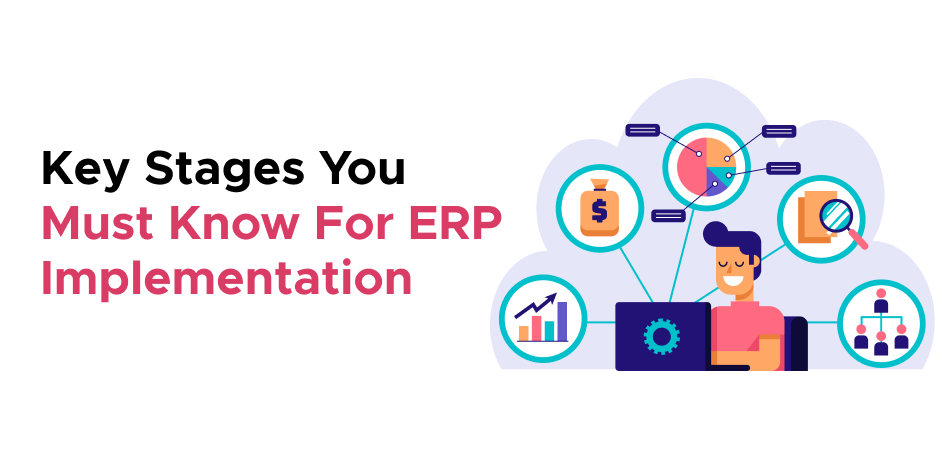
Essential Stages of ERP Implementation
1. Planning and Requirement Analysis
The ERP implementation phase involves assessing business needs and objectives and selecting a suitable ERP solution. Currently, organizations assess their existing workflows and identify gaps to be filled by the ERP system being developed. At this stage of ERP implementation, one must partner with a Flutter mobile app development company to build the entire system to enable field employees or other team members working remotely to remain connected.
2. Configuration and Migration of Data
Once the ERP is selected, it must be configured to match the organization’s operational processes. Customization can include module modifications, users’ role setup, and the tracking of third-party applications. Data migration is a key part of this phase. Specifically, it means securely moving all the data in legacy systems to the new ERP platform. An operation should be accurate and secure during the data migration to maintain effectiveness. The mobile app development service offers both accessible features and streamlines operational management systems.
3. Testing and Training of Employees
The ERP is thoroughly checked before total implementation to bring out and rectify possible technical or functional faults. Unit testing, system testing, and UAT are the three main stages of this phase. At the same time, employee training is performed to help them get used to the new system for smooth transitions whenever changes occur.
4. Deployment and Continuous Improvement
The business closely monitors the system as soon as it is live to identify problems and address improvements. Continuous support and releases will help improve a system’s overall functionality. Partnering with a detective mobile application development company can also enhance working with the ERP by developing mobile applications to enable seamless remote working access and improve efficiency with operations.
Why Is an ERP Implementation a Challenging Task?
The ERP implementation process produces difficulties in moving data between systems, combining applications for integration needs, and securing employee use of new systems. Migrating legacy system data demands careful planning to deliver accurate, protected information. Connectivity between ERP systems and current applications creates incompatible software issues that require intensive adjustment procedures.
Implementing an ERP system becomes challenging because employees frequently oppose new processes requiring intensive training programs. The implementation becomes difficult because of expensive costs, extended timelines, and the possibility of disrupted business operations. New systems’ success depends on representation and systematic modifications during ongoing monitoring after implementation. Seamless remote access for ERP systems can be achieved by collaborating with experienced ERP consultants or a dedicated mobile application development agency.
6 Common Challenges in Oil and Gas ERP Implementation
The oil and gas industry is a complicated operational field that needs complete Enterprise Resource Planning (ERP) systems to manage its operations effectively. ERP activation of business processes allows organizations to improve data management capabilities and achieve better decision selection. Implementing ERP systems creates multiple difficulties for oil and gas companies when implementing this technology. The path to successful ERP implementation requires a robust team of mobile app developers from an iOS app development company to handle challenges that block smooth transitions, such as interface unrest and system acceptance problems.
1. Integration with Legacy Systems
The main obstacle in ERP implementation for oil and gas enterprises involves combining the new solution with their outdated software packages. Organizations persist with obsolete systems that have operated since the 1970s and 1980s. Most legacy systems fail to provide the required APIs and compatibility features for smooth connections with contemporary ERP platforms. App developers near me assist companies by tailoring ERP solutions according to their industrial requirements. Web application development establishes critical bonds which enable perfect system interoperability.
Solution:
- An organization should examine its IT infrastructure extensively when choosing an ERP system.
- When pursuing data exchange improvement, develop middleware through a travel mobile app development company specializing in integration solutions.
- New ERP implementations should begin with legacy system decommissioning steps that maintain safe data transfers from historical records.
2. Data Migration and Accuracy
The oil and gas industry handles vast operational metrics, financial records, and compliance reports. Moving current data between previous systems and the new ERP platform requires extensive time and precise execution and contains a high risk of errors occurring. A poor data migration process results in contradictions, which causes duplicate records and essential information loss. ERP capabilities can be further strengthened through the support of a driven AI app development agency . The support from a dedicated mobile application development agency strengthens ERP capabilities through the implementation of smooth mobile connectivity solutions.
Solution:
- Organizations must complete data audits before migration to create proper structures and clean datasets.
- Automated data migration tools should be used for error reduction alongside quick process execution.
- The partnership with a development company specializing in ERP data management ensures complete success in the system transition.
3. Customization and Scalability Challenges
Standard ERP systems do not satisfy all the individual needs of different oil and gas companies. Making a standard ERP system that matches individual business requirements proves difficult because it extends the project costs and the time needed for implementation. Custom mobile application development can help tailor ERP solutions to provide capabilities for organizations that experience expansion to meet their changing requirements.
Solution:
- Organizations should select ERP software that offers a flexible platform design for modular configuration.
- Partner with a development company that builds application extensions and business-dependent features to meet corporate requirements.
- Position periodic ERP system upgrades to fulfill the scalability requirement during business expansion.
4. User Adoption and Training
ERP success requires practical employee usage of the advanced system, no matter how sophisticated it becomes. Technical staff in the gas and oil industry present specific challenges because some workers resist implementing change. Insufficient training causes professionals to make limited use of the system, leading to incorrect information submission and reduced operational effectiveness. Custom mobile application development creates integrated processes that boost user acceptance levels.
Solution:
- The organization should deliver specific training sessions to teach each user role its specialized functions.
- The implementation should occur over periods to support employee transition into the new system.
- Mobile app development experts should build accessible interfaces that enhance user experience and usability for mobile-based operations.
5. Regulatory Compliance and Security Risks
The oil and gas sector faces precise regulatory rules that enforce regulations to protect safety conditions, environmental safeguards, and financial disclosure requirements. So many travel app development companies face substantial challenges to ensure that their ERP system fulfills regulatory requirements and implements strong cybersecurity policies. ERP capabilities can be further strengthened through the support of a dedicated mobile application development agency which provides smooth mobile integration.
Solution:
- Choose an ERP system with regulatory compliance elements compatible with your organization’s industry standards.
- Companies should use stringent access permission systems and encryption solutions to protect sensitive data.
- Protecting your systems requires updated security protocols to block cyber-attacks and data breaches.
6. High Costs to Implement and Extremely Tight Timelines
Implementing ERP systems is expensive and involves many financial and human resources. Oil and gas companies suffer from budget constraints and a lack of time to implement critical ERP implementations properly. A dependable ai app development agency can help you understand the cost of implementing an ERP system.
Solution:
- Clear ERP implementation road maps must be developed, considering realistic timelines and budgets.
- Opt for cloud-based ERP solutions that would limit the initial costs of infrastructure.
- Employ experienced ERP consultants and software developers to hasten up the implementation process.
Future of ERP in the Oil and Gas Industry Introduction
Optimizing operations, reducing costs, and aiding in decision-making are the hallmark features of ERP in the oil and gas domain. ERP systems are rapidly changing to cater to the sector’s growing needs. Some of the influencing trends likely to impact the ERP future in this sector include cloud computing, AI integration, and mobile access. A determined mobile app development agency is helping advance ERP solutions by providing real-time access to critical data.
1. Move Toward Cloud-Based ERP Solutions
Cloud technology is a sudden bright star in the ERP sky of oil and gas. Companies are moving away from the premises toward cloud systems, which are far better in scalability, flexibility, and cost. This allows a travel app development company to access data whenever and from wherever they wish. This has fostered better collaboration among teams in different locations. A renowned mobile app development agency is integrating cloud-based ERP systems with mobile applications, giving access to critical operational data on smartphones and tablets.
2. AI in ERP with Predictive Analytics
AI is changing ERP with predictive analytics, machine learning, and automation. An AI-embedded ERP helps oil and gas companies manage assets, forecast possible equipment failures, and make rapid decisions. It analyzes large volumes of data to safeguard against expensive downtimes and improve operational efficiency. A dedicated Android mobile app development company is now integrating AI to develop intuitive and user-friendly interfaces for ERP, enhancing workforce productivity.
3. Integration of ERP with IoT
The IoT is changing the oil and gas industry by offering real-time monitoring of equipment and pipelines. An ERP system paired with IoT can track the performance of assets, consecrate faulty activities, and ensure compliance with safety regulations. A dedicated mobile app development agency develops solutions for field workers to access IoT-powered ERP data from their phones and tablets for rapid responses to operational complications.
4. Cybersecurity And Data Protection
With increased digitization came cybersecurity, one of the predominant concerns in the oil and gas sector. Future ERP systems will have robust security protocols, blockchain technology, and multi-factor authentication procedures to secure sensitive data. A determined Android mobile app development company ensures that focus is diverted toward developing secure mobile solutions that protect ERP data against cyber threats while allowing remote access remotely.
5. Blockchain for Enhanced Transparency
Blockchain technology represents a transformative development that changes how ERP operates in the oil and gas sector. The decentralized nature of blockchain and its tamper-resistant system allows entities to maintain transparent, secured, traceable transaction information. ERP systems of the future will integrate blockchain technology for handling contracts, supply chain monitoring, and regulatory adherence purposes. Mobile application development companies construct ERP mobile applications that combine blockchain solutions to ensure secure and transparent operations.
6. Sustainability and Green ERP Solutions
The oil and gas sector organizations face intensifying demands for sustainable practice implementation. Green ERP solutions allow a travel app development company to track their carbon emissions by improving resource management and energy-saving operations. ERP systems developed during the upcoming years will combine sustainability performance indicators and tracking for greenhouse gas emissions with regulatory reporting capabilities.
Sustainability monitoring capabilities through real-time data tracking have become standard for ERP mobile apps developed by companies in the mobile application sector to support environmental compliance efforts.
Conclusion
Implementing ERP in oil and gas operations proves difficult because it demands both strategic planning and system adaptation and must achieve a complete connection to current operational platforms. ERP implementations deliver substantial advantages to companies, yet organizations must overcome multiple implementation challenges, including staffing reluctance to change combined with challenging data transitions and unique business field requirements. A dedicated ai app development agency provides businesses the capability to address the overwhelming problems in the growing industry.
A strategic approach based on employee training and proper vendor selection with expert solutions from mobile app development companies serves to overcome these implementation challenges. The industrial revolution toward digital transformation requires companies to establish ERP systems that handle scalable needs while maintaining security requirements alongside real-time data accessibility. ERP functionalities improve through the support of a dependable mobile app development agency who deliver smooth mobile connectivity.
The implementation of mobile applications by mobile app development companies enables field workers and executives to access ERP data efficiently to make data-driven decisions. Oil and gas operations will achieve the maximum benefits and operational efficiency alongside market competitiveness by effectively resolving ERP implementation challenges. Connect with 7 Pillars, a reliable Android mobile app development company to begin your new adventure.
Join the newsletter and get all the updates.
Subscribe




