Let's have a
Quick Chat
with you!
Quick Chat
with you!
You have our ear and we can't wait to hear about your idea! Share your details here and we will make sure to schedule a coffee date with you soon.




Rising costs, greater patient needs, and staff shortage are putting pressure on healthcare systems. Consequently, collaboration with a leading healthcare mobile app development company has become a critical response to offering intelligent and data-driven solutions to scale across primary care, telehealth, and patient management platforms. Custom app development solutions help you understand regional benefits of AI in healthcare app development.
It is crucial in Australia, where the adoption of digital health has increased, and patients desire personalised, secure and accessible experiences. Local providers require solutions that facilitate workflow, aid diagnosis, and maximise resource allocation. Skilled iOS app developers help bridge the divide between clinical requirements and digital implementation, developing solutions to enhance precision, speed and patient interaction.
This blog will discuss how Australian healthcare organisations can use current app technologies to remain competitive. We will examine how collaboration with the appropriate app development company and professional mobile app developers can enable healthcare businesses to save money, improve patient interaction and future-proof digital care.
It targets Australian health-tech startups, hospital systems, private practices, and digital decision-makers who are interested in facilitating care models. To teams that may want to hire a healthcare mobile app development company to improve patient interaction or optimize clinical workflows, the content may serve as a valuable source of informative advice based on existing sector realities.
It also addresses founders, investors, and organisations considering the AI healthcare app development as a growth strategy. Leaders collaborating with a healthcare app development company will understand where AI generates actual outcomes. Investigating AI in healthcare app development will enable them to align innovation more effectively with regulatory conditions in Australia, operational requirements, and patient expectations.
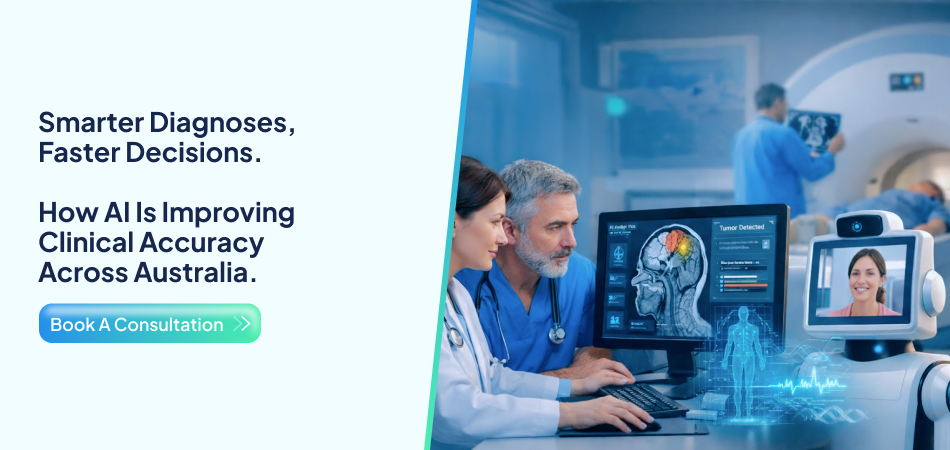 AI-Powered Healthcare in Australia
AI (Artificial Intelligence) in Healthcare entails intelligent algorithms, automating workflows, and data-driven insight to provide better diagnosis accuracy, more accurate treatment, and better patient outcomes. In Australia, providers are partnering with specialists in AI healthcare apps to create intelligent platforms that assist clinicians in their work, improving workflow, and helping develop more personalized patient care experiences.
The country has a good digital economy that integrates interactive healthcare technologies. A healthcare software development company in Australia would be critical in developing scaled, compliant AI applications for digital health.
AI is reshaping the accessibility, delivery and management of healthcare in Australia’s heterogeneous medical and digital ecosystem.
The use of artificial intelligence (AI) technologies in the Australian healthcare system must comply with the Privacy Act, the My Health Records Act 2012, and Therapeutic Goods Administration (TGA) regulations to achieve national patient privacy through secure, effective and transparent methods across the system.
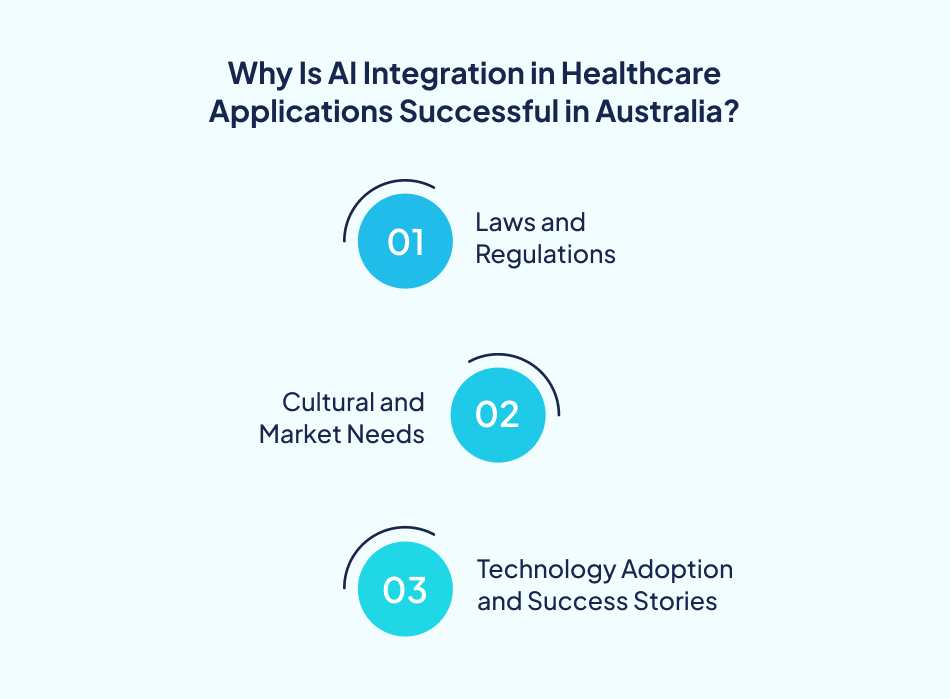 2. Cultural and Market Needs
With an ageing population, vast geographical landmass, and limited access to health services in rural areas of Australia, there is a reliance on AI-enabled solutions to provide an efficient way to access healthcare services, through remote consultations, enhanced diagnosis and ongoing monitoring mechanisms. AI in Healthcare app development has transformed the Australian healthcare industry.
Digital health apps are rapidly adopted, and over 90% of Australians are smartphone users. Telehealth, triage, and mental health online applications that leverage AI are associated with high levels of user interaction, which proves the willingness of Australians to innovate healthcare to the highest level.
Artificial Intelligence (AI) has gained a strong presence in the Australian medical sector. The greater utilisation of telehealth, digital transformation, and the increasing demand for personalised healthcare are all driving factors that will increase the adoption of AI technologies in the health sector.
More than 90% of Australians have access to mobile phones. Therefore, there is ample opportunity for AI-powered mobile health applications and telehealth to get adopted in Australia.
Artificial Intelligence (AI) is incorporated into health resource telehealth platforms throughout Australia, including wearable health devices, enabling individuals to access healthcare from any location. AI in healthcare app development has helped in the expansion of Telehealth in Australia.
AI knowledge is limited in the Australian workforce, with many organisations forming partnerships with AI vendors, mobile application developers, and other health industry professionals to address this shortfall.
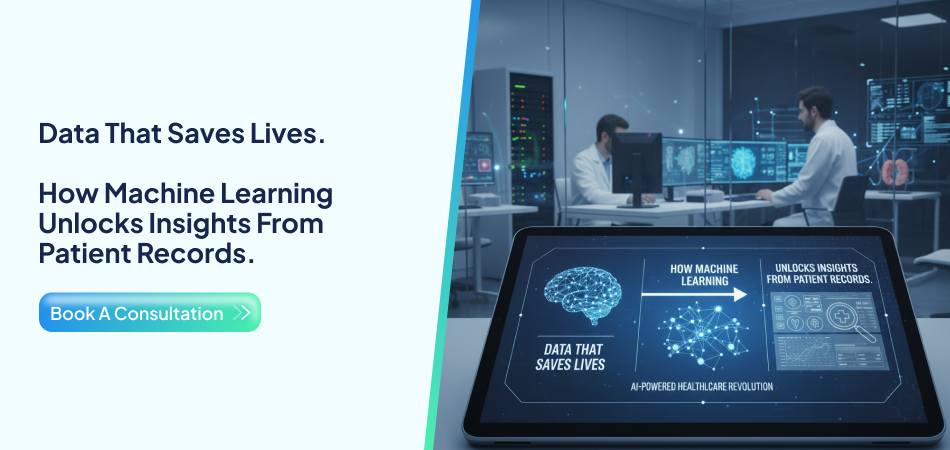 4. Barriers to AI Technology in Health Care
With the growth of AI technology in Australia, the primary barriers preventing its large-scale application in the medical sector are regulatory compliance issues, failed data protection compliance, and a lack of system interoperability between various facilities.
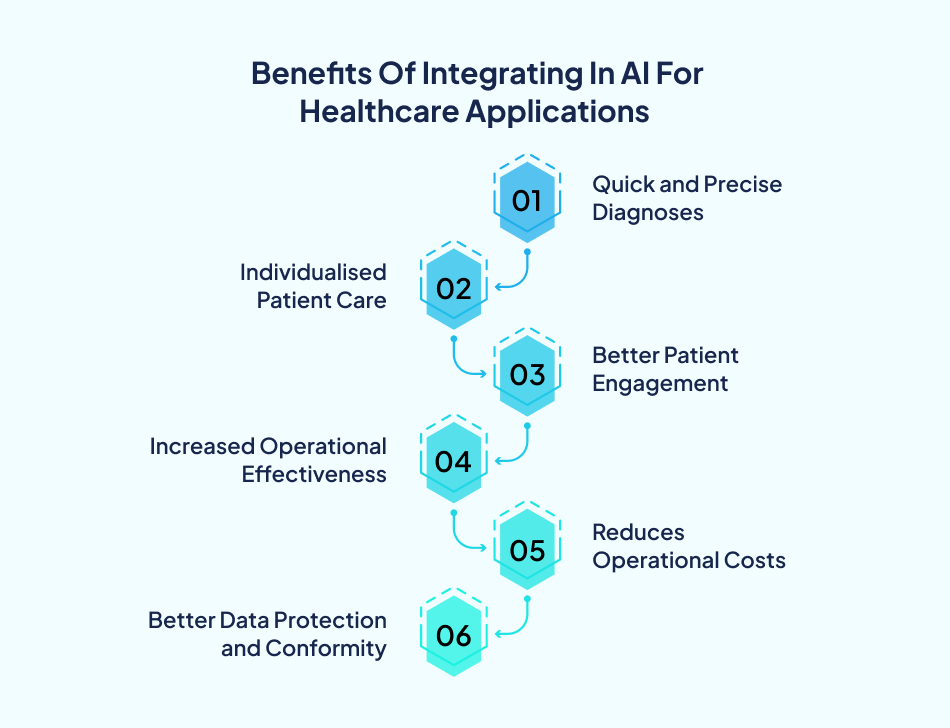 5. Reduces Operational Costs
The use of artificial intelligence in Australia’s healthcare reform will significantly improve clinical outcomes and efficiency by optimising operational processes while providing clinical decision-making using real-time data across the entire nation.
By backing up doctors to make faster and more accurate decisions by processing large volumes of patient information in real time, AI is assisting physicians.
AI identifies health risks at an early stage when they are not serious, so the focus of care is preventive.
Machine learning technologies (MLT) can also assist radiologists in identifying patterns that may not be apparent to human interpreters. IoT in medicine delivery apps enables real-time tracking, temperature monitoring, and secure pharmaceutical logistics.
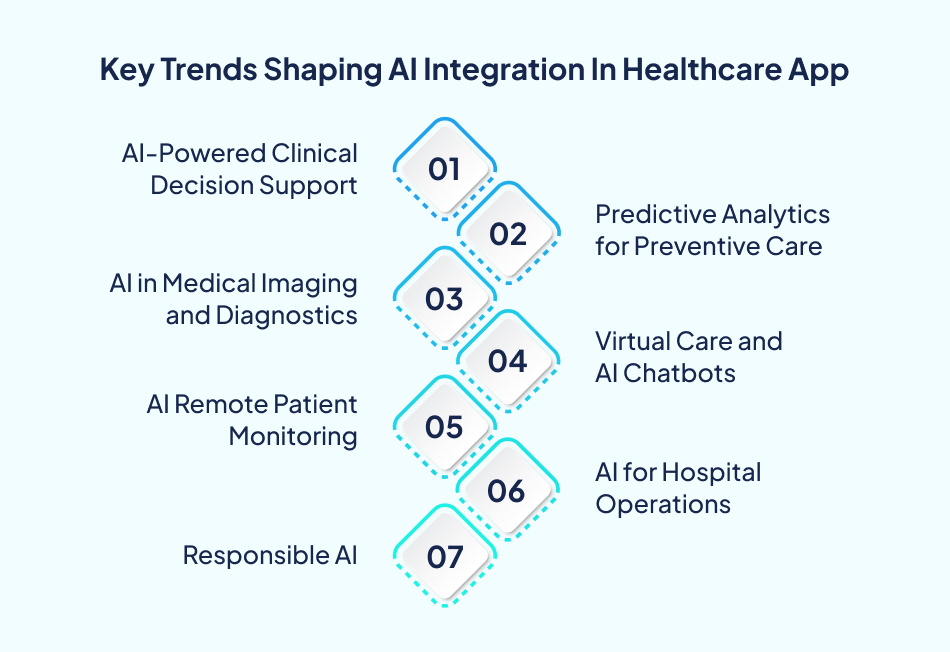 4. Virtual Care and AI Chatbots
Virtual assistants powered by AI are changing the way patients engage and access care.
AI leverages wearables and home data to track patients at home.
AI is used in hospitals to optimise operations, staffing and allocation of resources.
With the increasing use of AI, the ethical use and protection of information are of great importance in healthcare.
The development of artificial intelligence-based healthcare applications requires a combination of technical skills, regulatory knowledge, and sustainability planning of medical innovation.
 3. Accelerated Development using established Frameworks
The implementation of AI into healthcare systems introduces special technical, regulatory, and operational risks that organisations must negotiate to implement it.
Australia’s healthcare system underwent an incredible transformation over the past few years, with the introduction of Artificial Intelligence (AI). The system will no longer reactively respond, but provide predictive, personalised and patient-centred care.
AI will have the ability to analyse a patient’s history, lifestyle, behaviours, and even population trends to identify at-risk patients early on (before onset). It will allow for earlier intervention and reduce both hospitalisation and costs in the long term. An experienced on-demand app development company can help you align yourself with the current market trends.
Wearable devices, smart homes and telehealth using AI will enable continuous monitoring of patients’ conditions, which will help improve access to healthcare in rural areas and equity in healthcare access across Australia.
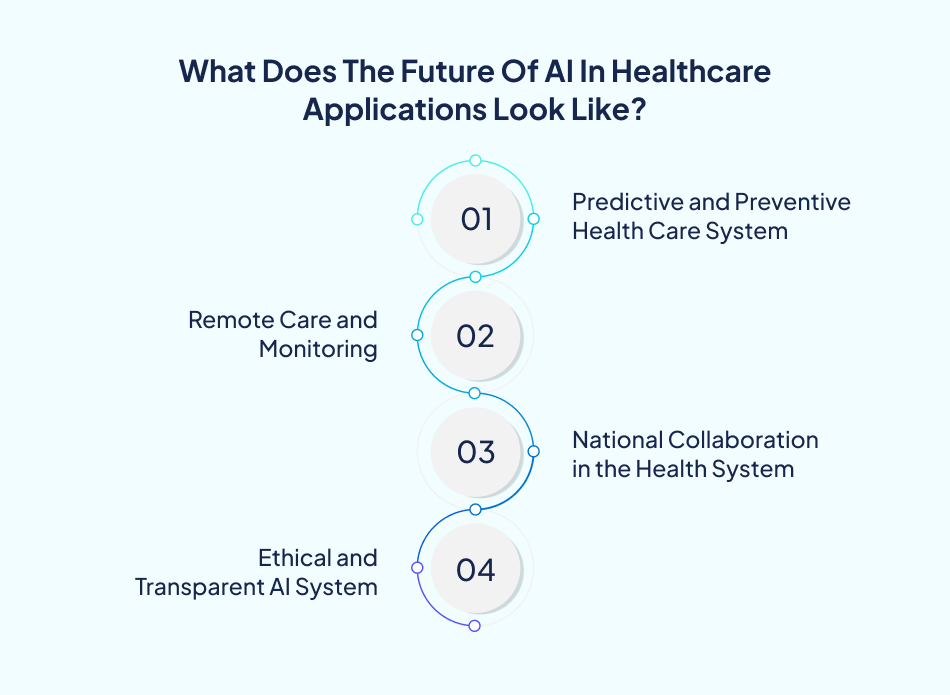 3. National Collaboration in the Health System
AI will facilitate improved integration of all national health initiatives, and strategies will enhance population health management, preventative health programs, hospital efficiency and sustainability of the national health system.
All AI must be ethical, transparent, explainable and compliant with applicable laws so that the Australian public and healthcare professionals will trust, have confidence in, and accept this new technology.
Due to the challenges of long wait times when scheduling a doctor’s appointment, limited access to medical facilities, and the inefficiencies associated with manual triage processes, a regional Australian health service is seeking a solution to improve the delivery of healthcare services in rural areas.
As a result of this need, the healthcare provider engaged the services of healthcare app developers to design and develop an integrated healthcare application using artificial intelligence to deliver automated symptom assessment, triage, and remote monitoring capabilities.
The use of AI-enabled technology to provide automated assessment and triage services resulted in a reduction in average time taken for an appointment by 35%, an increase in correct diagnosis at first contact with a clinician, and improved engagement of those in rural areas with their healthcare provider.
A wide variety of businesses in Australia rely on AI in healthcare app development service providers for the success of their business and quicker access to local services through digital means. Businesses that partner with an experienced on-demand app development company have a clear understanding of how to execute their concept and what features to prioritise.
In the future, the service marketplace will evolve into true “matchmaking” through improved analytics & data-driven insights, automation of how people conduct business with each other, and data-informed intelligence, none of which are available within the current market. Australian Startups that invest their resources into developing a strong national footprint will be able to expand rapidly nationwide without question.
Q1. What advantages do healthcare providers receive through AI-powered applications?
Ans 1. Healthcare app developers experienced in iOS can incorporate secure AI features as well as optimize the functioning of all the different types of Apple Devices used for virtual health by clinicians and their patients.
Q 2. Will AI healthcare applications be compatible with current hospital systems?
Ans 2. Indeed, AI medical software is used in EHRs, billing systems, and pos software deployed in clinics and pharmacies, which allows a smooth flow of data, precise reporting, and expedited administration.
Q 3. Do AI healthcare apps comply and are safe in Australia?
Ans 3. Properly designed, AI healthcare applications are compliant. Experienced iOS app developers will apply encryption, access controls, and compliance in accordance with Australian healthcare regulations.
Q 4. What benefits does AI have on the operational efficiency of healthcare facilities?
Ans 4. AI helps healthcare providers save time on scheduling, billing and patient management work by linking healthcare apps to POS software. The result is less manual work, fewer errors and better overall operational efficiency.


Partner with us to bring your vision to life.



 +61 (42) 108-3277
 contact@7pillars.com.au
 294A Station Street,
