15 May 2025
Best Practices For Testing Wearable Applications In 2025

Shaun Bell



As the digital world keeps developing, wearable technology is leading innovation. Such gadgets as smartwatches, fitness bands, smart glasses, and wearable medical devices have moved from niche gadgets to mainstream necessities. In the middle of these devices are wearable applications responsible for the interactions, the tracking of the data, and the on-the-spot processing. The more people adopt them, the more critical it is to achieve a smooth operation of wearable applications. Partnering with leading companies for wearable app development can ensure high performance, scalability, and user satisfaction.
This detailed blog post discusses best practices for wearable testing devices in 2025. This guide will take you from knowing what wearable apps are through the unique challenges they present to getting deeper into actionable testing strategies to equip you with the knowledge needed to succeed: developers, testers, and product managers. A creative wearable app development company can help you develop your dream app.
What Is a Wearable Application?
A wearable is an application software developed for wearable devices. Such devices are worn on the body, and they can track health metrics, provide notifications, and give address assistance, among others. It can be very important to partner with an experienced social networking app development company to create outstanding wearable solutions. Wearable apps are usually lightweight, able to sense contexts and designed to be run on smaller screens with limited input means.
Examples of Wearable Applications Include
- Smartwatch-type apps for fitness tracking (e.g., heart rate monitor, pedometer).
- Apps for medical surveillance (such as monitoring the glucose level and recording an electrocardiogram).
- Navigation and communication devices (e.g., Google Maps for glasses)
- Contactless payment apps
- Real-time notification and messaging platforms
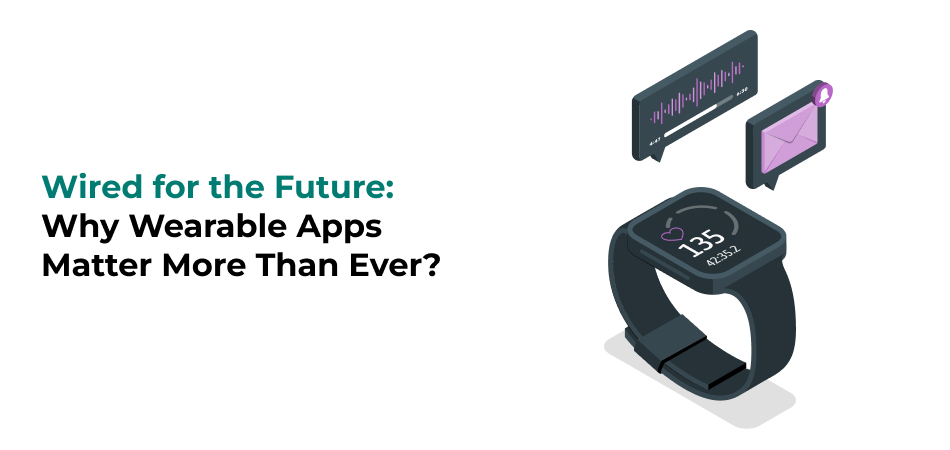
Why Do We Need Wearable App Development?
The technology cornerstone of wearable applications builds on the convergence of technological advances, lifestyle changes, and industrial evolution. With users’ increased dependence on quick access to data and smart functionality, wearables have become an extension of personal computing.
1. Health and Wellness
Wearables allow users to actively monitor their health following relevant critical signs of heart rate, sleep cycles, oxygen saturation, and physical activity all the time. Constituting support for preventive health care, the data enables anomalies to be caught earlier and may result in better consultations with the doctor. As more people have developed an interest in personal health and fitness, these apps determine the level of excellence in leading healthier lifestyles.
2. Convenience
With wearables, all notifications, navigation, Siri voice control, and workout data are available at a glance, avoiding the need to look for or keep smartphone(s) constantly. Their hand-free feature allows for multitasking, which helps increase productivity during workouts, travel, or daily life activities. A wearable app development services provider can help you navigate the evolving market effectively.
3. Enterprise Applications
Whether in logistics, healthcare, construction, or the field service industry, wearable apps give real-time information, checklists, and communication tools readily at hand in a mobile format and analytics. This enormously enhances worker productivity, safety, and mission-critical operations responsiveness. A creative cross platform app development company will ensure that your app serves its purpose effectively.
4. Accessibility
Wearables are changing the accessibility for disabled people. Voice-and gesture-activated and haptic-enabled applications allow those users who are visually, hearing, or motor impaired to interact with technology more naturally and independently. Wearing a partnership with a seasoned social networking app development company can make a substantial difference in delivering high-performing wearable solutions.
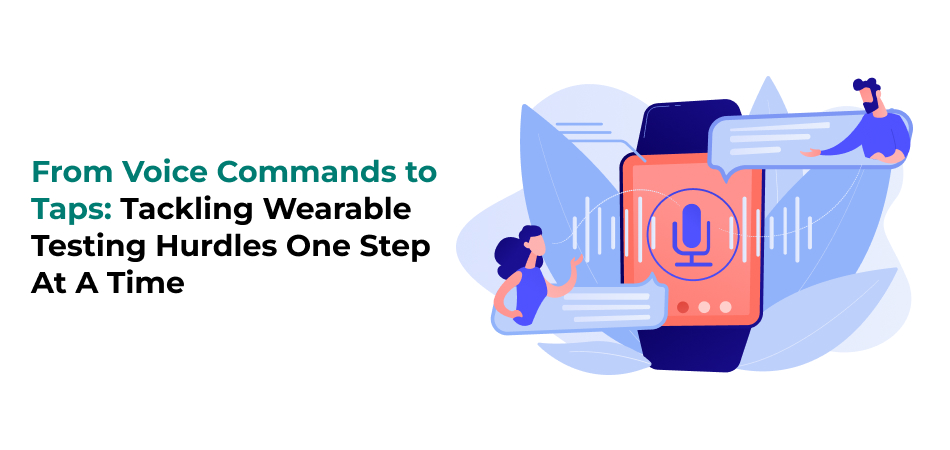
Understanding The Unique Challenges Of Testing Wearable Apps
The testing of wearable applications is a very complex activity determined by the portable, mobile, and context-related nature of the wearable technology. With wearables becoming very sophisticated, the complexities of their testing also increase, and a more sophisticated approach that combines the technical and the real-time adaptability will need to be demanded. Below are the critical challenges involved, which include:
1. Restricted Screen Size & Input Selection
Small displays are a regular characteristic of wearables, and hence, UI design and testing activities are challenging. Significant inputs are usually limited to gestures, swipes, taps, or voice commands. Testers must confirm the visual rendering and the usability of interacting with these within such narrow limitations. It is essential to provide UI responsiveness, maximum font readability, and clarity for the icons for different screen sizes. A wearable application development company can develop your dream app.
2. Diverse Operating Systems and Platforms
The wearable ecosystem is fragmented, unlike smartphones. There are different platforms on which devices can run, including watchOS (Apple), Wear OS (Google), Tizen – Samsung, Fitbit OS, and proprietary systems. Each platform is unique in the way development is done, the inputs are performed, and what features are available. The testing of these disparate environments necessitates a hybridization of emulators and actual devices to guarantee compatibility and performance uniformity. A commendable cross-platform app development company can do wonders for your business.
3. Hardware Limitations
Wearables operate under energy efficiency, which means the CPU power, memory, and battery life are compromised. These limitations should be taken care of during the performance test. A well-functioning app on a high-end smartwatch may lag heavily or drain the battery very fast on an entry-level device. Testing should concentrate on the utilization of resources in different usages.
4. Sensor Integration
Most wearables include several sensors: accelerometers, gyrometers, heart rate monitors, GPS, and SpO2, etc. Testing must check that sensor data is appropriately collected, processed correctly, and shown in real time. Simulating real-life activities such as running, sleeping, or cycling is essential for validating sensor-based features. Working with an artificial intelligence app development company can ensure these testing processes are comprehensive and fruits of their labor.
5. Context-Awareness
Wearables are frequently used on the move, under different lighting, temperature, circumstances, and sound. Apps have to flow smoothly in different changing worlds and user contexts. This implies that the testing has to involve a walk outside, a drive, presence in a noisy gymnasium, or rest in the bed. Environmental testing guarantees reliability in changing circumstances.
6. Network Dependency
Many wearable applications require intermittent or persistent connection to the internet to sync data to a smartphone or cloud-based infrastructure. Testing should include varied, changeable signal scenarios, but it should also include offline functionality of scenarios, scenarios where deviations in sync occur, and where error recovery occurs. One must test data transmission failure-handling and the logic of reconnecting in the app.
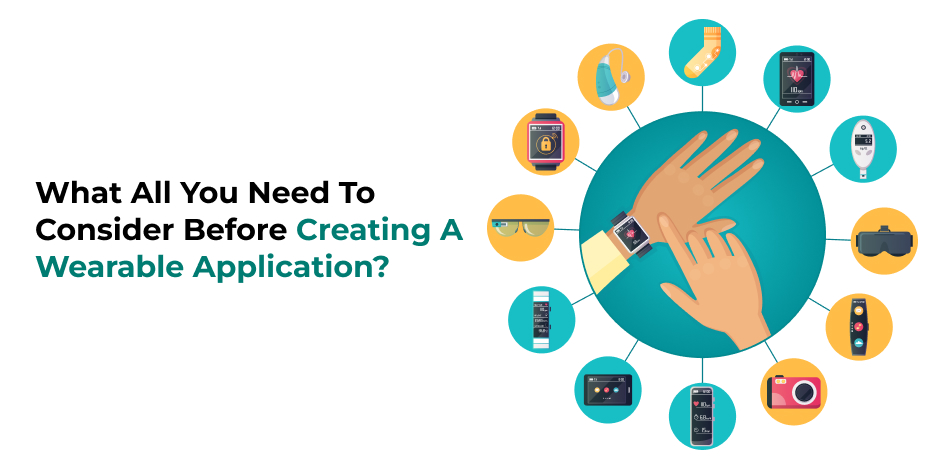
Key Considerations For Testing Wearable App Development In 2025
Several essential factors for complete testing in 2025 address wearable and user needs peculiarities.
1. Cross-Platform Compatibility
There are many forms of wearables, and they run on either watchOS, Wear OS, or proprietary platforms. Testing several devices and OS versions is indispensable for the user experience. This also checks layout rendering, performance, and functional behaviour on smartwatches, fitness bands, and smart glasses from different manufacturers.
2. Battery Consumption Testing
Battery life is essential as typical wearable devices are worn for extended periods. The app should be tested to calculate how much power it requires to operate actively, rest, and background run. The tools can imitate user behaviors to choose the app’s efficiency through system resources.
3. Sensor Data Accuracy In Wearable App Development
Many wearable applications rely on accurate sensor data to perform tasks, such as any pedometer that counts your steps, heart rate monitoring to measure beats per minute, or GPS tracking your location. Various scenarios modeled should mimic walking, running, resting, and cycling to test the level of guarantee afforded the app in interpreting and using the sensor input. App development for wearable devices is also an important area of consideration here.
4. Real-Time Data Processing
Real-time reaction is necessary, especially for health monitoring or navigation applications. Testing has to prove that the app does not lag when receiving, digesting, and showing the input from the sensor or the user. This also applies even for verifying the data synchronicity of the worn devices with companion apps on smartphones or cloud or wearable app development services.
5. Security and Privacy Compliance:
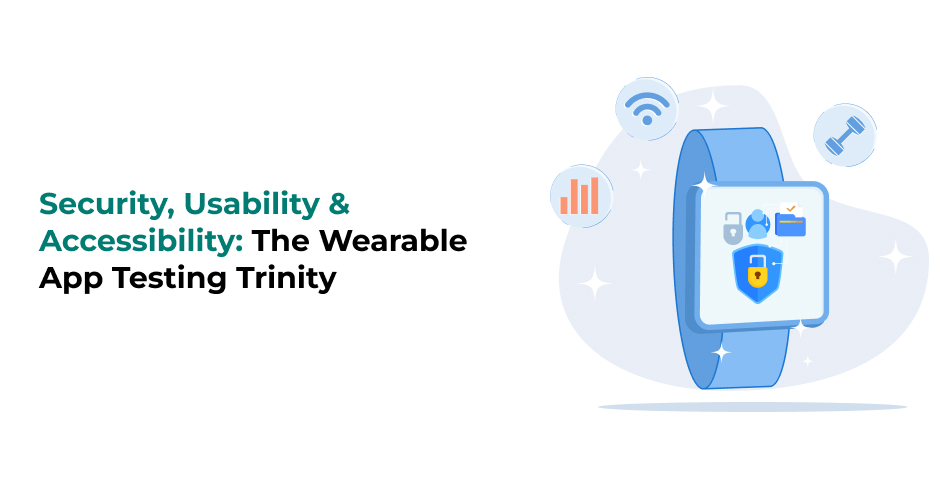
Wearable devices gather private personal information, especially in the medical or fitness field. Testing should include encryption protocols, secure API, and proper data handling. Procedures for compliance with such data protection laws as GDPR, HIPAA, and other regional regulations should always be supported by proactive audits and security testing. A dedicated wearable application development company can help you comply with privacy regulations.
6. User Interface and Usability:
Because of small screens, every touch counts. Testing for UI elements should be optimized for touch, voice, and gesture input. Making sure buttons are accessible, fonts are readable, and intuitive navigation significantly affects the app’s success.
7. Accessibility Features:
Inclusive design is vital. Evaluation of screen readers, voice assistance, high-contrast visuals, and haptic feedback makes the app accessible to people with vision, hearing, and motor impairment. It is consistent with the ethical standards and the global accessibility guidelines.
8. Intermittent Connectivity:
Wearables tend to operate in poor or no signal areas. Testing to see how the app reacts when there is a network drop, when offline, and when the sync is delayed is critical. This includes validating retry logic, caching the data, and updating the user about the current status during the loss of connection. A commendable on demand app development company can develop apps that integrate productivity tools directly inside wearables and their virtual counterparts.
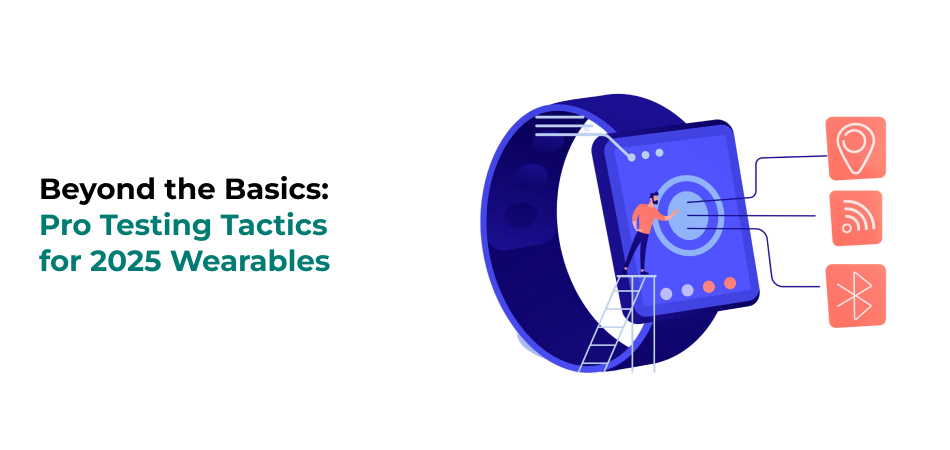
Best Practices For Testing Wearable Applications In 2025
1. Adopt Real-Device Testing Over Emulators
Although useful in the initial levels of development, emulators are far from doing an effective job of emulating real-world performance. App development for wearable devices is equally important in this context. The actual testing of devices reveals invaluable information about such critical areas as:
- Battery usage: Actual devices show how much your app uses during regular operation.
- Sensor behavior: There is a disconnect between wearables and their virtual counterparts in the form of emulators and real hardware. Many wearable sensors do not work the same way.
- Connectivity performance: Bluetooth, Wi-Fi, and mobile data interactions are achievable only using physical devices.
A forward-thinking wearable mobile app development company in Australia conducts thorough testing across various devices because it covers all possible user cases and ensures a proper experience.
2. Employ Continuous Integration and Automated Testing.
Development will be successful if continuous integration (CI) and continuous deployment (CD) pipelines are implemented. Automated testing in functionality, performance, security, and simplifying the development process facilitates the delivery of a reliable product. Working with an experienced start up app development company can bring a substantial difference in terms of implementing high performing wearable solutions.
A reputable wearable app development company uses these tools to construct and execute test suites that reflect the conditions that apply to wearable devices, such as limited screen space and hardware limitations. This standard of rigor ensures that teasers are found before they hit the consumers and that new features are thoroughly tested before release.
3. Test in Varied Environmental Conditions In Wearable App Development
The design of wearable devices presupposes their utilization on the go, and hence testing should consider a variety of environmental conditions:
- Lighting: Both lighting levels, indoor and outdoor, can influence screen readability and sensor accuracy.
- Weather: Conditions must be wet, humid, or dry, and hot, but devices should work.
- Temperature: Make the application functional in high and low temperature conditions.
- Physical conditions: Test when the user is in a state of rest and during movements of daily activities such as walking, running, and cycling.
A wearable app development firm with a good working environment has to understand these challenges so that testing mirrors the real world.
4. Simulate Real-Life Use Cases
Testing must always be aligned with the environment in which any person using the wearable apps interacts. Simulation scenarios might include:
- Workout exercises such as jogging, cycling, and yoga classes.
- Sleep tracking for accurate data collection overnight.
- Notifications are given during working meetings, workouts, or driving situations.
An professional iPhone app development company employs user behavior simulation to test the app’s functionality in varied situations.
5. Prioritize Accessibility and Usability
Although accessibility has been neglected, all users must have a good experience. Wearable apps should be usable by people of all abilities. These testing procedures can be ensured to be through and effective if the process is carried out by an artificial intelligence app development company. Focus on:
- Voice control compatibility
- Haptic feedback for alerts
- Readily legible font sizes and high contrast UI changes.
An experienced wearable app development company performs usability testing to optimize these elements to make the app functional and user-friendly.
6. Monitor Data Synchronization and Latency
Wearable apps are usually paired with companion mobile applications or cloud platforms. A reliable on-demand app development company can execute apps that offer accurate data collection. It’s vital to:
- Check the reliable and current data transfer.
- Reduce latency to ensure a smooth experience for users.
A competent iPhone mobile app development company where details matter most will focus on testing synchronizations between several operating systems and networks.
7. Feedback from Users and Beta Testing.
Real user feedback is crucial for contributing to the improvement of the app before the launch. By implementing a beta testing phase, developers can diagnose usability issues, bugs, and performance bottlenecks. A forward-thinking wearable app development house uses feedback loops in their QA process and makes improvements according to what is happening in the real world.
Benefits Of Wearable App Development-
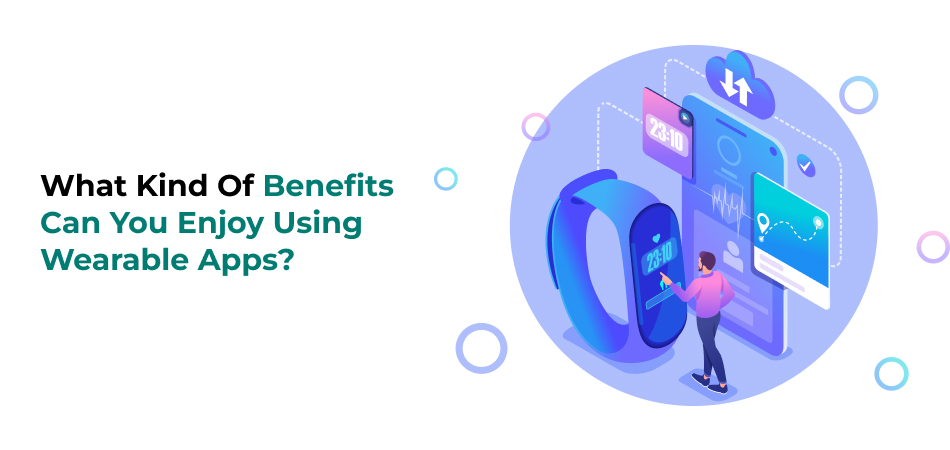
Wearable technology has moved far away from the fitness trackers, marking its beginning as an essential requirement of contemporary life and business activity. From smartwatches to health monitors, wearable devices are now equipped with powerful applications that offer convenience, insights, and efficiency. Here we go with what is purely the sum of the advantages of wearable apps and why working in collaboration with a UI UX app development firm will be very important towards utilizing the full potential of wearable apps.
1. Real-Time Health Monitoring
Real-time health tracking is one of the most significant advantages of wearable apps. Smartwatches can measure heart rate, sleep pattern, and steps taken; detect irregularities, at least in heartbeat or oxygen levels. With this piece of advice, users can take preventive health measures. A proficient wearable mobile app development company in Australia can design individualized health apps (that seamlessly integrate with different wearable devices) that come with personalized health advice and data analysis reports.
2. Enhanced User Engagement With Wearable App Development
Wearable apps offer an interactive and personal user experience. Whether to remember being active or to remind oneself to drink water, these apps keep the user engaged all day. Through constant access with little intrusion, wearables present a user-oriented platform that best wearable app development companies can use to enhance customer interaction with businesses. When it comes to delivering high performing wearable solutions, it can make a world of difference by working with an established progressive web app development company.
3. Increased Productivity and Convenience
Wearables simplify everyday activities because users can get messages, view a calendar, or turn on or off smart home devices without picking up their phones. This hands-free access saves time and increases efficiency, especially for professionals on the go. Best wearable app development companies can develop apps that integrate productivity tools directly inside wearables, optimizing workflows and task management.
4. Better Data Collection for Businesses
The wearable apps gather precious information on user behavior and standards. This information can be used by businesses to tweak products to suit customers, change marketing plans, and generally improve the customer experience. A professional Android app development company guarantees a secure acquisition, analysis, and proper use of data to improve business outcomes.
5. Competitive Advantage for Brands
With wearable technology, businesses can give themselves a modern, cutting-edge impact. Best wearable app development companies that partner with an experienced UI/UX mobile app development firm to develop wearable app solutions are better positioned to be ahead of the competitors by providing additional wearable app development services and user convenience.
Emerging Trends In Wearable App Development
Here are some of the latest trends in wearable technology, and with them, there is also the need to find updated testing procedures. An Android mobile app development company ahead of the curve must harmonize its quality assurance processes with the latest trends and technologies.
1. AI and ML integration
Wearable apps increasingly utilize AI and ML to provide predictive analytics, activity suggestions, and personalized health insights. These algorithms must be tested for accuracy, performance, and potential bias if they impact user health information and lifestyle decisions.
2. Edge computing
With more and more wearables featuring edge computation, local data handling must be a significant part of testing. An experienced wearable app development company shall ensure that apps can be tested for processing speed, power consideration, and working offline, because the ability to work without a steady cloud connection is vital to user experience. Working with a highly experienced start-up app development company can be a great difference when delivering top-performing wearables.
3. AR/VR wearables
Augmented Reality and Virtual Reality are expanding the horizons of wearable app development. Immersive experiences require testing for motion tracking, latency, and system-level responsiveness. A fully-fledged mobile app development company shall have the equipment and know-how to validate Augmented Reality/Virtual Reality features across various hardware configurations. App development for wearable devices is also viewed as another important priority.
4. Next Generation Biometrics
Recent generations of wearables have allowed biometric features like ECG readings, blood oxygen measurement, and glucose readings. Any of these functions will require clinical-grade verification and validation. A capable flutter app development agency knows the value of data quality in these cases.
5. Not just a singular IoT device.
Today’s wearable will be embedded in a bigger IoT ecosystem of smart homes and connected places. Testers must show that all this can communicate in real-time and work when connected with other devices and platforms.
Conclusion
In 2025 and beyond, the wearable technology sector is expected to experience a drastic increase. Wearable applications have become more complicated to test, requiring careful planning, real device validation, and matching of user expectations. Developers can provide stable, user-centric apps by knowing the distinct challenges and applying the best practices.
Working with a mobile or wearable app development company guarantees that wearable applications will be functional, innovative, and meet market demands. With wearable technology becoming a bigger part of our lives, the quality of apps that power them becomes an essential distinguishing factor. Working side by side with an experienced progressive web app development company can create quite a lot of difference in generating high-performing wearable solutions.
Whether you’re trying your luck as a startup entering the world of wearables or a brand that wants to optimize, partner with a professional app developer – here is your route towards success in the dynamic digital era. A dedicated flutter app development agency can integrate strong analytics that will transform data into action for your business.
FAQS
Q1: What is the difference between wearable and mobile app testing?
Ans 1: Wearable app testing requires more emphasis on integration with sensors, real-world applications, its battery life, and usage of a minimalistic interface than through the development of traditional mobile apps.
Q2: Why should I contract a wearable application development company for wearable apps?
Ans 2: A wearable mobile app development company in Australia has expertise, tools, and resources to build and test superior wearable applications that fit the market’s expectations.
Q3: What is the frequency of testing wearable apps?
Ans 3: The app will function smoothly in regular testing during development, after launching, and OS & hardware developments.
Q4: Which tools do we use to test wearable apps?
Ans 4: Automation and testing of wearable apps is often supported by such tools as Appium, Espresso, Robotium, and real device farms.
Join the newsletter and get all the updates.
Subscribe




