9 May 2025
How AI in Manufacturing Is Reshaping Perth’s Workforce Landscape

Shaun Bell



From the center of Western Australia, the manufacturing activities in Perth have functioned as the fundamental driving force behind the economy. The city has earned its reputation through mining equipment production, advanced fabrication capabilities, and engineering services. The tide is turning because Artificial Intelligence (AI) has started to gain prominence in various industries, especially with the emergence of the best AI in manufacturing firms.
Artificial Intelligence integration in manufacturing operations created substantial functional changes that affected workflows and employee dynamics and transformed contemporary start-up mobile application development firms. A dedicated cross-platform app development company can help you develop your dream app in your budget.
The Rise of AI in Manufacturing Perth
Artificial Intelligence functions as more than just an industry catchphrase. It is a paradigm-shifting force. Through predictive maintenance and intelligent robotics solutions, AI technologies drive industrial manufacturers to obtain unmatched levels of efficiency and productivity. AI adoption enables Perth-based companies to retain competitiveness against global competitors in their operations across light and heavy manufacturing sectors.
AI technology advancement created the necessity for unique digital solutions. Start up mobile app development firms play a vital role at this point. Social networking app development companies fill the gap between AI capabilities and practical usages for daily operations. Iot app development companies deliver user-friendly interfaces and real-time monitoring tools to transform robust AI systems accessible to users.
AI: A Catalyst for Change in Manufacturing
The manufacturing sector sees quick transformation through artificial intelligence as it serves to unlock innovation alongside operational efficiency and adaptable manufacturing capabilities. AI-based technologies now penetrate manufacturing operations throughout production and supply chain management to build operational productivity and quality and decrease expenses.
The global market demands that manufacturers use artificial intelligence technology as essential for maintaining competitiveness while industries evolve. As in other parts of the world, AI in manufacturing Perth reflects such a trend, particularly highlighting the development of the local industry toward smart manufacturing.
1. Enhancing Operational Efficiency
The most substantial advantage AI provides for manufacturing operations is operational streamlining power. Real-time process monitoring by machine learning algorithms and intelligent automation systems detects production inefficiencies to make recommendations for improvements. The case of application of AI in manufacturing industry focuses on the importance of integrating AI in order to achieve efficiency and effectiveness together with needs to be held responsible.
Through AI robot systems, production facilities can perform monotonous or hazardous operations twice as fast and with superior quality output to raise total production while ensuring peak safety measures. The adoption of automated systems allows social networking app development companies to reduce their manual workforce. This technology enables human workers to allocate their time to specialized creative tasks, including oversight and innovation activities.
2. Predictive Maintenance and Reduced Downtime
The predictive maintenance system heavily depends on AI technology to process data coming from machinery sensors. Predictive systems incorporate built-in alerts that allow manufacturers to plan maintenance activities before equipment failure happens. AI automation in Perth manufacturing enhances these systems in that it makes maintenance planning smarter and resourceful using an analysis of data.
A predictive maintenance strategy reduces unexpected equipment downtime while improving equipment lifespan at a lower operational expense. Manufacturers achieve more reliable customer meet rates and stable production levels through maintaining equipment in high operating performance states.
3. Optimizing the Supply Chain
Secondary data analytical programs through AI provide organizations with increased visibility and enhanced speed when managing their supply chains. AI achieves market trends and customer demand tracking by analyzing data in real-time and making predictions.
Manufacturers gain the ability to schedule their operations better and control their stock more efficiently, which in turn decreases manufacturing waste. AI technology enables supply chain observation of blockade points by suggesting alternate sourcing approaches, thus establishing an operational framework that effectively combats disruptions.
4. Driving Quality and Innovation
Through quality control processes, AI provides exceptional performance. AI-powered computer vision systems look at products throughout production to execute efficient inspections that recognize imperfections effectively and uniformly—implementing AI improves product quality because fewer items require returns and reduced rework instances. Advanced AI analytics enhance product quality and manufacturing procedures, creating an environment for continuous product enhancement.
Workforce Evolution: Upskilling And Reskilling
Artificial Intelligence (AI) advances in manufacturing logistics technology trigger a fundamental transformation of workforce dynamics. New human roles must adapt when machines develop additional capabilities and intelligence. The change is most visible in areas with fast-growing automation and AI integration, such as Perth’s expanding industrial and technology fields. Organizations must invest directly in training programs that help workers develop new skills to meet the coming changes in the industry.
1. The changing nature of work and newly available career prospects
The rising usage of AI-powered systems makes many conventional roles of repetitive manual work disappear. Employment levels may remain intact despite the introduction of new technology lines. New employment possibilities are developing in robotics operations, data science, machine learning engineering, and AI system management.
Modern skillsets have become necessary for workers who find employment across various industries, including IoT app development companies providing technology services. AI in manufacturing industry makes it compulsory to look at how to adopt AI strategies so as to have a balance of productivity and responsibility.
2. Reskilling for the Digital Age
Organizations must support workforce changes that enable their teams to stay competitive in the current market. Perth’s manufacturing sector stands out by dedicating resources to extensive training programs that assist employees in mastering artificial intelligence techniques. AI automation in Perth manufacturing helps in sustaining such systems by providing informed maintenance planning.
The educational programs teach various skills, from algorithm design and coding to robotics and predictive maintenance. App development companies with progressive outlooks improve their outlook by investing in employee education, which keeps developers and technicians advanced within an evolving digital network.
3. The Role of Mobile App Development in Workforce Transformation
AI technology extends its spheres of impact past traditional industries. Apart from conventional industries, AI also affects the mobile application sector. AI enables contemporary mobile app development firms to build applications that respond better, yet they need their team to maintain active knowledge of emerging technology developments. Continuous upskilling and reskilling processes enable app development companies to achieve their goals. Employees go through training to master AI integration, natural language processing, and analytical methods for user behavior.
4. Preparing for a Sustainable Future
The ongoing need for continuous learning enables industrial and digital companies to handle upcoming business challenges effectively. Any organization, from manufacturing to mobile app development, must develop an adaptable workplace culture to succeed. A Perth-based leading app development company shows success through workforce development initiatives that will allow it to succeed in the AI-driven future.
How Can AI Help Your Manufacturing Business?
Artificial intelligence has incalculably altered the landscape in the present manufacturing age. AI has helped manufacturing businesses streamline maintenance scheduling, aid supply chain processes, and enhance many other aspects; the result has been enhanced efficiency, cut-down costs, and product quality improvement. If manufacturers adopt this technology, they will survive the cutthroat competition.
1. Improving Operational Efficiency
Enhanced operational efficiency is at the core of AI benefits in manufacturing industries. AI-based systems work by watching the production line in real time, finding bottlenecks, and suggesting process improvements.
Because robots do tedious work, human error and productivity are reduced! Similarly, a good iPhone app development company can develop custom AI-enabled applications that enable factory managers to oversee operations with their mobile devices, thereby gaining better control over workflows.
2. Predictive Maintenance for Cost Savings
An unexpected equipment failure may lead to costly downtime. Such unfortunate occurrences can be addressed by predictive maintenance through AI. The combination of sensors on equipment generates data that AI examines to forecast possible machinery failures before they become a reality.
The warning period enables fast maintenance action, lowering equipment repair expenses and extending the lifetime. An on demand app development company can implement predictive analytics and embed it in a custom dashboard or mobile app so that one can monitor and get alerted in real-time.
3. Improved Quality Control
AI, especially computer vision and machine learning, represents the future of quality control. Defect inspection systems are more accurate and consistent than human inspectors. In other words, while fewer defective items reach customers, businesses can maintain higher standards, thus safeguarding their reputation. Mobile platform inspections facilitated by the app development agency help manufacturers execute their inspections more efficiently and effectively.
4. Supply Chain Optimization
Artificial intelligence is a foundational component that generates precise demand predictions while maximizing inventory management and supply chain logistical efficiency. Consequently, producers will anticipate shortages or delays and adjust operations accordingly.
A skilled address in app development will be able to build AI-driven systems that streamline every part of the supply chain, from acquisition to delivery. On the other hand, a UI UX app development company can build user-friendly mobile apps to keep track of the supply chain.
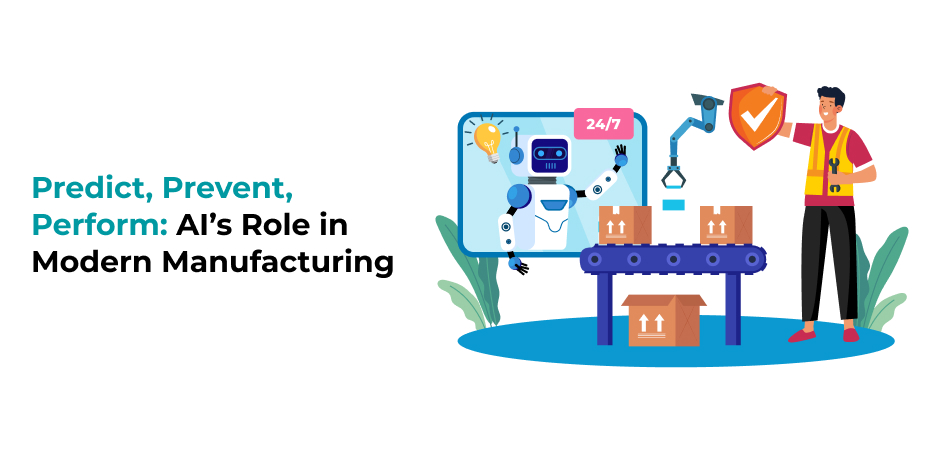
5. Making Your Business Future-Ready
By adopting AI, manufacturers establish future-proof businesses. Whether through a flutter app development company or a trusted on-demand app development company, embracing AI-powered solutions can lead to smarter operations, reduced costs, and greater agility in responding to market demands.They are well supported by the AI automation in Perth manufacturing for better and more informed maintenance scheduling.
Pitfalls Of Using AI In Manufacturing Perth
Artificial Intelligence (AI) possesses extensive manufacturing opportunities but achieves this at the expense of significant implementation complexities. Many businesses harm their adoption efforts toward AI because they do not grasp the complexity of AI implementation.
Implementing AI in manufacturing operations requires identifying potential obstacles before a business can reach its desired ROI. AI deployment for manufacturers requires thorough strategic planning and detailed assessment of technical challenges and workforce implications.
1. High Implementation Costs
AI integration into manufacturing facilities requires substantial first-time implementation expenses that prove to be one of the main difficulties for manufacturers. Small to medium-sized businesses face significant expenses when purchasing refined equipment and hiring AI specialists.
Work with an UI/UX mobile app development company to build AI-based monitoring systems, but costs will rise if budgeting is inadequate. When ROI remains unclear, investments tend to transform into enduring financial strain.
2. Data Quality and Management Issues
AI systems depend primarily on available data to run correctly. Predictions and important decisions become unreliable because of poor data quality alongside inconsistent data collection practices. Standard manufacturing facilities commonly operate with outdated system infrastructure, which proves challenging when integrated with modern AI technologies. A flutter mobile app development company can develop data tools and analysis capabilities, yet an unreliable fundamental data set will cause AI systems to generate erroneous insights.
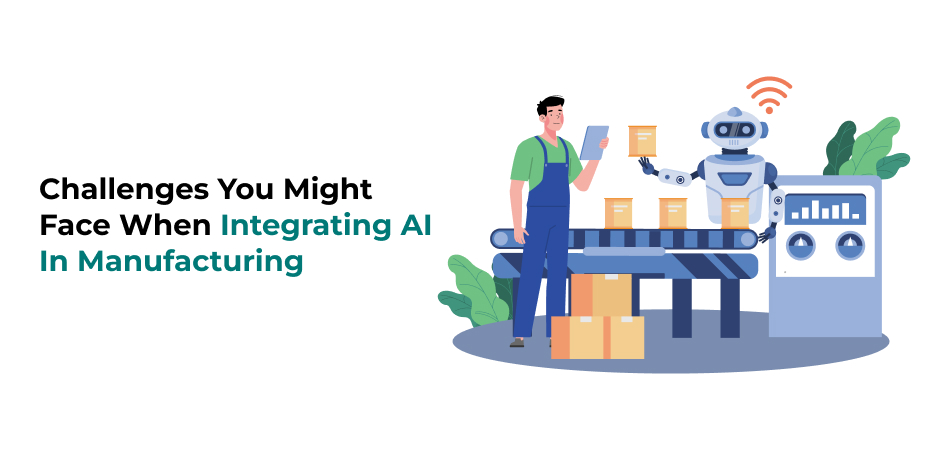
3. Resistance from the Workforce
Employee resistance constitutes a primary challenge that stands between AI implementation and success. Many workers fear AI will replace them at their current jobs, leading to mistrust and reduced morale. AI adoption without thoughtful employee training and change implementation strategies can create organization-wide conflicts.
An artificial intelligence app development company can develop easy-to-use interfaces for their AI tools, but employee engagement remains essential for reaching overall success. AI for manufacturing industry in Perth also has these challenges, hence the need for strategic planning.
4. Over Reliance on Automation
Excessive reliance on AI systems produces human decision-making engineers who become unprepared for tasks. In dynamic real-world situations, machines frequently make mistakes. The successful implementation of AI systems requires manufacturers to strike a proper equilibrium between automated processes and human monitoring functions. AI automation in Perth manufacturing underpins these systems by integrating intelligent data-driven maintenance strategies.
A partnership with an application development firm to embed manual control systems and review methods within AI-powered applications reduces this risk. The implementation of AI in manufacturing industry has to be done carefully in a manner that minimizes the automation and the maximum human intervention lest the overall quality is compromised.
5. Security and Privacy Concerns
AI systems routinely work with critical operational information datasets. These systems remain vulnerable to cyberattacks when their security protocols are poorly managed. Every reliable mobile application development company should build strong cybersecurity features into their AI-driven apps for manufacturers. A seasoned cross platform app development company must follow data protection regulations, thus preventing legal issues. The barriers of AI for manufacturing industry in Perth require strategic planning.
Future Of AI In Manufacturing Perth
Modern manufacturing experiences rapid growth as Artificial Intelligence (AI) drives its core transformation. Modern technology has expanded the accessibility of AI systems that operate at increased power levels across the entire manufacturing process chain. AI in Perth manufacturing reflects this evolution, where manufacturing AI will deliver greater operational productivity through predictive analytics, autonomous systems, enhanced flexibility, and innovative solutions.
1. Smarter Automation and Robotics
AI-powered robots will actively adapt their task execution to detect and respond to changing production settings in the forthcoming years. These automated machines will use data inputs to make real-time decisions, thus minimizing human participation. Partnering with an artificial intelligence mobile app development company enables manufacturers to create interfaces that let users control robotic systems in real-time through mobile platforms so they can improve their productivity and respond faster to situations. AI for manufacturing industry in Perth also comes across these challenges and strategic planning is very crucial.
2. Predictive and Prescriptive Analytics With AI In Manufacturing
AI systems will move past traditional predictive maintenance techniques to provide expert recommendations that help prevent operational failures while boosting operational performance. Business leaders will use Artificial Intelligence to predict consumer needs and operate supply chain systems before they make critical strategic decisions. AI in manufacturing industry must be implemented in a way that is soft with optimized control being left to the human system.
These AI capabilities get integrated into dashboards through partnerships with app development companies, which function equally on desktop and mobile devices to provide decision-making authority across all organizational levels. The following are possible innovative advantages that Artificial Intelligence in Perth manufacturing caters; Array AI improves strategies utilized in manufacturing practices.
3. AI-Driven Customization and Flexibility
The implementation of AI makes mass customization possible. Computers using next-generation technology will analyze what customers prefer, followed by automatic changes to production lines to create customized items while reducing waste output.
An Android app development company helps build applications that gather real-time user data for AI systems to process, resulting in customized agile manufacturing solutions.The following are the innovations that these groups have implemented, and which are supported by AI in Perth manufacturing.
Role Of Mobile App Development Companies
Digital technology integration within traditional manufacturing operations has reached its most important milestone. This industry transformation is driven by development companies specializing in mobile applications, particularly in innovation-rich regions like Perth. These technological companies transform manufacturing data collection processes, leading to stronger productivity results and lower operational expenses while teaching workers new skills.
1. Enabling Real-Time Data and Remote Monitoring
The leading mobile app development organization builds tailored solutions that let manufacturers observe equipment processes live through real-time monitoring. Mobile apps deliver real-time information by connecting sensors and IoT devices from the production line, providing performance analytics alongside warning signals about potential manufacturing breakdowns. Workers alongside managers benefit from instantaneous decision-support regardless of their location between office and remote positions.
2. Empowering Predictive Maintenance
AI-driven apps produce their most significant advantage through predictive maintenance capabilities. When partnered with an experienced Android mobile app development company, a manufacturer can use well-designed applications to predict when their equipment will fail before a breakdown occurs. AI for manufacturing industry also comes with these challenges which makes the strategic planning essential
The application helps manufacturers reduce unexpected system breakdowns while maximizing the useful life of their high-value equipment. Modernized mobile applications integrate predictive features with mobile-friendly dashboards and notification systems, which technicians can access through simple interface interactions.
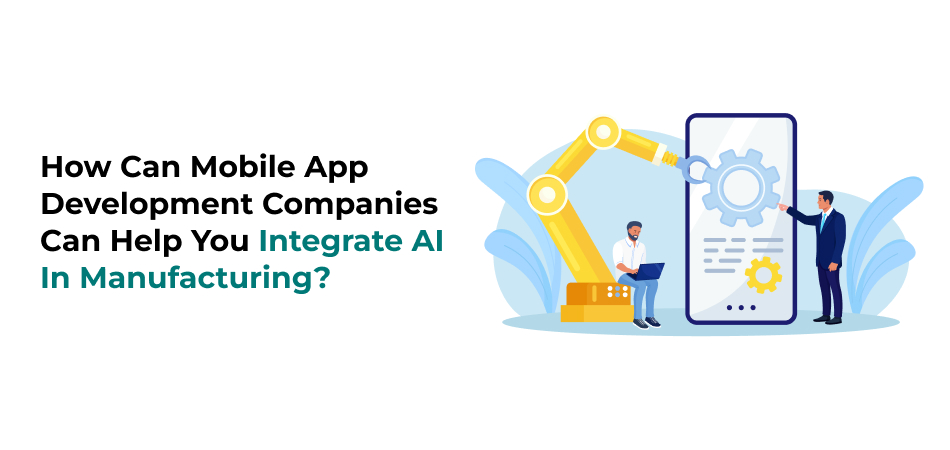
3. Boosting Workforce Efficiency and Learning
Apart from operation-related activities, mobile app development services work towards enhancing workforce capabilities. All companies currently use mobile platforms as their fundamental tool to deliver interactive training modules for employee skill development. The following innovations are supported by AI in Perth manufacturing, which leads to efficient advancements in the manufacturing ways.
Employees can learn existing safety protocols alongside AI system operations through easy-to-use training tools that provide accessible skill development opportunities. The changes in job roles caused by the introduction of AI and automation demand special attention from the industry workforce. Artificial Intelligence in Perth manufacturing fosters the adoption of these innovative changes to operations and produces flexibility.
4. Seamless Communication and Workflow Integration
Modern manufacturing needs communication alliances between all department teams, suppliers, and stakeholders. Skilled technology developers construct unified mobile interfaces that unite multiple production workflows from inventory systems to supply chain logistics. Improved coordination from this strategy reduces operational delays while enhancing agility and efficiency across the entire venture.
5. Driving Innovation in Perth and Beyond With AI In Manufacturing
The Australian mobile app development leader, App Gurus, drives industrial innovation throughout Perth. App Gurus enables manufacturers to build operational future-readiness through their personalized mobile solution development expertise, which seals their market leadership status in a competitive global industry.
Case Studies
1. Perth’s Robotics Integration With AI In Manufacturing
Perth-based company Fastbrick Robotics created the Hadrian X automatic bricklaying robot. The new technology enables cost-efficient work and improved construction speed. Mobile application systems function with advanced robotics, allowing remote operators to oversee and command equipment operations for maximum performance and safety standards. The application of AI in manufacturing industry should be properly implemented to ensure that proper control is maintained to contain the use of the technology.
2. Smart Manufacturing with IoT
Manufacturers across the region are integrating mobile applications with IoT devices to manage their production routines and monitor equipment status and inventory patterns. Cue-based systems deliver instantaneous information that helps companies maintain their resources effectively while making preventive equipment checks possible.
Conclusion
The changes AI brings to work management and employee-technology interactions deeply affect Perth’s manufacturing workforce. More widespread adoption of automated systems and intelligent programs requires workers to develop digitally proficient skills and adaptability abilities. Progressive web app development firms drive this transformation by creating innovative tools that boost real-time communication, operational efficiency, and workforce empowerment. Artificial Intelligence in Perth manufacturing backs up these innovations to employ clever and versatile modalities of production processes.
These companies drive the manufacturing industry’s AI revolution through their mobile application development of worker interfaces that deliver real-time data visualization with remote diagnostic capabilities and safer protocol implementation. These apps support task streamlining and increase safety and continuous learning through their predictive maintenance features, AI-based decision-making capabilities, and skill-building modules.
Mobile app development businesses enable Perth’s manufacturing industry to deal with digital age challenges by strategically deploying AI alongside mobile capabilities. Advanced mobile app technology advances Perth’s competitive position and ability to keep employees and protect operational stability, thus establishing itself as a leading industrial innovation hub.
FAQS
Q1: How is AI impacting the manufacturing industry?
Ans 1– AI technologies transform industrial operations through automated operations, improve manufacturing quality inspection, and improve supply chain efficiency. The manufacturing industry functions efficiently because of AI and manages reduced expenses.
Q2: What is the impact of AI on the workforce?
Ans 2- AI reshapes employee job structures because it simplifies manual work, making data-based, robotic, and AI system oversight positions more critical.
Q3: How will AI affect employment in Australia?
Ans 3- Technological developments in Australia enable workforce upskilling and create new technical positions, allowing businesses to succeed and become resilient against market changes.
Q4: What role do app developers play in this shift?Ans 4- An iPhone mobile app development company can develop AI-powered real-time monitoring and training tools. Progressive web app development firms and app development companies assist manufacturers in AI adoption by creating customized platforms that generate productivity enhancement and increase workforce involvement.
Join the newsletter and get all the updates.
Subscribe




