Let's have a
Quick Chat
with you!
Quick Chat
with you!
You have our ear and we can't wait to hear about your idea! Share your details here and we will make sure to schedule a coffee date with you soon.




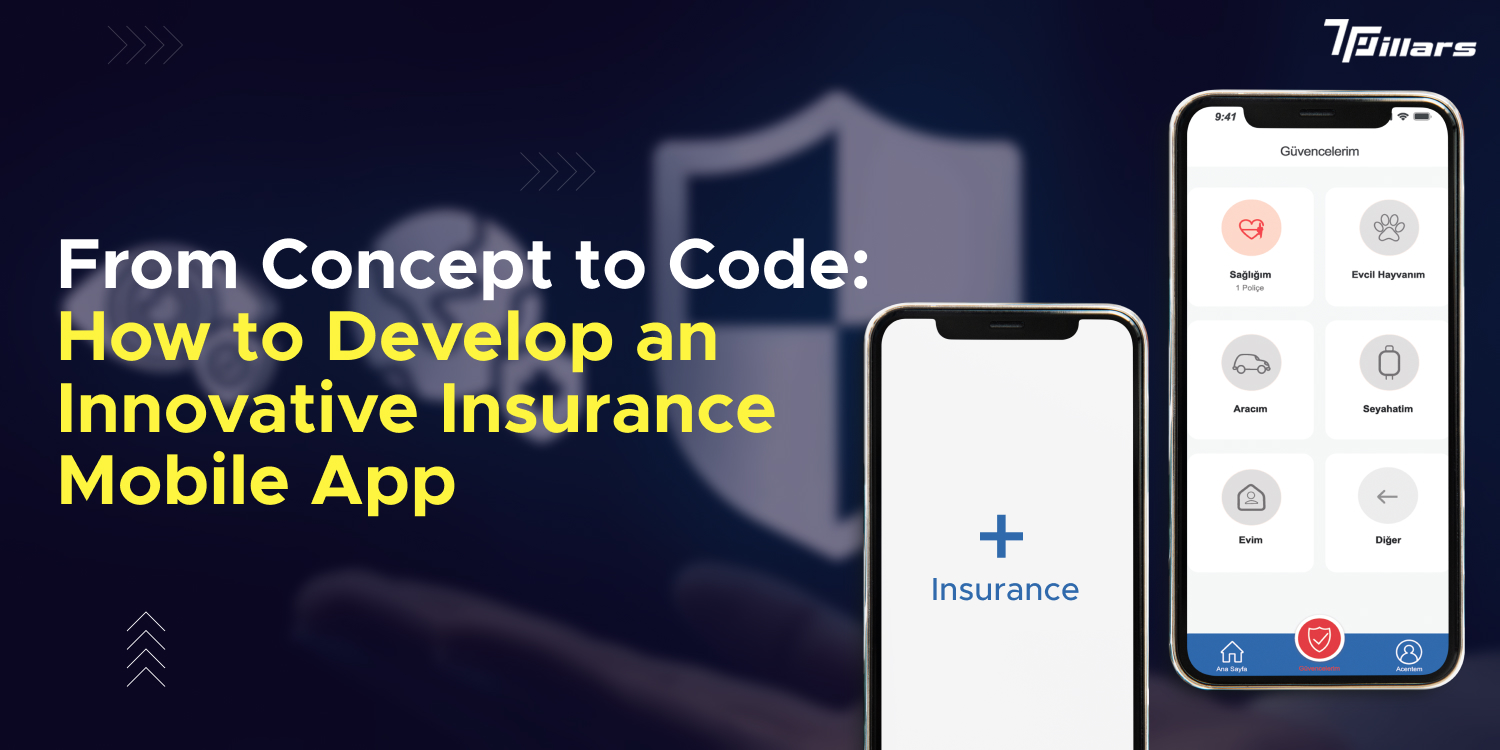
Insurance has always been cumbersome and annoying to manage. Digitisation has reinvented the industry in 2026. An app development company can help you understand how to develop innovative insurance mobile app. The latest insurance app can now provide AI-based claims, predictive risk evaluation, and tailored coverage suggestions. Insurers provide smarter, more innovative solutions with the help of an insurance mobile app development firm.
The current insurance apps can help users manage their policies and claims with AI-assistance, track premium payments, and provide pricing insights based on telematics. Customers want to have easy access, whether they are purchasing new coverage or renewing existing plans. With sophisticated Android mobile app development, applications are now providing easy-to-use dashboards, automated notifications and 24/7 digital support.
By collaborating with a reputable mobile app development company, insurers can combine automation, analytics, and compliance systems into a single secure system. Users can claim, check their coverage, and get AI suggestions immediately. These conveniences, transparency, and personalisation are what will characterise the modern insurance experiences in 2026.
AI-based policy comparison enables insurance apps to access and compare user information, offering the best coverage options. These tools break down industry jargon and provide clear breakdowns of benefits and exclusions. With Android mobile app development, users have access to seamless comparison engines together with real-time pricing APIs.
In addition to management, automated renewal reminders, dynamic premium calculators, and coverage gap notifications are run by AI. Other platforms apply behavioural information (such as driving or health statistics) to suggest cost reductions. Automation and predictive intelligence are radically transforming customer-insurer relationships through technology.
As insurers begin to integrate machine learning, embedded insurance APIs and blockchain-based smart contracts, the future of insurance apps in 2026 will be hyper-personalised, secure, and scalable. An established app development agency can help you develop innovative insurance mobile apps.
An insurance application refers to an online service that allows individuals to buy, manage, monitor, and optimise insurance services through a smartphone or tablet. In 2026, these applications go beyond the management provided by AI, fraud detection, and predictive analytics. Android app development guarantees the use of intuitive UX and a performance-based workflow.
As an illustration, apps such as Insura (this is a hypothetical example retained due to structural reasons) enable users to view policy details, start claims through AI-assisted workflows, and scan documents using OCR and obtain real-time status updates. Even roadside assistance or emergency medical help can be requested directly by the user.
The services of AI-assisted claim submissions, biometric authentication, and automatic fraud detection systems are becoming widespread in insurance app development. Notifications remind users of the dates of premium payments, raising the policy, or other personalised savings opportunities features are customary for an insurance mobile app development company.

Insurance started out as a manual, agent-based process. A web portal brought about digital access to policy by the early 2000s. The subsequent mobile app development based on Android facilitated the management of policies using a smartphone.
Initial applications had simple premium payments and a policy view. In the 2010s, the rise of smartphones prompted insurance companies to adopt claims uploads, GPS-assisted accident reporting, and digital paperwork. Hire an app development agency to help you develop innovative insurance mobile app
In 2026, GenAI-based customer assistants will assist users in making coverage choices, claims, and planning. Insurance applications have now become end-to-end digital ecosystems inclusive of onboarding, underwriting, engagement, retention and analytics.
Insurance applications have enabled people to approach their insurance providers, making the process much easier, faster, and more convenient. They are genuinely revolutionary for several reasons.
Customers can check and control their policies anywhere with an insurance app. Whether checking coverage, filing a claim, or renewing a policy, the power lies in their hands. This is one step away from traditional forms of insurance, where change and support could only come through calls, emails, and in-person visits. Through insurance mobile app development people build such apps which provide smooth functionality combined with user-friendly experiences.
Another great feature of insurance apps, developed by a mobile app development company, is streamlining the claim process. Users can raise a claim in real-time and, if necessary, upload photographic evidence of damage and monitor the claim status through the app. This reduces waiting time, reduces paperwork, and accelerates pay-out.
Most insurance apps provided by mobile app development companies give users understandable dashboards with features about policies, options, and premiums. Some apps even develop personal recommendations based on the user’s behavior and need to create an actionable incentive for the customer to optimize their cover. Given a clear and real-time view, users have better control and transparency over their insurance products. The role of insurance app development service is vital for improving these functionalities.
Many insurance applications allow users to receive discounts or unique benefits for digital policy management. They also have tools that help users decide on their requirements, thus enabling them to pay for coverage they do not need.
Many insurance apps possess AI-enabled chatbots or virtual assistants, thus supporting the customer 24 hours a day and all year. This is much more than traditional insurance since, usually, no support is provided after business hours. Building functional user-friendly mobile applications depends fundamentally on insurance mobile app development processes.
The general reasons behind the emergence of insurance apps in Australia include:
In recent years, insurance companies in Australia have been driving significant changes to digital solutions due to a transition towards mobile solutions. There is a growing pressure to make policies and claims, reporting and submitting, and even payments available via smart devices.
Some significant factors that have informed the adoption of insurance apps in Australia include enhancing customer experiences, using artificial intelligence to support personalized products and services, and utilizing digital technology to support claims processing. Today, consultants have developed applications for insurance offerings, helping users monitor their policies, file claims in real-time, and get round-the-clock support. These processes need to be revised in an insurance app development service.
Furthermore, the COVID-19 pandemic has fast-forwarded the use of technology since physical contact was minimized through the formation of lockdown and social distancing measures. New entrant Insurtech startups and incumbent insurers have also embraced this innovation as a tool for underwriting and risk evaluation, with the help of a insurance app development company.
The ongoing move toward mobile phone ownership and the portfolio of insurance consumers, flexible access to personal insurance, and the advancement of technology impacting the sector keep the future buoyant of insurance apps in Australia.

The growth of insurance apps in Australia is backed by several statistics, which support the growing development of insurance apps in Australia. A report by the Australia Prudential Regulation Authority (APRA) released in 2023 showed that over half of Australian adults aged 56 have partially used internet and mobile applications to transact, especially insurance policies, thanks to insurance app development service. This differs from previous years, where phone calls and face-to-face contact have always been preferred.
More Australian mobile insurance app downloads have been made this year. Top insurers AAMI, NRMA, and Allianz are experiencing a significant uptick in using the apps to perform tasks like claims, policies, etc. With COVID-19, an analysis of the Finder’s survey showed that 62% of the customers in Australia used mobile apps to submit claims in real-time, up from 39% in 2020.
Furthermore, according to the report by Statista, 71% of Australians have used mobile applications for financial services, and mobile insurance applications are among the fastest-growing segments. First emerging with pioneers like Collective and Trov, app-based InsurTech providers have gained significant market share quickly.
This digital shift is anticipated to persist in the following years, as the Australian insurance app market is expected to expand at a rate of 15% over the next five years due to increased consumer expectations for cost and value.
With the nature of the digital world, the insurance industry is also transforming into another space. More and more policyholders are indulging in mobile applications for policy management, claims, and other services. In today’s scenario, developing an insurance app has become a strategic imperative for insurers. Here are some of the benefits of creating an insurance app.
|
Benefit |
Core Idea |
Customer Advantage |
Business Impact |
|
Better Customer Experience |
Seamless & intuitive app interface |
Easy access to policies & claims |
Higher customer satisfaction |
|
Efficiency & Automation |
Automated workflows & processes |
Faster service, fewer errors |
Reduced operational costs |
|
Accessibility & Convenience |
24/7 mobile access |
Manage policies anytime, anywhere |
Improved retention rates |
|
Data-Driven Personalization |
User behavior & analytics insights |
Tailored policies & offers |
Increased sales & loyalty |
|
Cost-Effective Marketing |
Push notifications & referrals |
Relevant updates & rewards |
Lower acquisition costs |
|
Scalability & Future-Readiness |
Easy feature upgrades & integrations |
Modern, evolving services |
Long-term growth support |
|
Enhanced Security & Fraud Prevention |
MFA, biometrics & fraud detection |
Safer transactions & data protection |
Reduced fraud risk |

Building an app in the insurance industry requires a good understanding of the market, users’ needs, and technological aspects. The insurance industry is also very complex, which might make the difference in making an application user-friendly, secure, and functional. Below are the steps to guide you through developing an insurance app that stands out. Mobile application development companies act as fundamental developers who create both innovative and user-friendly insurance apps.
This requires understanding the target audience and any pain points they may have. The insurance industry is quite broad, and users might differ in what they prefer according to the type of insurance, for example, health, life, auto, etc. Market research is thus conducted to understand-
Having a good idea of the market and user needs, you can now decide on the basic features of your insurance app. Such features depend on the kind of insurance you are offering. However, there are some general features to be considered:
It is essential in insurance apps because a user may face or work with numerous and various data. It should logically flow, be easy to use and navigate, and have an impressive sleek design.A well-known app development agency can help you develop innovative insurance mobile apps.
The application deals with the sensitive information of the users, which is personal and financial, and requires security protection. Ensure that your app complies with regulations (like GDPR, HIPAA, or local insurance laws) and incorporates robust security measures, including:
That is why technologies affect your app’s success or failure in the market and users’ perception. Choose the right technological stack based on your app’s requirements:
Cloud Infrastructure: Ensure your app is hosted on a reliable cloud platform that accommodates growth and offers good speed.
Frontend Development: Frameworks such as React Native or Flutter enable developers to develop Android and iOS applications. They save time and cost while delivering high-performance apps on both platforms.
Backend Development: Select an efficient backend environment that can handle many results, such as Node.JS or Python with Django or Ruby on Rails.
Database: Implement a robust data structure such as PostgreSQL, MongoDB, or MySQL to archive user information, policy information, and transaction history.

Now, the real work starts with following the design and technology stack. Start with a prototype or an MVP to attract user and stakeholder feedback on essential aspects of the product. Apply an agile development approach to make changes on the go since changes will be made depending on the input. During Android application development the system focuses on flexibility and scalability while seeking user feedback to enhance the app through continuous improvement.
You must go to market once you have tested and fine-tuned your app. Your go-to-market strategy should interest people and attract users. Key tactics include:
However, this differs from where the work stops once the app has been released to the public. One must admit that constant attention must be paid to user responses, general application functionality, and significant indicators. It is unimportant to update the application often to deal with problems such as bugs and errors, improve the application’s functionality, and meet customers’ needs and trends with the expertise of a mobile application development company.
It remains strategically reactive to keep enhancing this app; apart from making it better for the users, it would ensure the long-run operation among all the similar ones, which is crucial to maintain the user’s attention and satisfaction over time. Insurance apps rely on mobile application development companies for their creation of innovative and user-friendly applications.
In today’s technology-driven world, insurance companies embrace mobile applications to facilitate various services and make use more accessible, enjoyable, and engaging. For an insurance app to bring about the needed changes, it has to implement several functions that will be useful for customers and insurance companies with the expertise of an Android app development company.
Any person who wants to create a similar application must collaborate with a mobile application development company that will build online platforms with an impressive list of features and intuitive user interfaces. Here are the key features to consider:
|
Feature |
Core Function |
User Benefit |
Business Impact |
|
User Registration & Profile |
Easy sign-up & profile management |
Secure & personalized access |
Better customer onboarding |
|
Policy Management |
View coverage, premiums & documents |
Easy policy tracking |
Improved user satisfaction |
|
Premium Estimates & Quotes |
Built-in calculator & comparison |
Informed policy decisions |
Higher conversion rates |
|
Claim Filing & Tracking |
Submit & monitor claims digitally |
Faster claim processing |
Enhanced trust & transparency |
|
Push Notifications |
Alerts for renewals & updates |
Never miss due dates |
Higher retention |
|
Payment Gateway Integration |
In-app premium payments |
Convenient transactions |
Increased payment completion |
|
Customer Support & Chatbots |
Live chat & AI assistance |
Instant query resolution |
Reduced support costs |
|
Document Upload & Storage |
Secure document management |
Easy access to records |
Streamlined operations |
|
Insurance Education & Resources |
Articles, FAQs & videos |
Better product understanding |
Improved engagement |
|
Advanced Security Features |
2FA,biometrics & encryption |
Data protection & trust |
Strong brand credibility |

This paper will outline the development of an insurance app in Australia, the things that make it costly, and the factors that affect the cost, including the complexity of the application, features, design, and developers. Typically, the cheapest price of developing an insurance app in Australia can cost as little as AUD 50,000, and the maximum cost is up to or more than AUD 500,000, depending on the project requirements and size. Android app development strongly influences the project’s total price and development difficulty level.
If you need more functionality in the app, the price will be even greater. The kind of insurance app that may contain only standard functions, such as policy management, claims tracking, and payment processing, may cost AUD 50K to AUD 150K. Nevertheless, a complex artificial intelligence app that can analyze claims, perform a real-time risk assessment, and connect with third parties would cost AUD 250,000 and AUD 500,000 or even more. A mobile app’s development complexity together with its features determine the total project cost in Android application development.
Usability is paramount in an insurance app, and while good design contributes to the development of an app, it also increases its cost. Professional design and UX work prices vary from AUD 10,000 to AUD 50,000, including the customization degree and the agency’s ratings. Collaborate with a reputable app development company in Sydney to develop innovative insurance mobile apps.
Designing the app for multiple platforms will take time and cost more money. Applications developed exclusively for iOS or Android are more expensive than those produced using a similar code base or framework for the two platforms.
High-end processes and additional controls, such as payment security code, user logins, and real-time data processing, may raise backend development costs. Sound backend support systems could add another AUD 50,000 to AUD 100,000 to the project.
A launched app will require constant modification, upgrade, maintenance, and customer support, which they estimate to be 15-20% of the development expense yearly.
In summary, the cost of app development in Australia for an insurance company can be as low as AUD 50,000 for the basic app, while complex applications may cost up to AUD 500,000 or slightly more. The expense of Android application development depends on how complex the app is and what specific features it contains.
Adhering to the 7 Pillars model and a company specialising in Android app development provides a solid guarantee that insurance applications will be safe, scalable, and future-proof. Through the use of usability, AI integration, compliance and personalisation, insurers will be able to provide smooth digital experiences that foster trust, increase retention, and distinguish their offerings in a competitive 2026 environment.
Collaborating with a reputable app development firm will ensure competent levels of technical execution, plans, and innovation in the long term. turn the cumbersome insurance procedures into user-friendly mobile experiences. A skilled mobile application development firm can turn the cumbersome insurance procedures into user-friendly mobile experiences. A prudent investment today will lead to sustainable growth, enhanced customer relationships, and quantifiable digital success for tomorrow’s insurance ecosystem.
Q 1. Why would the insurers get iOS app developers to work on their insurance app?
Ans 1. Hiring iOS application developers on an outsourcing basis will give you great insurance apps in terms of performance, security, and user-friendliness. It will lead to higher customer engagement and loyalty.
Q 2. What is the integration of pos software and insurance mobile apps?
Ans 2. Pos software may be made compatible with insurance software to allow embedded coverage at the point of checkout, which can automatically activate the policy and process the payment.
Q 3. Do iOS app developers enhance app security?
Ans 3. Yes, iOS developers apply biometric authentication, encryption, and safe APIs to safeguard sensitive insurance and financial information.
Q 4. What is the significance of pos software in embedded insurance models?
Ans 4. High-tech POS software facilitates real-time policy issuance and payment authentication, improving the digital insurance distribution strategies.


Partner with us to bring your vision to life.




 +61 (42) 108-3277
 contact@7pillars.com.au
 294A Station Street,
