



Let's have a
Quick Chat
with you!
Quick Chat
with you!
You have our ear and we can't wait to hear about your idea! Share your details here and we will make sure to schedule a coffee date with you soon.
Considering creating property management software in real estate, but not sure where to start? Managing modern portfolios requires more than basic tools. In the fast-moving environment, businesses have to coordinate tenants, leases, finances and communication.
When systems are disconnected, problems quickly appear. Late payments, slower service orders and low performance visibility may reduce growth and raise the cost of doing business.
Property management software brings everything together by streamlining processes, improving accuracy, and offering meaningful insights. It is important to plan it properly and have a scalable architecture with a powerful long-term vision during its creation.
In this blog, we will cover:
This blog is ideal for:
If you are using spreadsheets, manual tracking or disconnected tools, then this article will help you learn about a scalable and efficient digital system.
A property management software is a digital platform that allows business organisations to manage their property management processes within a centralised system. The software helps control the numerous processes involved in property management, including communication, financial transactions, maintenance, and tenant-related tasks.
From a technical view, the software serves as the operational framework for integrating the different processes within the system. Instead of switching between tools for accounting, communication, and maintenance tracking, a single interface manages everything.
Core Functions:
An effectively designed system is a one-stop solution for offering real-time, accurate information. The best cross-platform app development company can help you create a successful property management system.
Australia’s real estate market continues to grow, with increasing demand for both residential and commercial rental properties. As property portfolios expand, manual systems become difficult to manage and scale.
Common operational issues include:
The property management system helps overcome these difficulties through automation and the unification of all the processes. A well-established artificial intelligence mobile app development company in Australia can help you understand operational issues during the development process.
The Australian property managers need to comply with several legal aspects, including:
A digital system helps ensure compliance through:
It prevents possible lawsuits and controls the businesses.
Today’s tenants demand convenience and transparency. This includes:
A lack of a digital platform makes it difficult to meet customer expectations within given deadlines.
Requirements define how successful a software project can be in the initial stages.
Key areas to define include:
Many projects fail not because of technical issues, but because of unclear requirements. A skilled Android application development firm can help you decide your app requirements.
Custom Development
Hybrid Approach
Custom development offers more control and flexibility to businesses that intend to grow.
System architecture identifies how scalable and reliable the software will be in the long term.
Key architectural components include:
Monolithic architecture:
Microservices architecture:
For growing property platforms, microservices or modular architecture is typically more sustainable.
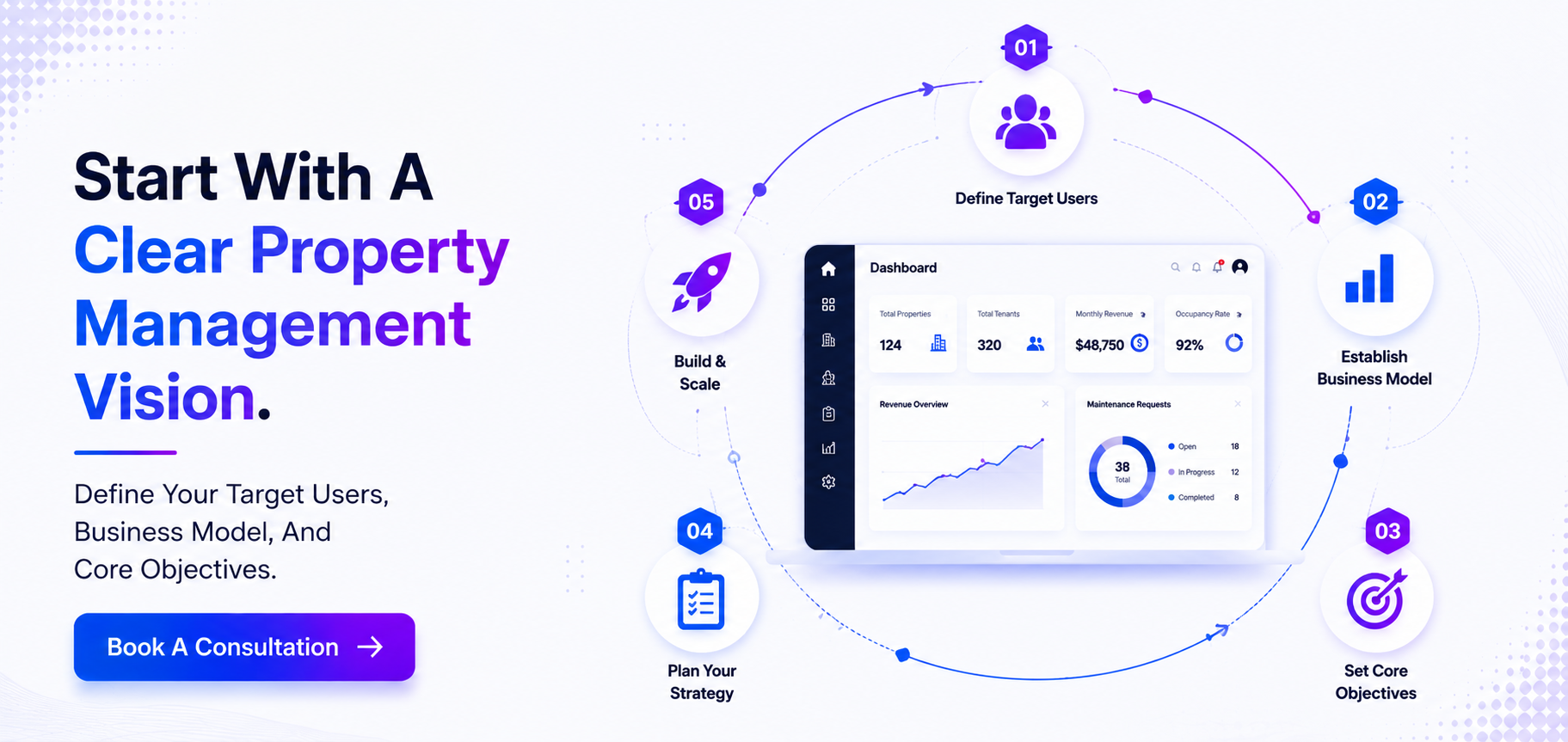 Deep Dive: Data Architecture for Property Systems
 Property management systems deal with highly interconnected data.
Key data relationships include:
Each entity should exist only once to prevent inconsistencies.
Separate data into:
Track system events such as:
This approach improves traceability and system scalability.
Adoption heavily depends on user experience.
Key design principles include:
No matter how powerful it is, a difficult-to-use system will be resisted.
The development stage will entail developing frontend and backend components. The common technology stack consists of:
Key development areas:
Handling multiple workflows efficiently while maintaining performance is the main technical challenge. A skilled team of mobile app developers can help you understand the benefits of AI applications in real estate.
Property management systems rely heavily on integrations.
Common integrations include:
Key Challenges:
An effective integration layer makes data flow easy and does not disrupt operations.
Testing guarantees the performance and reliability of the systems.
Testing types include:
Skipping or rushing this phase often results in costly issues after deployment.
Best practices include:
After deployment, continuous improvement is essential.
Ongoing support includes:
Cost isn’t one-size-fits-all. It changes based on what you include.
Going cheaper at the start can create more work later. A top mobile app development company in Australia can help you stay under budget.
Timelines vary based on scope, features, and system complexity, especially when working with the best mobile app development company in Australia.
More complex systems require additional time to ensure stability and scalability.
Compliance ensures your platform meets legal requirements when handling tenant, financial, and property data across systems.
Addressing compliance early reduces risks and avoids costly changes later.
Mobile app development often faces obstacles that can delay projects and increase costs. Understanding these challenges helps prevent mistakes.
Careful planning is essential to keep projects on track and avoid wasted effort.
Integrating third-party systems can be tricky if dependencies aren’t identified early.
Even a great app fails if users struggle to navigate it.
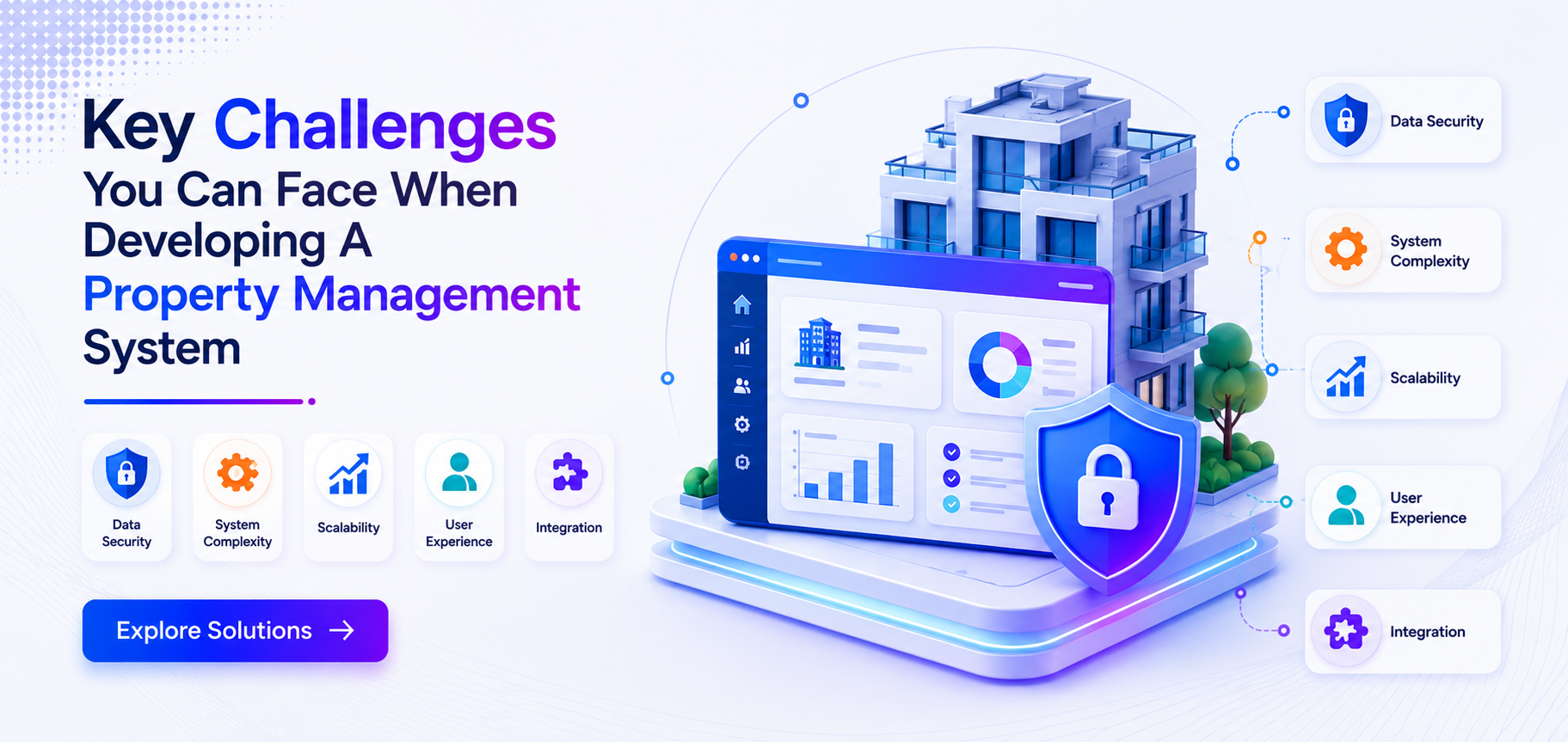 4. Scalability Problems
Apps must grow with user demand to remain effective.
Smart planning and prioritisation help save money without sacrificing app quality.
Starting small helps validate ideas before heavy investment.
Build only what’s essential first to save time and resources.
Address integrations from the start to prevent expensive fixes.
Expert developers reduce mistakes and speed delivery. A well-known mobile app development service provider can help you choose the best development partner.
A mid-sized real estate agency managing 800+ properties relied on spreadsheets.
The success came from workflow optimization, not just software development.
Property management software should simplify operations, manage tenants, and keep data organised as your portfolio grows. Working with a mobile app development company in Australia or an application development agency ensures the system is secure, scalable, and built for real estate workflows.
A well-built platform improves efficiency, supports integrations, and reduces manual work. Skilled mobile app developers deliver reliable systems that scale with demand. If you are planning to build or upgrade your platform, partner with the best mobile app development company in Australia to get started.
Q 1. How long does it take to build property management software?
Ans 1. Yes, timelines depend on complexity. A skilled iPhone app development company can help you complete your project on time.
Q 2. Is custom development better than ready-made software?
Ans 2. Yes, for scalability and flexibility.
Q 3. What impacts development cost the most?
Ans 3. Yes, several factors influence cost. An on-demand app development company can help you understand what impacts the overall development cost.
Q 4. Can property management software scale with business growth?
Ans 4. Yes, if built correctly. The best mobile app development company can help you create a scalable product.


Partner with us to bring your vision to life.



 +61 (42) 108-3277
 contact@7pillars.com.au
 294A Station Street,
