13 Mar 2025
Updated on March 20th, 2025
IoT App Development: Latest Trends and Practices 2025

Shaun Bell



Welcome to the future! A future where your coffee machine is more intelligent than your cat. How? Welcome to the world of IoT mobile app development—where devices talk and interact like an electronic web of miniature wizards. It’s a world where fridges text you, and your lights know you’re home before you are. Think about it: a world of what-ifs: your smartphone app might be the secret to harnessing the full potential of your everyday devices. Magic, perhaps? It’s IoT, and it’s the future.
What essential elements exist to make this dream a reality? IoT mobile app development is necessary to convert regular devices into next-level innovative systems. The field provides endless opportunities to develop systems that control home climate monitoring and healthcare interfaces without boundaries in innovation. And guess what? Mobile app development is taking the leading role in this show. Your smartphone allows you to regulate infinite connected devices through its elegant form and intuitive display.
The best part? It’s no longer science fiction. The evolution of mobile app development into an IoT application development combination enables users to experience futuristic devices previously available only to the Jetsons. People who want to join this app-smart device intersection are about to understand how technology transforms our daily activities from work to leisure scenarios. You should stick around to discover the fascinating IoT app realm, which connects everything in an interesting yet unique way. Through Internet of Things app development organizations revolutionize connectivity by creating seamless and more efficient experiences.
Understanding IoT App Development
The Internet of Things (IoT) transformed device communications through data sharing, thus creating the need for expert IoT mobile app development. IoT represents the extensive network of physical objects containing sensors, software applications, and other technological components that permit devices to detect and share information. IoT technology drives quick changes in many areas, including healthcare, agriculture, and transportation.
The Growing Importance of IoT App Development
The importance of IoT mobile app development has risen steeply since organizations began implementing innovative solutions in their operations. Remote device tracking through intelligent applications produced by IoT enables businesses to gain operational advantages from improved efficiency combined with time-sensitive data interpretation. Market predictions show the IoT market will exceed $1.1 trillion by 2026 because of expanding customer needs for such solutions.
Following integrating Internet of Things technology with mobile application development, mobile apps now function as interface tools to connect users with IoT devices. Thanks to this partnership of mobile devices with IoT technology, smart home automation, health monitoring, and industrial equipment supervision are now possible for users.
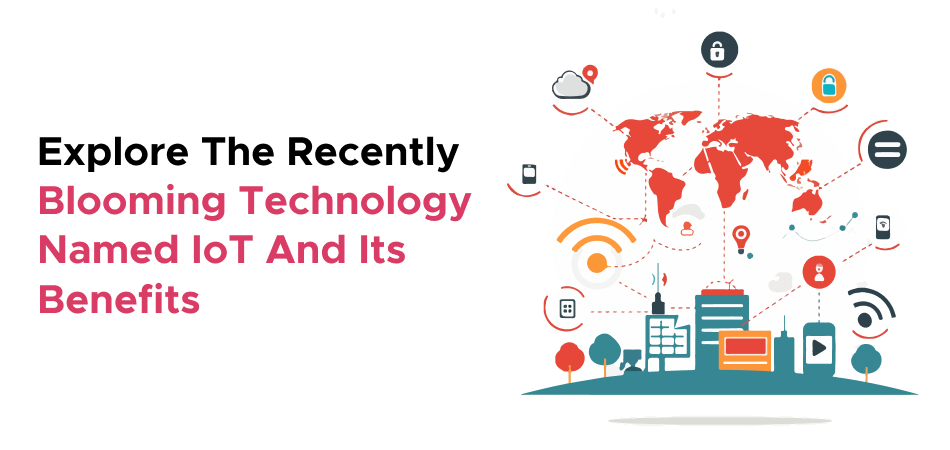
Key Statistics
According to 70% of organizations, business operation efficiency improves when IoT solutions are implemented.
Mobile App Development’s Role in IoT
Mobile application development enables the essential connection between users and Internet of Things (IoT) devices through their respective interfaces. Through mobile applications, users can easily control IoT devices, from home automation systems (HAS) to industrial IoT platforms. By controlling IoT devices with mobile application interfaces, customers gain a better experience and achieve simpler workflows. IoT application development powers improved device connectivity because it ensures genuine performance between systems.
Sectors Where IoT Solutions Have Made A Massive Impact:
Due to the Internet of Things app development, multiple industrial sectors in Australia undergo fundamental changes that fuel business expansion and improve operational process performance. The evolution of Internet of Things apps through development brings advanced functionality to connect people and machines with improved speed and efficiency. IoT impacts several sectors in the following ways:
Market Growth and Projections:
1. Overall IoT Market:
The Australian IoT market value in 2023 reached USD 12.63 billion, but experts predict it will expand to USD 22.98 billion by 2029 at a (CAGR) of 10.27%.
2. Industrial IoT:
Statistics show that the Industrial IoT segment will experience a 7.71% growth trajectory from 2025 until 2029 and establish a market value of USD 3.58 billion by 2029.
3. Industry-Specific Impacts:
Implementing IoT in the construction sector could generate annual benefits of AUD 75 billion and AUD 96 billion.
4. Manufacturing:
The deployment of IoT technologies allows real-time supervision and automation functions, elevating production output. The manufacturing sector expects to gain between AUD 50 billion and AUD 88 billion annually through IoT implementation.
5. Healthcare:
Healthcare attributes AUD 8 billion to AUD 22 billion worth of yearly benefits to IoT applications that use remote patient monitoring and innovative medical devices.
6. Mining:
The mining field implements IoT technology to monitor equipment and enhance safety, so the yearly benefits range from AUD 16 billion to AUD 25 billion.
7. Agriculture:
When farms and herds are monitored through IoT precision techniques, the approach generates between AUD 45 billion and AUD 88 billion in yearly advantages, which lead to improved resource stewardship and increased production gains.
8. Recent Developments:
TPG Australia, the third-largest communications firm in the nation, reached a 10-year innovative water meter deployment agreement with South East Water in August 2024. The program will establish one million smart water meters throughout Victoria so customers can track their water usage in real-time and detect leaks, strengthening conservation practices.
Trends Shaping IoT App Development in 2025
Introduction to IoT Mobile App Development Trends
The Internet of Things (IoT) maintains a rapid pace of growth through which technological developments determine device interaction principles. The development of IoT applications remains in the lead position in shaping technological developments, which lead to healthcare and smart home innovation. Multiple essential changes in IoT applications will direct their development path toward 2025. The emerging trends enhance product and user experience capabilities while providing business opportunities for consumers to explore new possibilities.
1. Edge Computing and IoT Integration
The implementation of edge computing stands out as the main driver behind the evolution of IoT app development in 2025. Through edge computing, data management occurs where the information originates instead of moving it to central cloud processing systems—eliminating latency, together with increased speed, powers real-time decisions for IoT devices through edge computing. The advancement of IoT innovations depends largely on IoT software development companies who create seamless integrations for various industries.
Mobile app development crucially supports IoT integration, enabling smooth user interaction with IoT devices in locations lacking reliable internet access. This advancement trend will motivate the further development of IoT devices.
2. AI and Machine Learning in IoT
Artificial Intelligence (AI) and Machine Learning (ML) are primary development trends integrated into IoT application development. With its implementation, devices can now gather data and analyze this information with intelligent functions. The capacities of IoT applications advance through AI and ML as they enable predictive maintenance for industrial applications while delivering individualized experiences in smart houses. Mobile applications prove essential during this process because they allow users to manage interaction with systems that operate through AI.
3. Enhanced Security Measures
The spreading number of IoT devices requires fundamental security measures to become a top priority. Data privacy and breach prevention will be the main focus of IoT app development in 2025. Mobile applications will function as the main IoT access points, thus requiring companies to focus on protecting communication pathways through secure authentication systems. Blockchain technology will expand its presence to secure IoT networks, strengthening IoT application development security standards.
4. 5G Connectivity and Its Impact
5G network deployment will significantly change the development of Internet of Things solutions. Implementing 5G technology will improve IoT device communication through enhanced internet speeds and decreased latency.
Such improvements will give mobile application development field-specific advantages since users can operate IoT devices in precise real-time mode. Improving infrastructure networks will exponentially increase the number of IoT device connections that mobile applications will manage.

5. Voice-Enabled IoT Interfaces
Using voice commands to operate IoT interfaces will establish itself as a dominant development by 2025. Combining voice assistants with IoT devices through integration with Amazon Alexa and Google Assistant allows users to manage smart home appliances, wearables, and their systems by giving voice control commands.
The development of speech-enabled IoT applications creates interfaces to improve device control, promoting hands-free convenience and usability improvement. Advances in voice recognition technology will allow IoT apps to deliver progressively personalized interactions with growing ease for user control.
6. Enhanced Security with Blockchain for IoT
Because the number of connected devices is expanding rapidly, the security needs of IoT devices become increasingly vital. Blockchain technology is a solution being developed to improve security measures in IoT application development. Deploying distributed blockchains creates unchangeable ledger systems, creating confident and transparent IoT system operations.
Integrating blockchain security protocols in mobile application development enables users to establish safe systems for IoT device control and management. Because of the growing number of connected devices, blockchain technology will advance data privacy protection and attack prevention abilities while maintaining the integrity of the IoT ecosystem. Internet of Things app development transforms connectivity through its evolution of user experiences while ensuring their operations become quicker and more organized.
Challenges in IoT App Development
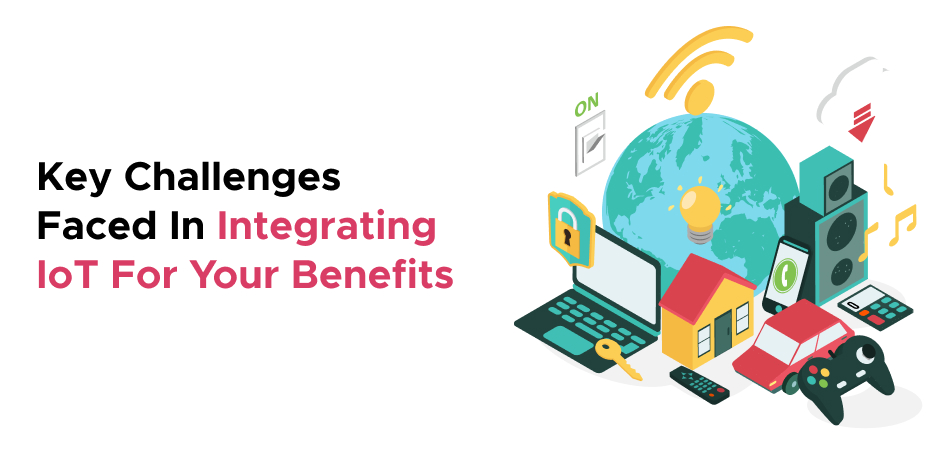
IoT application development has experienced significant expansion, which allows industries to implement wiser solutions. However, creating IoT applications introduces multiple obstacles to developers. IoT app development’s difficulties cover technical and security-based challenges that influence developers and end users. The implementation of IoT technologies relies on resolving these problems for success.
1. Security and Privacy Concerns
Data security and privacy remain two of the main barriers IoT app developers must overcome. Because IoT devices gather large amounts of sensitive data, they generate an increasing threat of cybersecurity attacks.The implementation of proper IoT application development services backs up these best practices to deliver better functionality and user experience.
Developers should build security protocols with encryption and authentication features into IoT application development. Mobile app development requires teams to prioritize user data protection by establishing defenses to safeguard data during mobile-to-IoT system exchanges. The successful advancement of IoT innovations depends on the critical expertise that IoT software development companies provide to maintain operational integration between industries.
2. Interoperability Between Devices
The IoT ecosystem combines multiple devices and platforms that frequently implement a unique combination of standards and communication protocols. The development of IoT applications requires resolving compatibility issues between various kinds of devices.
The irregular exchange of data between different devices creates system performance errors while reducing operational data efficiency. Mobile application development creates essential interfaces to enable smooth communication between any IoT device regardless of its different base technology. Internet of Things app development brings revolutionary changes to connectivity by enhancing its efficiency and simplicity.
3. Scalability and Maintenance
IoT technology requires scalable systems due to rising data and processing requirements caused by increased device connectivity. IoT application development needs scalability features because the system should adjust to expanding device numbers. The focus to build IoT application solutions lies in finding solutions to tackle these challenges for smooth system integration and communication.
Ongoing development is essential for maintaining devices and mobile applications because it ensures update compatibility, security, and the absence of system bugs. To maintain reliability, developers must perform uninterrupted testing and application updates of IoT devices and mobile applications.
4. Data Management and Storage
The data volume produced by IoT devices remains a substantial challenge during the IoT application development process since effective data storage solutions must be established. Data storage and adaptive data processing approaches are essential for developers to address the overwhelming amount of input data. Users need a simple method to access and work with data through mobile apps while avoiding information overload.
5. Power and Energy Consumption
While IoT devices function using minimal battery life, they usually need continuous power flow, affecting their operational capabilities and lifespan. Building efficient IoT devices is the main obstacle to creating IoT applications. Optimizing energy use becomes crucial during development because mobile applications connecting with IoT devices must extend the battery’s duration and maintain smooth operation. Modern innovations move forward through the crucial expertise provided by IoT software development companies who maintain seamless operations between industries.
IoT Prospects and Adoption Expenses by Sector
The Internet of Things (IoT) substantially affects industries across numerous sectors, leading to operational enhancements and innovative solutions. Implementing IoT technologies includes advantages as well as certain implementation expenses. This section details the adoption expenses and available opportunities that IoT offers through various industry sectors.
1. Healthcare
I. Opportunities
Healthcare benefits from IoT devices, including wearables and monitoring systems that optimize patient care services. Healthcare providers can take early action by monitoring vital signs, including blood pressure, heart rate, and glucose levels. Healthcare professionals and patients acquire simple access to mobile application data through IoT application development. The implementation produces better patient results together with optimized resource utilization. To build IoT application, you must contact a reputable IoT app development company.
II. Adoption Costs
Healthcare facilities must invest substantial funding at the start to deploy the Internet of Things because they need to acquire hardware alongside sensor implementation and healthcare framework compliance measures. Creating mobile apps for patient monitoring systems with secure data handling features demands substantial financial commitment. Healthcare organizations must factor in regular software updating expenses and security protection costs when assessing IoT systems.
2. Manufacturing
I. Opportunities
The Internet of Things helps manufacturing operations achieve enhanced operational efficiency, supply chain management, and equipment malfunction prediction through real-time equipment monitoring. Sensors within machines detect impending equipment failures, shortening equipment stoppage and decreasing service expenses. Through IoT app development, operators obtain production line oversight capabilities from mobile handsets to enhance operational decision-making. IoT software development companies serve as crucial elements for advancing innovative technologies by providing integrated industrial functionality.
II. Adoption Costs
At the beginning of IoT manufacturing implementation, one must invest in sensor deployment and device purchase, infrastructure integration, and operation management application creation. The expenses for maintaining IoT systems increase when operators need to upgrade their systems and implement cybersecurity protection measures. The implementation of best practices during IoT application development services creates improvements to system functionality and user experience.
3. Retail
I. Opportunities
IoT makes it possible to deliver more personalized shopping experiences by tracing a retail customer’s behavior and preferences for shopping habits. Smart shelves with RFID tags and IoT-based points of sale systems can track inventories more efficiently and streamline the shopping experience. The development of mobile applications integrating IoT handlers allows customers to receive personalized discounts and easily monitor their shopping experience. To build IoT application solutions address these hurdles to provide smooth data integration between different systems.
II. Adoption Costs
The economics of IoT devices and systems, such as smart shelves and inventory management tools, create an initial investment burden for retailers. IoT application development to create mobile platforms to interact with these systems adds further investment. In the longer term, such costs will include issues related to maintenance, big data technologies, and secure transmission of sensitive consumer information.
4. Agriculture
I. Opportunities
The Internet of Things enables better use of resources such as water fertilizers and pesticides in agricultural operations. Soil moisture and temperature data and atmospheric information are collected through sensors. Utilizing this method based on data collection makes optimizing yield potential and reducing resource waste possible. IoT app development guides farmers by making real-time data available on mobile apps, enabling remote farm monitoring and decision-making.
II. Adoption Costs
The cost of investing in IoT devices, such as soil sensors and climate monitoring systems, is high. Additionally, it is an excellent addition to the investment cost because it introduces mobile app development for integrating these devices to manage agriculture. Put forth the operational costs like continuous maintenance and innovations to be made, including data storage, to be done securely, contributing to the farmer’s aspects.
Best Practices in IoT App Development
The Industrial Revolution happened via the Internet of Things (IoT), which ensured improved connectivity and innovative solutions for many industries. Creating IoT applications requires a specialized set of development challenges. Applying best practices guarantees apps operate efficiently with excellent security and scalability features.
1. Prioritize Security
The extensive data IoT devices produce makes security the top priority for application development. Secure information goes hand in hand with implementing robust encryption systems, API security, and the authentication framework OAuth 2.0. To ensure protected IoT environments, operators must continuously update security features and run checks for potential vulnerabilities.Through Internet of Things app development the revolution of experiences occurs by achieving seamless and efficient connectivity.
2. Choose the Right Connectivity
IoT devices have different communication protocols, including Wi-Fi, Bluetooth, Zigbee, and cellular networks. To enable smooth operation, the correct selection of connection technologies depends on application demands regarding range parameters, data volume, and power usage expectations. Companies should choose Bluetooth because it meets short-range requirements, yet Wi-Fi proves suitable for high-volume data transmission tasks.
3. Optimize for Scalability
The number of connected devices and users keeps growing, which is necessary for IoT applications. An app’s scalability features enable it to expand its operations smoothly while maintaining efficient performance. The efficient use of cloud services and microservices architectures enables workload management, which preserves app responsiveness during high-traffic periods. These innovative advancements require IoT software development companies to provide essential integration services throughout different sectors.
4. Ensure Energy Efficiency
Because IoT devices rely on restricted battery power, energy efficiency requirements have become essential. The app’s design for power consumption management extends the operating time for IoT devices. The application should use energy-saving modes for devices while transferring processing tasks to cloud-based systems to reach maximum energy performance through optimized communication protocols.
5. Seamless User Experience
Even IoT applications require application success to depend heavily on User Experience (UX). An easy-to-use interface lets users view and manage their devices, improving their interaction with the system. Users will stay with applications and be more content when the apps show current data alongside simple analytics and beneficial notifications.
6. Leverage Edge Computing
Edge computing should be used to minimize delays and increase the speed at which IoT applications operate. It performs data processing operations near the sources (device or local area) to prevent delay problems from transmitting data to cloud servers. This technology benefits real-time decision-making applications, including industrial automation systems and healthcare devices. The implementation of IoT application development services guarantees best practices become operational for improved functionality and user experience.
7. Integrate with Cloud Services
Because of its vital importance, extensive IoT device-generated data must be integrated with the cloud for proper management and processing. Cloud platforms give users access to expandable storage, analytical capabilities, and distant device monitoring. Cloud-based technical solutions allow developers to create IoT apps that handle extensive data volumes and deliver users instant monitoring capabilities.
How to Select the Best IoT App Development Company
Your project’s success depends on choosing the best IoT app development company. The following are some items to search for:
1. Experience in IoT and Mobile App Development
Seek a firm that is expert in IoT and mobile app development. Their knowledge of IoT devices, data integration, and mobile app frameworks will ensure that the devices and mobile apps integrate and work together smoothly.
2. Portfolio and Past Work
A well-established IoT app development company will have a rich portfolio of finished projects. Browse their past work to estimate their experience level, design efficiency, and understanding of IoT solutions. This will give you insight into their capability to serve your specific needs.
3. Technical Skills and Innovation
The best companies specializing in IoT app development are usually highly proficient in modern technology. They should be acquainted with recent IoT and mobile app development trends, such as security, AI, and cloud integration. This keeps your app updated and ready to compete with others.
4. Client Support and Maintenance
Select a company that provides firm support and maintenance services after launch. Regular updates, bug fixes, and optimization are vital for the sustained success of your IoT solution. The implementation of best practices during development stages relies on IoT application development services to achieve better functionality and improved user experience. The focus to build IoT application solutions stands to eliminate integration hurdles across different systems for improved performance.
5. Customization and Scalability
An IoT app development company aware of the foreign business requisites can help offer a configurable solution. The app must also be scalable enough to accommodate future extensions or additional features as your business evolves. You need to ensure these criteria are met to prevent costly redesigns later.
6. Communication and Collaboration
Radiant communication is the hallmark of any successful project. Choose a transparent IoT app development company that gives you consistent updates. Close collaboration during the project will ensure your feedback is listened to and implemented for a successful outcome attuned to the project’s IIoT and mobile app development aspects.
Conclusion
The scope of IoT app development has witnessed rapid expansion, allowing companies to see-before user experiences and streamline operational models. To harmoniously coalesce human lives with more intelligent devices and connected systems, constant awareness of trends and practices related to IoT development is obligatory.
Best practices in IoT application development suggest that the application would integrate profoundly with user requirements into device management, data, and seamless connectivity between mobile apps and IoT systems. Agile methodology, vigorous testing, and continuous updating are vital for making the application reliable and scalable, as agile methods encourage vigorous testing. The implementation of IoT application development services delivers optimal functionality through proper deployment of best practices that boost user experience.
Whatever industry, from healthcare to manufacturing, has changed over the years due to the associated trends and best practices will finally help develop innovative solutions to create a valuable reality for users. The latest technology adoption remains the core of competitiveness and next-gen mindset IoT applicability design.
By guiding these trends and practices, companies such as 7 Pillars can take a varied lead in this IoT development world, presenting cutting-edge, safe, and efficiency-oriented IoT solutions shaping the facets of industries globally.
Join the newsletter and get all the updates.
Subscribe




