Let's have a
Quick Chat
with you!
Quick Chat
with you!
You have our ear and we can't wait to hear about your idea! Share your details here and we will make sure to schedule a coffee date with you soon.




In an age when your phone has more information about you than your closest friend, safeguarding your data is no longer a privilege but a need. With every tap, every swipe, every chat, a digital trail is left behind, and without adequate protection, your data could land where you never meant for it to go. That is where a robust privacy policy for mobile apps steps in, serving as your digital bulletproof jacket to shield you from curious eyes.
Think of it as a bouncer in the VIP section of life, allowing access only to people with the proper credentials. A good privacy policy for a mobile app will tell you what data is collected, how it will be used, and—most importantly—who gets to see it. The goals include encrypted messages, secure login credentials, and priority on transparency and protection. Conversations should be between you and not data-hungry advertisers or stalking cyber-snoops.
So before you hit “I Agree” on that next app download, check it out for a second. Your data is worth a lot—treat it like a VIP!
In today’s hyperconnected world, mobile apps are necessary in people’s daily lives. Everything, from banking to shopping, social networking to entertainment, relies on apps. But have you ever thought about how secure these apps are? Mobile applications can be protected against hacking, data breaches, and malware attacks through mobile app security measures. Vigorous security enforcement prevents cybercriminals from exploiting your data when not implemented. Checking a free mobile app privacy policy that comes without cost helps users discover data handing practices while maintaining security compliance standards.
Mobile app security involves encryption, authentication, and other factors to protect life-sustaining data. Developers apply security measures to thwart unauthorized access to sensitive data (like passwords or payment details). Unfortunately, some apps are less sensitive to security measures, exposing users to many risks.
The mobile application’s Privacy Policy is another integral part of mobile security. This policy states what kind of data an app recovers, how that data is used, and, lastly, whether or not third parties are to be involved. Barring personally identifiable information, if the app does not comprehensively state the explicit purpose of its operations, then this is a display of deception.
A well-crafted mobile application privacy policy builds trust between the user and the developer because users know precisely what information will be retrieved and what can be done. A mobile app privacy policy is a safety measure during app downloads; thus, users should review these policies to safeguard their information. A determined cross-platform mobile app development company can help you understand the privacy policies for your data protection. Users can understand data handling practices of free mobile app privacy policy reviews which also help with security standard compliance.
A combination of app-related knowledge and security-conscious application choices will help you achieve better mobile device security.
Moving from a world where smartphones have become the storehouses for chatting, banking, and other personal things into an age of increased mobile application security. Cybercriminals have been inhaling fresh avenues of finding possible exploits, creating a desperate need for protection from both developers from a flutter app development company and users. It only takes a security loophole for a breach to cause data theft, identity theft, and financial loss. It will go a long way in helping one understand mobile app security and thus make informed decisions against protecting an individual’s digital footprint.
Mobile application security exists mainly to protect user data. Different types of data, including sensitive information such as emails, passwords, and credit card and location details, accumulate in most apps. If collected without security, the data may quickly get into the wrong hands. A firm policy for a mobile application privacy policy would ensure transparency in stating how user data is to be collected, stored, and hence, shared, with control of such information by the users themselves.
Different hacking techniques comprising malware phishing and unauthorized access methods enable hackers to capture your data. Because of their non-secured nature, flexible mobile applications have become primary targets for cyber threats. Apps can thus be secured from malicious attacks by introducing features like encryption, multi-factor authentication, and regular security updates. A reliable Android app development company can help you understand privacy policies better.
The world has regulatory foundations, and governments are implementing privacy regulations to safeguard user information. Application developers from a flutter app development company must execute specific security protocols for personal data according to requirements such as GDPR, CCPA, and HIPAA. Mobile apps with well-structured privacy policies protect businesses from future legal issues and penalties because they meet all requirements of regulated privacy laws.
Heavy security is meant to secure the data and significantly affects app performance and longevity. Applications that lack security and go public would be the sources for negative reviews, leading to uninstalls and discrediting. Saving app security will increase the quality of user experience, reduce the number of crashes caught in the system, and increase the app’s lifetime in the market.
Mobile applications, from banking to communication, are vital for daily activities but have security risks. Hackers exploit loopholes and get hold of different devices to access data. Knowledge of common threats to the application will assist both users and developers in securing sensitive information. A firm privacy policy for mobile apps and security can minimize threats and increase data security.
Many applications often request many permissions, leading to unintentional data leaks. If a mobile application privacy policy is vague, users might innocently expose crucial details to third parties. Cybercriminals access personal data through the abuse of weak protective measures. It is paramount for a user to examine app permissions duly, install apps only from trusted sources, and turn off unnecessary permissions so mobile device settings cannot be maliciously used to obtain data about the user.
Applications fail to protect sensitive information, including passwords and payment details, because they do not use encryption protocols. Hacker organizations exploit data system vulnerabilities for stolen information. Mobile app developers from a flutter app development company should adopt secure encryption methods and a proper key management system for safeguarding stored information. Users should avoid saving sensitive application details and update them frequently to take advantage of the new security patches.
Application Programming Interfaces (APIs) are meant for communication between mobile applications and servers, but a weak indication of security exposes them to attacks. User data to cybercriminals is exposed through poor authentication and encryption. Mobile app developers from an IoT app development company should ensure strong API security with authentication, authorization, and encryption. Users should ensure that official apps follow all the stringent security standards for information protection.
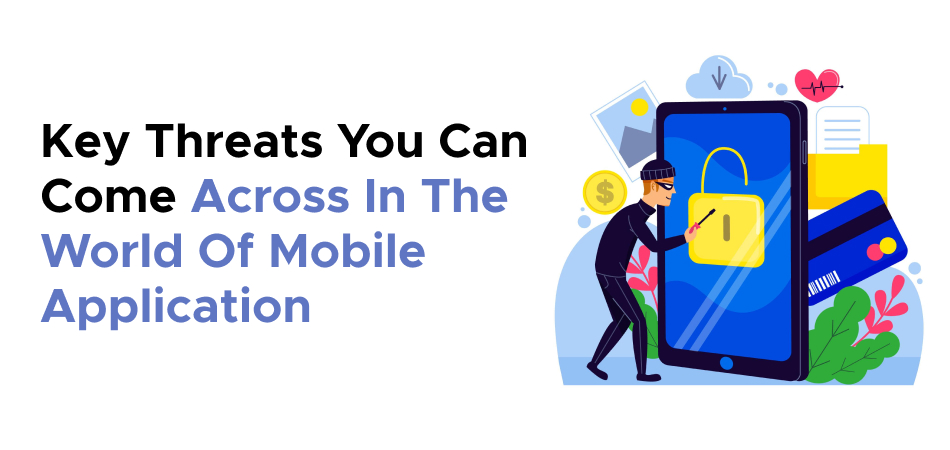
Cybercriminals create fake applications or phishing links to steal credentials and financial details. The imitations of genuine apps that appear to users as nefarious applications use authentic apps. Users can protect their devices from unauthorized app installation by using official stores only to download apps and stay away from suspicious links, in addition to enabling security blocking mechanisms.
Applications that do not have multi-factor authentication (MFA) are attack-prone through brute force. Sensitive data is not protected just through weak passwords alone. Developers from a dedicated IoT app development company must adopt biometric authentication, good password policies, and two-step verification. Users must also enable MFA wherever possible and create unique, strong passwords to boost security and prevent unauthorized access to their mobile applications.
Improper or vague mobile application privacy policy indicates weak data protection. Users must carefully study privacy policies before knowing what data collection methods will occur and how they will be treated. All developers need to create transparent privacy policies. At the same time, they need to follow legal data protection regulations. Well-defined policy improves trust and security of the app.
Although mobile apps have become integral to the new lifestyle in banking, shopping, and communicating, one must endeavor to map strong security measures around them. With hackers constantly looking for loopholes to exploit, users and developers should observe the best security practices. Such measures include a clear privacy policy for mobile apps on how the application intends to use personal data collected.
Weak authentication puts the applications at risk of brute force and unauthorized access. Introducing multi-factor authentication (MFA) can go a long way in adding security. Developers from IoT app development company should integrate biometric authentication into strong passwords with fingerprint or facial recognition. The more layers of protection and risk reduction formed by applying MFA by users limit credential theft.
An application requires data encryption to maintain security since data connects applications with servers. A cross-platform app development company must ensure that application developers use advanced data encryption standards, particularly AES-256, to maintain data storage security and communication. End-to-end encryption creates an inaccessible data zone that hackers would never have access to, even if they do intercept transmissions. Users should only use applications that are concerned with encryption to protect their data.
API communication makes many mobile applications rely on servers, the most common attack ground. Developers should implement secure authentication and encryption methods, represented by OAuth 2.0 and TLS (Transport Layer Security). API security audits regularly help developers determine which attacks the application faces while establishing methods to defend the data from cyber threats.
Hackers use antiquated applications to break into and penetrate computers. Developers must regularly execute updates and security patches to fix vulnerabilities. Users should have automatic updates on or check their devices manually to ensure they get the latest updates with included security fixes. Updating operating systems and applications will protect against new cyber threats and malware attacks.
Insecure data provisioning, in turn, allows cybercriminals to access sensitive information. Thus, in choosing between user data conservation while maintaining device capability to provision sensitive information, developers need to avoid storing sensitive user data on devices within the platform as much as possible and use secure storage methods like encrypted databases or the Android Keystore system. Users should clear cached data regularly and never store passwords or personal information in unprotected app environments.
System threats become detectable through regular security assessments, thus stopping hackers from exploiting security flaws. When performing tests, developers should use penetration testing, vulnerability assessments, and code reviews to find their system weaknesses. Security tools paired with technique testing and ethical hacking should be part of best practices to ensure that specific applications survive the threats posed by cyber crimes.
It should describe clearly to users the way data is collected, applied, and shared. During developer implementation, the privacy policy for mobile apps needs governance by suitable regulatory frameworks such as GDPR and CCPA. A user must carefully read the mobile app privacy policy before installing the app. Hence, they know what will happen to their personal information and make informed decisions.
You expose yourself to an ever-growing stack of security risks with every new permission you allow the app to access. At least on the fundamental level, developers should have permission to use certain app features. App permissions should be checked carefully by developers and users, and any unnecessary permissions, such as contact lists or location tracking, should be denied. Limiting permissions decreases the likelihood of data leaks involving unauthorized personal access. The review of a sample privacy policy for Android apps allows users to make informed choices regarding permissions by understanding data collection methods, usage practices and protection measures.
Securing the app does not just end at the first stage of development. Developers should follow security guidelines provided by the app stores, namely, Google Play Protect and Apple Store Security Policies. Integrating checks of the app, secure code procedures, and compliant practices with security standards gives an upper hand to resist cyber-attacks. Users should download their applications from trusted sources only.
Cyber threats continue to increase daily; thus, the virus user feels that protecting personal data is a significant responsibility. While developers apply security measures, the users must equally safeguard their privacy. People must learn to evaluate risks while making rational choices since reading mobile application privacy policies helps prevent data security incidents.
Many mobile apps request access to personal data, sometimes even excessively. Users should always do well to analyze and restrict those permissions, granting only the ones necessary for the app’s operation. To illustrate, a weather app asking for access to contacts or messages may pose a privacy risk. Therefore, restricting app permissions minimizes your exposure to the misuse of data. Users can make better choices regarding app permissions by studying a sample privacy policy for Android apps.
A free mobile app privacy policy details how an app acquires, stores, and shares respective user data. You need to take some time to read these documents before installing them on your app. Words are vague or untrue, which shows that data protection is compromised. Choosing apps with straightforward and strict privacy policies intensifies your security.
Users enable MFA and deploy strong and unique passwords for different applications. Another layer is secured with biometric authentication, like fingerprint or facial recognition. In other words, never opt for weak passwords; considering security features minimizes the risk of unauthorized access to accounts and personal data.
User data remains vulnerable due to the absence of security protocols in most public Wi-Fi networks. Public Wi-Fi users must refrain from accessing banking apps and creating and sharing personal information. Your VPN adds that extra layer of security due to data transmission encryption.
As mobile communication continues to develop, privacy remains a significant concern. With the threat from increasingly sophisticated cyber threats, the angle taken for data collection, and ever-advancing technology, the outcome is that the future of privacy will depend on stricter regulations, better security measures, and user awareness. Thus, a mobile application development company needs a more stringent code of conduct to protect user data, including revealing mobile application privacy policies.
Advanced encryption techniques will be the future of mobile communication against data breaches regarding sensitive information. End-to-end encryption will become a standard feature in messaging, email, and cloud storage. Being under constant cyber threats demands the need to update encryption algorithms frequently to diminish threats of data breaches and unlawful access. Every travel app development company must bind strong encryption methodologies to their apps, ensuring compliance with a sample privacy policy for Android apps to enhance data security and user trust.
Worldwide government efforts include strict data regulations and friendly privacy policies across jurisdictions: GDPR and CCPA. Future regulations will likely impose more stringent penalties on a reputable iOS mobile app development company that misuse or fail to protect user data. The free mobile app privacy policy must be well-defined, and user trust will be built. A determined travel app development company would allow complete transparency in handling user data.
Blockchain and decentralized identity systems will be crucial in building a secure user data system. This will give users better control over their personal information and less reliance on centralized servers prone to hacking. Every app development company should consider incorporating decentralized security features in future apps.
Artificial intelligence makes the workplace simpler because security threats are detected immediately, and information leaks are prevented. AI security systems scan and detect malicious activity for privacy protection by detecting attempted fraud, phishing, and unauthorized system entries. A dedicated travel mobile app development company can help you implement AI-powered privacy protection systems, ensuring compliance with a sample privacy policy for Android apps to enhance data security and user trust.
An effective free mobile app privacy policy safeguards user data and introduces transparency regarding collecting, storing, and sharing that information. With data security coming into the limelight, the user must take it upon himself to read through a privacy policy for mobile app before downloading any application to understand what rights and risks he will face.
The company places extreme importance on following GDPR and CCPA data protection standards through its operations. Secure authentication and encryption form the core of data protection measures within this framework. With every other day, advancements in cyber threats put users and a renowned cross-platform app development company in an obligation to protect privacy proactively.
7 Pillars, a dedicated ios mobile app development company advocates for transparency by promoting the restriction of data collection and implementing advanced security methods to allow mobile applications to become an even safer harbor in the digital world.
By prioritizing user privacy, developing mechanisms to protect sensitive information, and fostering trust, 7 Pillars, a renowned Android mobile app development company, ensures that mobile applications align with the highest security standards. This commitment, reinforced by a sample privacy policy for Android apps, builds user confidence in the application and tilts it towards credibility in an increasingly data-driven world.


Partner with us to bring your vision to life.




 +61 (42) 108-3277
 contact@7pillars.com.au
 294A Station Street,
