

14 Apr 2026

MVP vs Full App Development: Cost, Timeline & What to Choose

MVP vs Full App Development: Cost, Timeline & What to Choose

Table of Contents

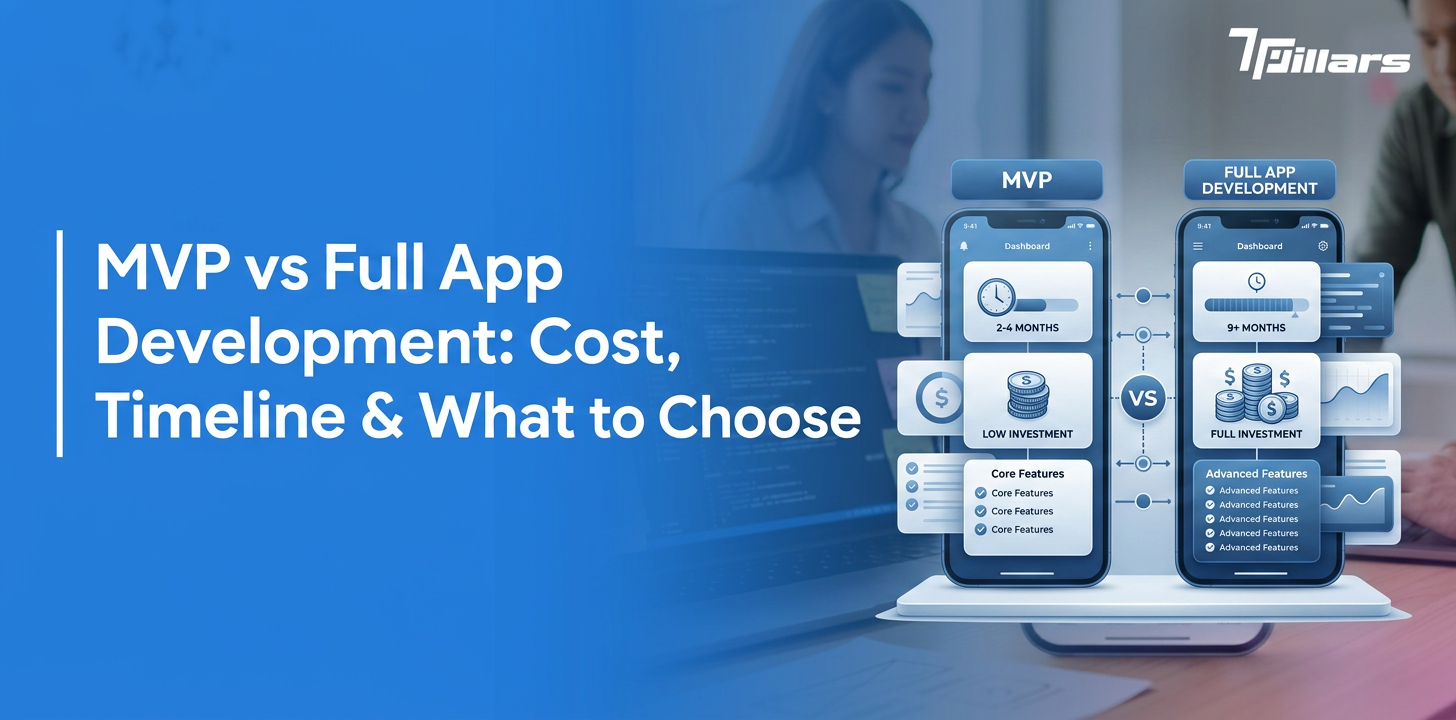
Most apps don’t fail because the idea is wrong; they fail because too much is built too early. In Australia, founders often invest heavily in full-scale apps before validating demand. By the time real user feedback comes in, changing direction becomes expensive and slow. That’s where the MVP approach creates an advantage. While an MVP will cost you AUD 30,000 to 80,000, it will take 6 to 12 weeks to deliver. A fully scaled app will cost you 120,000 to 300,000+ AUD, taking a longer time to deliver.

The best advice for most start-ups is to start lean. This is where working with the best mobile app development company in Australia helps you validate your idea early, avoiding investing heavily in a product before proving demand. This is how expert mobile app developers in Melbourne approach app development: they build, they launch, and they scale.

At senior developer rates, you’re looking at 100 to 180 AUD an hour, and things can quickly get out of hand. This is also where data from the Australian Bureau of Statistics will indicate that digital adoption is still growing, and speed to market is more important than ever. We will compare MVP vs full development during this blog.

Making the Right App Investment in Australia

This blog is for start-ups, start-up founders, and businesses in Australia who are looking to develop apps without committing too much to the process. Most early-stage teams begin with a lean build approach before committing to full-scale development.

As the product gains traction, the focus shifts from product to performance. This is where the best mobile app development company in Australia helps ensure the product is capable of scaling. In reality, mobile app developers in Melbourne work in phases.
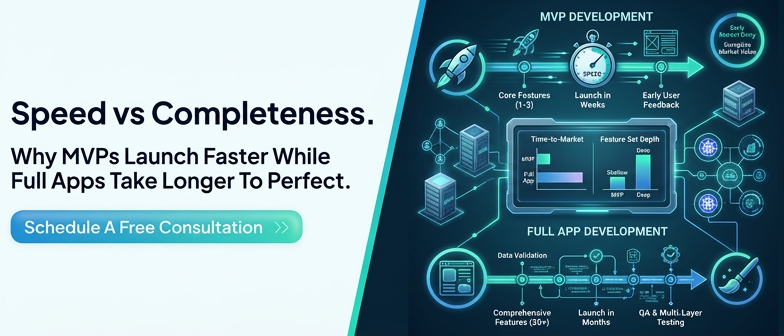
Speed vs Completeness. Why MVPs Launch Faster While Full Apps Take Longer To Perfect. Schedule A Free Consultation

MVP vs Full App: Speed vs Scale

A Minimum Viable Product is “the most basic form of your app that includes just enough features to solve one specific problem for users.

A minimum viable product does not intend perfection.

An MVP means:

  • Validate a single core problem
  • Observe real user behaviour (not assumptions)
  • Identify what actually drives retention

Choosing Between MVP and Full Development

MVP vs Full app development helps Australian businesses decide whether to focus on quick validation or invest in a scalable app development strategy.

  • Having an idea of direction helps avoid miscalculations in the process.
  • Businesses want to launch quickly in the changing market.
  • Validation shows whether users actually want the product.
  • User expectations in Australia are extremely high, particularly in terms of performance and usability.
  • With the mobile-first generation, the user interface is now an absolute necessity from day one.
  • Frameworks supporting cross-platform development can reduce overall costs.
  • Scalability planning is a critical consideration, even when building a simplified version of a product.
  • Having a great technical implementation has a direct impact on the overall success and scalability of a product.

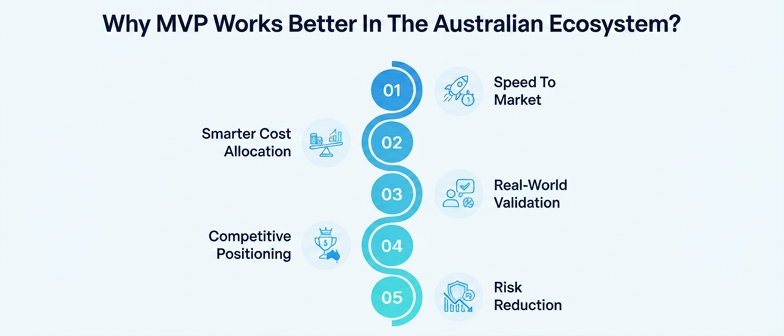
Why MVP Wins for Australian Businesses?

Australian businesses face a trade-off between speed, investment, and scalability; therefore, the decision to use an MVP or to develop a full product is a practical concern for Australian businesses.

1. Speed To Market

For Australian businesses, reaching the market fast is often a bigger concern than perfecting the market launch.

  • The MVP approach ensures Australian businesses enter the market rapidly and learn from real users.
  • An MVP allows you to launch early and avoid delays caused by over-engineering.

2. Smarter Cost Allocation

Australian businesses must ensure that costs are allocated to areas that make the greatest impact.

  • For most teams, speed to market matters more than perfection. 
  • The full product approach is best when there is confidence in a product or service and its revenue potential.

3. Real-World Validation

Australian businesses often make assumptions that rarely hold without real-world validation.
  • An MVP provides businesses with clarity and insight into the customer’s view of the product.
  • An MVP gets you to market quickly and shows you what users actually care about.

Why MVP Works Better In The Australian Ecosystem?

4. Competitive Positioning

The Australian market is competitive.

  • Early launch helps gain an edge before the competition catches up. 
  • Having a full product helps to reinforce the positioning and long-term differentiation.

5. Risk Reduction

Going all in on the full product without testing is financially and operationally risky.

  • The MVP approach minimises the risk while still progressing the business.
  • It is a more controlled approach.
  • Australian businesses can move with clarity and scale with confidence as the market grows.

Key Factors in Choosing MVP vs Full Development

MVP or full development depends on the budget and certainty about product-market fit.

1. Define the Approach

  • MVP is preferred when the idea is untested.
  • Full development is preferred when the idea is already validated and there is clear confidence in demand, user behaviour, and revenue potential.
  • A good app development partner aligns this decision with your business goals and growth plan.

2. Cost Consideration

  • MVP is cost-effective because it involves minimal feature development.
  • An app development company in Australia suggests phased spending.
  • Full apps require more initial spending due to complexity.

3. Timeline

  • MVP is fast-tracked to get to market.
  • Mobile app developers will develop an MVP in weeks or months.
  • The full app needs more time due to its complexity.

4. Feature Scope

  • MVP involves minimal features.
  • An app development company will help focus on what is important.
  • Full apps have more features and a better user experience.

5. Technology Choice

  • Flutter mobile application development frameworks enable faster cross-platform app development.
  • The use of ionic app builder tools helps in faster app development, helping reduce costs.
  • Technology helps with faster app development and scalability.

6. Scalability

  • MVP development should still account for future scale.
  • Done right, it avoids expensive rework when the product grows.
  • An app development company in Sydney ensures smooth scalability for apps.

7. Feedback And Iteration

  • MVP helps get user feedback and make changes quickly.
  • Mobile app developers in Sydney make changes to apps based on user feedback.
  • For fully developed apps, more emphasis is on predefined requirements.

8. Risk Management 

  • MVP helps in reducing financial and product risk.
  • An app development company in Australia utilises MVP for app development.
  • The best mobile app development company balances risk and long-term goals.

Cost Comparison: MVP vs Full App Development

The price of creating a minimum viable product vs creating a complete application varies based on how, when, and the risk you are willing to accept. 

With a minimum viable product, you will have less expense and fewer features than with a complete application.

MVP Development Cost in Australia

  • If you are a business in Australia, the MVP development cost will be:
  • AUD 40,000-120,000
  • This cost involves developing an MVP offering the core features.

What Are You Paying For?

With an MVP, you’re investing only in what’s necessary to test the idea:

  • Core features (without any additional features)
  • Simple User Interface and User Experience
  • Limited Integrations

Simple Backend Infrastructure

An MVP development cost involves developing an application that answers one question:

  • “Will users actually use this product?”
  • This means building only the core features while still keeping future scalability in mind.

Full App Development Cost in Australia

A full-scale app requires significantly more investment because you’re building for scale, not validation.
  • AUD 150,000-500,000+
  • A complex mobile application will cost:
  • AUD 800,000+

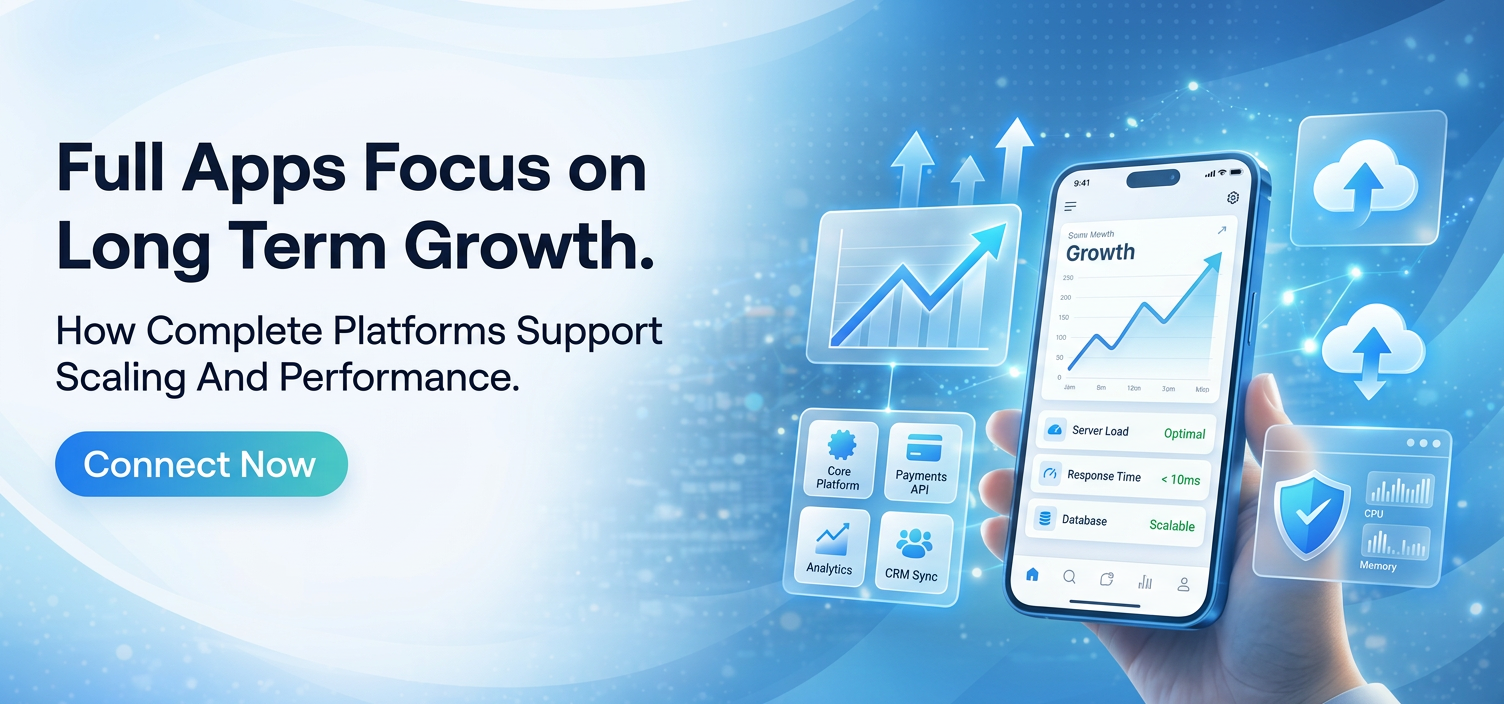
Full Apps Focus on Long Term Growth. How Complete Platforms Support Scaling And Performance. Connect Now

What drives the higher cost:

  • complete feature set
  • advanced UI/UX design
  • multiple third-party integrations
  • scalable backend infrastructure
  • security and compliance layers

This is where many businesses engage a top app development company,  not just to build the product, but to structure the investment properly and avoid unnecessary overspending.

Where Does the Cost Difference Actually Come From?

The gap between MVP and full development isn’t arbitrary.

1. Feature Scope

  • The biggest cost driver is how much you build.
  • MVP focuses on 20-30% of the total features
  • Full app includes 100% of planned functionality

For example:

  • MVP: basic login + core feature
  • Full app: login + dashboards + analytics + notifications + integrations
  •  More features = more development time = higher cost

2. Backend Complexity

MVPs typically use:

  • simplified APIs
  • minimal database structure

Full apps require:

  • scalable architectures
  • real-time processing
  • complex data handling

It is especially important for:

  • fintech apps
  • booking platforms
  • marketplaces
  • Backend systems are often where costs increase significantly.

3. UI/UX Design Depth

An MVP focuses on usability.

A full app focuses on:

  • polished design
  • animations
  • micro-interactions
  • user retention optimisation

Good design isn’t just visual; it directly impacts:

  • engagement
  • conversions
  • retention

4. Integrations & APIs

MVPs:

Use minimal or pre-built integrations

Full apps:

integrate with multiple systems 

Each integration adds:

  • development time
  • testing requirements
  • ongoing maintenance

5. Security & Compliance

Security often gets underestimated.

MVP:

basic security layers

Full app:

  • advanced encryption
  • authentication systems
  • regulatory compliance (especially in Australia)

Industries like fintech and healthcare significantly increase costs here.

6. Scalability & Infrastructure

MVPs aren’t built to scale; they’re built to prove whether scaling is worth it.

Full apps require:

  • cloud infrastructure
  • load handling
  • performance optimisation

Building for scale upfront increases cost but avoids future rebuilds.

Hidden Costs Businesses Often Miss

1. Maintenance & Updates

  • Bug Fixes
  • Feature Updates
  • OS Compatibility

2. Cloud Hosting & Infrastructure

  • Servers
  • Storage
  • Data Processing

3. Third-Party Services

  • APIs
  • Payment Gateways
  • Analytics Tools

4. Security Monitoring

  • Vulnerability Checks
  • Compliance Updates

These costs are often 10-20% of the initial development per year.

Cost vs ROI: What Actually Matters?

Cost alone doesn’t determine success; timing and validation do.

MVP ROI

  • Faster Launch
  • Lower Risk
  • Quicker Validation

Best For:

  • Start-Ups
  • New Ideas
  • Uncertain Markets

Full App ROI

  • Stronger Market Presence
  • Better User Experience
  • Long-Term Scalability

Best For:

  • Established Businesses
  • Validated Products
  • Competitive Markets

Real-World Cost Scenario

Let’s say you desire to develop a booking app.

MVP Approach (AUD 70K)

  • User Login
  • Booking System
  • Basic Dashboard
  • Launch In 3 Months
  • Test User Demand

Full App Approach (AUD 300K+)

  • Advanced Search
  • Payment Integrations
  • Notifications
  • Analytics Dashboard
  • Admin Panel
  • 9-12 Months Development
  • Full-scale Product

The difference isn’t just cost, it’s certainty vs assumption.

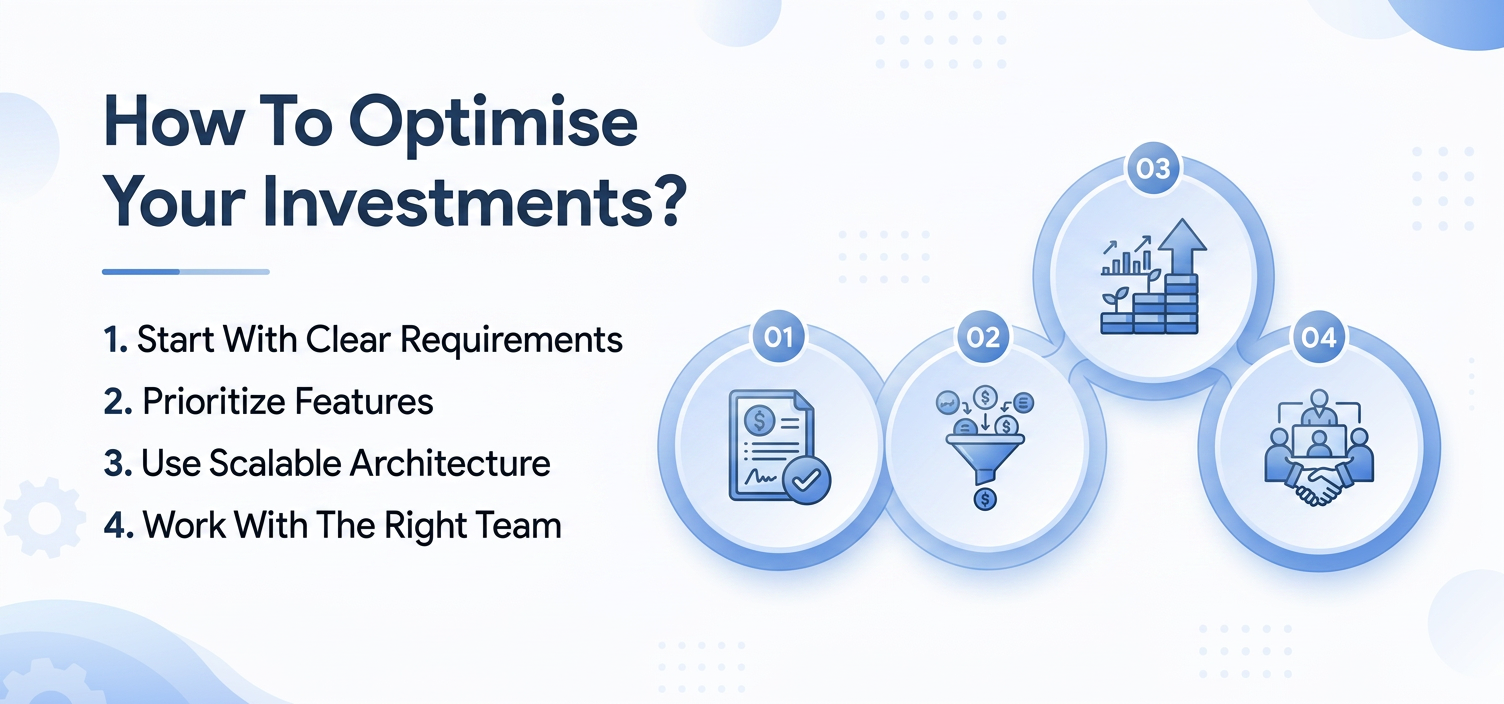
How To Optimise Your Investment?

However, regardless of the method you choose, there are several ways to control the cost effectively:

1. Start With Clear Requirements

Clear requirements upfront prevent scope creep and unnecessary costs.

2. Prioritize Features

Focus only on features that directly support your core use cause.

3. Use Scalable Architecture

Scalability enables your application to grow without architectural changes. 
How To Optimise Your Investments

4. Work With The Right Team

The right team will ensure that your application is developed correctly, thereby saving time and cost. 

This is the reason why many businesses seek the best mobile app development company in Australia.

Timeline Comparison

MVP Timeline

  • 8 to 16 weeks

MVPs are designed for speed, allowing businesses to:

  • launch quickly
  • validate ideas

iterate based on feedback

Full App Timeline

  • 6 to 12+ months
  • Full development takes longer due to:
  • feature complexity
  • multiple integrations
  • extensive testing

When Must You Select MVP?

1. When You Are Testing an Idea

MVP will enable you to test the demand for your product.

2. You Have Budget Constraints

Start-ups often face resource constraints.

An MVP allows you to:

  • minimise upfront investment
  • demonstrate traction
  • secure funding

3. Speed to Market Is Critical

Launching early gives you:

  • competitive advantage
  • faster user feedback
  • opportunity to pivot

4. You Want to Reduce Risk

One of the major benefits of an MVP is that it mitigates the risk of investing in features that the users would not need.

When Should You Select Full App Development? 

1. Your Idea Is Proven

If you already have validation, you can confidently invest in a full build.

2. You Need Complex Features

Some products require:

  • real-time systems
  • multiple integrations
  • enterprise functionality

3. You Have Strong Funding

If budget isn’t a limitation, full development can accelerate growth.

Industry-Based Decision Guide

Different industries favour different approaches.

Fintech

  • Start with an MVP for validation
  • Scale to the full app for compliance and security

E-commerce

  • MVP for testing product-market fit
  • Full app for scaling operations

Healthcare

  • Often requires full development due to compliance.

The Hybrid Approach 

Most successful products follow a hybrid model:

  • Build MVP
  • Validate idea
  • Scale into full product

This approach balances:

  • cost efficiency
  • speed
  • scalability

It’s also the strategy most experienced mobile app developers recommend.

Real-World Case Study: MVP to Full Product

Imagine building a fitness app.

Phase 1: MVP

  • user signup
  • workout tracking
  • basic analytics
  • Launched in 3 months, the app works efficiently. 

Phase 2: Expansion

You can add new features, depending on feedback:

  • personalised plans
  • integrations with wearables
  • social features

Outcome

Instead of guessing, the business effectively improves the product for market fit.

Key Cost Drivers You Should Know

1. Feature Complexity

More features = higher cost and longer timelines.

2. Design Quality

Good design helps improve retention but requires investment.

3. Backend Systems

Real-time processing and integrations increase complexity.

4. Scalability

Apps built for growth require stronger infrastructure.

Mistakes You Must Avoid

1. Overbuilding Early

Trying to launch a full app without validation is a common mistake.

2. Ignoring User Feedback

User insights help drive essential development decisions.

3. Underestimating Ongoing Costs

Maintenance and updates are some of the essential ongoing expenses.

4. Choosing the Wrong Partner

Working with a top app development company ensures:

  • Better planning
  • Efficient execution
  • Scalable solutions

Business Decisions Made Simple

Ask yourself:

  • Is my idea validated?
  • What is my budget?
  • When do I need to launch?

An MVP is likely your best choice if you’re not comfortable answering the previous questions.

Why Choose The Best Development Partner?

The team you choose will directly impact whether the product succeeds or struggles.

An experienced best mobile app development company in Australia will:

  • guide your strategy
  • optimise costs
  • ensure scalability
  • reduce development risks

The Role of Mobile App Developers

Skilled mobile app developers play a crucial role in:

  • identifying risks early
  • designing efficient systems
  • prioritizing 
  • features
  • ensuring long-term performance
  • The right team doesn’t just build your app; they prevent expensive mistakes early.

MVP to Full-Scale Growth

1. Business Objective

A start-up in Sydney wanted to validate its marketplace concept for a specific niche market with minimal investment.

2. MVP Approach

The mobile app development company developed an MVP focusing on core transactions and user onboarding.

3. Timeline and Cost

The MVP development took 10 weeks to complete.

4. Results and Scaling

After achieving user traction for the marketplace concept, the mobile app development company in Australia decided to add more features to the marketplace.

Mobile app developers in Sydney have now scaled the marketplace with enhanced features.

Conclusion 

Selecting an MVP or a fully developed product mainly depends on time, money, and certainty. An iPhone app development company assesses actual market needs before lean testing or full builds. Resources stay focused, growth stays flexible. Scalability should be considered from day one, even in early-stage builds.

For Australian companies, engaging an iPhone app development company is the way to achieve the proper mix of speed and quality. By starting with a minimal viable product or creating a complete system, a trusted iPhone app developer company can contribute to risk mitigation, increase the payoff on investment, and create apps that fulfill the user’s needs.

FAQS

Q 1. Can an MVP later be turned into a whole application?

Ans 1. Yes, most MVPs are built with growth in mind, and an on-demand app development company will utilize the right kind of infrastructure for your future development.

Q 2. Is it a good choice for new businesses to develop an Android application?

Ans 2. Yes, as it provides the option of flexibility in costs due to the larger audience, it’s considered one of the best options for the development of a new product.

Q 3. What features should be included in an MVP?

Ans 3. Include only the basic functions necessary to resolve the main issue; your on-demand app development company will help you identify these
Q 4. Can Android application development accommodate scaling?

Ans 4. Yes, when properly developed, you can confidently scale Android application development as consumers’ demand grows and additional functions are needed.


Related Posts

Copyright © 2026-2027, 7 Pillars, All Rights Reserved.
DMCA