Let's have a
Quick Chat
with you!
Quick Chat
with you!
You have our ear and we can't wait to hear about your idea! Share your details here and we will make sure to schedule a coffee date with you soon.




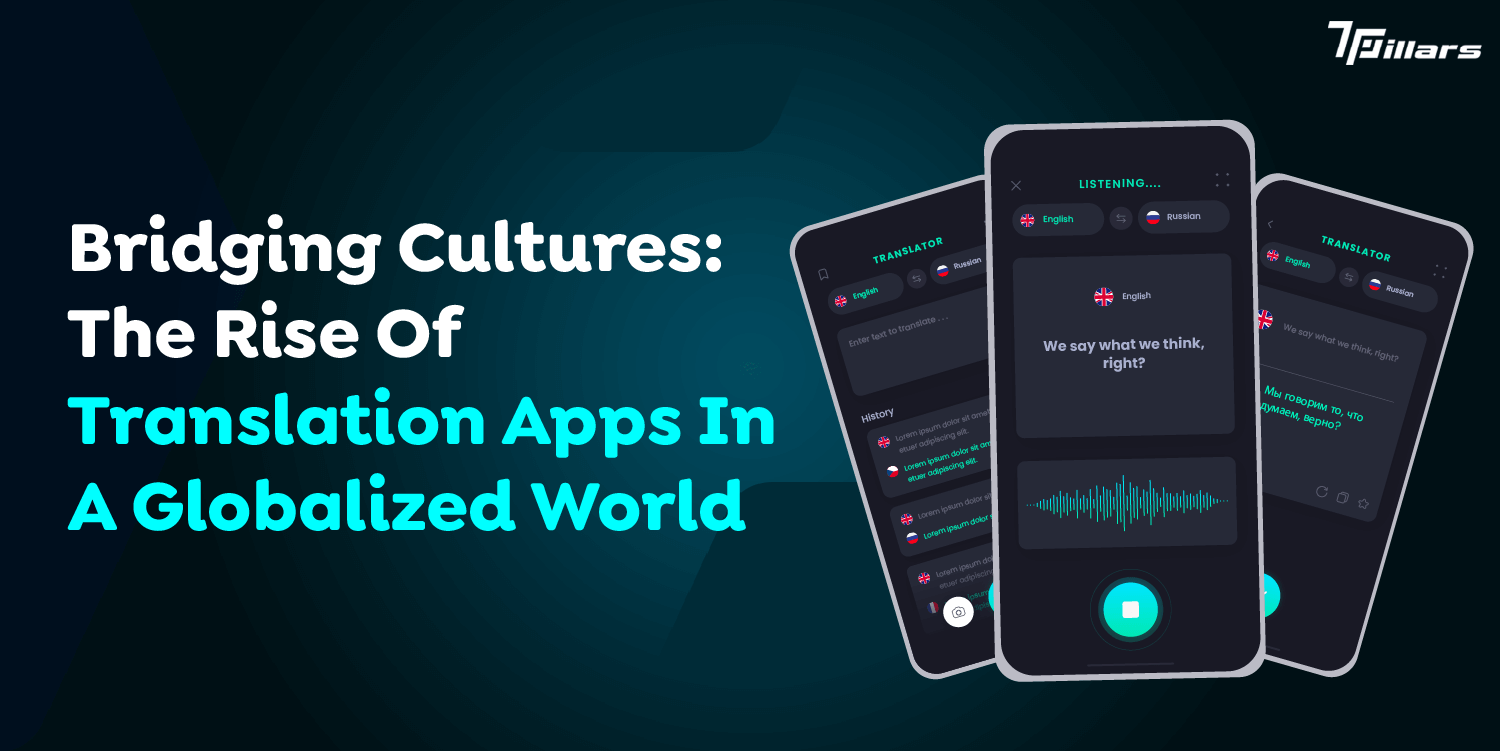
By 2026, the digital environment will have rendered the world a global village. It is overcome by AI-driven translation applications, highlighting the impact of translation apps in global business, which transform phones into instant interpreters. Whether it is a casual traveller getting familiar with foreign streets or a professional getting a deal in a foreign country, Android application development firm can create a tailor-made intelligent application that will astonish consumers and improve everyday experiences.
Current translation applications do not just translate words. They understand the context, idioms and tone. Machine learning, natural language processing, and voice recognition allow users to communicate in different languages. Whether it’s business or travelling, these apps are sensitive to different cultural peculiarities, and interaction is not only factual but interesting, enjoyable and astonishingly human-like in its responsiveness and intelligence.
Since translation can be done through cafes in the streets of Paris or by people on the streets of Tokyo, translation technologies can seamlessly integrate into wearable devices. Development companies of voice translation apps are able to create customised applications that are natural, quick and easy to use. No longer are these apps simple tools that allow people to connect with people, build understanding, and have rich and cross-cultural experiences, which makes the world even smaller than it used to be.
In recent years, translation apps in Australia have been skyrocketing due to AI advancement, globalisation, and a multicultural population, highlighting the impact of translation apps in global business. Analysts project a 9% CAGR to 2026, and tourism to grow to well over 10 million visitors per year. Digital translators are becoming popular in healthcare, education, and legal services. Android apps have presented a golden opportunity to Android app developers to design flexible, intuitive and user-friendly solutions for various users.
The translation and interpreting sector in Australia’s revenue exceeded AUD 1.5 billion in 2025. The need is reflected in the demand for Android app development that can incorporate multilingual, context-sensitive AI translation and a user-friendly interface, making apps indispensable in professional, educational, and personal settings.
The COVID-19 pandemic has fast-tracked the increase in adoption rates of translation apps across Australia. With border closures and a complete shutdown of international travel, Australians turned to digital communication tools to hold on to relationships with others across languages.
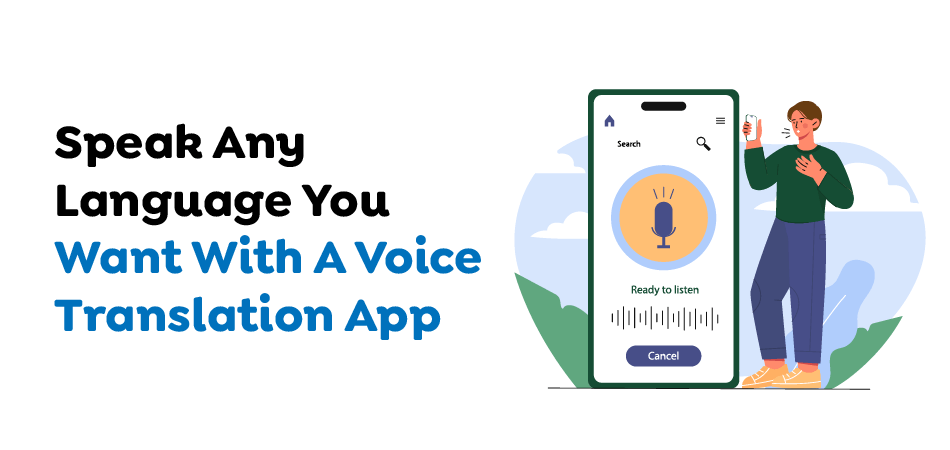
Voice translation apps are innovative solutions that offer spoken language translation in real time to bridge the communication gap between different languages. Modern speech recognition, natural language processing, and machine learning technologies make the application possible by instantly translating spoken words between languages. A voice translation app development company can help you understand the history of translation apps in detail in no time.
The process initiates with speech recognition, where spoken input is picked up by the device microphone and accurately transcribed into text. Further processing of this text is done through NLP to understand context, syntax, and semantics so that the translation retains the proper meaning and tone of expression. Again, this translated text gets converted into the speech form of the target language, facilitating flawless verbal communication. Android application development is crucial in merging these advanced technologies into a mobile platform in a seamless manner, providing smooth performance and user experience.
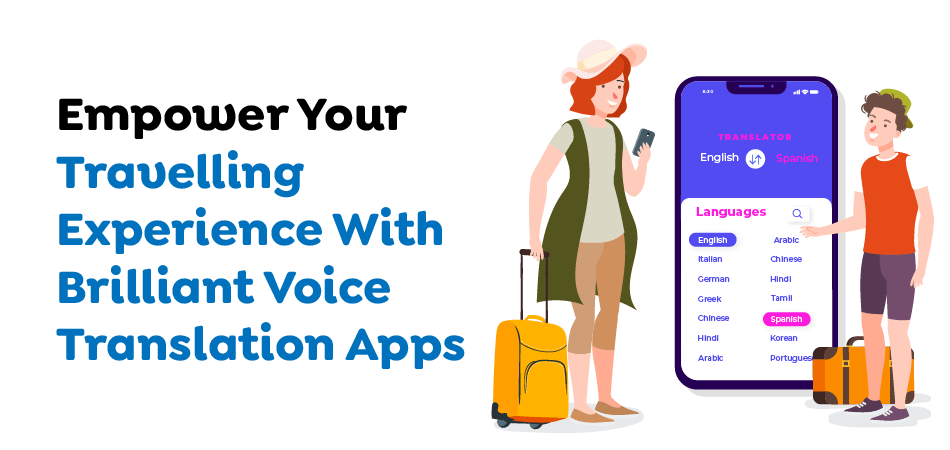
Voice Translation apps are an invaluable tool for individuals looking to overlook language barriers and have seamless communication in foreign lands to avoid getting caught in any scandal. They give real-time translations that aid communication easily and foster understanding across cultures, bridging language gaps to help interaction in multilingual environments.
|
Use Case |
How It Helps? |
Key Benefits |
|
Globalization & International Travel |
Helps travellers communicate in foreign countries |
|
|
Cross-Cultural Communication |
Enables real-time multilingual conversations |
|
|
Education & Learning |
Supports language learning through speech |
|
|
Emergency Situations |
Translates speech during critical moments |
|
|
Accessibility & Inclusivity |
Assists people with speech or hearing impairments |
|
|
Business & E-commerce |
Facilitates global business communication |
|
|
Cultural Exchange & Diplomacy |
Promotes international understanding |
|
Creating a voice translation mobile app is difficult since it has to follow tight security regulations to meet a wide range of user requirements. This is especially true considering how important and complex the voice translation sector is.
However, you need to consider several things if you’re an entrepreneur looking to launch a profitable voice translation app, and a reliable app development company can help you realize your vision. A leading voice translation mobile application development company can help you understand the pivotal steps in developing a mobile app that’s an instant market hit.
The first and foremost step in building up a great voice translation app is to clearly define your objectives with proper market analysis regarding the languages in demand and the target audience’s needs.
First, identify the language you would want to support with specific functions and features you would like to provide your clients. Ensure that your choices align with the target user’s needs and preferences.
It includes regional dialects and cultural nuances that may be specific to the environment in which the app might be used. It will help you make the app appropriate and effective if its features can answer such elements, making it more valuable and personal for the users.
This is the step wherein you have to study and analyse the market properly before finalizing the features and languages you want in your app.
Detailed market research will help ensure that your idea is unique and existent in the light of understanding user demand, competitors, and priorities and making decisions based on the data collected.
After deciding on the concept of your voice translation app, it wouldn’t be hard to bring it into reality with the sharpness of a mind and a fantastic mobile application development company. To research the market and develop a profitable app, you should partner with a reliable mobile app development company.
Choosing the correct technological stack among the millions available in the market is the rightful part of the developing process of the voice translation app, which ensures that your app offers unique features to your users with seamless integration. A leading mobile application development company can help you choose the right technological stack for your voice translation app after understanding your needs.
Choosing the correct technology stack for the voice translation application will involve selecting the correct programming languages, frameworks, and third-party APIs that best fit the requirement. A reputable mobile app development company can help you transform your business.
Secondly, state-of-the-art technologies available in speech recognition, machine translation, NLP, and text-to-speech should be incorporated to ensure accurate and seamless translations. Test several of them to realize how every combination offers the best performance and user experience in processing speed and accuracy. The rigorous selection process brings to life a robust, powerful translation application.
Creating a user interface that sets your voice translation software apart from the competition is another essential component of creating a fantastic app. Focus on effectively using user experiences while inputting text or voice commands, setting languages, and viewing translated content. Ensure ease of navigation through a lucid interface with clear instructions, visual feedback and error-handling mechanisms that orient users and solve problems immediately. Mobile phone application development is key in making sure that your application performs flawlessly on various devices, providing a seamless and responsive experience for users.
After designing and developing the user interface for your app, you will decide upon the primary features you wish to offer to the users, like language translation, speech-to-text translation, language translations, etc.
Add user customization options for context-aware translation and increased accuracy and relevance. These decisions will then lead the way toward setting the overall functionality of the application and user experience to create more value and effectiveness for your target audience.
Security and privacy are the most important things to be incorporated while developing a voice translation app. First, any data transmitted from the app to servers needs to be encrypted to make it secure against interception. Robust authentication mechanisms prevent unauthorized access.
Keep updating your app regularly to protect against security vulnerabilities and test it properly to check for any threats. Ensure clear privacy policies are in place and obtain users’ consent before collecting data to comply with regulations such as GDPR or CCPA, reinforcing the impact of translation apps in global business. Additionally, include features that allow users to control their data and manage permissions effectively, enhancing both security and user confidence. Outsourcing the services of a voice translation app development company can help manage continuous upgrades, compliance requirements, and robust security enhancements efficiently.
Testing and deployment are very critical stages in creating voice translation apps. It helps you offer faultless and bug-free products to the users and optimize your first impression.
There is a need to highlight the fact that several tests ought to be performed before the final release of the product for consumption in the market or by the end user to avoid failing in the market.
By offering to pay users to use the product in its beta stage, the application developers work with you to identify flaws in your app. It is a crucial stage in ensuring that the app systems and components conform to the requirements of the clients and the technological specifications that are made available. A mobile phone application development company can assist you in navigating the growing market.
After testing the voice translation app and being satisfied, get ready for its launch by choosing a platform that is right for your app launch among the dozens available in the market. Then, work out a marketing strategy with some exciting promotional material and ads alongside a strategic launch.
This can be done by effective awareness building, generating interest, and realizing many downloads, hence the general adoption of your voice translation app.
Monitoring your app is one of the most pivotal phases of developing a voice translation app, as it will let you understand how your app is doing in the market through user feedback. Monitor user engagement, feedback, and in-app performance post-launch for improvement and optimization.
This will help you understand how the app is being used and how adjustments need to be made, highlighting the impact of translation apps in global business. It will help generate new technological benefits through continuous iterations and updates in the app, based on this feedback, to answer market trends in their best form. Hire a leading voice translation app development company to help you monitor your app’s progress and make required changes.
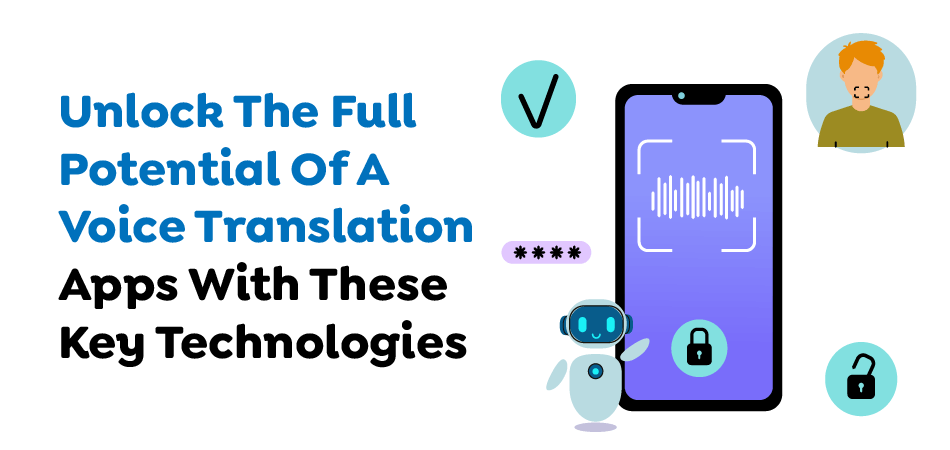
Integrated with these brilliant technologies, a voice translation application has the potential to revolutionize global interactions. In this respect, machine learning algorithms will provide users of the app with tailored language choices and predictive analytics for developing better decision-making. NLP will make user interaction much more intuitive through the intervention of choices. A mobile phone application development company in Australia can assist you with the uniqueness of your solution.
|
Feature |
Purpose |
How Does It Works? |
|
Speech Recognition |
Converts speech to text |
|
|
Language Identification |
Detects source language |
|
|
Machine Translation |
Converts text to other languages |
|
|
Text-to-Speech |
Reads translations aloud |
|
|
User Interface |
Simple & intuitive interaction |
|
|
Cloud Computing |
Handles heavy processing |
|
|
Language Database |
Maintains accuracy |
|
This rapid growth in the development of voice translation technologies opens up a brilliant avenue for adding unique value to AI-powered voice translation applications that drive up user experience and operational efficiency. Understand how AI transformations can help you design an app to meet current needs and anticipate future needs in the voice translation landscape. A known mobile app development company can help you incorporate all essential features in your voice translation apps with no issue.
The first pivotal feature of all voice translation apps is the registration or login process, followed by detailed user information linked to the user’s preference and details for the many language tools.
This way, the users can log in to the benefits of the app and keep some personal data on themselves, namely, names, telephone numbers, physical addresses, and preferred products. Such information can give target customers a personalized experience on the platform.
A voice translation app development will help develop translation apps that assists one in communicating easily across many languages. The real-time voice translation feature picks up the words spoken through the microphone, processes the audio to transcribe and translate it instantly, and then returns the translated text or speech. This system is supported by advanced speech recognition, language detection, and machine translation technologies to give immediate and accurate translations.
It provides smooth and efficient communication between the two interlocutors in any situation, from travelling to business meetings through live conversation between speakers of different languages, thus improving the user’s experience with minimal delays.
Another essential feature you need to integrate into your voice translation app is text translation, which will allow your users to translate their concerns into any of the chosen languages instantly. The voice translation app’s text translation feature converts spoken words into written text before translating them into another language. It picks up the audio first via the device microphone.
Then, speech recognition technology activates to convert spoken language into written text. This content is processed by an AI-powered translation engine that adapts it into the required language, demonstrating how translation solutions are reshaping cross-border communication and the impact of translation apps in global business. The result is seamless, real-time interaction across languages, making these apps highly effective for travel, professional collaboration, and multilingual conversations.
The multiple language support feature allows the voice translation app development to interpret and translate several languages to enable users to communicate across different languages effortlessly. This functionality allows the app to recognize and transcribe spoken input in various languages and then translate it into the target language.
By combining robust speech recognition and machine translation APIs, the app can be applied potentially to any number of language pairs and return relevant contextual translations. This feature is essential for users desiring real-time conversations in a foreign language or content translation in another language, thus facilitating global communication and access.
The speech-to-text feature in the voice translation app turns spoken words into written text. It is achieved by capturing and processing audio input from a user’s microphone via speech recognition technology.
This audio is then transcribed, with an accurate text version created for the spoken word in real-time. This text forms the base for translation into the desired target language. Integrated with speech-to-text functionality, the app will allow easy conversation between different languages, easier understanding, and real-time translation of spoken conversations.
This conversation mode in a voice translation app facilitates real-time communication in two languages. The user speaks into the application, which will transcribe and translate the speech into the desired language and play it back for the other party. The app listens for the response, translating it to the original language.
This feature is often equipped with automatic language detection, seamlessness of turn-taking, and support for multiple language pairs, thus allowing conversations to flow naturally and smoothly.
The camera mode in a voice translation app allows users to translate text taken through the device’s camera. Pointing a camera to written content, it detects and processes the photo in real-time. It reads the text using OCR technology and then translates it into the user’s chosen language.
This feature brings flexibility to the application by giving users a robust tool for translating speech and text. It is helpful for travellers and language learners who quickly want to translate printed materials.
An offline mode in a voice translation application will allow users to use it without an internet connection. This feature is beneficial at locations that have less or no connectivity. It’s accomplished by carefully uploading the necessary databases and language models to the device.
Then, users can speak into the application, and the audio will be processed locally to produce translations. It speeds up the process because a user doesn’t need to contact the server to perform translations, and it also makes it more private by limiting the quantity of data sent. It becomes more functional continuously through offline mode. It makes the application more reliable and versatile when travelling or in remote places.
An accessibility feature in a voice translation application makes it usable for all, including the differently-abled. This would pertain to screen readers reading the text for visually challenged users and voice control that enables one to navigate and issue commands using speech itself.
Variable font sizes and high contrast modes support users who have visual impairments. The hearing impaired benefit from real-time text captions, while those with hearing difficulties are catered for with adjustable audio settings. These features will make the application all the more inclusive, making the voice translation feature quite useful for persons with different needs.
A feedback and improvement option in a voice translation app would allow users to comment and rate the accuracy and fluency of translations. This kind of user feedback is collected and analyzed to outline the common issues and areas that need refinement. With this data, machine learning algorithms would then be able to refine translation models for better performance in the future.
Since the user is involved in the improvement process, over time, the app evolves towards more accurate and reliable translations. This feature in itself enhances both the satisfaction of the user and the overall effectiveness of the app. Voice translation app development is important for integrating these functions so that the app continues to adapt to accommodate user requirements and provide more and more accurate translations with time.
Depending on several factors, the cost of developing a voice translation app can vary widely in Australia. Elements such as features, app complexity, supported platforms, development team structure, and delivery timelines all influence overall pricing, reflecting the impact of translation apps in global business. Collaborating with a reliable mobile app development company helps align technical requirements with your business goals while staying within budget. A specialised voice translation mobile app development company can turn your idea into a scalable, high-performing solution.
The cost of developing a voice translation application in Australia can vary from AUD 50,000 to AUD 200,000. It depends on several factors: the complexity of the work, features, development team expertise, and time allocated to the project.
Crucial aspects include speech recognition, language translation, user interface, and back-end services. Offline operation, support of several languages, or AI integration are other options that would increase costs by more than tenfold. Further investment will then be required with ongoing maintenance and updates.
Simple ones, such as voice recognition, text translation, and text-to-speech, are cheaper. Premium functions, such as real-time multilingual translation, context-based AI, offline messaging, and custom learning functionalities, add to the expenses.
The creation of Android, iOS, web, or all three at once has an impact on the budget. Cross-platform frameworks would help to minimise costs without compromising quality.
The cost of local Australian teams is higher than that of offshore teams. Combining developers, designers, QA testers, and project managers provides a polished app.
Pricing is indeed influenced by AI, machine learning, NLP, and cloud APIs. The cost of development may increase substantially with the use of high-accuracy speech-to-text and translation engines.
A smooth, user-friendly and responsive interface must be properly designed, which raises the cost.
Hosting, cloud solutions, long-term maintenance, marketing and security patches are to be included in the budget.
Features: Voice recognition, Basic Translations for a few languages, text-to-speech.
Cost: Estimates of cost somewhere between 30,000 AUD to 60,000 AUD
|
App Type |
Features |
Estimated Cost (AUD) |
|
Basic |
|
35,000- 65,000 |
|
Moderate Complexity |
|
70,000-150,000 |
|
Advanced AI-Powered App |
|
160,000-300,000+ |
The above estimates are rough and easily varied by several factors, depending on specific requirements and market conditions. Naturally, it makes sense to communicate your needs to several companies that work in app development to get a detailed quote.
Voice translation applications have become a vital digital resource in 2026, serving the multicultural community of Australia, international business, and the education sector. These apps are facilitated by AI, real-time speech recognition, and scalability. These apps are no longer optional as they are essential to accessibility, efficiency, and overall effective cross-language communication in daily interactions.
As a company struggling to remain afloat, a future-proof translation app is a good investment. Collaborate with skilled app developers to create secure, scalable, AI-powered solutions to suit your audience. Willing to change communication? Get in touch and begin developing your new translation app.
Q1. What is the importance of voice translation apps to businesses in 2026?
Ans-2 Voice translation applications companies connect with customers worldwide in real-time, enhancing customer support, sales, and accessibility. They seamlessly blend with the current electronic systems and minimise language-related tension.
Q2. What can iOS app developers do to improve the performance of voice translation apps?
Ans-2 Skilled iOS app developers optimise AI programs, user interface/user experience, and real-time processing on the device to have fast, secure, and accurate real-time translations on Apple devices.
Q3. Are voice translators compatible with pos software?
Ans-3 Yes, modern voice translation applications can be interconnected with pos software to allow multilingual employees and clients to interact consistently during the billing, ordering, and customer support process.
Q4. Who are the businesses that should collaborate with in scalable solutions?
Ans-4 The collaboration with experienced iOS app developers is going to provide smooth integration with pos software through API, scalable architecture and future-proof performance to expand the business worldwide.


Partner with us to bring your vision to life.



 +61 (42) 108-3277
 contact@7pillars.com.au
 294A Station Street,
