Let's have a
Quick Chat
with you!
Quick Chat
with you!
You have our ear and we can't wait to hear about your idea! Share your details here and we will make sure to schedule a coffee date with you soon.




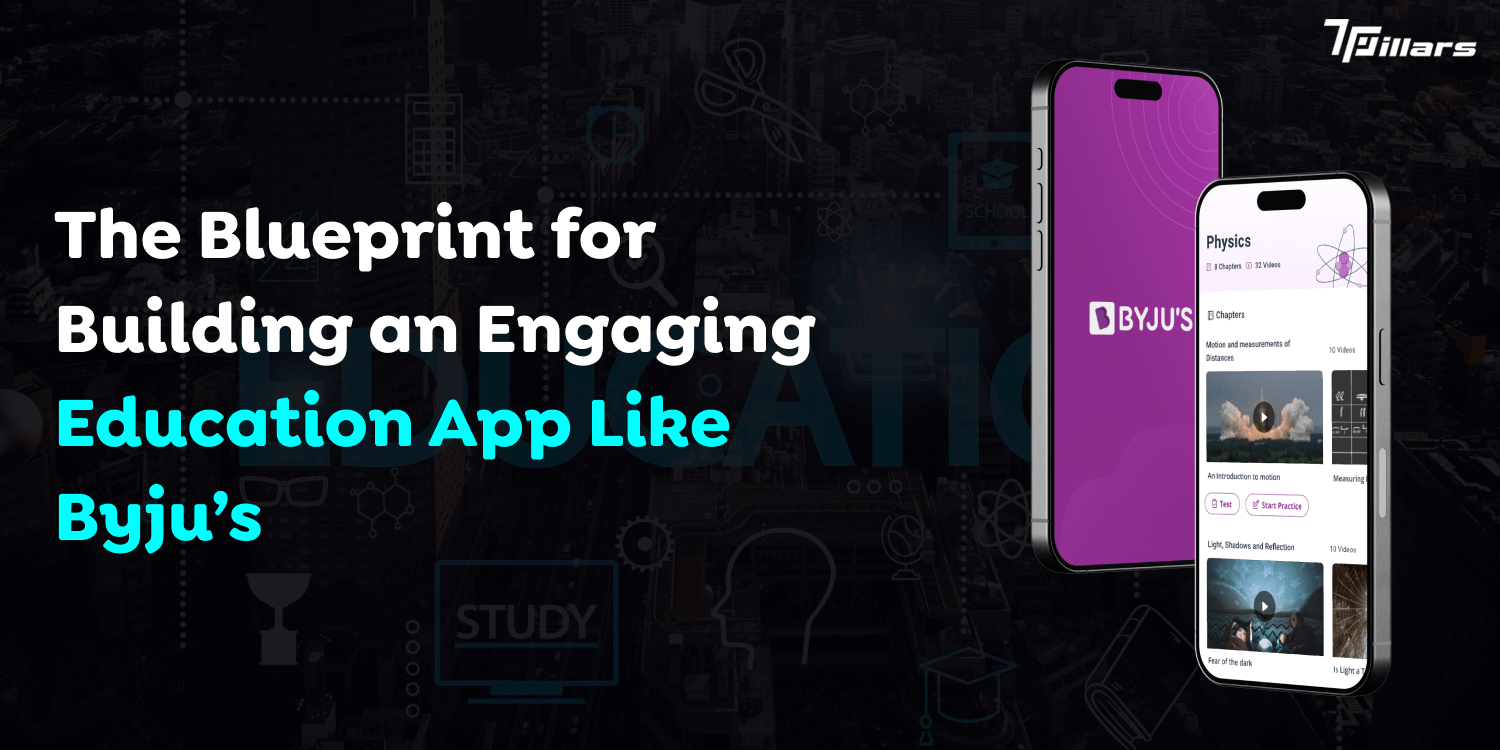
Think of an education that is not as much about memorising textbooks but finding a new idea in a day. Education turns into an adventure allowing one to explore and learn about new things. In this type of educational setting, learning is a journey guided by curiosity, leading to insightful understanding on a lesson-by-lesson basis. This is the kind of transformational experience that inspires businesses and educators to build education app like Byju’s, making learning engaging, interactive, and empowering for students to discover, grow, and succeed with confidence.
The world is changing education through digital innovation. By 2026, customised and dynamic tracks in immersive learning platforms will increase student engagement. Students will actively learn and master concepts more quickly through videos, gaming and visual storytelling without passive classroom experiences.
Lessons have been taught in overcrowded classroom settings for generations, which has caused many students to be unable to ask questions out of fear and to proceed at their own pace rather than match everyone else’s pace. BYJU’S was developed as a solution for learners who want an affordable, flexible, enjoyable and customisable learning environment.
Even though the platform isn’t doing well in the market due to several wrong decisions on the founder’s part, it used to be one of the most sought-after online learning platforms a while back, giving tough competition to other earning platforms like meritination.com.
One of the reasons behind the tremendous success achieved by the online learning platform is that it came into existence when students needed quality education, and schools failed to provide the same.
Byju is not just a learning app; it is the vibrant centre of active learning, engaging the child to achieve their finest potential through technology that is at par in combining interactive video lessons, customized pathways, and instantaneous feedback with education that is both accessible and entertaining.
The depth of content infused into the design ensures that children are active participants rather than information-passive recipients in the learning process.
From interactive quizzes triggering competitive spirits to comprehensive analysis guiding improvement, BYJU ensures a holistic approach catering to diversified learning styles.
Whether you are a high school student preparing for competitive exams or a parent seeking the best tools to help your child get the best education, BYJU’S gives you efficient tools with a unique approach.

BYJU has been instrumental in transforming contemporary education through adaptive technology-oriented methods of learning globally. Its acquisition of Australia was a strategic action to meet the rising needs for personalised, curriculum-based digital learning. Emphasising flexibility and student interaction, BYJU was able to become an efficient substitute to conventional learning practices.
BYJU was established in 2011 in India and soon became more than a local tutoring company, becoming a global educational brand. ItIt has redefined student engagement with academic content with a digital-first strategy, providing formalised but interactive learning experiences that cut across education systems to build education app like Byju’s.
BYJU has been instrumental in transforming contemporary education through adaptive technology-oriented methods of learning globally. Its acquisition of Australia was a strategic action to meet the rising needs for personalised, curriculum-based digital learning. Emphasising flexibility and student interaction, BYJU was able to become an efficient substitute to conventional learning practices.
BYJU was established in 2011 in India and soon became more than a local tutoring company, becoming a global educational brand. It has redefined student engagement with academic content with a digital-first strategy, providing formalised but interactive learning experiences that cut across education systems.
The Australian education market reacted well to BYJU’s emphasis on individualised learning and attainment of national curriculum standards. The platform tailored its materials to fit the local academic standards and learning behaviours through collaboration with local teachers and schools.
Local collaborations, niche marketing, and adaptive technology have been the main factors of BYJU’s successful integration into the Australian digital education system. Interactive video lessons, progress tracking, and AI-based testing are features that attracted the attention of students and parents wanting the support of reliable additional learning tools.
Even though Byju’s became a turning point in the educational sector, entrepreneurs are still sceptical about investing in a similar app, as everyone knows a field with competitors is the one to invest in if you want to succeed in the market. Technological history points out that a market that enjoys robust competition is the one to invest in as it is the one that does well among users.
The primary cause behind this phenomenon is that a business does well among users only when it strives to provide high-quality content and services to users that give them a competitive edge over their competitors. Creating an app similar to Byju is okay if you provide your users with enough unique features to help them stand apart from your users.
If you cater to your users and provide them with features they enjoy, it will help retain them and encourage them to switch from your competitor’s app to yours.
Additionally, investors will come to your aid if your proposal is as innovative as Byju’s. The global eLearning industry is expected to grow from $295.97 billion in 2023 to $916.83 billion in 2030. Thus, investing to create a similar app is a brilliant idea.
Currently, one should invest more in education app development to build education app like Byju’s, since there is a high demand for digital learning solutions coupled with rapid technological advancements. In the education sector, technological innovations are widely adopted, thus providing an opportunity for ground-breaking ideas to make a brilliant impact.
Once you have a promising concept, you must present it to an elite education app development company. The companies are those experts who will better help refine the idea, translate it into a functional and engaging app, and finally bring it to the market. This opportunity leads to significant growth and success through the developing landscape of education technology.

Different people employ different processes while they are constructing an application. To ensure their successful launch into the market and to increase their applicability, all products and consumers require basic components.
Generally speaking, creating an educational app comparable to Byju takes a lot of time and money, especially when a professional team of engineers, designers, content planners, and marketing specialists is involved. The scope of work, the number of developers working on the project, the features themselves, recommendations, offline access, and many other factors will all affect the overall anticipated cost and duration.
Any service like Byju must go through several crucial stages of development, including strategy and market research, app development, content acquisition, legal considerations, testing, launch, and ongoing service maintenance. Here’s a summary of the same:
Before you start your journey to developing an app like Byju, you need to understand what works for your target audience and what your competitors are doing that isn’t working for them. The first thing you need to do is decide your target audience, demographics and the educational needs of your users to ensure your app is successful once launched among users.
You also need to understand that a bright idea isn’t the only thing that will ensure an app’s success, but multifaceted factors play a significant role in assuring an app’s success. After you have finalized your app idea, start working on understanding industry trends and the latest technologies that you must incorporate into your app to guarantee users switch to your app from your competitors.
For your application to take advantage of new technologies or change users’ preferences, you must conduct a thorough analysis of industry trends. In addition to ensuring that the application will satisfy the user’s needs, this will help present value from a competitive standpoint.
An app is successful in attracting and retaining users if it’s open about its objective and concepts that cater to unique user needs without fail.
It must mention the application’s purpose and describe which specific learning objectives it is intended to deliver. This step is drawn from a detailed review of the features that your app would provide like Byju offers its users and more alike. You will then understand how you structure your application to serve the users’ needs.
Therefore, it is pivotal to discover and develop unique selling propositions that will allow your custom education app to be different from your competitors. Concentrate on being innovative and distinct, be creative in developing a value proposition that users cannot ignore, and, in the long run, will stand out amidst the overcrowded education technology marketplace.
Once you have planned your app and its objective, you need to start working on designing the app’s user interface to ensure it is clean and innovative to attract users towards your app. An aesthetically pleasing design attracts users.
To visualize the layout and navigation of the app, wireframes and prototypes must be created naturally. Hire a reputable app development company to help you design an innovative user interface with bold and visually appealing designs to attract users.
Ask your education app development services to help create a user-friendly interface with simple navigation to improve the user experience. It’s also pivotal to ensure your educational app works well on several screens and devices.
This step to build education app like Byju’s is crucial, as you must decide which platform to launch your app on after completion to ensure post-launch success. There are more than a few platforms available in the market that can be used to launch an app, but you have to choose between creating an app for a single platform or multiple after deeply researching the market.
Once you have selected your platform, you should choose a development approach that matches your budget and hire an app development company which can deliver your dream app within your budget. A reputable education app development company will help you set up a development environment and establish coding standards for consistency and efficiency.
Content should be your foremost priority while creating an app like Byju, as it will help you gain and retain users if you provide them with high-quality content different from your competitor’s content.
You must collaborate with subject experts available in the industry and incorporate interesting quizzes and interactive lessons to offer an immersive learning experience to your users.
Apart from incorporating quizzes and video lessons, add and organize your content into structured modules and classes aligning with educational standards and learning objectives. These elements will assist you in creating an app that succeeds as Byju.
At this point, your developers of the educational application should get your concept off the ground by designing an app similar to BYJU and following all the specifications and design rules.
Some elements need to be included to make it more appealing to users, such as video playback for interactive lessons, quizzes for tracking learning progress, progress tracking for monitoring user achievements and personalized user profiles catering for unique educational experiences.
On completion of the first stage of development, it is pivotal to carry out thorough testing to certify that everything about the app works perfectly well and it conforms with defined quality benchmarks. It involves identifying bugs, mistakes, or performance problems that may not meet user satisfaction.
A reputable Android app development company employs many types of testing, including unit tests, which check individual components; integration tests used for checking how different parts of the app function together; user acceptance tests, whose objective is to ascertain if the expectations from customers are met and automated tests which help do repetitive tasks effortlessly. In-depth testing guarantees an efficient application with its best quality is ready for launch.
Once you have checked all the boxes and are sure your app is bug-free and ready for launch in the market, work with your hired team of app developers to prepare a comprehensive launch plan involving app store optimization (ASO) strategies and various marketing campaigns.
An Education app development company will help you submit the software to app stores for review and approval. There won’t be any issues with the seamless launch of your app once you have adhered to the app store’s standards and requirements. Monitoring the app performance for 2–4 weeks and getting user feedback after launching your educational app like Byju is vital for iterating and improving it to ensure an enhanced user experience.
You could be thinking about how it is possible to gather user feedback. The answer lies in reviews, ratings, and surveys that can help you identify things that need improvement. Nowadays, people work within the digital environment and engage in various activities. Because of this, users are likely to have less patience, and as such, any educational app like BYJU’s has to remain relevant and engaging.
Incorporating new features, content, and other improvements into the mobile application increases the interest and the user’s emotions. In addition, it is pivotal to be aware of new trends in technologies and products to be competitive and bring novel ideas to the market. Therefore, you are so dynamic and sensitive that with changes in user needs and industry changes, you will be very efficient and appealing in your app.

There is a growing trend for Byju’s like apps, which need a robust and scalable tech stack. Each component the app may require to support this stack includes:

|
Feature |
AI-Powered Education Apps |
Traditional Learning Platforms |
|
Personalisation |
|
One-size-fits-all content |
|
Learning Path |
|
Fixed structure |
|
User Engagement |
|
Mostly passive |
|
Feedback |
|
Delayed or basic |
|
Skill Relevance |
|
Limited job focus |
|
Accessibility |
|
Location dependent |
|
Future Readiness |
|
Slow to evolve |
In-app messaging and chat capabilities encourage better cooperation among app users by permitting effortless communication. It helps create a social environment in those apps by making it very simple for the user to connect with friends who are also using that specific app.
They discuss their favourite lessons, provide suggestions for brand-new tests and interactive courses, and share their experiences from earlier courses they are now reviewing. Apart from offering a personalized learning experience, this interactive approach cultivates a feeling of community among users.
Using the app to establish direct relationships with other users helps create rich and dynamic experiences that make cooperative education exploration fun. Social contact of this kind turns lonely listening into a shared experience.
Using a social media account, an email address, or a unique ID, a user can create an account within the platform. An account allows users to view their history and preferences as well as receive personalised recommendations based on their app usage history. Accordingly, registered account holders will receive tailored content, exclusive course offers, and have a more enriching overall experience with the learning process.
When you plan to develop an app like Byju for your users, incorporate browse and search functionality to help users seamlessly explore and find their favourite educational content and teachers. Ensure it contains a user-friendly interface with intuitive search functionality, allowing users to enter keywords, filter results by subjects, levels, or categories, and view course details.
The browsing experience is enhanced by categories, tags, and recommended courses based on user preferences and history. Advanced search options enable users to sort by relevance, popularity, or newest additions.
The Course Discovery & Search system enables users to easily locate courses and instructors by providing keywords that can be used in a search engine and filtering subject and level information. The user can quickly narrow down the number of available options by creating a personalised list. Having access to all these tools allows learners to locate material relevant to their needs.
Integrated purchasing offers learners a fast, secure, and smooth transaction when purchasing. Learners can select from various payment methods, receive invoices, view payment history, and access discounts directly within the app.
This feature will hook into secure payment gateways to ensure smooth transactions through credit/debit cards, digital wallets, or bank transfers. A user can see their payment history and retrieve receipts within the app. Another way of engaging with users is by offering discounts or promo codes.
The “Take Tests” feature in an education app helps students to gauge knowledge. It includes multiple formats such as choice, short answer and questions prepared to meet the requirements of different learning levels.
Instant feedback with detailed performance analysis helps a student identify his strengths and areas of improvement. The reports are helpful for the tutors to track progress and test customization, as well as timed assessments, enhancing preparation for exams. Active learning contributes to student engagement and better academic performance through regular practice and timely evaluation.
The “Track Shipment” feature allows the education app to automatically track the shipment status of educational materials, such as textbooks and study kits or equipment, for users to access the delivery status in real time.
It allows students, teachers, and administrators to track the orders of the resources immediately; therefore, they are received in good time. With this approach, shipping services can be integrated with shipping progress notifications, estimated dates of delivery, and tracking history.
Therefore, from such a perspective, the “Track Shipment” feature is where improvement in the convenience of users ends, minimizing delays, and resource management becomes efficient in education.
The core of any learning experience is a “Learn” feature when you plan to build education app like Byju’s. There are always interactive lessons, videos, quizzes, and personalized content. Often, this may be customized to fit different learning styles, providing multimedia formats in text, audio, or even visuals. Most features contain the possibility of tracking, allowing learners to monitor their achievements and stay motivated.
Learn” feature encompasses AI-driven recommendation, which helps the user determine where their weakness is. By inducing engagement via gamification, for example, through badges or points, the feature achieves an immersive experience in a well-structured learning environment designed to boost knowledge retention and skill development.
This education app feature gives students a means of reinforcing their learning through interactive exercises and quizzes. It allows the learners to practice given on their track of progress, which can help them strengthen weak areas and retain knowledge. The feature can also adjust to levels of skill variation so that some can have a combination of challenges and feedback to improve continuously.
Gamification aspects like rewards and tracking of progress support inherent motivation and engagement. It is the appropriate tool for independent learning in the class, allowing learners to become confident and master a subject through good practice design simulating real-life or realistic assessments.
The feature of quizzes in an education app enhances learning by providing interactive assessment. It allows students to test their knowledge in real-time, all with immediate feedback. Customizable quizzes enable the educator to track the student’s progress and tailor content to individual needs.
Gamification features, such as scores and rewards, make learning unique and entertaining. Self-paced quizzing can be used within curricula to guide students through distinct subject matter, pinpoint their weaknesses, and maintain motivation. This feature fosters active participation and better understanding in an attractive, web-based learning setting.
An education application may facilitate learning by practising the knowledge graph feature, which organizes and links large amounts of information. The knowledge graph visually represents the relationships of concepts and empowers students to explore topics in greater depth. Integrating related ideas fosters critical thinking into complexly understandable subjects.
Additionally, knowledge graphs enable personalized learning when you build education app like Byju’s, by tailoring content to the user’s progress and preferences. This helps both the teacher and learners to identify knowledge gaps and areas that are targeted for more focused teaching. This interaction tool intuitively revolutionized how students relate to their information and how they learn, making the learning dynamic much more interactive.
|
Feature |
AI Education Apps |
Offline Coaching Classes |
|
Learning Flexibility |
Anytime, anywhere |
Fixed schedules |
|
Personalisation |
AI-driven paths |
Limited personal focus |
|
Cost Efficiency |
Subscription-based |
High recurring fees |
|
Content Updates |
Real-time updates |
Slow curriculum changes |
|
Performance Tracking |
Automated analytics |
Manual assessments |
|
Scalability |
Unlimited users |
Capacity-restricted |
|
Accessibility |
Global access |
Location-bound |
|
Student Engagement |
Gamified learning |
Classroom-dependent |
|
Future Readiness |
Continuously evolving |
Limited innovation |
To create an app such as BYJU in 2026, a careful balance of content, highly developed technology, and an approach that prioritises the user is required. The key to success lies in the ability to understand learner behaviour, select an appropriate technology stack and combine AI-guided personalisation that is responsive to each person’s learning style. 7 Pillars is an education app development firm that helps companies turn ideas about education into scalable and high-performing digital platforms.
With expertise in developing mobile applications, utilising both React Native and artificial intelligence technologies to enhance user experience and provide education for simple, secure, competitive, scalable and all-encompassing applications in a rapidly changing environment. 7 Pillars will turn your vision into a reality if you plan to create an application similar to BYJU’s, while still offering something distinctive and advanced in technology.
Q.1: Do businesses need to employ professional iOS app developers?
Ans-1 Secure architecture, flawless performance, and adherence to Apple’s best practices are guaranteed by the expert iOS app developers on board, thus allowing businesses to release scalable apps that provide a consistent user experience.
Q.2: What does POS software do to facilitate mobile and digital businesses?
Ans-2 New POS systems enhance inventory, billing, and reporting and are connected mobile applications that allow companies to control sales both online and offline.
Q.3: Do iOS app creators support AI and analytics in apps?
Ans-3 Of course, even equipped iOS application developers can use AI, analytics, and automation to enhance personalisation, performance management, and engagement.
Q.4: Can POS software fit education and service-focused applications?
Ans-4 The high-level POS software supports subscriptions, digital payments and reporting, making it applicable in education platforms, service apps and scalable business models.


Partner with us to bring your vision to life.




 +61 (42) 108-3277
 contact@7pillars.com.au
 294A Station Street,
