Let's have a
Quick Chat
with you!
Quick Chat
with you!
You have our ear and we can't wait to hear about your idea! Share your details here and we will make sure to schedule a coffee date with you soon.




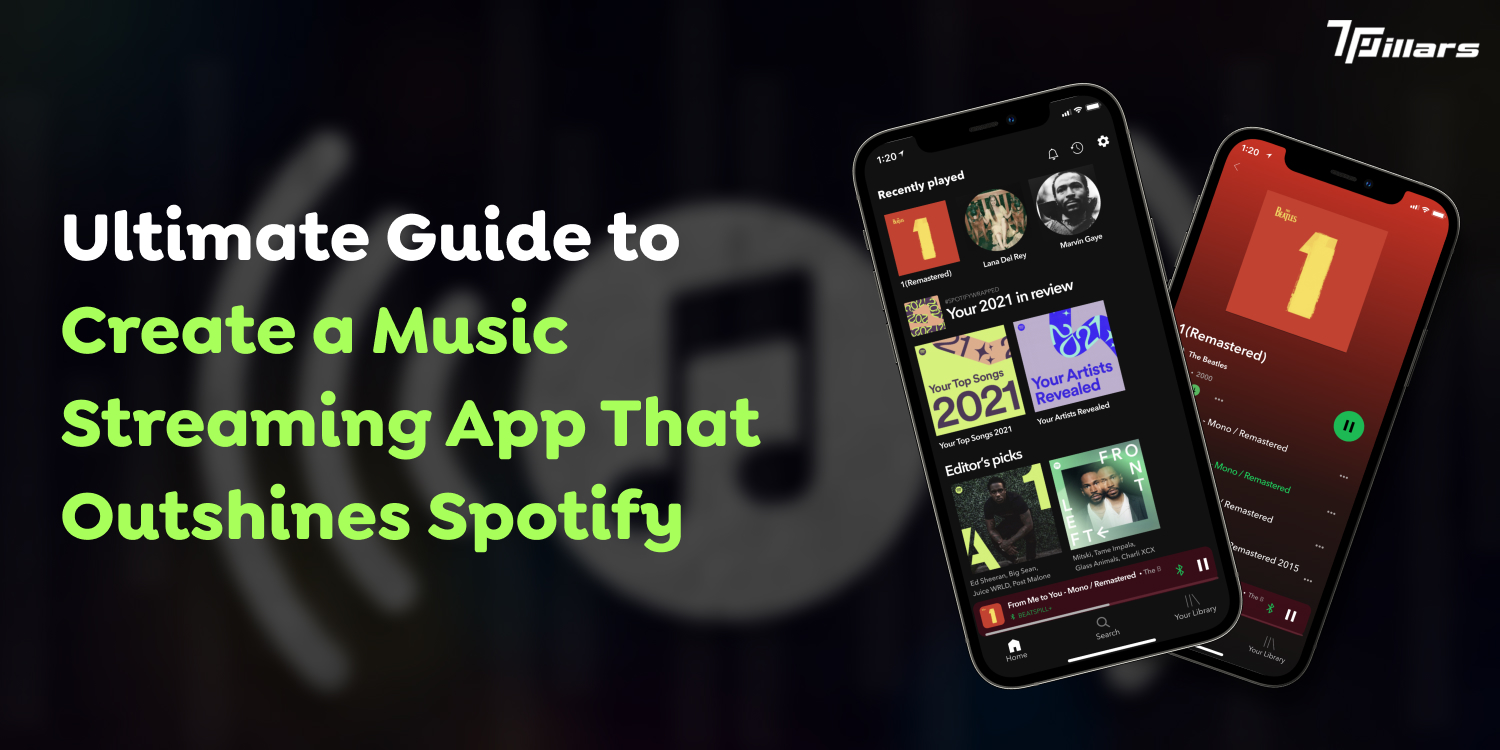
The modern lifestyle has identified music as one of the most essential mood boosters in exercise, busy travel, and after a stressful day. Dancing in comfy pyjamas, tapping lo-fi music, or emotionally regulating through sound, music streaming applications offer an immediate source of happiness, creativity, and health, with individualised playlists for users worldwide.
This ever-increasing emotional attachment to music is fueling an enormous demand for platforms like Spotify, urging entrepreneurial minds and application development firms to invest in new and innovative music applications. With mental health, productivity and remote living rapidly growing in 2026, users want access to millions of songs at a low price that intelligently match their mood.
On the one hand, music streaming applications have transformed the way the world listens to music by eliminating physical collections and providing infinite libraries at our fingertips. The best music streaming service is now both a discovery engine and champion of the indies, as well as the most enjoyable, personalised listening experience that fits with hectic digital schedules in the twenty-sixth century around the world.
In 2026, music streaming applications are much more than listening. The digital consumption of music has been transformed by AI-generated playlists, emotion-driven suggestions, a social listening room, and livestream interaction with artists.
The latest music apps leverage AI and machine learning to learn about moods, habits and contexts to suggest music to work out, focus, and sleep. The inclusiveness of gaming, like virtual performances, spatial sound, and artificially intelligent music experiences, remains on the edge.
The new Android-based music streaming app focuses on multi-device access, ultra-low latency streaming and personalised sound experience. Independent artists also enjoy the advantage of uploading songs, live sessions, and interacting directly with fans without traditional gatekeepers.
In this digital age, the most optimal music streaming platform, such as Spotify, has transformed the emotional relationship that individuals have with music. Spotify has over 500 million active users globally. Its success is due to the popularity of personalised, mobile and immersive audio experiences.
If you opt to build a music streaming app like Spotify in 2026, you will be tapping into a competitive but profitable market where one cannot rely only on content but equally on technology, user experience, and innovation.
Are you a Rihanna fan, or do you love Taylor Swift a little more? The answer lies in your playlist hidden in streaming platforms like Spotify. Spotify is a giant in the music-streaming industry that enables users to play their favourite artists anywhere, whether at work, rest, or during transit. The Android version of the best music streaming app can offer access to millions of songs and podcasts, with premium audio quality, that meets the devices of the present time.
Spotify creates playlists, helps you find artists and browses through algorithmic blends or editorial playlists. What makes Spotify significant in 2026 is offline downloads, social networking, collaborative sharing, and playlists.
Spotify is a digital music player founded by Daniel Ek and Martin Lorentzon in 2008. It transformed digital music by offering free and premium music. It is one of the top music streaming services in the world because its intelligent algorithms examine listening behaviour and provide hyper-personalised recommendations.
Spotify’s business model is “freemium,” where the service is free but with options for premium subscriptions. The Swedish company, founded in 2006 by Daniel Ek and Martin Lorentzon, launched their service two years later.
Spotify was created in response to the increasing illegal music downloads that plagued the music industry. This would be a legal, user-friendly outlet to immediately access a massive music library while continuing to pay for the artists and record labels.
This freemium model enables Spotify to provide its entire music library for free but with certain restrictions. Free users tolerate the ads that run between songs and cannot download any song for offline use.
They have limits on the number of song skips. However, premium subscribers who pay a monthly fee enjoy high-quality, ad-free services with the ability to download music, giving control over song selection and playback.
This is the most crucial revenue category, and premium subscribers are the sources. The subscribers pay a monthly added feature in return. Spotify has subscription packages for individuals, families, and students.
Spotify also makes money from free users by playing ads between the tracks. It provides opportunities for enterprises to reach their target audience through audio, video, and display ads.
Spotify pays artists, record labels, and music rights holders royalties in proportion to how many streams the former’s track is subjected to. The innovative freemium model invented by Spotify spearheaded the company at the head of the global music streaming industry, including hundreds of millions of users and leading positions in music and podcasting. The best music streaming app for Android devices gives users access to a wide range of music and podcast content through their high-quality audio collection.
The success story at Spotify started in 2006 when Swedish entrepreneurs Daniel Ek and Martin Lorentzon developed this epiphany to combat the growing challenge of music piracy by legally creating a user-friendly music-streaming platform.
Spotify launched in 2008 with an innovative freemium model containing free ad-supported access with premium subscription services. Millions of songs would suddenly become accessible to people thanks to that brilliant idea.
Spotify saw early success with on-demand music, ease of use, and complex algorithms offering customers the most personalized recommendations. For the first time, Spotify had secured licensing deals with major record labels, positioning itself to offer authorized alternatives to illegal downloads. It opened up new revenue streams related to streaming for artists, which should revive the ailing music industry.
Then, this company started to grow very fast, scaling operations globally while enhancing its offering. Spotify changed how people discovered music through creative playlists like “Discover Weekly” and deeper levels of user engagement. It branched into podcasts, where Spotify scaled beyond just music by signing exclusive deals with some of the largest podcasters.
With millions of people paying for its premium services, Spotify has over 500 million active users worldwide and is now regarded as one of the most well-known music streaming services.
Engineering precision combined with deep insight into human behaviour is the combination that best describes the Spotify experience in building trust in each user. Arguably, Spotify’s recommendation technology, which offers recommendations and playlists tailored for each user, forms the core of this trust. It achieves this by stitching together a massive volume of data, listening habits, user feedback, and contextual information to ensure users discover music that always resonates with them.
Engineering trust deals with security and privacy. The best music streaming service like Spotify apply advanced encryption; data protection measures are taken so that users’ information may stay safe and they can enjoy the service in a secure environment. It builds trust due to its straightforward, intuitive design at the user interface, offering the same experience reliably on every device.
The ability to listen to music on demand, a user-friendly design, and sophisticated algorithms that generated tailored recommendations all contributed to Spotify’s early success.
More importantly, Spotify’s commitment to transparency in things like clear communications for changes in terms of service or privacy policy renews the commitment with users. Updates and new features, often shaped by user feedback, prove that Spotify listens to and values the community.
This combination of personalized content, robust security, and responsive design underpins the trust users put in Spotify, making it not just a music streaming service but trusted in daily life.
The growth of Spotify in Australia reflects global trends in music streaming. In 2023, Australia will continue to contribute significantly to the worldwide market for music streaming, propelled by growth at a rate of 12.0% in user penetration, expected to increase to 14.1% by 2027.
The Australian market continues to grow at a CAGR similar to that of global growth in this industry: 5.13%. It’s anticipated that by 2027, revenue from the music streaming market will total US$31 billion. In 2027, an estimated 1.1 billion people will be using music streaming services. This further underlines Spotify’s growing supremacy in Australia and its relative competitiveness in the global markets.
|
Feature |
User Benefit |
Why Does It Matter in 2026? |
|
AI Mood Playlists |
Auto-matches emotions |
Users prioritise mental wellness and emotional balance |
|
Immersive Audio |
3D sound experience |
High-end headphones and Dolby Atmos adoption is mainstream |
|
Live Virtual Concerts |
Real-time performances |
Independent artists dominate digital platforms |
|
Social Listening Rooms |
Group music sessions |
Gen Z values shared digital experiences |
|
Smart Offline Mode |
Auto-downloads songs |
Users expect convenience without manual effort |
|
Hyper Personalisation |
Tailored discovery |
Reduces content fatigue and increases retention |
|
Cross-Device Sync |
Seamless switching |
Multi-device lifestyles are standard |
|
Voice Control |
Hands-free access |
Wearables and smart environments are growing |
|
Creator Monetisation |
Direct fan support |
Supports independent artists |
|
Ethical AI |
Fair artist payouts |
Users support ethical, creator-friendly platforms |
If you are a brand looking to create an app like Spotify, the only thing holding you back is why you should invest in building an app like the popular music streaming one. If the answer is yes, then work with a music streaming app development company to understand the extent of benefits you can gain by creating a music streaming app.
A clone of Spotify gives a brilliant head start to any business in the booming industry, assuring its users of the most seamless and engaging hub for music consumption. Features of this application include personalized playlists, listening offline, and access to enormous libraries, which meet the needs of today’s consumers for convenience, personalization, and entertainment on the go. A music streaming app development company can help you integrate the latest tracks.
Are you a brand looking to broaden your reach and generate better revenue? If the response is “yes,” developing an app is your best bet, as it allows brands to widen their reach and make better revenue.
A music streaming application provides a great avenue to showcase an online presence within the rapidly growing digital music arena. With a neat and user-friendly app, you will create an avenue into the world market to build for the audience immense libraries of music at their fingertips.
This serves not only to enhance your brand presence but also helps you carve a niche for yourself among aficionados. You could win users’ loyalty with suggestions, playlists, and seamless streaming. Other avenues for monetization could be subscriptions and ads, which would help you have a competitive edge regarding music streaming.
The best part about creating a music streaming app is that it allows you to earn big bucks from listeners by giving them what is in demand. Premium membership or a set of paid tools within your music streaming application can make it profitable.
Examples include ad-free streaming, high-quality audio, exclusive content, and playlists tailor-made by professionals. Users are willing to pay for an enhanced listening experience. With added value, your offering gets even more attractive to potential users who will start purchasing subscriptions or spending money within the app. Users can access high-quality audio content through the best music streaming app for Android, which offers extensive song and podcast libraries.
It increases user satisfaction by opening the doors to recurring revenue through subscription models. Premium features will help you retain customers, thus making your platform financially successful and long-lasting in this competitive music streaming market.
The only way your music streaming app will be successful is if you treat the artists fairly and pay them a price that helps you retain them for a while longer. The development of a music streaming application provides a robust platform to encourage upcoming musicians and solo artists to present their work to the world.
You can also provide a platform for less-recognized performers of various genres and different forms of music to come into the limelight and increase their following. It might be essential publicity for advancing their careers, collaborations, recognition, and monetization.
Your application becomes a source of discovering new talent and helping new artists to reach an international audience. By assisting up-and-coming performers, you also encourage users to utilize your app longer in search of fresh, varied music, which fosters a vibrant musical community.
Everyone has a unique music taste with differing choices, and music streaming apps allow listeners to make their playlists with their favourite songs to move their bodies to. A music streaming application would provide room for creativity by enabling users to create their mix playlists, get recommendations from personalized content, and even discover obscure bands. A music streaming app development company creates platforms that execute innovative ideas through their capability to deliver high-end user-friendly features.
Originality will help set your platform apart from the crowd. You can lure users looking for something more than mainstream fare with mix-and-match creating, perhaps a genre-specific or subculture musical experience.
Functions such as playlist creation and recommendation will add value, among others, to further deepen the engagement. It is bound to make this application an ideal destination for music lovers who appreciate the variety and unique content, making your platform stand out from the competition.
Integrating the live video capability into your music streaming application provides users with the ability to actively participate in concerts, performances, or discussions in real-time. That helps improve their experience.
Such an exciting new feature creates a greater connection for the fans with their favourite artists, adding community and interaction to what thus far was only passive listening. Users can watch exclusive live shows, join virtual meet-and-greets, or even participate in Q&A sessions by feeling more involved.
Such live interactions could provide the immediate feedback an artist needs and reinforce relationships with their fans. Your app has this dynamic functionality that appeals to users of the virtual music world who want more than just a passive one-way experience.
While creating an application, different people use different processes. Fundamental components are needed for every product and consumer to improve their applicability and guarantee success once they are released onto the market. Each person has different needs, but for an application to be successful in the market, everyone must adhere to some standard procedures, especially if they wish to duplicate a pre-existing application. A music streaming app development company helps transform original ideas into user-friendly platforms featuring various advanced features.
In general, developing a Spotify-like music streaming application requires a lot of time and cost if a professional team of developers, designers, content planners, and marketing experts is included. Altogether, the estimated cost and timeline will depend on the scope of work, the number of development team members, the features themselves, recommendations, offline access, and many more.
According to the available tools or platforms, collaboration with industry experts will ease the process, reducing the waste of time by minimizing complexity. The development of any best music streaming service like Spotify involves a few pivotal stages: market research and planning, development of the app, acquiring content, considering legal issues, testing, launching, and continuing the maintenance of the service. Following is a six-step overview of the same:
The initial stage of creating a profitable app is knowing what your competitors are doing and how you can stand out in the market among users to attract them towards your app over your competitors.
When creating the app of your dreams, you should think carefully about who your target market is and how to make your product stand out from the competition. Spotify has become one of the most well-liked music streaming locations in the industry because of its superior customer care and music variety.
If you intend to develop an app, know that a great idea alone won’t guarantee success. Market research is pivotal to understanding how your app will stand out and how you might have a competitive advantage over rivals. A reputable React Native mobile app development company can help you build an amazing app like Spotify.
Research on current trends in the music streaming industry, user preferences evaluation, and competitor analysis are all necessary for the market research of apps like Spotify. Observe top music streaming applications for characteristics and deficiencies in those applications.
Second, understand the user’s behaviour: what would make them feel great with such a service, like playlists from curated lists, offline access, or social sharing. Analyse the target demographics to tailor content and design elements specific to your application.
In this regard, you must deeply study market trends so that your application may catch the emerging technologies or shift users’ preference for something. This will help propose the value and ensure from the competitive point of view that the application will meet the user’s needs.
Before planning any development of an application similar to Spotify, one needs to know that you can’t build up your customer base without offering your listeners exclusive features and trending songs from their favourite artists.
Now, prioritize your main features of the music streaming application given the market demand and needs of the target users: consider fundamental ingredients like signing up for the user, access to huge music libraries, and creating aspects of playlists; sprinkle a little spice with social sharing and personalized recommendations for more engaged users.
Offline listening capability can be added to enable users with constrained internet access. Shortlist these features on the grounds of priority and viability. First, consider those features that align with the user’s desires and are not offered by competitors, as it will promise your application creates more value for the user and gives it a competitive edge.
The user interface is another vital point that can either make or break your app; thus, it becomes of utmost importance while designing an easy-to-use and loud design that attracts and retains the user’s interest. The user’s preferences must be considered while creating an appealing user interface.
The views’ layout should be straightforward, simple, and easy to peruse. Remember to include enjoyable components like dynamic visualizations and interactives. Contemplate both a web version and a mobile one: coherence between them but each considering the particularities of each device.
An application has to be practical and accessible, regardless of the user’s level of knowledge of computer technology. A good UI brings better user satisfaction and retention. Collaborate with a leading app development company to integrate unique characteristics to your app’s user interface.
Without experienced engineers and developers, implementing your app idea into real life is impossible. Find those professionals who work with a wide range of programming languages and tools from Swift for iOS development to Java or Kotlin for Android. They will work out the app functionality compatible with the required platforms. A determined React Native mobile app development company can develop an app like Spotify in no time.
This is where user data processing, music streaming, and storage occur. Rigorous testing will ensure that the app performs stably and securely with a brilliant overall performance. Tests to be done are for different functionalities, usability, and stress tests to find out issues and resolve them pre-launch. The above shall help deliver a very holistically reliable and quality app.
Of course, the rights and permission will make music streaming via your app legal. First, negotiate contracts to use record companies, musicians, and artists’ catalogues. These agreements will let you distribute your content to consumers of your service lawfully. Work out a lucid scheme of paying royalties so that all the artists receive an appropriate percentage of their work.
The intellectual property rules ensure that the law of copyright is considered and there isn’t any infringement of the same. It is imperative to adhere to licensing agreements and request permission before using any copyrighted material. Proper management of such legal aspects will enable the app to always be in trust and within the ambit of the law. A mobile app development company can help you gain music license and copyright issues sorted effortlessly.
Release the software on popular marketplaces like the Google Play Store and Apple Software Store after it has been produced and thoroughly tested for bugs. Devise a proper marketing strategy that should reach your target audience. Advertise on digital marketing platforms, social media, and even with influencer partnerships. Run targeted advertisements that will help you access your core demographic. The music streaming app development requires user engagement strategies as a basic element for long-run success.
Continuously meet user satisfaction by proactively reaching out through requests for feedback, bug fixing, and releasing updates and features.
At every phase of the mobile application development cycle, flexibility, security, and consideration for data safety should be incorporated. Update your app regularly, on-board new functionality, fight some issues, and adapt to the changing market trends and technologies.
Be sensitive to user feedback and events in the market for informed improvements that keep positions at the top. This will give the app relevance and ongoing user activity in the vibrant market.
By facilitating smooth communication between the app users, in-app messaging and chat features foster more collaboration among them. It makes it very easy for the user to connect with friends using that particular app, thus helping build a social environment in those apps. A renowned mobile application development company can assist you in analyzing the growing market.
They share music recommendations, discuss favourite tracks, and share experiences regarding songs they listen to in real time. Such an interactive approach offers not just a personalized music-listening experience but is building up a community among them.
Making direct connections with other users via the app facilitates the development of rich and dynamic experiences that make exploring music enjoyable and cooperative. This kind of social connectivity creates solitary listening into a shared adventure.
User accounts must be created or registered using an email address, specific social media accounts, or other forms of identity. These identifiers enable the user to effectively save their preferences and allow personalization each time access is made to an app or service.
The inclusion of the registration process has the potential for storing user settings, favourite content, and recommendations tailored according to interests and behaviour. In addition, this will lead to special features and services, including exclusive content or special offers. In turn, this will serve as an agent to maximize user satisfaction by providing a far more interactive and personalized means of using the platform. A trustworthy React Native app development company is your one-stop haven to integrate the latest features in the app.
User profiles let users organize their settings, and their listening history, follow artists and friends, and update locations from within the app. This feature would increase app personalization by users, who can choose based on their preferences.
The users can follow artists and friends, keep connected and find more music through social interactions. In summary, user profiles make communication smooth and personalized, developing the user experience and creating a more active community.
Sharing capabilities on apps will enable users to share their favourite songs, mixes, or bands through social networking sites or even directly within the same app. This will allow users to advertise their musical tastes and their discoveries to an audience larger than one’s circle could allow, enhancing a sense of community while sharing and discovering music across the platform. Music streaming app development should include these features to build an interactive user experience that engages application users.
It is in the sharing of such tracks or playlists by user preferences that their friends and connections get exposed to new music, which perhaps would never have been encountered otherwise. This peer-driven discovery enhances the overall music experience by encouraging exploration, extending the user’s musical horizons through recommendations and shared experiences courtesy of his social circles. A mobile application development company has the ability to implement features that increase user connection and maintain user loyalty.
Music videos should be freely accessible online for any user who has access to the internet, as it is an easy way to watch visual content combined with audio tracks. Downloading a song, album, or playlist is highly in demand for offline listening.
It enables users to listen to their favourite music without being ‘chained’ to an uninterrupted internet connection. Now, music can be available anywhere: travelling, commuting, or in other areas with poor network connectivity. The users will have a better experience with the ease and convenience of listening to music offline. A React Native app development company can help you understand the benefits of making your content available offline to your listeners.
A robust search tool contributes to this experience, allowing one to find a particular song, album, or band in just a few seconds. That speaks to efficiency, in which users can catch what they are looking for without hassle. In addition, recommendations make it useful-personalized toward users’ tastes and preferences based on a user’s past interactions. A music streaming app development company can help you revolutionize the industry.
Handcrafted mixes and searching by genre further fine-tune the means of discovery through curated playlists and music to suit individual tastes. Users can browse through and enjoy music connected to their interests and hobbies comprehensively and dynamically when these features are integrated.
Music streaming applications employ various complicated algorithms that continuously make recommendations based on the user’s preferences in listening, favourite tracks, and all other information relevant to the particular case. A recommendation algorithm considers the patterns in the users’ listening history, such as genres, artists, and songs they repeatedly listen to. A React Native mobile app development company can assist you in integrating unique features in your app.
Once this information is processed, the application should return precise and personalized recommendations that expose users to artists, genres, and tracks in directions close to their established preferences. This data-driven approach helps users broaden their musical horizons and enhances the general listening experience for users through the constant presentation of fresh and relevant music.
Users have several sharing and collaboration choices when it comes to playlists because group creation and maintenance is a vital function in music applications. You can easily create playlists that you could share with friends, compile collections of songs you like, or themed mixes around an object, place, event, or feeling.
This is a shared mix feature where multiple users can contribute to one single mix. In that way, the experience of curating and finding new music can be social. Users can work together by mixing and combining various musical tastes and preferences, making playlists vibrant and engaging, reflecting several interests and sharing community and enjoyment.
Push notifications help keep users hooked with their music and reading interest by serving an alert when bands that they are following have new music available so they can stay updated on the latest tracks and albums. This also includes notifications of updates to playlists that users have personalized, thereby keeping them updated regarding new content available in their areas of interest. General news notifications enable the user to stay informed about pivotal updates or events related to music streaming app development.
All information in real-time keeps the user connected and interested in their related topics, be it finding new music or even new books to read, making their interaction more enjoyable and experience-enhancing. A mobile application development company uses integrated features to improve user interaction and loyalty.
|
Aspect |
AI Music Apps |
Traditional Music Apps |
|
Playlist Creation |
Auto mood-based |
Manual selection |
|
Music Discovery |
Predictive AI |
Search-based |
|
Personalisation |
Hyper-personalised |
Limited customisation |
|
User Engagement |
High & interactive |
Moderate |
|
Artist Support |
Smart monetisation |
Fixed royalties |
|
Retention Rate |
Higher |
Lower |
It costs a lot in various ways to develop an application similar to Spotify in Australia. Factors include development complexity, design requirements, and more. The average price of building such a music streaming app as Spotify in Australia can vary from AUD 100,000 to AUD 500,000 or even more. Hire either a React Native app development company or an iPhone app development company, depending on your budget to build the app of your dreams.
The program should have a visually appealing and user-friendly design. Prototyping and Wireframing are involved, and the approximate cost ranges from AUD 10,000 to AUD 20,000.
Regarding backend development, any Spotify clone that wants to handle a lot of data needs a robust server. It also involves user profiles, playlists, and music libraries, entailing a cost of approximately AUD 30,000 to AUD 50,000, depending on the degree of complexity.
The actual coding and integration of user interfaces involve the app development on both iOS and Android platforms. It costs anywhere from AUD 30,000 to AUD 60,000. A React Native mobile app development company can help you understand the front-end costs.
The cost of licenses, which range from AUD 50,000 to AUD 100,000 annually, depending on what is agreed upon, must be obtained if the app streams music. A React Native app development company can help you understand the benefits of analysing the market before developing an app.
Ensuring the app does not glitch or bug increases the total estimate by AUD 5,000-15,000.
Maintenance and keeping up with feature updates are typically done so that the product will sustain itself without any issues. It costs AUD 5,000-10,000 on average per month.
Developing an application like Spotify in Australia can cost AUD 130,000 to AUD 250,000 or even more.
Building an application like Spotify in Australia would include several cost factors, right from the development difficulty to the design the application would require. It could vary greatly, from the app feature, and platform selection to team structure. In general, developing a music streaming app similar to Spotify in Australia would have an estimated cost of around AUD 100,000 to AUD 500,000 or more. A dedicated mobile app development company can help you understand the factors affecting the development cost.
The complexity of the feature set, including user registration, music library, offline downloads, social sharing, and personalized recommendations, makes the development time-consuming and costly. Recommendation algorithms using machine learning, audio streaming technology, and data storage further enhance the cost.
iOS, Android, and Web development would be more expensive, as separate codebases or cross-platform frameworks like React Native will be included, meaning each platform needs its own development and testing process.
A flawless music streaming software can only be enhanced by its user interface and user experience. Increased user engagement occurs due to better, more intuitive design, but it takes longer to create.
The powerful backend for millions of songs, real-time streaming, and security requires cloud servers, databases, and content delivery networks. These are operational costs apart from the development and will keep adding to the overall budget. A reputable mobile app development company can help you build an app of your dreams within your budget.
These are for music licensing fees, which can be expensive to legally obtain song rights and follow the regulations according to Australian law. A React Native app development company can help you build an app that can seamlessly cater to the different user needs.
Experienced developers, designers, and testers will be employed, adding to the cost, whether hired in-house or via a third-party agency, depending on their location and expertise.
Developing an application like Spotify requires a clearly outlined strategy, technical capabilities to create an application with real value, and deep knowledge in the music streaming area.
Building an application similar to Spotify requires finding the sweet spot where technical development meets navigation in the music industry and strategic growth. Once you take care of this through proper planning and execution, making further commitments to innovation will enable you to build a music streaming app development that finds a place in users’ hearts and will be capable of competing in the digital music space.
As an Australian mobile application development company, 7 Pillars helps companies create Spotify-like applications with special features, deep architecture and long-term expansion plans. When you are ready to make the next big music streaming platform, 7 Pillars is the partner you can trust in development.
FAQS
Q 1. Why would I engage the services of iOS app developers with my music streaming app?
Ans 1- iOS app developers offer knowledge on the Apple ecosystem so that your own music app is compatible with iPhones and iPads to achieve high performance and better user experience.
Q 2. Is it possible to integrate POS software into a music app by iOS app developers?
Ans 2- Yes! iOS app developers can build in POS software to permit in-app purchases, subscriptions, or sell merchandise, turning your music app into a money-making service.
Q 3. What is the mechanism through which iOS app developers improve the functionality of the app?
Ans 3- They maximise productivity, introduce streaming capabilities and incorporate other tools such as POS software to facilitate smooth transactions and analytics monitoring.
Q 4. Should you hire iOS app developers for music app monetisation?
Ans 4- Absolutely. Your app can easily sell premium subscriptions, in-app purchases, and premium content through the use of iOS app builders and POS software.


Partner with us to bring your vision to life.



 +61 (42) 108-3277
 contact@7pillars.com.au
 294A Station Street,
