Let's have a
Quick Chat
with you!
Quick Chat
with you!
You have our ear and we can't wait to hear about your idea! Share your details here and we will make sure to schedule a coffee date with you soon.




Mental health is basically the core of the process through which individuals express their emotions, challenges and how they relate to the world around them. By 2026, as lifestyles continue to be more digitally integrated and professionally demanding, maintaining one’s mental balance will be put on par with maintaining one’s physical health, especially with the growing role of wearables and mental health App solutions in everyday life.
It determines one’s ability to bounce back, one’s efficiency, one’s innovation, and the quality of one’s relationships. If one’s mental health goes down because of chronic stress, anxiety, or emotional exhaustion, it can interfere with one’s normal functioning and result in a decrease in both one’s personal happiness and professional effectiveness.
Being under pressure from the economy, social media influence, remote work culture, and academic competition, these factors have, in a way, contributed to increased psychological stress in different age groups in Australia. On top of that, although the trend is changing and there are more and more support systems, the stigma and the delay in the intervention still make it difficult for many people to get timely mental health care.
Mental health has become the centre of the global discussion. Digital transformation of 2026 radically changed the means of providing, gaining, and experiencing support. Thanks to technology, therapy, tracking, and emotional monitoring have become more accessible than ever before.
Digital platforms offer online therapy, chat support through AI, mindfulness applications, and wearable tracking. At the same time, excessive use of the screen, cyberbullying, and the comparison culture, with the help of algorithms, are continuing to take a toll on psychological health.
The Australian population has suffered a psychological scar because of the COVID-19 pandemic. It is reported that anxiety, depression, and burnout cases are not new and that the situation continues to be the same even several years after the lockdowns.
This is particularly the case with young Australians, as almost 39% of individuals aged 16–24 years report having suffered a mental disorder in the past year, which indicates that psychological distress is still significantly high among young people relative to the older age groups, further increasing the need for advanced wearables and mental health App solutions that provide timely support and intervention.
Social isolation, economic uncertainties and digital overload are some of the post-pandemic stressors that have driven the high demand in mental health support services. Although the number of people requesting assistance is increasing, the need is still high, and anxiety rates, burnout, and overall distress still exceed those before the pandemic in 2026.
Wearables are electronic devices that a person wears on their body. Most of the time, they are ingrained in clothing and accessories that help monitor and track aspects of one’s health and activity. Such devices include smartwatches, fitness trackers, and smart glasses. They use sensors to pick up data related to metrics like heart rate, physical activity, sleep patterns, and even environmental conditions.
This information is then interpreted and presented by associated applications to give real-time insights and feedback to the user. Wearable technology, therefore, serves as the means to personal health management, fitness tracking, and ease of life by seamlessly integrating with valuable information, supporting wearables and mental health app experiences to improve well-being in daily life.
A reputable app development company can help you develop a brilliant mental health app integrated with wearable technology to help you become successful in the market.
Similar to other brilliant technologies, wearable technology has revolutionized several industries by making things convenient and speedy, with the mental health industry being no exception.
Wearable technology has significantly impacted the mental health industry itself, wherein people suffering from disorders like anxiety, depression, etc., can now monitor their health with the help of sensors that come equipped with the technology, the level of stress, sleep pattern, heart rate, etc.
The technology helps improve the user’s mental well-being by tracking habits and monitoring activity levels; hence, it allows people to change towards healthy life habits and make the required modifications in their lifestyle.
What began as a primary fitness device has evolved, over time, to become a sophisticated medical device capable of monitoring several physiological and psychological aspects that make up life. Miniaturization of sensor technology has brought this change even closer to home, after pedometers and heart rate monitors laid the fundamental groundwork for wearable technology, hence giving birth to wearable devices.
Wearables are prominent devices in the rapidly changing landscape of mental health care. It has been developing innovative tools that build solutions focused on monitoring and improving mental well-being.
From smartwatches that track stress levels or sleep, specific devices offer real-time biofeedback, changing course towards mental health. Different wearable devices for mental health are available in the market, catering to the user’s unique needs since one-size-fits-all is not an option due to the diverse challenges faced by individuals.
A responsible wearable app development company will ensure you receive a high-quality and reliable solution developed according to your concrete needs. Beyond that, the company has to offer expert-level integration of advanced technology, provide high support, and deliver the product so that the user experience is effective.
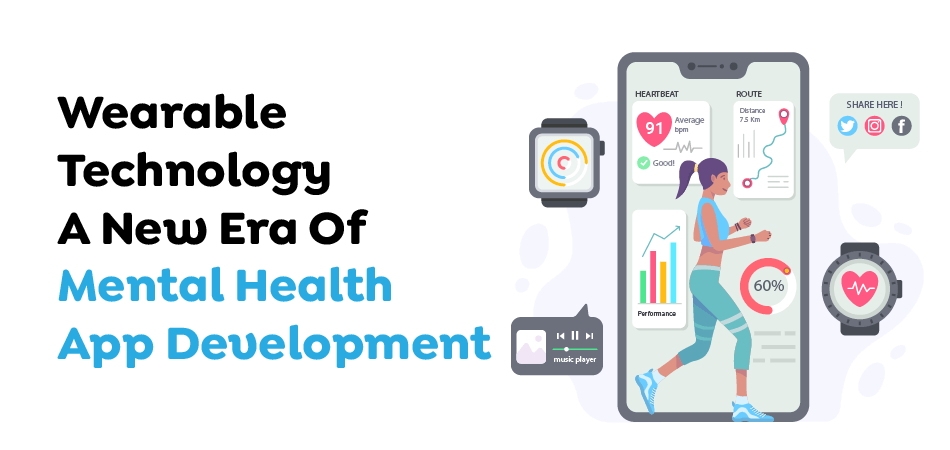
The first devices to implement wearable technology were fitness trackers and smartwatches. It helped in knowing the heart rate, stress level, and sleeping pattern, thereby letting the user make all the necessary changes in their lifestyle to live healthily.
The best thing about these applications is that they synchronize with your wearable devices, thus making it easy for you to check and analyse your data from anywhere in the world at any time. These applications have exquisite features like guided workouts, healthy habit reminders, personalized feedback, etc., to help people achieve their mental health goals in no time.
Isn’t it great that we can analyse our physiological symptoms without running to doctors for every little symptom? Thanks to the invention of biosensors, you can now examine your physiological symptoms with no issues, enabling more precise monitoring of parameters, including blood pressure, glucose levels, heart rate, and real-time health information.
A biosensor application utilizes a suite of wearable sensors to collect data in real-time and analyses physiological information such as heartbeats, glucose levels, or blood pressure.
The app retrieves data from biosensors, generally built within smartwatches or activity trackers, recording minute information on health metrics and answering the same. It often comes with user-friendly dashboards, trend analysis, and abnormality alerts to help individuals keep track of chronic diseases or optimize wellness routines.
Another brilliant wearable device-integrated app is a wearable ECG monitor that helps individuals track their heart rate and take steps if they find any abnormalities. This detailed heart rate analysis helps individuals understand and know when they are getting a panic or anxiety attack, and they can take action accordingly to manage their attacks better.
It provides real-time feedback and alerts in the event of abnormal heart patterns, thus having an instrumental value in the early detection of conditions like atrial fibrillation or arrhythmias. Of the many applications available, a large number include historical data tracking, trend analysis, and even healthcare provider integration to give users access to monitoring and management of heart health.
EEG headsets are another brilliant wearable technology integrated app that helps individuals detect conditions like ADHD and depression in their early stages by evaluating brain activities and alerting the individuals of irregularities to help them make the required changes.
The headset, fitted with electrodes, picks up electrical activity from the brain and sends this information back to the app. One can track states such as focused, relaxed, or even sleep. The app processes the EEG signals to give real-time insight, visualization of the brain wave patterns, and feedback on cognitive performance. A known app development company can help you integrate brilliant wearable technology into your EEG Headset app.
Did you ever think that one day your clothes would be able to help in detecting mental health issues, probably not. Thanks to the invention of smart clothes, it is no longer a dream but a reality, as they have sensors embedded within that allow individuals to monitor physiological symptoms related to psychological issues.
It collects and interprets real-time data to give insights into the user’s health and performance. Such features can represent the ability to track physical activity, quality of sleep or optimize athletic performance.
There isn’t one but many, making wearable technology a part of mental health care. These devices might monitor physiological signs, like heartbeats and stress levels, which could provide more real-time feedback and insights that are natural toward personalization. They help in early interventions, improve the effectiveness of therapy, and empower self-management of mental well-being.
Wouldn’t it be great if you could detect anxiety or depression in their early stages and take action accordingly to manage them with no trouble? The wearable technology integrated with mental health apps helps individuals monitor their psychological and physiological symptoms continuously to allow them to detect mental health issues early.
Early detection allows early intervention, which might significantly impact the treatment outcome and prevent deterioration. Continuous monitoring empowers users and healthcare professionals to maintain information on trends in mental health and enables person-centred and adaptive care strategies.
Two pivotal features of a mental health app integrated with wearable technology would be personalized care and real-time intervention. Personalization refers to tailoring treatment and support according to the needs of the individuals based on the data captured in the form of heart rate variability and sleep patterns, among others.
It leads to the customization of relevance and effectiveness for strategies in mental health. Real-time intervention allows for instant responses to issues detected, such as sudden changes in mood or stress levels.
This feature enables users to take preventative measures for their mental health and well-being, which lowers the likelihood of severe episodes. Technologies that raise timely notifications and recommendations facilitate this ability.
When the wearable device is combined with mental health apps, patients can get help without ever leaving their homes by sharing the data obtained with medical professionals. Heart rate variability, sleep, and general physical activity are recorded by wearables, providing information on mental health status.
This data helps monitor a patient’s progress as a clinician and identify patterns to make better and more informed decisions about treatment adjustment. Real-time data will enable timely interventions and more personalized care that works better for the patient to ensure the treatment plans respond to the patient’s needs.
The best thing to come out of the integration of wearable technology with mental health apps is the reduced stigma surrounding mental health disorders. Wearable technology in mental health apps breaks down barriers and normalizes mental health monitoring and treatment.
It can enable users to monitor their symptoms effortlessly, knowing that real-time data capture will provide a means of monitoring one’s mental well-being privately and asking for help if needed—free from judgment and stigma. The kind of integration that brings openness to the conversation, early intervention, and support is accessible to all people, irrespective of geographical or socio-economic backgrounds.
If you would like your mental health app to succeed in the market, then there are several things you need to consider. You will have to provide your targeted audience with many unique features that will capture them as loyal customers if you want to remain safe in this industry.
There are a lot of vultures out there eager to replace you, so you have to work hard to keep them from doing so.
A key feature common in all mental health applications is provision for registration or login, and the attendant detailed user information, together with details of their preferences for the various mental health tools.
This then allows users to register on the application and maintain private information about themselves, including names, telephone numbers, physical addresses, and favourite products. Using this information, it can then offer a customized platform experience for the target clientele.
If you plan on creating a mental health app integrated with wearable technology, then the foremost feature that you need to incorporate into your app is real-time monitoring to allow users to track their vitals and stress levels throughout the day.
This enables timely intervention, tracking of trends in mental health, and insight into triggers and patterns. Real-time monitoring allows users to take a proactive approach toward their mental health and offers them recommendations and individual support toward better well-being.
Personalized feedback from a mental health app associated with wearable technology provides real-time, individualized insight into the user based on biological data. The more heart rates, sleep habits, and physical activity this app tracks, the more probable it is to identify the first weaknesses in the armour, be it stress, anxiety, or depression.
Using that information, it provides tailored recommendations, such as relaxation exercises, mindfulness activities, or even alerts to seek professional help. It is, therefore, a personalized way of ensuring timely and relevant support to users for improved mental well-being and proactive management of mental health.
Isn’t it great you can log your mood in mental health apps? Mental health apps that incorporate wearable technologies continuously track the user’s physiological data, including heart rate, skin conductance, and sleeping patterns.
The metrics are interpreted by the application through advanced algorithms to form an impression of the user’s current emotional state in terms of patterns and fluctuations in their mood. It generates real-time feedback and gives relevant insights to the user for their emotional triggers and management of better mental health.
Another pivotal feature that you need to offer to your users is sleep analysis to help them understand their sleeping patterns and work on getting better sleep to avoid falling prey to mental health disorders. The application provides information about sleep disturbances, sleep insomnias or apnea, drawing from raw data supplied by devices like accelerometers and heart rate monitors.
It offers individual recommendations regarding restoring sleep patterns and mental health, including relaxation techniques and bedtime routines. As it tracks the long-term trends in sleep, this feature helps users understand how sleep impacts their mental well-being and might warn them to seek professional help if some serious problems are detected.
Retaining the attention of the target audience is essential for mental health app owners to avoid going out of business, and the easiest way to do this is by using a push notification tool to keep them engaged with the brand. The notifications section, as part of a mental health app integrated with wearable technology, generates real-time personalized alerts.
Such notifications could remind the user to be mindful, to take medication, or to consider stress-relief activities based on biometric data relating to heart rate and sleep patterns. These reminders for therapy sessions, medication refills, and other kinds of physical activities keep users in line with their routines toward mental health.
The feature differentiating mental health apps fitted with wearable technology is their integration into healthcare professionals. The sharing of real-time data between a patient and their healthcare provider empowers patients with continued monitoring of mental health metrics via heart rate, sleep patterns, and physical activity.
Abnormal readings set off alerts, raising timely interventions; historical data will help generate accurate diagnoses and personalized treatment plans. This seamless communication will facilitate the proactive management of mental health conditions by providing patients with appropriate support and adjustment in care plans so that, ultimately, the effectiveness and efficiency of the treatment get improved to ensure better mental health.
An emergency support feature within a mental health app embedded with wearable technology provides real-time crisis intervention. The wearable sensors detect physiological signals of distress—like accelerated heartbeat and breathing—and the app will shoot automatic alerts to the user and the list of contacts designated as emergency contacts. It could also facilitate connecting to mental health professionals or hotlines during emergencies.
It can also guide the user in calming activities, like breathing or mindfulness, to defuse this highly charged situation. This is seamless in assisting and elevating user safety through ongoing health monitoring with immediate access to resources.
A user-friendly interface of a mental health app integrated with wearable technology features a clean design, is intuitive, easy to use, and offers real-time data tracking and visualization of stress levels, heart rate, and sleep patterns—all through clear graphs and charts. Tailored notifications and mindfulness exercises, medication, or therapy sessions increase engagement.
Real-time voice and chat support, plus settings can be customised to a user’s likability, making the application tailor-made. Easy synchronisation with wearables makes sure that all the tracking info is accurate, hence becoming an all-inclusive, approachable tool for mental health management.
Although wearable technology has revolutionized how individuals deal with mental illness through its unique features, at the same time, it has many challenges and constraints for both app developers and users. Hence the application of wearable technology in mental health apps is costly, and access to that is poor with the necessity of special training.
Data privacy and security are always the first concerns any user will have before they start using a mental health app integrated with wearable technology since everyone wants to know that their data will not be misused.
Wearable technology integration with mental health apps raises data security and privacy concerns because there’s a chance that private health information could be exposed in a data breach.
Wearable devices are gathering personal data all the time, thereby making it vulnerable to hacking if it is not encrypted. Ensuring brilliant management of these concerns requires robust security protocols, transparent privacy policies, and user-controlled data sharing.
Data accuracy and reliability are significant challenges for mental health apps integrated with wearable technology. For instance, wearables may generate variable or inaccurate readings, resulting in issues like sensor malfunction, user movement, or other environmental factors.
The variability of methods for data collection and algorithms may result in incorrect assessments, thus affecting the reliability of insights and recommendations derived from data.
The ethical considerations in using mental health apps integrated with wearable technology include protection of privacy, security of users’ data, and prevention of misuse. Difficulties in preserving consent, appropriate and evidence-based interventions, and transparency in data collecting.
Another would be an overreliance on technology, which may shift focus away from human attention to mental health. Another issue would be ensuring that access is equitably possible with possible biases in the interpretation of data so that inequities in care can be minimized.
In Australia, the cost of creating a wearable technology-integrated mental health app would range from AUD 100,000 to AUD 500,000. AUD 500,000. There are so many factors involved in it, from complexity in features to level of integration with wearables, and quality in design and user experience.
Thus, apps at the lowest end would only have basic functionalities and integrations, while more advanced ones with complex analytics, real-time monitoring, and seamless wearable connectivity would come at a higher price. Other costs may include regulatory compliance, data security, and further maintenance. This is why you need to work with the most seasoned developers in the sphere of wearable tech and mental health to ensure the app is industry-standard, effective, and user-centric.
The future of mental health apps integrated with wearable technology gives way to a sea change in personal well-being. Such apps would take real-time physiological data from wearables and make appropriate mental health insights and interventions possible. Indicators monitored will include heart rate, sleep patterns, and the amount of physical activity to give tailor-made suggestions of stress management techniques and warnings of mental health anomalies.
The integration of machine learning and artificial intelligence into wearable technologies is going to be disruptive for mental health apps in the future. Advanced algorithms will then examine real-time physiological and behavioural data, thus allowing for tailored mental health interventions.
AI-driven insights will forecast the potential of mental health issues before their occurrences and give custom-made suggestions to users. More integration with wearables, continuous monitoring, and adaptive therapies raise the bar on mental health outcomes. As technology advances, these astute solutions will lead to more accuracy and proactive measures to facilitate and improve mental health treatment accessibility.
Wearable technologies will be at the very core of the future of mental health research, especially through advanced wearable devices combined with mental health apps. Wearable devices powered by physiological signal sensors can track heart rate and skin conductance data in real-time; when uploaded to a dedicated app, access is provided for mental health insights studies and interventions for any given person. It will allow researchers to gain data on an unprecedented level, leading to the development of new interventions and treatments.
With improving wearable technology and its affordability, its application in mental healthcare will increase. Access to these technologies must be coupled with increased accessibility to see this happen across a larger population, especially for neglected communities. It will call for the research and development of low-cost, efficient devices and better all-round support systems that include user education and technical assistance.
Wearable technology on mental health, when integrated with mental health apps, is promising in its future collaboration with healthcare professionals. This wearable technology, together with mental health apps, can offer real-time data and insights, making the healthcare provider capable of monitoring the patient’s emotional and psychological well-being. These technologies allow proactive intervention, tailored treatment plans, and more accurate assessments.
Technology is changing how we deliver mental health care through Wearable technologies combined with mental health app features. Continuous monitoring of symptoms and providing users with insights driven by artificial intelligence to help them make changes before their symptoms become more severe.
At 7 Pillars, a top wearable mobile app development company, we create secure, efficient, and sustainable mental health solutions driven by an innovative wearable integration. Our team of specialists ensures that the functionality is seamless, regulatory-compliant and user-oriented, enabling you to create products of impact in digital healthcare that are future-ready.
Q 1. What should iOS app developers do to increase the use of wearable mental health apps?
Ans 1. Skilled iOS app developers will provide flawless Apple Watch connections, best performance, secure HealthKit information integration, and flawless user experiences on iPhone and wearable ecosystems.
Q 2. Why does wearable mental health application data security matter?
Ans 2. Such applications, which handle sensitive biometric data encryption, secure APIs, and compliance standards, are vital to user privacy.
Q 3. Does it have the ability to integrate with wearable apps with pos software systems?
Ans 3. Yes, a wellness clinic or therapy centre can be integrated with pos software to handle subscriptions, billing, and service tracking effectively.
Q 4. What does pos software do to the mental health businesses?
Ans 4. The wearable-based therapy is complemented by modern pos software to simplify the process of making an appointment, analysing, and working with customers.


Partner with us to bring your vision to life.




 +61 (42) 108-3277
 contact@7pillars.com.au
 294A Station Street,
