Let's have a
Quick Chat
with you!
Quick Chat
with you!
You have our ear and we can't wait to hear about your idea! Share your details here and we will make sure to schedule a coffee date with you soon.





Sydney leads Australia’s fintech growth due to strong access to capital, supportive regulations, and a deep talent pool. It continues to attract major venture funding and hosts a significant share of fintech firms, strengthening fintech in Australia. Many of these firms also collaborate with experienced product development teams and mobile application development companies in Melbourne to build stable and reliable financial products.
Compliance plays a central role in every financial technology (fintech) decision in Australia. Regulations enforce strict standards across licensing, reporting, and security, where poorly built systems can lead to delays and increased risk. Working with the best mobile app development company in Australia helps ensure your platform is stable, secure, and ready for transactions, identity verification, and high user loads.
This blog explains why Sydney continues to attract fintech growth and the infrastructure supporting it, while also highlighting how mobile app developers in Melbourne build secure platforms tailored for Australian conditions, with a clear focus on performance.
This blog is for Australian start-ups, tech founders, and growing businesses with fintech opportunities in Sydney. These start-ups begin their journey by working with on-demand mobile app developers in Melbourne for idea validation, defining technology and architecture, etc.
As a start-up prepares to go live or expand its offerings, it is necessary to partner with the best mobile app development company in Australia, thus laying the foundation for compliance and performance while supporting fintech in Australia. As complexity increases, experienced teams support secure integrations.
Fintech hubs are ecosystems that work together to develop innovative digital finance products.
Sydney leads Australia’s fintech growth through robust banking infrastructure and consistent investment.
 Why Sydney Leads Australia’s Fintech Growth?
New ideas, regulation, and access to skilled talent are key factors behind Sydney’s fintech growth, supporting the evolution of modern financial products.
Sydney is home to Australia’s largest banks, payment providers, and financial institutions. This concentration plays a defining role in the development of fintech products.
Instead of building in isolation, companies can:
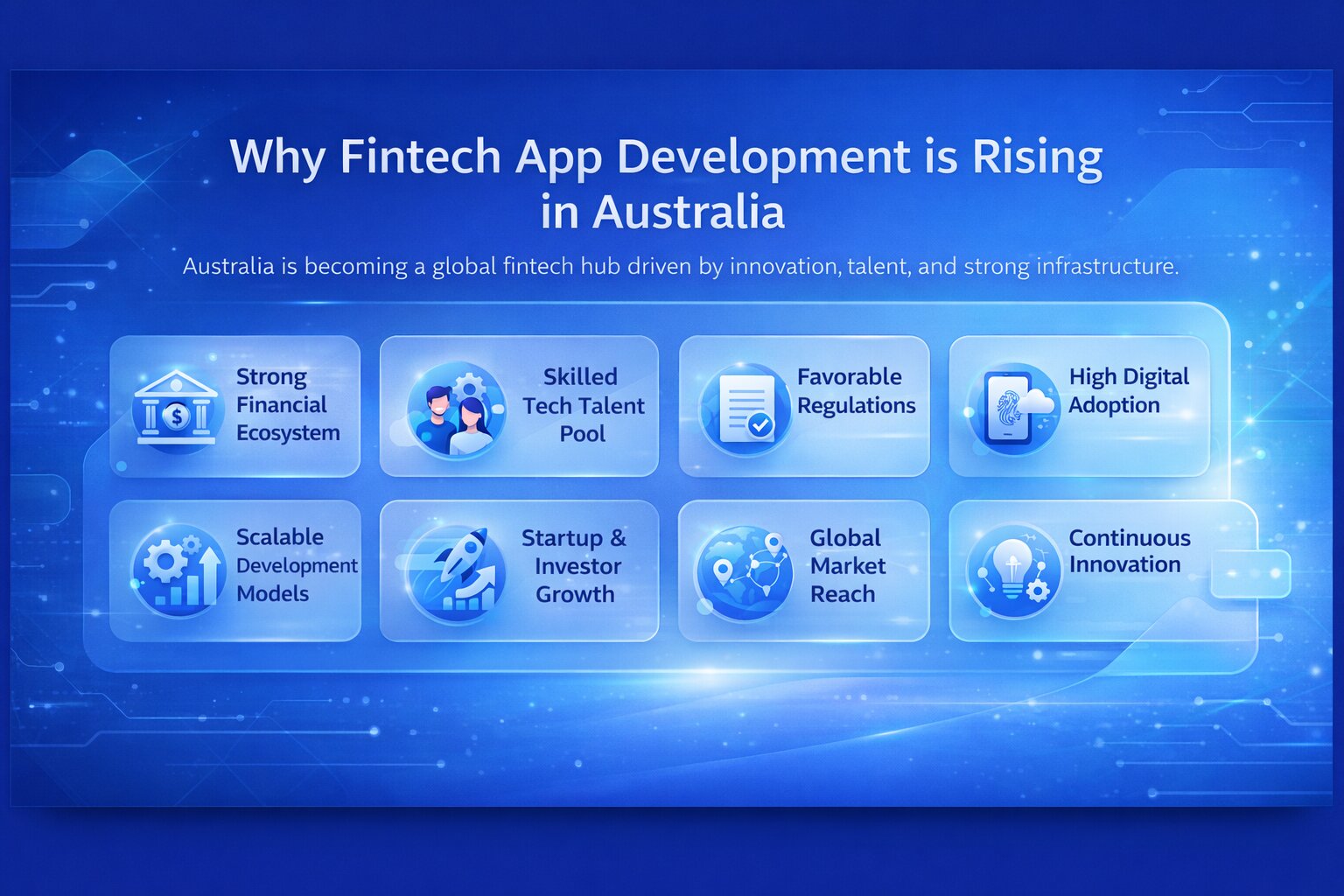
Fintech in Sydney has thrived due to brilliant infrastructure and an abundant talent pool. It leads to the development of scalable digital finance products.
 3. Regulatory Advantage
Among the greatest challenges in fintech globally is regulatory compliance. The Sydney factor that makes it unique is its explicit regulatory framework.
The Australian regulatory regime has evolved into a system that encourages innovation and strong consumer protection. These include:
For companies, there is less ambiguity because teams understand what to build, how to manage information, and what requirements are.
It leads to a shift in product development, as regulatory compliance can no longer act as a barrier during initial architectural design phases.
Investment is key to the success of fintech companies, and Sydney acts as the capital of investments in Australia.
The city attracts:
But access to capital here is not just about funding rounds. It often comes with strategic value:
It enables fintech companies to scale with more clarity compared to scaling through expenditure increase.
 Talent That Understands Finance And Technology
Fintech innovation needs much more than just engineering. It needs expertise in financial systems, regulatory matters, and human behaviour.
Sydney provides access to talents in:
More importantly, you can experience this talent by working within regulated environments. That changes how products get designed.
Instead of retrofitting compliance or restructuring systems later, teams build with the right assumptions from the start.
Consumers in Australia have adopted digital financial transactions, and Sydney has become the epicentre of this trend.
Some important developments in consumer behaviour include:
This shift is not just about convenience. It is redefining user expectations.
Users now expect:
It poses a challenge to fintech companies, where speed and usability must coexist with strict compliance.
The open banking project has impacted fintech innovation in Australia. It secures the sharing of financial data between institutions, enabling more personalised and flexible services.
It creates opportunities to:
Data security and consent are extremely important. The products must address all these issues without affecting the user experience.
This is where strong technical architecture becomes essential.
The government plays an important role in fintech app development.
Initiatives include:
They minimise the risks of entering the market, allowing businesses to conduct experiments in a protected environment before going into mass production.
Start-ups can use them to have an easier entry route into the market. Established companies enjoy the advantage of innovation without risk.
The success of Sydney’s fintech ecosystem lies not in competition but in collaboration.
Start-ups frequently work alongside:
It creates mutual value.
Start-ups gain:
Established institutions gain:
This collaborative model accelerates product development and improves the quality of financial services available in the market.
Building fintech products requires robust infrastructure. Sydney provides access to the tools and systems needed to support this.
Key components include:
These systems allow companies to:
While infrastructure may initially seem unimportant, it is critical to performance and cost-effectiveness in fintech. A start-up application development company can help you with technical infrastructures.
For early-stage companies, Sydney offers a combination of advantages that are difficult to replicate elsewhere.
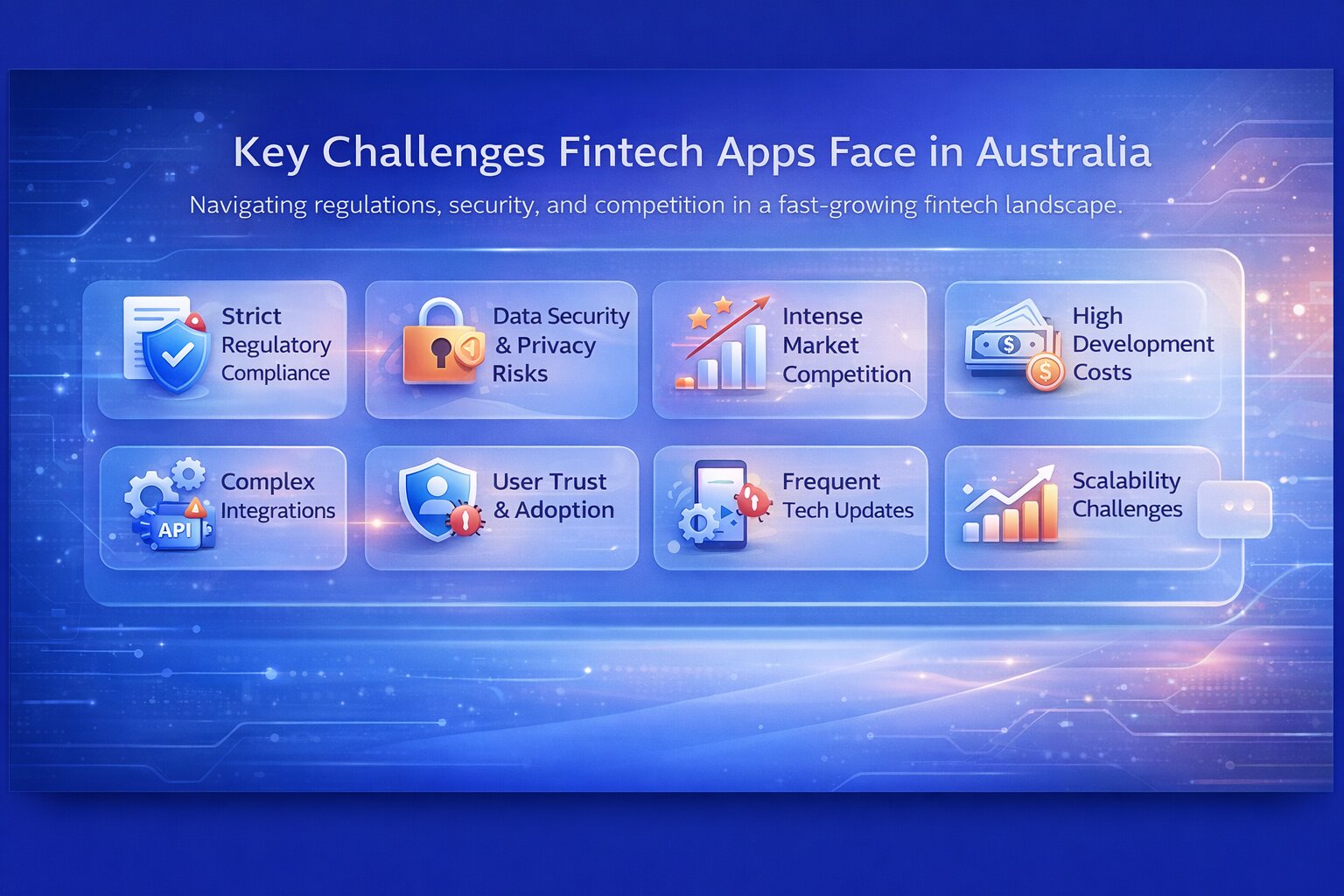
However, notwithstanding the advantages of Sydney’s fintech industry, there are some difficulties facing enterprises in the ecosystem.
Due to its rapid expansion, it has become hard to distinguish oneself from the rest.
Although there are clear regulations, companies need to comply accordingly.
There is a need for talented individuals in the industry, which raises employment costs.
 4. Development Costs
Building secure and scalable fintech applications requires significant investment.
Modern fintech applications rely heavily on technological integrations.
Common implementations include:
These technologies are not optional; they are fundamental to building competitive financial products.
The fintech sector in Sydney continues to evolve as technology adoption continues to grow.
Some of the key changes include:
These tendencies will influence the way that financial products are constructed, issued, and expanded.
One of the Sydney-based fintech start-ups has embarked on the mission to streamline loan approvals on a digital platform.
The conventional lending procedures were cumbersome and needed manual verification at all times.
The team implemented:
Technology alone didn’t drive the success of this platform; it was how effectively it was applied to solve a problem.
The fintech ecosystem in Sydney remains at the forefront of Australian fintech regulation, innovation, and access to top talent, strengthening fintech in Australia. Both start-ups and mature companies require professional mobile app developers as well as an iPhone app development company for building financial applications that are not only secure but also scalable. With the right guidance, growth becomes faster, more efficient, and sustainable.
For businesses looking to capitalise on Sydney fintech, collaborating with a leading iPhone app development company guarantees excellence in product quality. Get in touch with us now and make your fintech visions come to fruition as an app.
Q 1. How long does Android application development typically take?
Ans 1. Timelines vary with complexity, features, and backend integrations. Basic applications can be developed within a few months, whereas complex Android application development can take time.
Q 2. How much does Android application development cost?
Ans 2. Costs depend on scope and technical requirements. An on‑demand app development company usually evaluates your idea to provide a tailored estimate.
Q 3. What makes Android a preferred platform?
Ans 3. Android’s wide global market share supports high reach and performance, making it ideal for solutions.
Q 4. Can Android application development include AI features?
Ans 4. Yes. AI can enhance Android apps with personalisation, predictions, and automation.


Partner with us to bring your vision to life.




 +61 (42) 108-3277
 contact@7pillars.com.au
 294A Station Street,
