By 2026, creating healthcare applications will not just be a digital program, but will also be a strategic investment in the patient experience, compliance with regulations, and scalable innovation. Regardless of whether you are a hospital network, a private clinic, a health-tech founder, or an insurer, it is important to be aware of the precise cost of app development in Australia and make a decision that does not exceed your budget.
The Australian digital health ecosystem is a fast-growing phenomenon. Integrations of My Health Record, AI diagnostics, wearable data syncing, and tough privacy regulations require accuracy in mobile app development changes compared to most sectors. It implies that cost estimation should be more than a simple list of features on the surface, but include compliance, architecture, integrations, security audits, as well as long-term scalability.
The following 2026 guide will cover all the information you need to know about budgeting, planning, and how to find the right healthcare app development firm in Australia, so that you can make confident financial decisions.
Developing Healthcare Apps with Confidence
This guide offers a general summary of:
Design and UX planning
Back-end architecture
Compliance and security
Testing and deployment
Infrastructure and maintenance.
Scalability planning
Monetisation strategies
By the end, you’ll understand:
What is the cost of developing your healthcare app?
What is the cost for healthcare mobile app development?
What is the way of comparing quotes of a healthcare app development company in Australia?
How to reduce financial risk?
What is the way to align budgets with the conditions of the Australian market?
Why Are Healthcare App Costs Difficult To Estimate?
The reason is that many organisations cannot estimate healthcare app budgets because of:
Regulatory uncertainty
Data privacy obligations
Integration complexity
Misrepresenting the quotes of the vendors.
Hidden post-launch costs
It is also common in Australia to see development costs that seem expensive relative to expectations, as specialised healthcare software developers are charged a premium rate owing to compliance expertise.
Confusion often arises between:
Initial development cost
Continued infrastructure expenditure.
Maintenance expenses
Security audits
Upgrade cycles
The end healthcare development cost may become higher than expected without clarity.
Custom Healthcare App Development Costs in Australia
At the conclusion of this guide, you will be capable of:
Proper estimation of your total healthcare app development cost, depending on complexity, compliance, and infrastructure requirements.
Getting to know healthcare mobile app development pricing as done by a professional healthcare app development company in Australia.
Comparing the proposals of various vendors with clarity, particularly when assessing specialised healthcare software developers.
Developing a scalable, realistic budget that is consistent with Australian reporting requirements and long-term expansion targets.
It’s rare to find a healthcare solution that every patient can use. Hospitals and digital health start-up companies often create customized software to meet their unique needs in terms of internal operations, patient interactions, and data management.
Custom builds are more expensive, but are more scalable, have greater data control and are long-term ROI.
Healthcare App Market in Australia
The Australian digital healthcare market is growing rapidly, with hospitals, clinics, and start-ups investing millions of dollars in the development of telehealth and healthcare mobile apps.
The Australian digital health market is estimated to reach a billion AUD and is ever-increasing as a result of the increased use of telemedicine.
The proportion of healthcare providers utilising digital health or telehealth is now more than 45% in Australia.
Increased investment in digital health infrastructure by the government and individuals every year.
The demand is increasing, necessitating the creation of healthcare applications and the presence of qualified healthcare mobile app developers all over Australia.
This constant growth is a sign of a strong business climate for developing mobile applications in the healthcare sector, helping to stay competitive in the future.
Why Invest in Healthcare App Development?
Healthcare software development is no longer an option, but a strategic approach that any business wanting to enhance patient access, automate functioning and scale digital healthcare services in Australia should consider.
1. Smart Patient Experiences
Healthcare applications help provide individualised care based on patient history and behaviour.
Improves patient retention, participation, and treatment compliance.
2. Cost-Effectiveness of Operation
Scheduling of appointments, billing, and communication with patients are automated.
Reduces administrative costs in the long term, even with increased costs incurred during development.
3. Scalability and Future Readiness
Healthcare applications can expand without problems.
Makes healthcare providers competitive in a digitalising market.
Mobile applications in healthcare are long-term efficient in terms of operations.
Technology-Wise Price of Healthcare App Development in Australia
The Australian custom healthcare software development depends on the technology behind its working, compliance, and the complexity of the infrastructure. Different healthcare functionalities require specially designed expertise, secure architecture and integration facilities.
1. Telemedicine (AUD 80,000-250,000)
Infrastructure and compliance layers are used effectively in video calls, booking systems and secure messaging.
An increase in the price of real-time video streaming and server optimisation.
Cloud hosting and encryption raise the cost of infrastructure.
2. Electronic Health Records (AUD 70,000-200,000)
Streamline healthcare by integrating EHR systems with hospital databases and compliance systems.
Ready-to-use APIs lower the integration costs.
Purposefully developed systems raise the complexity and cost of development.
It is enhanced by health predictions and diagnostic assistance provided by AI.
Both pre-trained models reduce pre-set-up costs.
The development of custom AI models is very expensive in healthcare app development.
A collaboration with top healthcare mobile app developers will provide a scalable, compliant, and cost-effective digital health solution to be customised to fit the Australian market.
What Is the Cost of Healthcare App Development?
When discussing the cost of developing healthcare apps, the majority believe that all that is involved is coding. It is an integrated investment in plan, structure, engineering, infrastructure, compliance and expandability to create a secure and competitive healthcare product.
The cost of healthcare mobile app development involves various related factors that extend beyond code writing when developing solutions specific to the Australian healthcare ecosystem. These are dependent on:
Research on healthcare products and technical planning.
Accessibility and optimisation of user experience.
Front-end and back-end development.
Integrations of medical systems and patient data.
Security levels, compliance with privacy, and data security.
Digital health start-ups have had promising opportunities due to the rise of healthcare applications and telemedicine solutions. Driven by individuals resorting to virtual check-ups, online prescriptions and 24/7 health monitoring at home, the demand has driven growth. Mobile apps built for medical needs now stand out, not because they sound good on paper but because real usage shapes them.
The benefits of creating a healthcare app in business are:
Monthly fees roll in through ongoing service sign-ups. Payment follows each scheduled advice session.
Working together through clinic partnerships.
Telehealth services alongside online medicine delivery.
Intelligent patient engagement and personalisation.
Scalable software development models of healthcare.
High ROI in line with trends in digital health transformation.
Healthcare applications will be able to grow consistently with lasting requirements due to the effective existing rules. The regulatory structure will also provide the ability to meet all requirements for employing secure infrastructure.
Healthcare App Development Cost Ranges in Australia
Depending on the features you choose to incorporate, the platform you wish to build on, your compliance needs, and your anticipated scale of future expansion, the cost of developing a healthcare application in Australia will vary. That is why you must budget early enough to avoid the shock of the unexpected after doing your development.
All subsequent prices are based on the average healthcare app development costs in Australia and demonstrate how the complexity of a project increases development hours and investment.
Key Factors That Affect The Cost Of Healthcare Apps
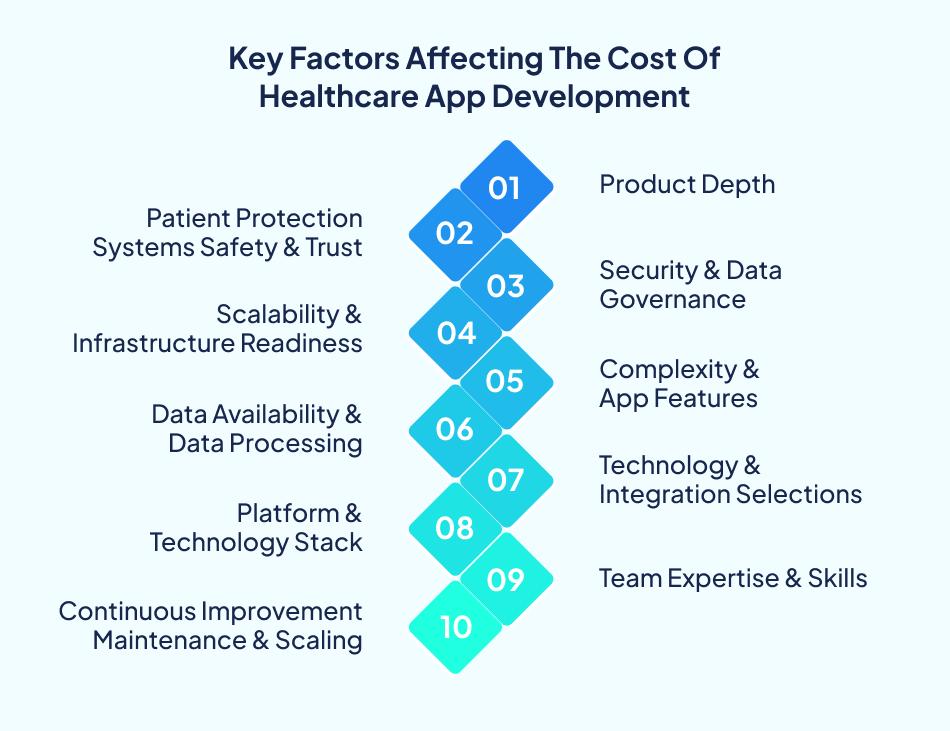
The Australian healthcare market faces its own pressures, primarily with rigorous privacy laws, patient safety risks, system integration, and scaling pressures in hospitals, clinics, and telehealth care providers.
1. Product depth
The extent of functionality present in healthcare applications will determine the amount of effort developers will need to use, both in terms of cost and time.
The more sophisticated telemedicine capabilities take 30-50% longer to develop compared to straightforward appointment booking applications.
Electronic Health Record (EHR) connections augment both load and test time on the back-end.
Patients need safe medical data storage and an encrypted cloud infrastructure.
Payment gateways and insurance systems demand more integration.
Accessibility and multilingual support increase design and quality assurance.
Real-time monitoring and data syncing make the database and server complex.
2. Patient Protection Systems, Safety, And Trust
Australian laws are raising the pressure on safe digital healthcare settings, which are no longer an optional feature.
A significant percentage of patients are worried about the abuse of digital health data.
Compared to simple rule-based systems, automated monitoring and encryption systems are more costly to establish and maintain.
Ongoing costs are an addition to third-party verification and authentication services.
During access control and consent management procedures, the complexity of the back-end gets enhanced.
Real-time storage and analytics in administrative dashboards.
UI and back-end logic specialised in emergency alerts and critical care functionality.
3. Security And Data Governance
Personal medical information can be quite costly to treat in terms of Australian privacy laws.
Secrecy in communication adds to the time spent in engineering.
The systems require multi-factor authentication to ensure the safety of patient authentication.
Audit preparedness involves elaborate logging and reporting systems.
The back-end storage becomes complicated with data retention and deletion capabilities.
Extensive consent agendas generate more UI and regulatory burdens.
4. Scalability And Infrastructure Readiness
Australian healthcare applications should have the capacity to handle the varying demand, especially during seasonal outbreaks and peak consultation times.
Telehealth platforms may undergo numerous traffic peaks each day.
Live video consultations need permanent server connections and load balancing.
Cloud hosting in Australia is about 20-30 per cent more expensive than in foreign areas.
Storing medical images and video streaming consume more bandwidth.
Database sharding and caching increase development costs.
Monitoring, autoscaling systems and alerting are some of the DevOps overheads.
5. Complexity And App Features
Healthcare apps can be developed with varying features, depending on the cost of development, particularly at high levels of integration and compliance required for healthcare development.
Simple features for booking appointments and scheduling are more affordable.
Remote monitoring, EHR integration, and telemedicine are aspects that raise the development costs.
The health tracking and personalised dashboards are real-time and need advanced architecture.
Healthcare apps on the enterprise level require high security and scalability.
More advanced features need more time for testing and optimisation.
6. Data Availability And Data Processing
The key cost point and central point of mobile app development in healthcare is data management.
Medical datasets are structured, which saves time in development.
Unstructured or legacy data increases the cost for preprocessing and migration.
Live data pipelines must have a stable back-end infrastructure.
Secure storage, compliance and encryption are other costs.
Increases in patient databases lead to higher infrastructure and maintenance costs.
7. Technology And Integrations Selections
The nature of integrations employed also impacts healthcare app development pricing.
Ready-to-use API minimises the complexity in development.
Tailored hospital connections raise expenses.
The use of high-level analytics and monitoring tools demands a bigger computing capacity.
Continuous updates on integrations increase long-term costs.
8. Platform And Technology Stack
Technical decisions lead to an increase in healthcare mobile app development costs.
Cross or native development influences the build cost and time.
Healthcare applications that run on the cloud incur constant hosting costs.
The use of third-party API integrations contributes to the cost of licenses.
Seasoned experts minimize time wastage and technical errors.
Competence guarantees regulatory safety and system reliability.
10. Constant Improvement, Maintenance and Scaling
After launching their apps, healthcare requires continued investment.
Periodic security patches raise the long-term expenses.
Expanding user communities require increased cloud capabilities.
Upgrades of features make healthcare platforms competitive.
Healthcare mobile app development will require constant optimisation.
Platform Choice and Its Impact on Healthcare App Development Cost
The selection of a platform will influence the budget size required to build a healthcare app.
1. Native Application (iOS and Android)
The native development of each platform offers high usability and performance, though the costs incurred in developing your healthcare application are higher.
Needs two codebases for iOS and Android.
Enhances design, test and long-term maintenance.
Most often used by feature-packed health care applications in telemedicine and video consultation.
Offers improved access to hardware, biometric authentication, and system security.
It is more scalable and has fewer performance restrictions.
An experienced healthcare app development company offers enterprise-grade software.
2. Cross-Platform Development
Because cross-platform frameworks are affordable and reliable, numerous start-ups engage healthcare mobile app development services to develop cross-platform apps.
Saves up to 30% of the development time.
Quicken telehealth and patient engagement applications.
Trade-offs in complex real-time video features.
Reduced update and maintenance costs.
Economical in MVP and early stages of growth.
Trendy in the digital health start-up.
3. Web and Hybrid Applications
Web and hybrid solutions can help start with lightweight platforms or pilot healthcare projects.
The cost of initial development is lower than that of native apps.
Lack of access to higher-level device security.
Real-time consultations and streaming performance restrictions.
Streamlined deployment without app store authorisation is slow.
Healthcare App Category and Its Impact on Development Cost
The kind of healthcare app you choose has a significant impact on the cost of healthcare app development, the number of features available, and the technical architecture. The healthcare app development company with experience in digital health platform development will need to plan compliance levels, integration depth, and scalability differentiations in each model.
1. Telemedicine Apps
Applications of telemedicine are oriented towards virtual consultations and real-time care delivery, which is moderately complex but has the infrastructure to scale.
Video consultation and booking systems.
Simple patient demographics and medical history.
Encrypted communication.
Live session back-end performance.
Consultation payment gateways.
Simple patient engagement tracking analytics.
Estimated Cost: 100,000-180,000 AUD
2. Appointment and Clinic Management Apps
These healthcare applications simplify the work of hospitals and clinics.
Availability of physicians and calendar.
Automatic notifications and reminders.
Interconnection with billing and insurance systems.
Operation monitoring dashboards.
Middle-range scalability specifications.
Additional QA to guarantee scheduling.
Estimated Cost: 140,000-250,000 AUD
3. Remote Patient Monitoring Apps
Remote monitoring applications focus on real-time data tracking, compliance, and superior back-end systems.
Integration of a wearable device and IoT.
Syncing and alerts of real-time health data.
Health trend analysis through AI.
Estimated Cost: 220,000-380,000 AUD
4. Extensive Healthcare Websites
Enterprise-level healthcare is a combination of telehealth, EHR, pharmacy, and analytics systems into a single ecosystem.
Inbuilt telemedicine and e-prescription modules.
High patient engagement and CRM systems.
Robotic suggestions and reporting systems.
Multi-layer security implementation and intricate compliance.
Estimated Cost: 300,000-500,000+ AUD
Breakdown of Healthcare App Development Costs
The overall healthcare app development involves two variables: the complexity of the solution and the development lifecycle cost. The last investment relies on features, compliance, integrations, security layers and long-term maintenance planning.
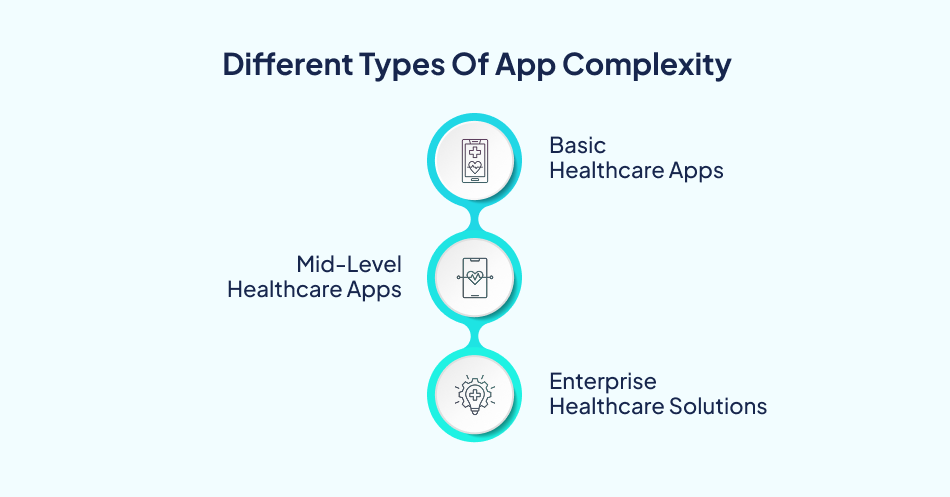
Cost Breakdown By Levels of Complexity
Healthcare applications are as simple as patient utility applications. Complexity increases with the sensitivity of data, infrastructure provisions and regulatory compliance.
1. Basic Healthcare Apps (AUD60,000-100,000)
Easy booking and scheduling of appointments.
Little patient data storage with low security measures.
Meets the needs of MVPs, clinic apps, or simple teleconsultation applications.
Telehealth characterises video calls and safe communication.
Connectivity with third-party APIs, i.e. payment gateways and EHRs.
Most appropriate for SaaS healthcare services, individual clinics and start-up health businesses.
3. Enterprise Healthcare Solutions (between AUD 300,000 and 600,000+)
State-of-the-art EHR integration, real-time processing of the data, and automation.
Multi-layer and strict compliance security requirements.
Applied in hospitals, multi-location clinics, and large healthcare networks.
Most appropriate for full-scale healthcare mobile application production platforms in Australia.
Cost Breakdown by Development Stages
The development of healthcare apps is not an upfront cost but a gradual one. These phases were created through compliance preparedness, performance reliability and operational success.
1. Planning (10-15%) (AUD 20,000-40,000)
This phase defines the project and removes costly future changes.
Business objective and healthcare compliance needs.
Choice of technology stack, security designs and integrations.
Architecture design and regulatory advice: initial system architecture.
2. Design (15-20%) (AUD 25,000-50,000)
The design will be dictated by usability, accessibility and simplification of complicated healthcare procedures.
Wireframes and patient journey mapping.
Planning the flow of doctor-patient interaction.
Graphical display of reports and medical knowledge.
3. Development (40-50%)(AUD 120,000-300,000)
This step is the most costly and resource-consuming in the development of healthcare mobile applications.
Secure database development and backing.
API connections to EHR, payment or telemedicine.
Clients and provider front-end implementation.
Security testing
4. Launch (5-10%)(AUD 15,000-35,000)
The launch will help the healthcare system operate successfully under actual conditions.
Update healthcare applications and regulatory changes.
Security improvements and monitoring of performance.
System improvement and features.
Agreement with new healthcare policies and customers.
Estimate the cost of healthcare app development in Australia, with an eye on the long-term optimisation of the original development cost.
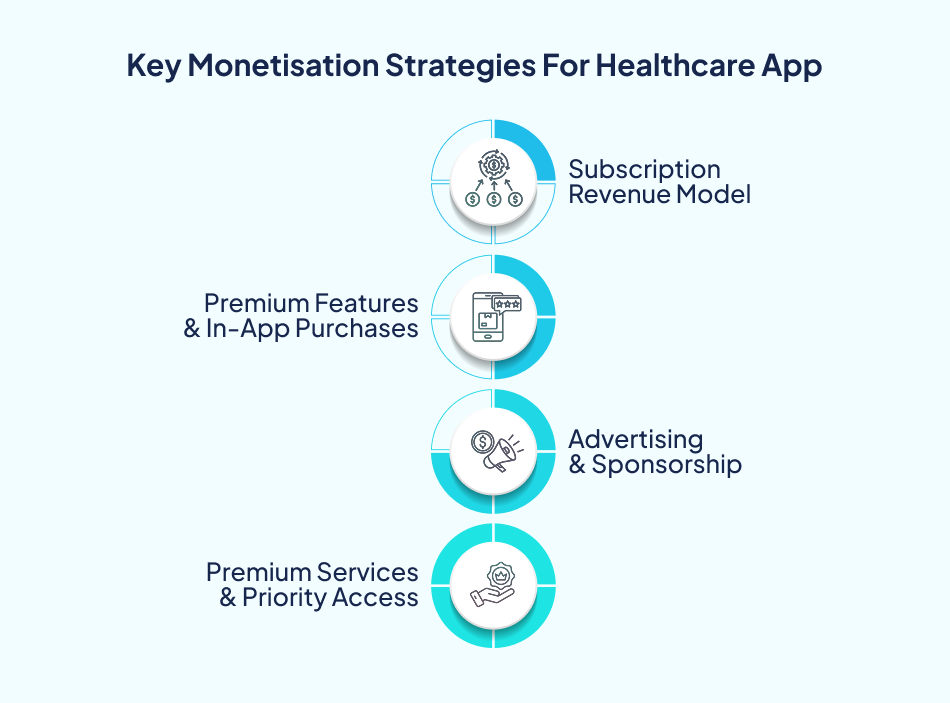
Revenue Generation Strategies
The total cost of healthcare app development is directly related to revenue models since all monetisation strategies imply specific features, integrations, compliance layers, and maintenance.
If businesses plan to develop healthcare mobile apps, monetisation should be discussed at the initial stage during the partnership with the selected healthcare app development company to prevent costly reorganisation in the future.
1. Subscription Revenue Model
Telehealth and digital health platforms have a high rate of subscriptions, which demand sophisticated back-end and secure payment systems.
Monthly and annual care plans on recurring billing.
Protected payment gateway integration adds to increased development.
Role-based access control makes back-end logic hard.
Subscriptions tracking admin dashboards increase the development expenses.
App store commission compliance involves extra validation logic.
2. Premium Features And In-App Purchases
The owners have the option to generate additional revenue by offering premium services, appointments and in-app purchases. It gives them a more detailed version of their health report and the associated health data.
Verification of entitlements in real time is necessary.
Handling secure transactions is also more demanding of QA and testing.
Platform-specific APIs create extra complexity in integration.
Toggling the logic of features introduces load to the back-end process.
Dispute and refund management systems add overhead to operations.
Scaled to the size of a healthcare mobile application development company.
3. Revenue And Sponsorship
Advertising reduces barriers to entry, but creates compliance and privacy concerns in healthcare applications.
Ad network SDKs add complexity and size to the apps.
Regulate user data monitoring.
These need performance optimisation to prevent sluggish consultations.
Australian privacy laws require consent management.
This approach is typical of freemium healthcare app development.
An experienced app development services provider helps you understand what revenue generation entails.
4. Premium Services And Priority Access
In more significant health services platforms, premium positioning of services and priority reservations are typical.
Custom algorithms handle visibility and service prioritisation.
Priority scheduling systems add complexity to the back end.
Dynamic pricing models depend on analytic integration.
Ongoing optimization adds to the maintenance costs.
Hidden Factors Affecting The Cost Of Healthcare App Development
Healthcare app development relies on numerous factors that determine its cost, such as security level, advanced functions, scalability, regulatory requirements, and maintenance.
1. Quality Assurance
An important cost variable in mobile app development for healthcare is quality assurance, as medical applications must be accurate and reliable.
Wide-ranging testing helps ensure that healthcare workflows work correctly and patient data is correct.
Manual and automatic testing add time and increase the project development cost.
Vulnerability and security testing help keep sensitive healthcare information safe.
2. Maintenance and Post-Launch Support of Apps
Healthcare applications require constant monitoring and updating once deployed.
Frequent bug fixes and security patches raise the costs of long-term operations.
Application compatibility with updates to the operating system.
Continuous technology services guarantee consistent performance among healthcare providers and patients.
3. App Hosting & Listing Costs
The required costs in the budget of healthcare mobile app development include infrastructure and marketplace listing costs.
Cloud securely stores Patient records and healthcare data.
High-availability server infrastructure ensures stability and steady system performance.
Both Android and iOS have application store listing fees.
4. Application Marketing and Customer Acquisition
One of the many reasons healthcare apps reach patients, hospitals, and providers is due to the influence of marketing.
App Store Optimisation generates awareness and increases downloads.
Online marketing campaigns help create awareness among healthcare app users.
Alliances with healthcare providers contribute to accelerated adoption of a user.
5. Compliance and Security
Strict laws, compliance and security are critical considerations that determine the total cost of development.
Data encryption prevents unauthorised access to sensitive patient data.
Medical records should be under secure authentication control so that only authorised users can view them.
Security audits will ensure adherence to healthcare regulations.
Strategies To Reduce Costs
The price of a healthcare mobile application development may vary based on the back-end infrastructure, integrations, user experience design, scalability needs, and technology architecture.
1. Back-end Complexity
Back-end administrators manage the servers, databases, and medical records of a healthcare app.
Dealing with large amounts of patient information necessitates powerful server infrastructure and high infrastructure costs.
Timely processing of data related to health monitoring requires more sophisticated server capabilities and increased development effort.
Intricate back-end integrations with hospital systems drive up the cost of development and maintenance.
2. Third-Party Integrations
Healthcare applications that leverage various third-party services to add features will also connect to other health systems of all types.
To create an interface for connecting with an electronic health record (EHR) system, you need to develop a specialised API and additional time for development.
Telemedicine platforms, wearable devices integrations and payment gateways add complexity to implementation.
There is also a recurring operational cost associated with licensing and use fees of third-party services.
3. UI/UX Design Complexity
In the field of healthcare apps, UX design is crucial as the interface should stay as simple, approachable, and compliant as possible.
The creation of user-friendly patient and doctor dashboards needs extensive research and usability testing.
Elderly or disabled accessibility features add to the cost of design and development.
Interactive features, such as health charts and real-time updates, add to the cost of developing the UI.
4. Scalability Requirements
Develop healthcare applications to accommodate the growing number of users, medical data, and system performance requirements.
The expanding storage of healthcare data needs a scalable cloud infrastructure.
Load balancing and sophisticated server architecture help with high user traffic.
Future expansion features raise initial system design and development costs.
5. Technology Stack Selection
The selection of programming languages, frameworks, and infrastructure tools will directly influence the cost and time of the development.
Confidential structures are needed to manage delicate healthcare information.
The adoption of modern, scalable technology contributes to the long-term expansion of healthcare platforms.
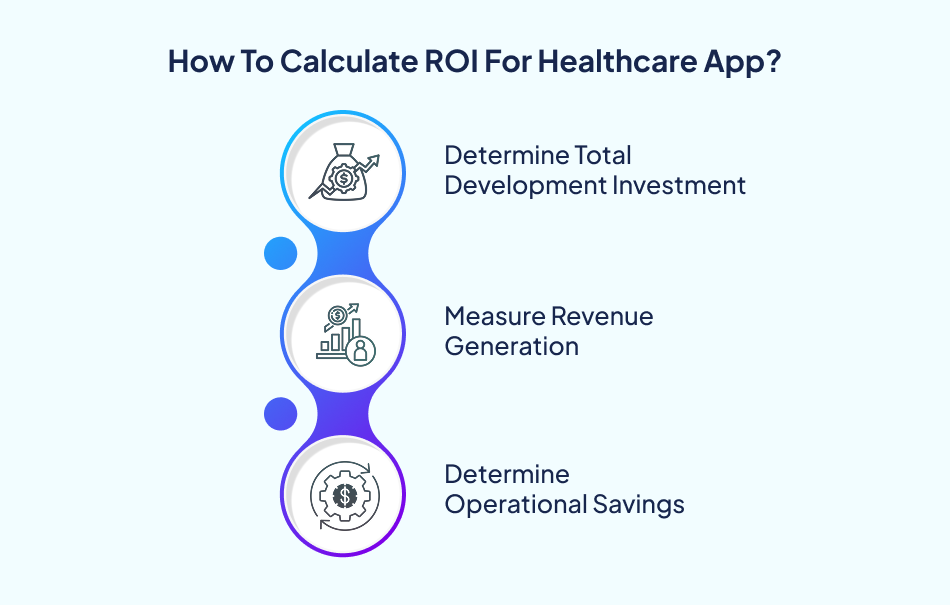
How to Calculate ROI for Healthcare App Development?
ROI calculation helps companies understand whether the healthcare mobile application creates quantifiable financial and overall operational efficiency.
1. Determine Total Development Investment
The calculation of the total investment needed to develop and support the healthcare application is the first step.
The cost of healthcare app development encompasses design, development, testing, and deployment.
Cloud hosting, APIs, and integrations are also infrastructure expenses you should account for.
Continuous maintenance and upgrading are long-term investments for app development.
2. Measure Revenue Generation
There are digital healthcare services and monetisation models that help generate revenue through healthcare applications.
Telemedicine or patient monitoring subscription plans expand a recurring revenue source.
Healthcare applications have the potential to earn revenue on a per-consultation, premium, or service basis.
Mobile app development companies offer solutions with monetisation models and sustainable revenue growth.
3. Determine Operational Savings
Mobile apps in healthcare also provide ROI by lowering the operational costs of hospitals and clinics.
Automation saves on administrative workloads and enhances workflow efficiency.
Online patient control reduces the cost of paperwork.
Healthcare app development will enhance patient interaction, help lower non-attendance, and wasteful operations.
Core Features of a Healthcare App
Any medical mobile application should depend on trusted functions that help patient care, medical data handling, and communication flow.
User Panel Features
1. Account & Onboarding
Register securely leveraging email, mobile phone number or social login.
Creation of the profile, personal health information and preferences.
Patient data security through multi-factor authentication.
An easy onboarding system has better accessibility, whereas more rigorous security measures may add a small adjustment to the cost of developing the healthcare app.
2. Customised Health Dashboard
Summaries and real-time health records.
Scheduling appointments and reminding of medication.
Individualised health information on the user data.
Dashboards for patient engagement and health monitoring are a frequent direction in healthcare mobile app development.
3. Booking and Scheduling of Guest Room Reservations
Search for doctors with specialisation.
On-the-fly booking and re-booking.
Notifications and reminders of consultation are automated.
The characteristics of telemedicine apps in modern applications include the appointment management option developed by highly experienced app developers.
4. Virtual Consultation & Telemedicine
Doctor-patient video or audio.
Privatised in-app messages on medical inquiries.
The sharing of electronic prescriptions following consultations.
The value of healthcare mobile app development solutions increases considerably with the presence of telemedicine functionality.
5. Health Tracking & Reports
Combination with wearable technologies and fitness.
Overall observation of vital signs, including heart rate and activity.
The availability of a downloadable health report and medical history.
Key Roles Required in Healthcare App Development
In comparison with traditional applications, the development of healthcare mobile applications requires specialists to ensure the safety, adherence, and trustworthy services.
Core Team Structure
1. Project Manager
Identifies the scope, timeline, and roadmap of the project.
They handle budgets, resources and project progress.
Coordinates between the developer, designer, and the healthcare stakeholders.
2. UI/UX App Designer Sydney
Innovative patient and physician healthcare interfaces.
Designs appointments, records and reports dashboards.
Enhances accessibility and navigation to enhance patient engagement.
It is a vital position in healthcare mobile app development, as a well-designed user experience encourages better adoption by users.
3. Mobile Developers
Swift developers of the Apple-based devices.
Android software developers with Kotlin or Java.
Collaborating with skilled app developers ensures healthcare apps are functional on a variety of devices and platforms.
4. Back-end Developers
Secure API and server architecture.
Direct patient data and healthcare database management.
Combine third-party healthcare systems and services.
The complexity of the back-ends can also be a factor in defining the cost of healthcare apps.
5. Medical Informatics Programs
Ensure the application meets healthcare data standards.
Embrace patient data privacy and security standards.
Direct legal and regulatory guidelines to guide developers.
6. DevOps Engineers
Operate cloud platforms and pipelines.
Achieve system performance, reliability and scalability.
Check and update the performance of the monitor servers.
DevOps specialists help maintain the stability of infrastructure when developing healthcare mobile apps.
7. QA & Testing Engineers
Conduct workflow functional testing.
Carry out security and compliance tests on patient data.
Ensure that performance is reliable for devices and systems.
How to Select a Healthcare App Development Partner?
Select a healthcare app development company in terms of its security, compliance, expertise, scalability, experience, and long-term support.
1. Measures Technical Expertise
Bringing together secure and reliable healthcare applications requires strong technical expertise.
Healthcare mobile application development and medical data systems experience.
The experience of cloud infrastructure, APIs, and healthcare integrations.
Experienced in the history of digital health and healthcare projects.
Experienced mobile app programmers and medical technology experts.
2. Assess Industry Experience
The expertise of the medical sector reduces the risks of non-compliance and construction time waste.
Understanding of patient data security and healthcare laws.
Hospital, clinic, or telemedicine working experience.
Best practices in healthcare security and privacy.
Interoperability with other health care systems and databases.
3. Review Communication and Support
Open communication and constant support help to make the project run smoothly and succeed in the long run.
Rapid iterations and updates through Agile development.
Clear estimation of healthcare app development cost.
Consistent after-sales services and maintenance.
Providing scalability, upcoming updates and future upgrades.
Transforming Patient Care with a Healthcare Mobile App
A top healthcare company merged with an application developer to develop a mobile platform based on appointments, telemedicine, engagement, accessibility, and personalized care.
Challenge
The medical practitioner was experiencing poor patient communication and appointment management.
Strict healthcare compliance and ensuring secure patient data management increased healthcare app development costs.
Solution
It created a traditional healthcare mobile application that includes telemedicine, appointments, and secure patient documentation.
Cloud infrastructure and encryption ensured a secure and scalable healthcare application.
Result
There was a notable improvement in patient engagement.
Digital workflows enhanced efficiency in hospitals.
Conclusion
In Australia, the efforts to digitise healthcare, including the creation of health apps, are already necessary for hospitals, clinics, and even health-tech start-ups. Knowing the cost of development, infrastructure requirements, and compliance, businesses can develop a scalable solution through the assistance of react native software development to support efficient cross-platform performance.
A thoughtful healthcare application enhances customer interaction, increases efficiency, and generates long-term sales potential. Collaborating with the best developers and selecting technologies such as React Native helps minimise performance failures, security and scalability for future healthcare innovations in the Australian digital health ecosystem.
FAQS
Q 1. Are start-ups successful in developing healthcare apps?
Ans 1. Yes, start-ups can develop healthcare applications to prioritise the MVP features, scalable infrastructure, regulatory compliance, and robust healthcare collaboration.
Q 2. What is the timeframe of healthcare app development?
Ans 2. The development typically requires 4-12 months based on features such as telemedicine, EHR integration, and patient monitoring. App developers specialising in professional iOS work to facilitate easier development and compatibility with payment systems, hospital infrastructure, and secure pos software systems employed in healthcare facilities.
Q 3. What are the technologies of healthcare apps?
Ans 3. Healthcare applications combine cloud computing, AI analytics, wearable technology, secure APIs, and hospital systems such as healthcare pos software applications.
Q 4. Do medical applications make money?
Ans 4. The applications in the healthcare sector make money via subscriptions, consultations, premium features, affiliate clinics, and integrated payment platforms such as POS software.




 Custom Healthcare App Development Costs in Australia
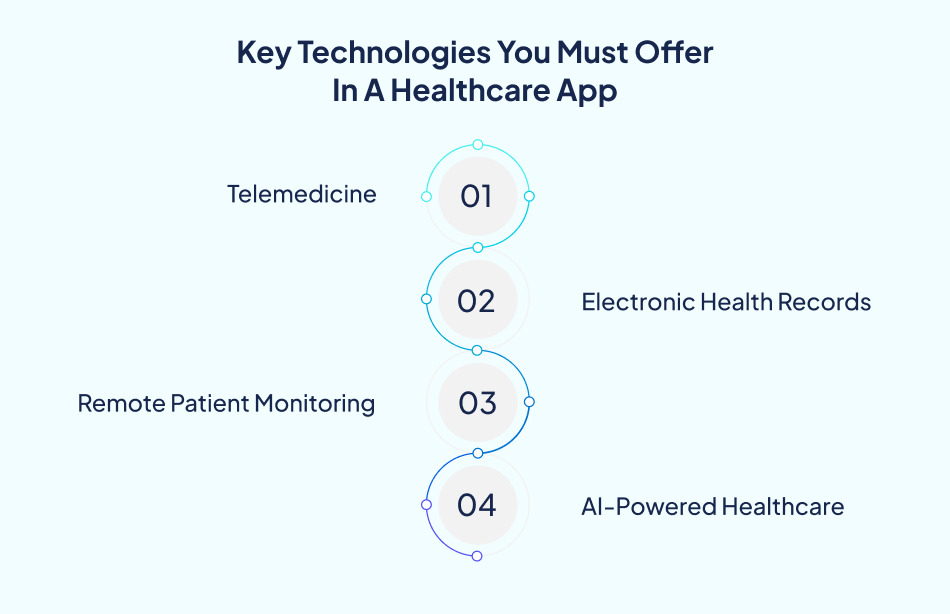 3. Remote Patient Monitoring (AUD 90,000- AUD 300,000+)
 3. Security And Data Governance
 Healthcare App Category and Its Impact on Development Cost
 3. Enterprise Healthcare Solutions (between AUD 300,000 and 600,000+)
 3. Revenue And Sponsorship
 5. Compliance and Security
 3. Determine Operational Savings
 3. Review Communication and Support





 +61 (42) 108-3277
 contact@7pillars.com.au
 294A Station Street,
