




Let's have a
Quick Chat
with you!
Quick Chat
with you!
You have our ear and we can't wait to hear about your idea! Share your details here and we will make sure to schedule a coffee date with you soon.


The development of custom software in Melbourne is a structured process that involves research, feature planning, UX design, development, and testing. The digital economy has added more than 167 billion to Australia’s GDP, and this is why enterprises are starting to invest in Melbourne app development to create scalable and competent digital platforms.
Melbourne is home to one of the largest start-up ecosystems in Australia, with over 3,500 start-ups underway and high levels of venture capital. With increasing competition, firms hire the services of skilled mobile app developers in Melbourne to develop customised platforms that automate business operations, combine services, and enhance customer experiences.
Australia is estimated to have more than 120 billion dollars invested in technology every year, and companies are interested in cloud infrastructures and mobile platforms. The trend is accelerating app development in Melbourne because organisations are resorting to secure and scalable software that has the potential to boost digital transformation, operational efficiency and long-term growth in competitive industries.
The growing trend in technology investment is also driving businesses in Melbourne to request scalable and secure digital systems. The Australian digital economy accounts for over $ 167 billion of the national GDP, where businesses must invest in app development in Melbourne to promote automation, customer interaction, and sustainability in the digitalisation of businesses in competitive industries.
There has also been a quick evolution of user expectations. Research has found that more than 70% of users leave apps due to bad performance or ineffective design. Skilled mobile app developers in Melbourne hence concentrate on user-oriented design, agile development, and continuous optimisation to provide quick, intuitive and scalable electronic experiences.
Most software projects fail or go over budget due to poor planning, overly optimistic technical complexity estimates, and inadequate attention paid to business goals and expectations set by those goals.
Common challenges include:
Companies that contract out Melbourne app development to skilled developers in Melbourne are usually free of problems, as professional teams have an organised development process, quality checks and clear communication patterns.

Strategic planning is significant for the success of the custom software projects. Companies that establish clear development roadmaps, budgets, and performance objectives in the early stages of the process tend to introduce successful digital products, including iPhone app development Melbourne initiatives.
By collaborating with other an experienced mobile app development company in Melbourne that have gone through the process of developing, businesses can accomplish:
Working with an effective app development team in Melbourne enables companies to turn ideas into effective online platforms.
Custom VR software development helps create digital solutions designed to address business needs and operations. In contrast to mass-market software products, custom ones are created to fit the existing working processes, internal solutions, and industry-specific operations.
There are a few stages that are usually involved in the process of development:
Other technical layers also include cloud infrastructure, APIs, data security tools, and scalable architecture in modern software platforms. Collaborating with an established iOS app development company Melbourne helps organisations to choose the appropriate technologies and develop systems that are likely to facilitate long-term digital expansion, including iPhone app development Melbourne solutions.
The growing tech environment and digital use in Melbourne are driving the need to develop bespoke software platforms and mobile apps.
Key statistics defining the software industry are:
Companies are now investing in Melbourne app development to create high-performance and scalable digital products.
There are three key components of most modern mobile apps that interrelate to deliver functionality, performance, and continued user experience.
The front-end is the visual component of a mobile application development Melbourne which the user interacts with. It is committed to usability, responsiveness, and performance of the design, enabling us to navigate the devices easily.
By creating professional applications, the design teams focus on a user-friendly interface and responsive layout, especially for businesses targeting iPhone app development Melbourne audiences.
The most important front-end features are:
The current development tools help the mobile app developer Melbourne team create adaptable applications.
The logic, databases, and communication with the servers are done on the back-end. It provides data reliability and security.
Melbourne-based professional IoT mobile app developers create scalable back-end architecture systems that can support thousands and even millions of users.
The major back-end functions are:
An effective back-end system makes the application safe, stable and scalable.
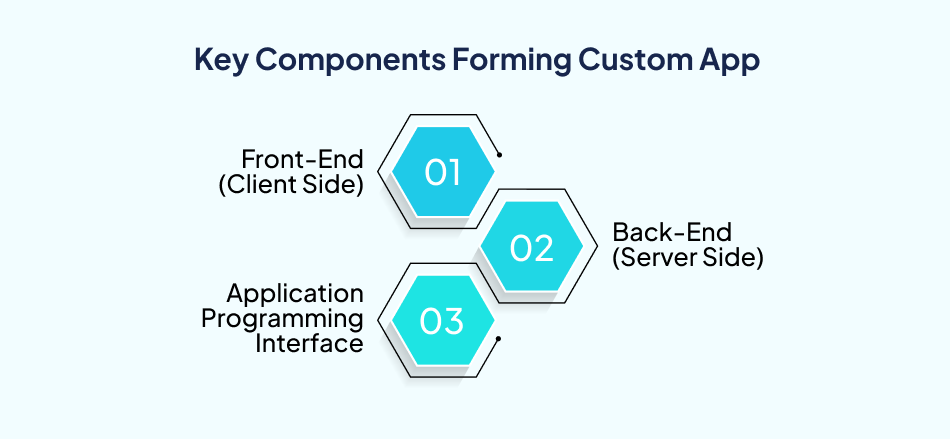
APIs work as communication intermediaries between the front-end and back-end systems. They enable the applications to communicate with other platforms and services, often implemented efficiently by app builders Melbourne.
APIs can help integrate with the tools such as:
Properly developed APIs can support:
A secure API framework developed by experienced Melbourne app developers ensures performance and security.
Mobile apps are now at the centre of the digital economy.
The industry is still growing due to several reasons:
There are over 25 million smartphone users in Australia, and mobile apps have become part of daily life activities, including banking, shopping, communication, and healthcare. Businesses expanding into premium markets often prioritise iPhone app development Melbourne to reach high-value users.
Due to the increasing number of companies in Melbourne that have digitalised their professional services, the need for professional mobile app developers in Melbourne is also on the rise.
Mobile application development companies in Melbourne need to be aware of the various types of mobile applications in the market before embarking on a development project. The correct solution depends on financial capacity, performance, and the vision of the future, especially when planning app development in Melbourne.
The four primary mobile applications include:
Native apps can run with only one operating system, iOS or Android. Developers leverage platform-specific and programming languages.
Native applications have several strengths:
In a cross-platform framework, developers deploy a single application on different operating systems without creating individual applications for each platform. The existing models allow developers to design high-performance software and reduce the development process.
Advantages include:
Hybrid applications are a mix of web technologies and native containers. These are applications installed in native wrappers, but for web technologies, HTML, CSS and JavaScript.
Hybrid development works in the event of:
Key advantages include:

Progressive web applications are web applications that perform as mobile applications.
Users have a chance to use them directly through web browsers.
Advantages include:
Why Do Businesses Invest In Custom Software Development?
More companies are investing in custom software development Melbourne to create digital solutions. Unlike off-the-shelf systems, tailor-made systems can satisfy the operational requirements of the company.
The major benefits of custom software are:
Collaborating with an established Android application development team in Melbourne can enable organisations to develop a consistent and safe digital platform that facilitates the enduring process of digital transformation.
Mobile apps are now critical digital assets that companies seek to leverage to attract modern consumers and increase their digital footprint.
Mobile application development Melbourne forms a direct communication between businesses and customers. The audience can engage at all times with the help of push notifications and instant updates.
Benefits include:
App designers Melbourne emphasise simplicity and ease of use to guarantee the maximum level of user interaction.
People tend to remember brands that remain in sight through a mobile application on the user’s device. As users use apps several times per day, businesses enjoy brand recognition and familiarity with their customers.
Benefits include:
The use of a professional mobile app developer Melbourne team can help ensure that application design, colours and visuals are not in any way contrary to the company brand identity. Mobile application development Melbourne helps you build a strong brand visibility.
Mobile apps present various monetisation possibilities to various businesses.
The common types of revenue models are:
A top app development agency Melbourne helps businesses select the best monetisation approach depending on their product and market.
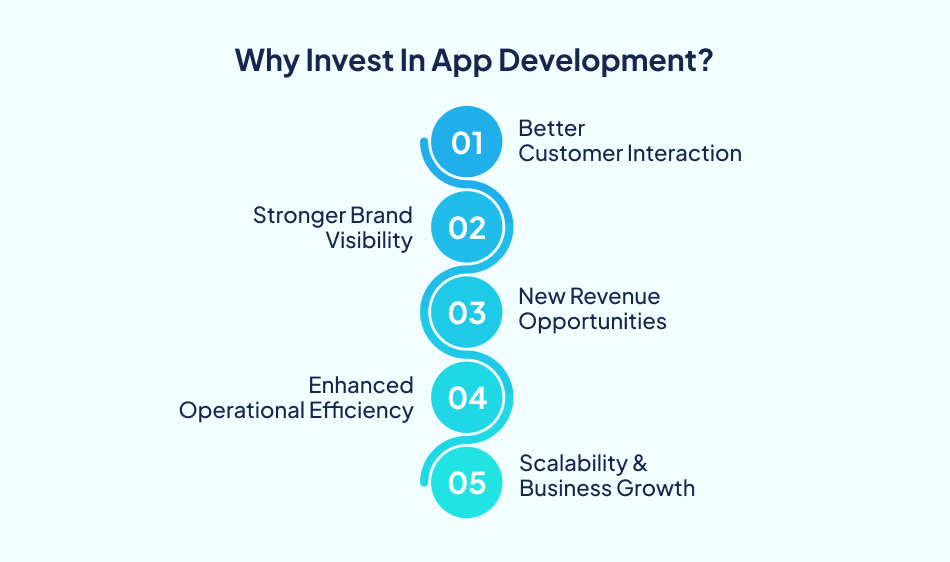
Numerous mobile application development companies in Melbourne create internal applications to enhance their business processes and efficiency.
Custom applications can:
App development in Melbourne enables firms to create systems specific to their internal operations.
Mobile apps can expand alongside business by introducing additional features, integrations, and services.
Benefits include:
Companies must ensure the development of organised digital products for their projects to succeed. Every stage leads to stability, usability and performance of the final application. The teams of professional mobile app developer Melbourne follow a systematic roadmap that involves the following phases.
Businesses must identify:
Skilled mobile app developers in Melbourne assist organisations to transform business concepts into technical specifications. Clear goals help keep the development process on track with the strategic goals.
Professional teams analyse before the development:
Research will take development decisions, depending on facts, not assumptions.
Important steps include:
It is an organised form of planning that development teams leverage to deliver products within budget limits without exceeding the budget.

Design activities include:
Good design enhances user experience, retention and product usability.
The value of a professional development team is to offer:
Seasoned teams also provide strategic direction during the development process.
Key benefits include:
Melbourne mobile app developers can assist businesses in further refining MVP products based on actual real-world data before rolling out into full-scale platforms.
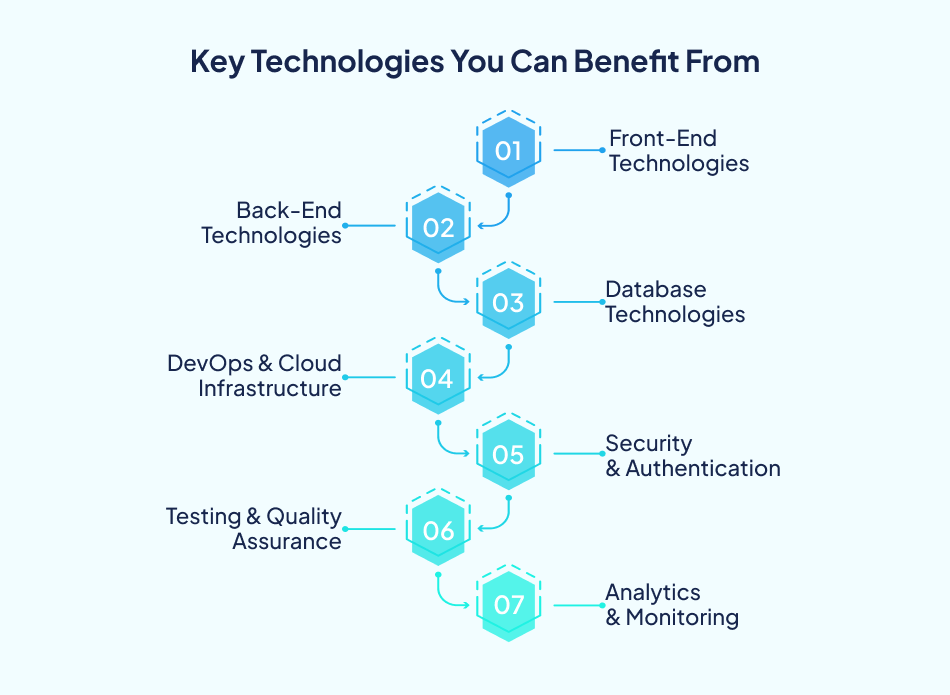
Modern technology stacks are helping app developers in Melbourne to create secure, scalable and high-performance digital platforms. These technologies enable effective development, solid integrations, and scalability of software in the long run.
Front-end technologies are the ones that create the interface that users interact with. Their design is responsive, easy to navigate and cross-platform consistent.
Common examples of front-end technology are:
It is useful to create dynamic and quick user interfaces for an existing web application.
A framework that is popular with scalable enterprise-level web applications.
A framework that is lightweight and is used to produce responsive and interactive interfaces.
A renowned platform for developing cross-platform mobile applications on a single code.
These resources help development teams create responsive applications.
Back-end technologies drive server operation, system logic and database communication. They also ensure that the application is effective in data processing.
Commonly used back-end technologies are:
Enables JavaScript on servers with support for scalable applications.
Popular in automation and data processing, with a scalable back-end.
It is generally used in enterprise software because it is secure and stable.
Business application development architecture helps create secure and high-performance applications.
Melbourne mobile app developers with experience in back-end technologies, which is determined by the performance, depending on their scalability and integration needs.
Application data is stored and managed in databases that systems can easily and safely retrieve the information.
The popular database technologies are:
A stable relational database that is suitable for complicated applications.
Web platforms and scalable application database.
A NoSQL database that is capable of accommodating large amounts of versatile data.
Typically, a real-time cloud database.
These database systems help preserve the security, speed, and system scalability.
| Layer | Technologies Used | Purpose |
| Frontend | React, Angular, Vue, Flutter | Build responsive and user-friendly UI |
| Backend | Node.js, Python, Java, .NET | Handle logic, APIs, and server operations |
| Database | PostgreSQL, MongoDB, MySQL, Firebase | Store and manage application data |
| Cloud & DevOps | AWS, Azure, Google Cloud, Docker | Deployment, scaling, and infrastructure |
| Security | OAuth 2.0, JWT, SSL/TLS | Authentication and data protection |
| Testing | Selenium, Appium, JUnit | Ensure software quality and stability |
| Analytics | Firebase Analytics, Mixpanel, New Relic | Track performance and user behaviour |
DevOps practices and cloud infrastructure enable application developers to deploy, scale and maintain applications.
Examples of common technologies are:
Offers dependable cloud computing and a scalable computing platform.
Cloud platform at an enterprise level, including robust integrations.
Provides analytics services, storage services and scalable back-end services.
A containerisation utility that was employed in the deployment of applications across environments.
Security technologies help secure sensitive data and provide security to the communication between systems and users.
Typical security solutions are:
A system that enables the authorisation of third-party access to the applications securely.
Token authentication helps securely send data.
Facilitate the use of fingerprints.
Encryption helps to secure information on the internet.
The mobile app developers in Melbourne apply technologies to ensure that digital platforms are highly secure.
Testing is the activity that ensures that applications are stable, can run freely and are secure.
The common testing tools are:
Mobile application automation testing on several platforms.
Commonly used in web application testing and regression testing.
Code and system testing framework.
Enables mobile apps testing on actual devices.
Quality assurance procedures help development teams identify bugs to enhance the system.
Analytics tools monitor the performance of the system, user behaviour and stability of the application. The lessons aid companies in optimising online platforms.
Examples of common analytics tools are:
Monitor user activity and application use.
Identifies crashes and stability issues with an application.
Monitoring infrastructure health and performance.
Gives information about retention and engagement.
Secured applications protect confidential data, increase adherence to standards, and boost consumer confidence. Firms that invest in software development in Melbourne are more concerned with secure security systems that would protect their online infrastructure.
The key areas of focus regarding security are:
Authentication protocols and token-based access exist that guarantee application, platform and third-party integration.
Access permission depends on the user roles, implying that unauthorised users can’t access sensitive data.
Frequent vulnerability scanning also helps in monitoring the threats ahead of time and offers stability to the application.
A software development company based in Melbourne provides infrastructure, scale, security, hosting and monitoring of infrastructure on a cloud platform.
The selection of a development model influences scalability, development cost and launch.
Examples of common development models are:
A trusted software development company in Melbourne helps companies find the best architecture to support them.
Native applications work on a single operating system (like iOS or Android). It is a favourite among businesses that build enterprise-level systems in terms of performance and security, especially when working with app builders Melbourne.
Key characteristics
According to numerous Melbourne app developers, native development is preferable in fintech and healthcare applications as well as enterprise software, where performance is a key factor.
Cross-platform development enables businesses to create an application that performs on different operating systems on a single common codebase.
Key characteristics
Upon beginning operations, Melbourne-based start-up app development companies prefer the use of cross-platform frameworks for their digital products.
| Model | Best For | Advantages | Limitations |
| Native Apps | High-performance apps | Best speed, security, UX | Higher development cost |
| Cross-Platform | Startups, MVPs | Faster development, lower cost | Slight performance trade-offs |
| PWA | Lightweight platforms | No install, low cost | Limited device access |
| Hybrid Apps | Budget-friendly apps | Easy maintenance, faster updates | Performance |
PWAs are a type of web technology that combines the capabilities of a mobile application with an internet connection. They offer a lightweight solution for businesses that run on devices without the need to install them in application stores.
Key characteristics
PWAs are becoming popular in online shopping and service websites developed using custom software development Melbourne.
Hybrid apps utilise web technologies and have native containers that allow faster deployment and cross-platform functionality.
Key characteristics
Start-ups offering digital products in the Melbourne blockchain technology ecosystem commonly embrace hybrid development.
The Melbourne technology ecosystem is growing as fintech firms and enterprise organisations accelerate digital transformation.
Some of the key trends that guide the custom software development Australia include the following.
The Melbourne business is quickly adopting AI in enterprise software to automate its operations and enhance customer experiences.
Key applications include:
Most Melbourne app developers now combine machine learning models into mobile and web applications.
Melbourne is now a key fintech centre in Australia, resulting in a rise in the need to secure financial applications.
Software solutions include:
Firms that develop fintech platforms collaborate with a software development company in Melbourne to ensure that they comply with stringent requirements.
Medical professionals in Victoria are embracing digital health applications to enhance effective patient interactions.
Common uses are:
One of the most rapidly expanding industries behind the custom software development in Melbourne is HealthTech.
The smart-city projects in Melbourne are motivating companies to create IoT-based software systems.
Key applications include:
IoT systems enable organisations to process real-time information and enhance their operations.
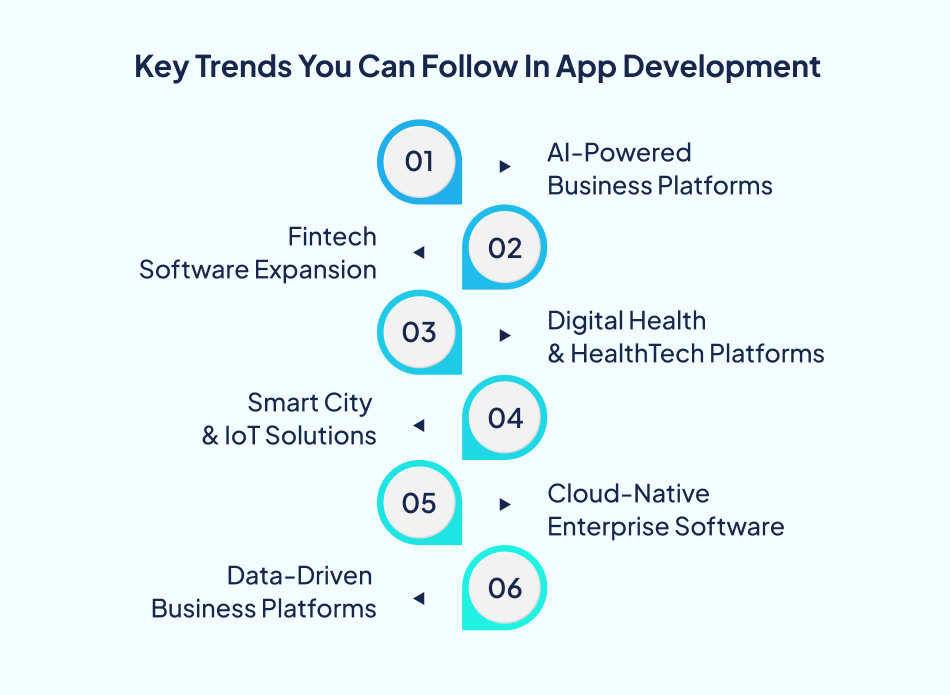
Cloud-native architectures are becoming increasingly popular in Melbourne companies to enable scalable digital platforms.
Benefits include:
Google Cloud and Amazon Web Services are cloud infrastructure services that operate many enterprise applications.
Firms in Melbourne have invested in advanced analytics, which enable them to comprehend customer behaviour.
Key capabilities include:
In Melbourne projects, data analytics is now a fundamental part of custom software development.
The quality and cost of the software depend on the choice of a proper development strategy.
Internal development teams give organisations complete control of product architecture and long-term strategy.
Advantages
Challenges
Offshore development companies help companies tap into the global technical resource and manage the cost of development.
Advantages
Challenges
| Approach | Cost | Control | Best For |
| In-house Team | High | Full | Large enterprises |
| Offshore Company | Medium | Medium | Cost-effective scaling |
| Freelancers | Low | Limited | Small or short-term projects |
Small projects, prototypes, or MVPs may be associated with freelance developers hiring.
Advantages
Challenges
A robust digital product development requires the choice of a firm that is a reliable partner. When investing in custom software development in Melbourne, businesses must focus on a vendor with excellent technical capabilities, process-oriented development, and the ability to support changing software systems in the long term.
Primary attributes of a trustworthy supplier include:
The analysis of business development companies also enables businesses to understand their technical expertise, experience, and dependability in a project.
When handling the evaluation process, businesses need to pose specific questions that touch on the practices of development, security policy, and long-term support.
Such talks enable organisations to know how an organisation in Melbourne, run by a software development company, handles projects and secures business systems.
Some of the key questions are:
A significant number of organisations experience delays and budget overruns due to bad planning in software development projects.
Avoid these mistakes to ensure companies are successful in their efforts to introduce custom software development in Melbourne.
Common mistakes include:
The production of custom software does not only involve writing.
The technology layer has a direct impact on the software performance, scaling, and the complexity of software maintenance.
Key considerations
With a proper budget, you can address rising issues during software development.
Important factors
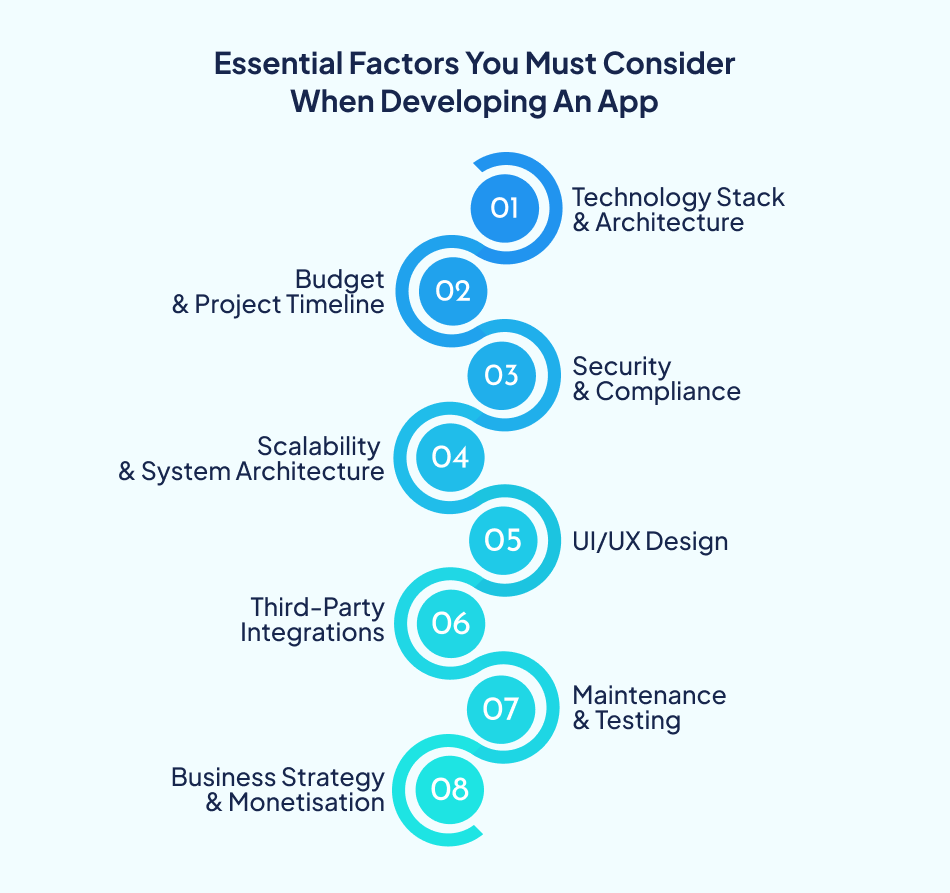
Security systems ensure adherence to data policies.
Security considerations
A scalable architecture will help ensure that software systems increase as business demands increase.
Important elements
The user experience is a key to the adoption of digital products and their long-term usage.
Key UX considerations
The vast majority of contemporary software platforms depend on external systems and API.
Examples of integrations
The process of continuous testing and maintenance will ensure the system’s reliability.
Key practices
Tailor-built software must align with business objectives and monetary plans.
Common strategies
Various aspects of the price of custom software development in Melbourne.
Applications with advanced features, integrations and complex architecture tend to consume more development time and increase the budget. Application development Melbourne helps you understand software complexity.
The performance of the system and overall development investment depend on the types of programming languages, frameworks, and cloud platforms leveraged in development.
The interactive design elements, custom interfaces and dashboards add to the design cost and the development time.
| Cost Factor | Impact on Budget | Description |
| Complexity | High | More features and integrations increase cost |
| Technology Stack | Medium-High | Advanced tools and frameworks require expertise |
| UI/UX Design | Medium | Custom design and animations increase effort |
| Integrations | High | APIs and third-party systems add complexity |
| Maintenance | Ongoing | Updates, monitoring, and support costs |
The incorporation of APIs, databases, and enterprise systems creates a technical and development burden. An app development company in Melbourne can help you integrate with the existing systems.
Constant upgrades, maintenance and security augmentations are required for reliable software systems.
Identifying the appropriate monetisation approach will allow businesses to have a steady stream of revenue through their online networks.
Sub model, users can obtain software by paying regularly.
Key benefits
Freemium services offer free, limited service and sell advanced services.
Benefits
| Strategy | Revenue Type | Best For | Example Use Case |
| Subscription | Recurring | SaaS platforms | Monthly software tools |
| Freemium | Upgrade-based | Apps with large audiences | Productivity apps |
| Advertising | Traffic-based | High user platforms | Content or media apps |
| Partnerships | Revenue sharing | Niche platforms | Marketplace or aggregator apps |
Monetisation via advertising. The monetisation of advertising is the process of earning money by placing digital advertisements on sites.
Examples
The models employed by software platforms to collaborate with service providers and brands are known as partnership models.
Examples
Technical and operational problems are common in software development projects. Cybernetically developed businesses, in collaboration with any software development company in Melbourne, can manage these risks by using organised developmental practices.
Major software programs require an enormous investment.
Common causes
Solutions

Security threats may impact business activities and user confidence.
Common risks
Solutions
| Challenge | Impact | Solution |
| High Costs | Budget overruns | MVP approach, phased development |
| Security Risks | Data breaches | Encryption, regular audits |
| Deployment Issues | Launch delays | Testing and structured releases |
| Scalability Problems | Performance issues | Cloud-based scalable architecture |
Delays in the deployment may delay product launches.
Common causes
Solutions
The lack of proper system architecture may lead to performance problems as user demand grows.
Common issues
Solutions
To accomplish this, a Melbourne logistics firm engaged a software development team to create a digital system capable of automating fleet movement, order management and delivery scheduling.
In the modern competitive digital world, companies update their software to facilitate operations and provide an enhanced user experience. Collaborating with a trusted iOS app development company Melbourne helps organisations develop secure, high-performance applications for long-term digital development. Selecting the best mobile app development company in Melbourne guarantees quality development and steady product innovation.
With continued technology transformation, firms should invest in current mobile platforms that enhance efficiency and customer interaction. A reliable mobile app development company in Melbourne will help companies to implement new technologies and develop scalable solutions. An expert iOS app development company Melbourne also offers lifecycle support, maintenance and optimisation to ensure long-term growth.
Q 1. What is the average duration of custom software development?
Ans 1. The development schedules depend on features, integrations, and testing requirements. Skilled on-demand application developers can increase process speed and incorporate systems like POS software for seamless operations.
Q 2. Is it possible to integrate custom software into existing business systems?
Ans 2. Yes, new apps are designed to connect to CRM applications, payment gateways, and POS software. Skilled on-demand app developers ensure secure data flow between platforms.
Q 3. Is custom software suitable for small businesses?
Ans 3. Tailored platforms are popular among many start-ups automating workflows and payments. On-demand app developers are professional enough to create scalable solutions, which also accommodate POS software in daily operations.
Q 4. How do businesses maintain software performance after launch?
Ans 4. Systems are stable due to regular updates, security checks and performance monitoring. Skilled app developers in Melbourne also have built-in POS software to make transactions reliable and operations hassle-free.

Partner with us to bring your vision to life.



 +61 (42) 108-3277
 contact@7pillars.com.au
 294A Station Street,
