



Let's have a
Quick Chat
with you!
Quick Chat
with you!
You have our ear and we can't wait to hear about your idea! Share your details here and we will make sure to schedule a coffee date with you soon.
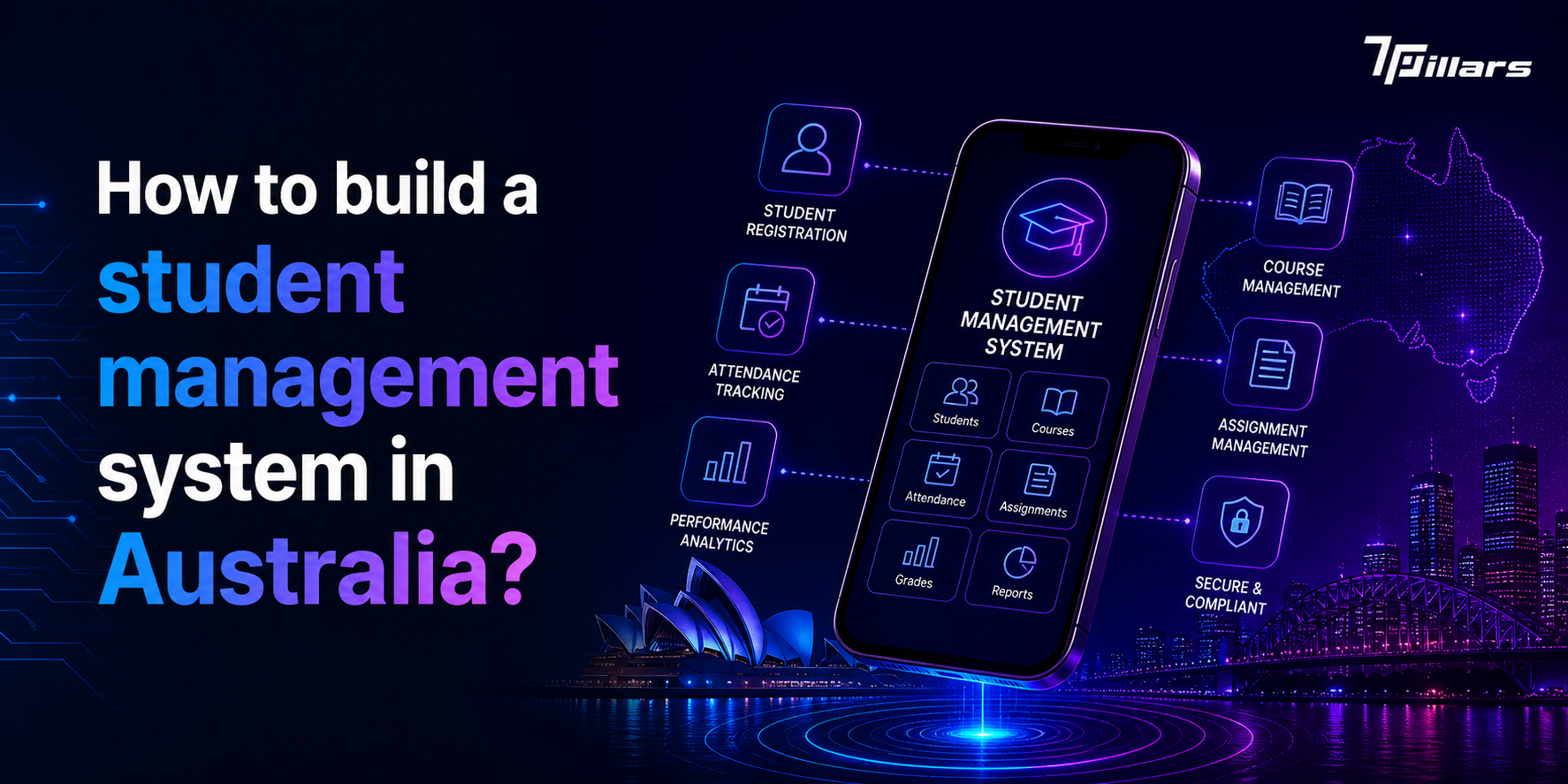
“Many Australian education providers reach a point where spreadsheets and disconnected systems stop working, but knowing how to build a student management system properly isn’t always clear.”
With the swift transition of educational institutions to the digital realm, it is impossible to manage student information using manual methods. Everything requires a systematic approach, be it registration, attendance records, or performance management.
In Australia, this need becomes even more pressing, considering compliance requirements and student demands for seamless online interactions. However, in a competitive environment, where educational institutions compete with each other to provide better service, efficiency and effectiveness of management become important.
However, what most institutions overlook when planning their own Student Management System is that it is not only about developing an application but also about creating an efficient system to support academic and administrative work.
This blog breaks down:
If you’re planning to build a reliable platform, this will give you complete clarity.
This blog is ideal for:
If you’re moving beyond spreadsheets, legacy ERP systems, or disconnected LMS tools, this is particularly relevant.
Most organisations reach this stage when:
This is typically when institutions realise they need a proper Student Management System. It is a strategic approach that will enable them to manage their operations and gain sustainability.
Student Management System is a centralised system that coordinates the entire student lifecycle, from inquiry to graduation. A Student Management System is the operational backbone, bringing all processes into a single cohesive platform. Instead of managing the enrollment and student performance through two separate systems, all are integrated into a single system.
Core Functions:
An effective SMS is also a single source of truth, as it keeps the data consistent across departments. It is essential for institutions that depend on effective reporting and coordination among teams.
Digital systems are quickly becoming the norm in Australian education providers, yet many work in disjointed settings. Older tools always exist with newer platforms, bringing inefficiencies.
This results in:
A well-designed SMS eliminates these issues by centralising both data and workflows into a single system. A well-established Android application development firm to help you navigate the growing market.
The education sector is one of those that is subject to stringent data laws in Australia.
Key frameworks include:
A critical but often overlooked requirement is the ability to reconstruct historical data states.
This means systems must support:
Compliance is not merely about having a safe data storage facility, but about the ability to demonstrate how data evolved over the years.
Students today expect:
When institutions do not live up to these expectations, they experience more support requests and less engagement. AI applications have played an essential role in the rise of SMS.
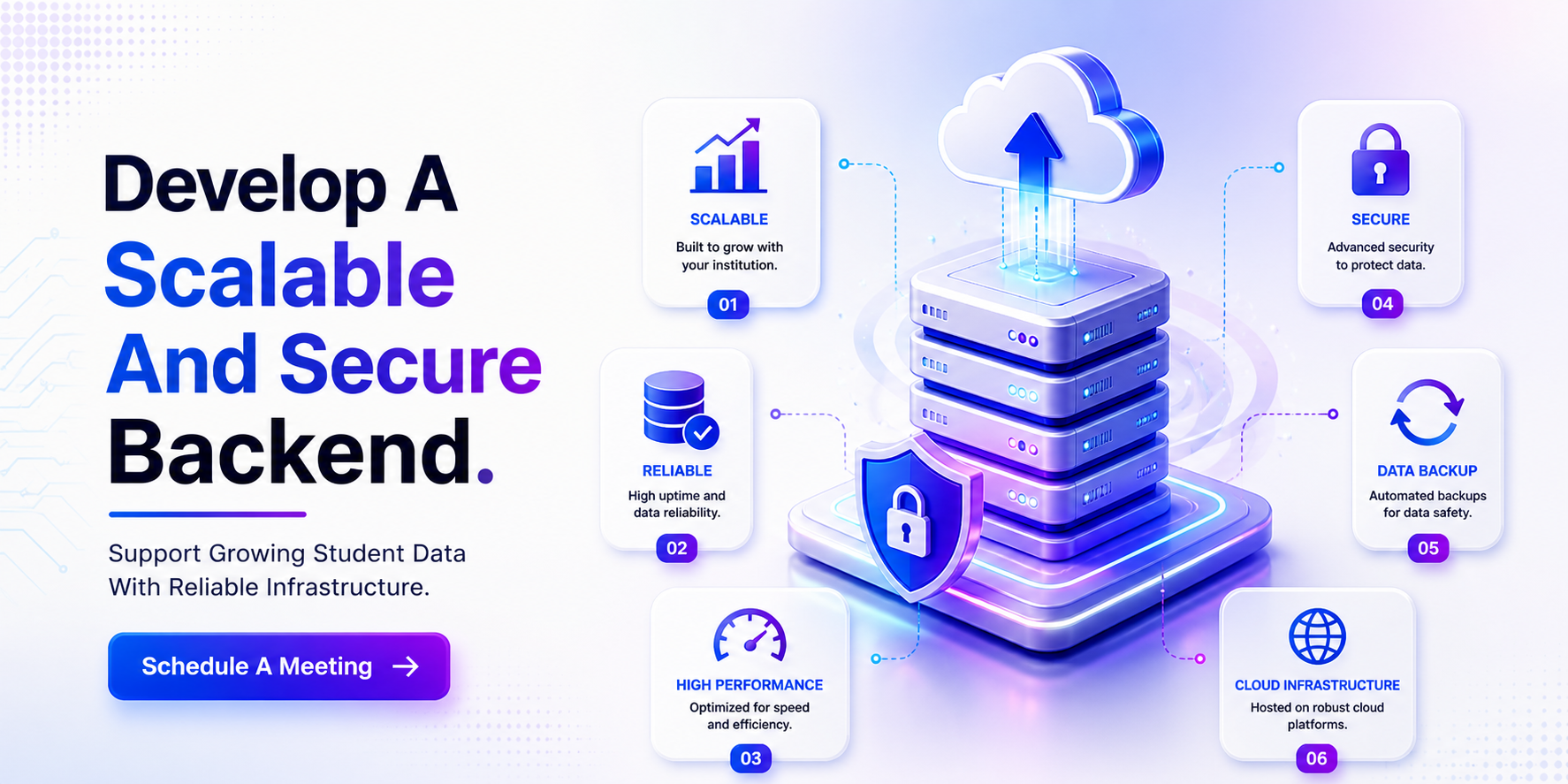 How to Build a Student Management System?
This is the most critical phase.
You must clearly define:
Most system failures originate from unclear or incomplete requirements.
Options include:
Hybrid Approach
Combines SaaS Services tools with custom modules
Most institutions in Australia eventually move toward custom or hybrid solutions due to regulatory complexities.
Architecture determines whether your system can scale or fail.
A strong SMS architecture includes:
Poor architectural decisions often lead to expensive rebuilds within a few years.
At its core, a Student Management System is a data-driven platform.
The trick is in the data relationship organisation:
Poorly designed relationships lead to systems becoming inconsistent and difficult to scale.
Key Principles
Every student record should exist only once. Duplicate records create reporting errors.
Separate data into logical layers, such as academic and financial.
Record every action, enrolment and grading as an event. It enables full audit trails and historical tracking.
Systems must accommodate growing amounts of data without being slowed down. This may necessitate optimised indexing and distributed databases.
These principles ensure long-term reliability.
User experience directly impacts adoption.
Key considerations:
An effective interface minimises the training needs and enhances efficiency.
It Includes:
One of the biggest challenges is ensuring data and functionality are consistent across all modules.
A Student Management System must integrate with multiple external systems:
Each integration introduces complexity due to:
A well-designed system uses:
Without this, systems become difficult to maintain and scale.
Testing must go beyond basic functionality.
It should include:
Systems often fail during peak periods if testing is insufficient.
Best practices include:
This reduces risk and ensures stability.
A Student Management System requires ongoing updates:
Core Features:
Advanced Features:
In today’s world, automation and intelligence have replaced manual methods.
Beyond operations, the real value of an SMS lies in reporting and analytics.
Institutions require:
An effective reporting system is critical for sound decision-making and enhanced institutional efficiency.
The absence of such a level reduces systems to mere tools and not strategic investments.
AUD 60,000 to 100,000
AUD 100,000 to 180,000
AUD 180,000 to 300,000 and above
Compliance requirements are often the biggest drivers of development cost.
Standard time frame:
Systems must support:
Legal compliance helps maintain data integrity and avoids legal trouble for the organisation.
As systems scale, managing access becomes critical.
Institutions must define:
This requires:
Without proper governance, systems become far more vulnerable to errors and misuse.
Problems often occur during the SMS development process, impacting the timeline and budget.
Insufficient planning can lead to uncertainty regarding required functionalities and increase the development time.
The integration of third-party tools can lead to certain issues during development.
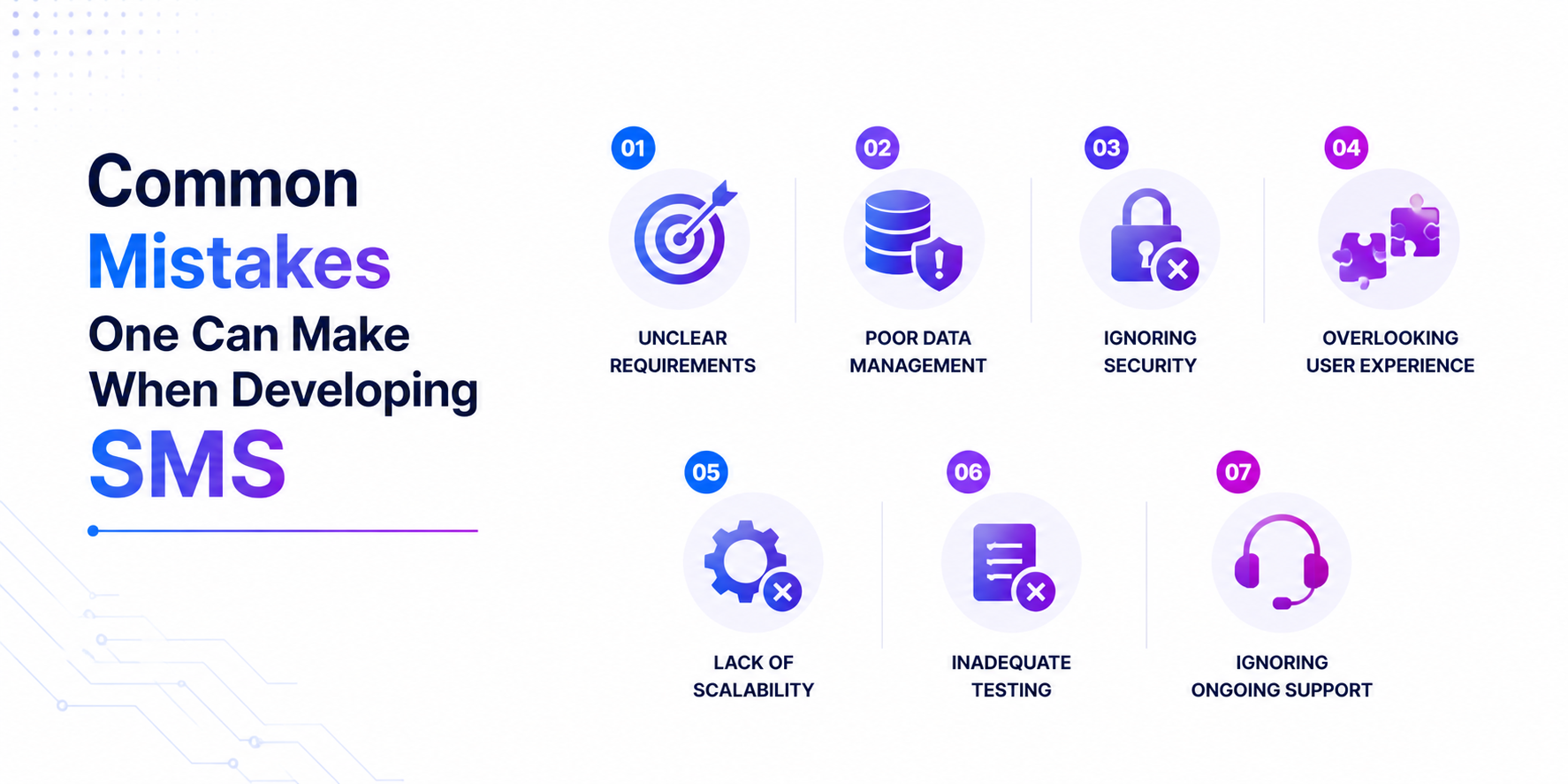 3. Low rate of adoption
If the system fails to meet user expectations around usability and value, adoption rates drop significantly.
SMS development solutions that lack scalability fail to work properly as the number of users or messages increases.
The above issues are due to failure to plan rather than any technological issues.
There are some steps you can take to lower the price of developing SMS solutions.
Creating an MVP helps determine whether your ideas are valuable enough. A mobile app development service provider can help you create and launch an MVP in the market to test the waters.
Do not add any non-critical features to your product to save money and time.
Consider potential integration opportunities at the planning stage.
It means you should choose teams that already have strong experience and a history of doing similar work.
Working with a mobile app development company in Australia helps avoid costly mistakes.
A mid-sized RTO managing over 1,200 students relied on spreadsheets and manual processes.
The key success factor was workflow optimisation rather than just system implementation.
The ROI of Student Management Systems is high because they increase efficiency, cut costs, and help maintain more accurate institution data.
Institutions save money by automating operations and becoming less dependent on manual operations and paperwork.
Processes become faster when departments share data from the same source and conduct their work digitally.
Automated data capture reduces errors and improves the reliability of both academic and administrative records.
These benefits ultimately outweigh any cost of implementing the system.
Technologies that focus on making Student Management Systems more automated and integrated into other digital systems are emerging fast.
Institutions can use AI solutions to analyse student data and base their decisions on the analysis.
The software is designed for convenient access using mobile devices.
Routine institutional processes are increasingly being automated to improve accuracy and reduce manual effort.
Modern systems are moving towards fully integrated digital ecosystems, where platforms connect seamlessly across operations.
Future systems will focus on intelligence and automation.
A growing training provider managing over 1,500 students relied on spreadsheets, causing delays.
Building a student management system in Australia isn’t simply about putting processes online. Rather, it is about laying down a framework that will make compliance easier and enable greater efficiency and effectiveness in running an institution. Choosing the best system from the beginning foundation guarantees success down the road.
With the right technology partner, however, building such a system will prove to be a great investment for your institution. A good developer will save you from making expensive mistakes and provide you with an efficient system that can grow with you in time.
Q 1. How long does it take to build a student management system?
Ans 1. Yes, timelines vary based on complexity. An iPhone app development company can help you create a successful student management system.
Q 2. Is custom development better than SaaS tools?
Ans 2. Yes, for long-term scalability and control as it offers:
Q 3. What drives the cost of development the most?
Ans 3. Yes, costs depend on multiple factors.
Q 4. Can a student management system scale with growth?
Ans 4. Yes, if built correctly from the start. An on-demand app development company can help you understand how a student management system works.


Partner with us to bring your vision to life.



 +61 (42) 108-3277
 contact@7pillars.com.au
 294A Station Street,
