Building an LMS in Australia isn’t a fixed-cost exercise; it’s a scope-driven investment. Most platforms land somewhere between AUD 60,000 and 220,000+, but that range shifts quickly depending on the product. A simple system for delivering courses is relatively quick to build. Projects with advanced features like automation, integrations, or personalised learning typically sit on the higher end of the cost to build an LMS in Australia.
What separates controlled projects from expensive ones is clarity at the start. Teams that define structure, features, and scale early rarely need major rework later. Those that don’t often end up rebuilding parts of the platform midway through development.
At the same time, expectations around digital learning in Australia have changed. It’s no longer enough to host content. Platforms are expected to handle scale, track performance, and deliver a smooth user experience across devices.
This breakdown focuses on what actually drives LMS development cost, where budgets typically stretch, and how to approach planning if the goal is to build something that performs beyond launch, not just something that works.
Planning LMS Investment Without Cost Overruns
For most teams, the challenge isn’t building an LMS; it’s controlling cost and scope while building it. Early-stage decisions have a direct impact on both development cost and efficiency, ultimately shaping the cost to build an LMS in Australia. Teams that involve developers early usually avoid expensive architectural changes later.
For organisations focused on scalable education platforms, building quality directly impacts long-term ROI. By engaging the best professional mobile app development company in Australia, you will get reliable performance, excellent security, and consistent results. Skilled mobile app developers in Melbourne also help manage costs effectively while maintaining platform quality.
NextGen Learning System
An LMS is a central system that allows organisations to deliver, manage, and track learning at scale. It enables organisations to provide training and certifications through a centralised system.
In Australia, LMS platforms today go beyond content delivery; they support compliance, workforce scaling, and measurable outcomes.
As adoption grows, LMS platforms are now widely used across:
- Corporate training
- Educational material and online courses
- Skill development platforms
- Compliance and certification programs
Scalability depends heavily on how the platform is structured from the beginning.
Why Are Businesses Investing in LMS Platforms in Australia?
The learning landscape in Australia has shifted toward digital-first training. Traditional training methods are no longer efficient. Organisations today want centralised systems that enable automation and the measurability of results, which directly impacts the cost to build an LMS in Australia.
- The healthcare sector, mining, and educational organisations depend heavily on training. Training and upskilling employees requires platforms that allow monitoring and managing the training process.
- Simultaneously, remote work and distributed teams have brought the increasing demand for digital-based training solutions.
- LMS platforms give organisations clear visibility into employee progress and performance.
An LMS enables organisations to:
- Deliver consistent training across multiple locations
- Track learner progress and certification status
- Reduce administrative workload
For growing organisations, an LMS is no longer just a training tool; it becomes a central hub for workforce development.
 LMS Development Price in Australia
LMS development costs largely depend on complexity and purpose. The following is a realistic breakdown of the current Australian development standards.
1. Basic LMS
This level is best suited for small businesses or early-stage start-ups.
- Estimated Cost: AUD 60,000-90,000
- User registration and login
- Course creation and management
- Content delivery
- Basic quizzes and assessments
- Simple reporting dashboard
This level focuses on core functionality without complex integrations.
2. Mid-Level LMS
This level is designed for growing organisations and includes:
- Estimated Cost: AUD 90,000-150,000
- Integration with CRM systems
- Role-based access control
- Advanced analytics
- Certification workflows
- Mobile responsiveness or dedicated apps
This level balances functionality with scalability.
3. Advanced LMS
Enterprise-grade LMS platforms include:
- Estimated Cost: AUD 150,000-220,000+
- Customised learning paths
- Real-time dashboard analytics
- Multi-tenant architecture
- API integrations
- Compliance tracking
- Audit logs
These systems are built to support large-scale operations with thousands of active users.
Key Factors Affecting LMS Development Cost
1. Feature Complexity
The features you include will have the biggest impact on overall cost. A simple LMS stays relatively affordable, but costs increase quickly as more advanced functionality gets added.
- Basic course delivery keeps development straightforward.
- Personalised learning features require more logic and data handling
- Analytics dashboards take additional time to build and optimise
- Automation adds complexity to workflows and approvals
- Gamification features expand both scope and testing effort
Adding features later is one of the biggest reasons projects exceed budget.
2. Platform Selection
Platform choice impacts cost and development time.
- Web platforms are faster and more cost-effective
- Native apps cost more but perform better
- Cross-platform offers a balance of cost and reach
- Choose based on how users will access the platform
3. Integrations
Most LMS platforms connect with existing systems to work properly.
- HR systems help manage employee data and training records
- Payroll platforms support compliance and reporting
- CRM tools enable user tracking and communication
- Third-party content providers expand learning material
- Each integration adds development effort and can slow timelines if not clearly planned from the start
4. Compliance and Security
Security is an essential requirement to protect users sensitive data.
- Audit trails ensure accountability.
- Consent management ensures compliance.
- These are not optional features; they’re expected in any production-grade LMS.
5. UI and UX Design
Usability drives adoption and engagement.
- Clear navigation reduces friction.
- Clean interface enhances experience.
- Accessibility broadens usability
- Custom design takes more time compared to basic templates
- In many cases, poor UX leads to low adoption, even if the platform is technically strong
6. Scalability Requirements
Consider scalability early if you plan to grow your LMS.
- The system should handle increasing users without slowing down, which is essential when planning the cost to build an LMS in Australia
- Performance must remain stable during peak usage
- Backend infrastructure should support long-term growth
- Fixing scalability later is usually more expensive than planning for it up front
- Often underestimated early, but it becomes a major cost factor over time
Ongoing LMS Costs Most Businesses Overlook
Many organisations focus on the upfront build cost and miscalculate what it takes to run an LMS long term. In reality, ongoing expenses impact your total investment.
1. Cloud Hosting and Infrastructure
- Server costs and data storage
- Scales with user growth and content volumes
- With the expansion of your platform, infrastructure costs rise.
2. Third-Party Services
- Video hosting platforms for course delivery
- Payment gateways for monetised learning
- AI or analytics tools for advanced functionality
These third-party and SaaS services are usually subscription-based and become more expensive as usage increases.
3. Compliance and Legal Costs
- Data privacy requirements
- Security audits and risk assessments
- Legal consultation where required
Adherence is not a single process. It requires constant monitoring as rules are changing.
4. Training and Onboarding
- Internal team training for administrators
- User onboarding resources and guides
- Even robust platforms require effective onboarding to make teams adopt them.
In most cases, these additional costs can add 20 to 40 per cent on top of the initial development budget.
Core Features of a High-Quality LMS
The best LMS centres its functions towards supporting both learners and administrators without unnecessary complexities.
- User management, for managing roles, rights, and access
- Course management to create, update, and organise learning content
- Content delivery, including documents and live sessions
- Tests and quizzes for evaluation
- Reporting for monitoring progress
- These form the core foundation of any LMS platform.
Advanced Features for a Competitive LMS Platform
As organisations scale, they often move beyond basic functionality to improve engagement and efficiency.
- AI-based learning recommendations for user behaviour
- Gamification elements (badges and progress tracking)
- Multilingual support for varied user bases
- Offline learning for accessibility
- Enterprise system integration for smooth processes
These features aren’t essential at launch, but they become critical as the platform scales.
LMS Development Timeline in Australia
Timeline plays a key role in both cost and execution quality.
1. Discovery & Planning (2-4 weeks)
- Requirement gathering
- Feature definition
- Technical planning
2. UI/UX Design (3-6 weeks)
- Wireframes
- Prototypes
- Usability testing
3. Development (8-20 weeks)
- Frontend and backend development
- Integrations
- Performance optimisation
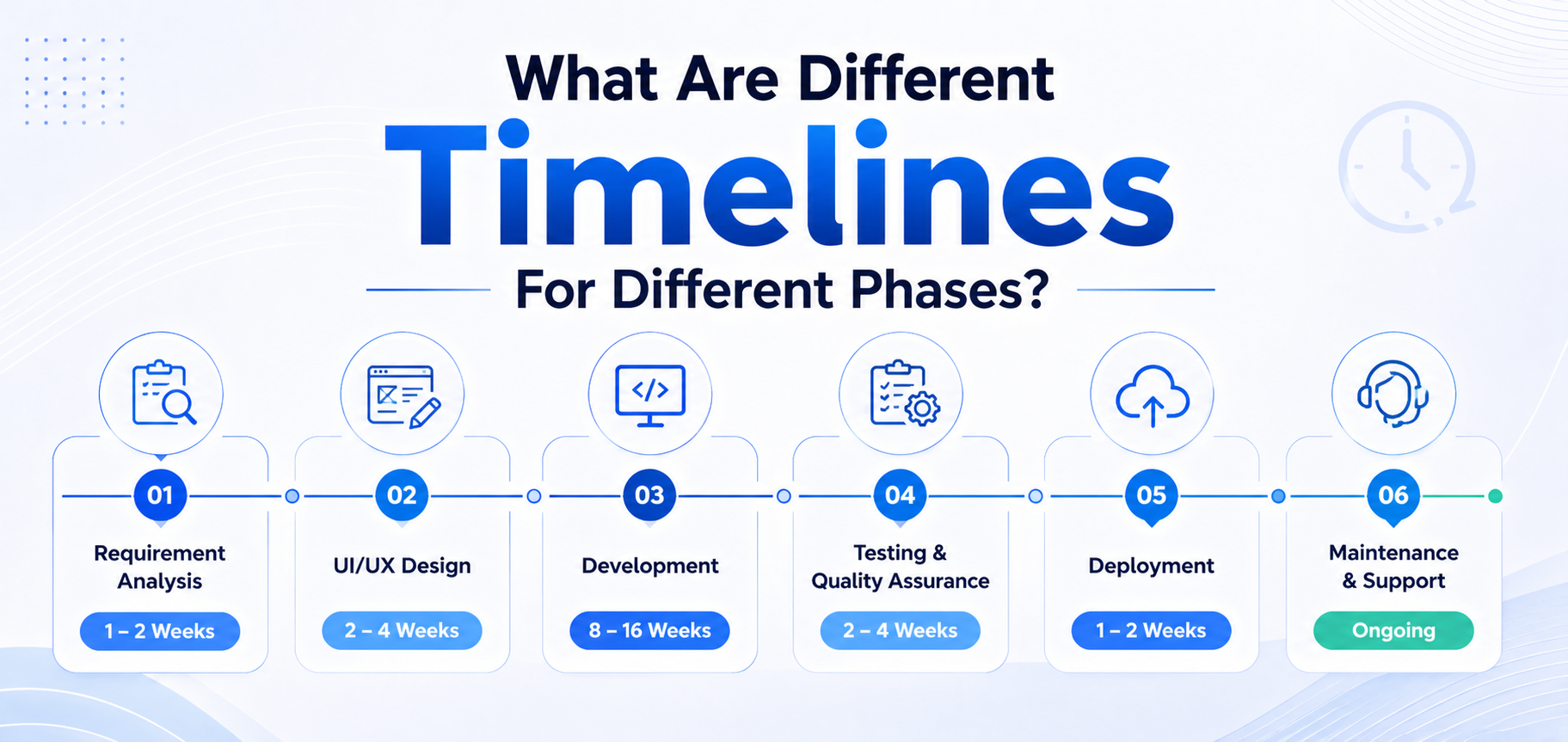
4. Testing & QA (2-4 weeks)
- Bug fixes
- Performance testing
- Security validation
5. Launch & Deployment (1-2 weeks)
- Server deployment
- Monitoring setup
6. Post-Launch (Ongoing)
- Updates
- Optimisation
- Feature expansion
Industry-Wise LMS Cost Considerations
Different industries require different levels of complexity.
1. Corporate Training LMS
- Moderate complexity
- Strong focus on reporting and compliance
- Medium cost range
2. EdTech Platforms
- High user volume
- Content-heavy systems
- Requires scalability
- Higher cost
3. Healthcare LMS
- Strict compliance requirements
- Advanced data security
- Higher development cost
4. Enterprise LMS
- Multi-tenant architecture
- Advanced integrations
- The highest cost bracket
Where LMS Budgets Typically Go Wrong?
Most LMS projects don’t go over budget during development, but they go over budget due to poor planning.
- Features are added mid-development without proper validation
- Integrations are underestimated early
- UX is treated as secondary, leading to redesign costs
- Requirements keep changing during development
The result is not just higher cost, but delayed timelines and compromised product quality.
How To Reduce LMS Development Cost?
1. Start With an MVP
- Build core features only
- Launch faster
- Validate demand
2. Define Scope Clearly
- Avoid vague requirements
- Prioritise essentials
3. Choose the Right Team
- Choose experienced team
- Reduce inefficiencies
- Ensure clear communication
4. Plan for Scalability Early
- Design for growth
- Avoid rebuilds
- Use scalable systems
5. Avoid Overbuilding
- Focus on core problem
- Skip extra features
- Expand after validation
Build vs Buy: LMS Decision Guide
1. Off-the-Shelf LMS
Pros:
- Lower upfront cost
- Faster setup
Cons:
- Limited flexibility
- Ongoing subscription costs
2. Custom LMS Development
Pros:
- Full control
- Scalable architecture
- Tailored features
Cons:
- Higher initial cost
- Longer timeline
Most growing businesses eventually move toward custom solutions.
Real-World LMS Cost Scenario
Corporate Training LMS
1. MVP Build (AUD 80K)
- Login system
- Course delivery
- Reporting
- Timeline: 10 weeks
2. Scaling Phase (AUD 150K+)
- Analytics
- Integrations
- Automation
3. Result
- Improved efficiency
- Scalable system
- Better ROI and measurable improvements in training efficiency and user engagement.
ROI of LMS Development
A well-built LMS delivers long-term value:
- Reduced training costs
- Improved employee performance
- Scalable learning delivery
- Better compliance tracking
- Data-driven insights
Over time, this translates into lower training costs, faster onboarding, and improved workforce productivity.
Future Trends in LMS Development
LMS platforms are evolving rapidly:
- AI-based learning
- Mobile-first experiences
- Gamification
- Microlearning
- Advanced analytics
Leading mobile app developers in Melbourne are already integrating these features into modern platforms.
Common LMS Development Mistakes
- Building too many features early
- Ignoring UX
- Poor planning
- Underestimating integrations
- No post-launch strategy
Avoiding these significantly improves success rates.
Corporate Training LMS Transformation
Business Objective
- Replace an outdated LMS with a scalable, centralised training platform
- Improve reporting, compliance tracking, and user management
Support expansion across multiple locations with help from a mobile app development company in Australia
Challenges
- Limited reporting capabilities and poor data visibility
- Manual admin processes are increasing the operational workload
- Platform instability with a growing user base
- Lack of integrations with HR and internal systems
Solution Approach
- Started with an MVP focusing on core features
- Designed a scalable backend aligned with best practices followed by a leading app development company in Australia
- Integrated HR systems for automated user and compliance tracking
- Improved UI/UX with support from experienced mobile app developers in Melbourne
Timeline & Cost
- MVP development: 10-12 weeks
- Initial cost: AUD 80K
- Scaling cost: AUD 120K+, depending on additional requirements
Outcomes
- Supported 10,000+ active users without performance issues
- Saved over 40% on manual administrative costs
- Increased student participation and completion rate
- Allowed real-time reporting and compliance monitoring
Conclusion
Building an LMS in Australia requires more than just a defined budget; it depends on clear planning and scalability from the start, which plays a critical role in the cost to build an LMS in Australia. It involves planning right from the initial stage of development, along with scalability considerations. Firms that collaborate with a reputable on-demand app development company in Australia can save on costs.
A process that starts with the basics and scales according to actual use is the key to success. For companies considering building and scaling LMSs, collaboration with a professional app development company in Australia can lead to making the right decisions concerning the technical side. The right partners allow the development of efficient LMSs with great scalability.
FAQS
Q 1. Why do LMS projects go over budget?
Ans 1. Usually, because things change mid-build. A well-known React Native software development company can help you remain in your budget.
- Extra features get added.
- Integrations take longer than expected.
- The initial scope wasn’t clear.
Q 2. Should you build everything from day one?
Ans 2. Not really. Most teams start small and expand.
- Launch with core features
- Learn from real users
- Improve over time
Q 3. What slows development the most?
Ans 3. It’s rarely just coding. An iPhone app development company can help you analyze and understand what’s slowing your development process.
- Delayed feedback
- Changing requirements
- Underestimated testing
Q 4. When should you upgrade your LMS?
Ans 4. When your existing system is slowing your team or hindering growth, it is normally an indicator. Most businesses cling to outdated platforms longer than necessary, which is more expensive in the long run than rebuilding them properly.
Post Views: 11









 +61 (42) 108-3277
 contact@7pillars.com.au
 294A Station Street,
