



📌 Key Takeaways
- What a fitness app actually is
- Different Types of Fitness Apps
- Essential Features of Fitness Apps
- Fitness App Development Process
- Fitness App Development Cost
- Tech Stack for Building Fitness Apps
- How Fitness Apps Make Money
- Factors to Consider While Choosing a Fitness App Development Company
Australians are increasingly becoming aware of fitness and a healthy lifestyle. To support that lifestyle and track their fitness, mobile fitness apps are the primary tool. Therefore, the demand for good fitness apps is constantly increasing.
According to a report by Grand View Research, the Fitness platform development market is expected to grow at a CAGR of 13.5% from USD 258 million in 2026 to USD 626.6 million by 2033. This has created ample opportunities for startups, entrepreneurs, and app developers who want to fulfill the demand of Australians.
In order to build a successful fitness app, you need to understand the market dynamics, expectations of your target audience, costs involved in development, technologies used, and everything that can help you make informed decisions before investing in custom fitness app development. Therefore, we compiled everything for you in this comprehensive guide. Let’s start with what a fitness app actually entails.
What is a Fitness App?
A fitness app is a mobile application that is designed for fitness enthusiasts to help them achieve their fitness goals. Such apps are equipped with features such as personalised exercises and routine tracking, managing diet, and tracking overall physical activity through wearable syncing.
However, not all fitness apps are the same. The functionality of these apps depends on what they are built for. Some just log data (steps, calories, workouts completed). Others use that data to guide what the user should do next. It may involve adjusting a training plan, suggesting recovery time, or flagging when someone’s overtraining.
Fitness App Market Trends and Opportunities in Australia
As we already mentioned, the fitness app market is growing very fast and is expected to boom in upcoming years. However, the industry will be driven by these trends.
AI Personalisation
Fitness enthusiasts are expecting to have reliable AI personalisation in fitness apps. They want a personalised experience with personalised workout or diet plans based on their biometric inputs and behavioural patterns. With the rise of AI in digital health platforms, the demand for such features will increase further in the future.
Wearable Integration
People expect their data to be synced automatically without manual entry. With wearable integration, using smartwatches, smart rings, and other wearable devices, the apps can log user data in real time to provide workout metrics such as heart rates, sleep quality scores, etc in order to provide an accurate picture for personalised workout plans and nutrition recommendations.
Activity Tracking
In Australia, exercise and weight-loss apps pulled in the biggest chunk of revenue across all categories in the past few years. And activity tracking is the primary feature of those apps. However, people expect more comprehensive activity tracking, including features like meal tracking and calorie monitoring, across fitness apps.
Local Preferences
The big global brands easily win on recognition. But recognition and actually understanding how someone in Brisbane trains, eats, or wants to pay for a subscription are two different things. That gap can be seen in today’s fitness app market. So, you can design your apps focused on local preferences of people across Australian suburbs to thrive
The broader takeaway: This isn’t a market where you need to convince people fitness apps are worth using anymore because that argument’s already won. The opportunity now is in building the specific thing that does what the generic big-name apps don’t quite do well.
What are the Types of Fitness Apps You Can Build?
Fitness apps can be of various types depending on the purpose they were built for. Common types include:
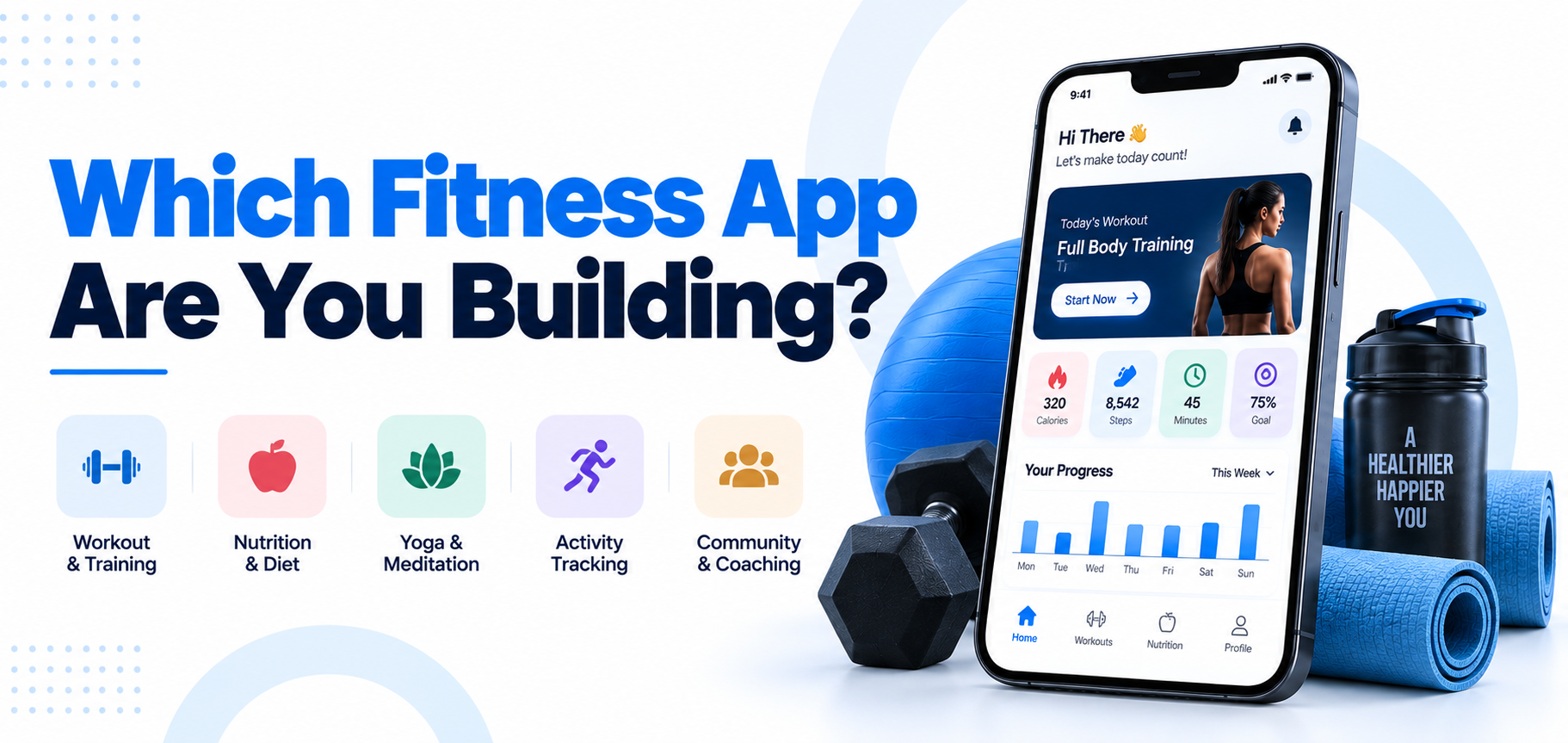
- Workout App
- Fitness Tracker
- Personal Trainer
- Gym App
- Nutrition App
- AI Fitness Coach
- Wellness App
- Fitness Platform
Workout and Exercise Apps
Entrepreneurs pursue workout app development because they want to design an application focused on guiding a user through a training session, exercise demonstrations, structured plans, sets and reps tracking, and so on. The core job is making sure the user knows what to do and how to do it properly.
Fitness Tracking Apps
Fitness app development companies build these types of apps around monitoring and analysing activity over time, such as steps, calories burned, heart rate, and workout history. The value here is in the data and the trends it provides by analysing logged data.
Personal Training Apps
Personal trainer app development involves providing customised training to individual people. They can be powered by personalised AI for automated training data generation based on the user’s profile or can be assigned a personal human trainer who can add personalised training for the assigned user.
Gym and Fitness Studio Apps
These apps are designed for the business side. They involve features such as membership management, class scheduling, payment processing, and member communication. If a gym wants members to book classes and manage their membership from their phone, this is the category.
Nutrition and Diet Apps
As the name suggests, these apps are built for meal tracking, calorie counting, and food intake management. Such apps can be equipped with features such as users logging their workout routines, and the app provides the means to complement the workout based on user goals.
Wellness Apps
Wellness apps cover sleep tracking, stress management, mindfulness, and general health habits. These apps sit closer to lifestyle management than pure physical training.
Corporate Wellness Apps
Built for businesses to offer as an employee benefit, usually combining fitness tracking with broader wellbeing features and sometimes gamification to encourage participation across a workforce.
AI Fitness Coach Apps
These apps use AI to personalise the experience in real time by adjusting workout plans based on progress, recommending recovery days, or coaching form and technique. This is where AI fitness app development is heading fastest, and it’s a genuinely different build to a static workout app.
All-in-One Fitness Platforms
These combine several of the categories above into a single product. From workout plans, fitness tracking, nutrition, custom AI chatbots, and sometimes trainer access all in one app. More complex to build, but often the direction fitness businesses grow toward once a simpler app proves demand.
Let’s have a look at the comparison table based on the feature focus and development complexity of different apps.
| App Type | Core Purpose | Key Features | Complexity |
| Workout | Exercise guidance | Plans, videos, tracking | Medium |
| Tracking | Activity monitoring | Steps, calories, analytics | Medium |
| Trainer | Coaching | Chat, plans, bookings | High |
| Gym | Member management | Membership, booking, payments | High |
| Nutrition | Diet management | Meals, calories, food database | Medium |
| AI fitness | Personalisation | AI coach, recommendations | High |
What are the Essential Features involved in Fitness App Development?
As you already know, all fitness apps have their own set of features built around the purpose it serves. But some common ones include:
User profiles and onboarding
This is the app’s first window to actually learn something about the person using it. From fitness level, goals, injuries, or anything they’re really trying to get out of this thing. Rush this part, and you end up with a generic experience for everyone, which kind of defeats the point.
Workout plans and an exercise library.
Exercises with clear demos, plans that tell a user what to do and when. Honestly, the quality of the video and form cues matters way more here than how many exercises you cram in.
Progress tracking
People need to see the proof that they’re in progress. Such progress involves the weight lifted, workouts finished, measurements changing, and so on. Without this, motivation just quietly disappears after a few weeks.
Wearable syncing
Apple Watch, Fitbit, Garmin, that pull in heart rate and sleep data automatically instead of making someone type it in by hand. At this point, users just expect this feature to exist in their apps.
AI-driven personalisation
Adjusting the plan based on how the user’s actually doing, suggesting a rest day, catching a pattern a trainer might notice is where AI fitness app development is headed right now. It’s the difference between an app that feels alive and one that just sits there running the same script for everyone.
Nutrition tracking
Even apps that are mainly about workouts end up getting asked for nutrition tracking eventually, because results come down to diet just as much as training.
Social features
Leaderboards, shared wins, challenges with friends, or sharing progress in social media influence people to stick with their fitness goals longer because it creates a sense that someone else is watching.
Payments and subscriptions
If you’re monetising through subscriptions, this needs to work smoothly. A clunky checkout is a surprisingly common reason people bail before they even start.
Gamification Components
Streaks, badges, and small milestone rewards are small gamification features that help when that initial burst of motivation fades, which it always does eventually when it comes to fitness.
Fitness App Security, Privacy, and Compliance
Australian businesses dealing with personal data are strictly bound by compliance, security, and privacy requirements that you should be aware of.
Data Security
Health data, activity history, and anything pulled from a wearable needs to be encrypted both when it’s moving and when it’s just sitting in your database. On top of that, access within your own team should be locked down too, and limiting who can access this data internally is one of the simplest ways to cut risk.
Privacy
Fitness apps deal with data that goes beyond standard personal information, such as biometric readings, activity patterns, location, or medical context. This kind of health-related data is treated as sensitive information under privacy law, which means it warrants a higher standard of care than someone’s email address.
Compliance
As we already mentioned, any app collecting personal information in Australia should strictly adhere to the Privacy Act 1988. This act outlines how that data can be collected, stored, and shared. This shapes how the app’s built from the start, especially given how health data specifically gets handled under this framework.
What is the Fitness App Development Process?
Every developer has their own process. However, the core sequence of that process remains almost the same.
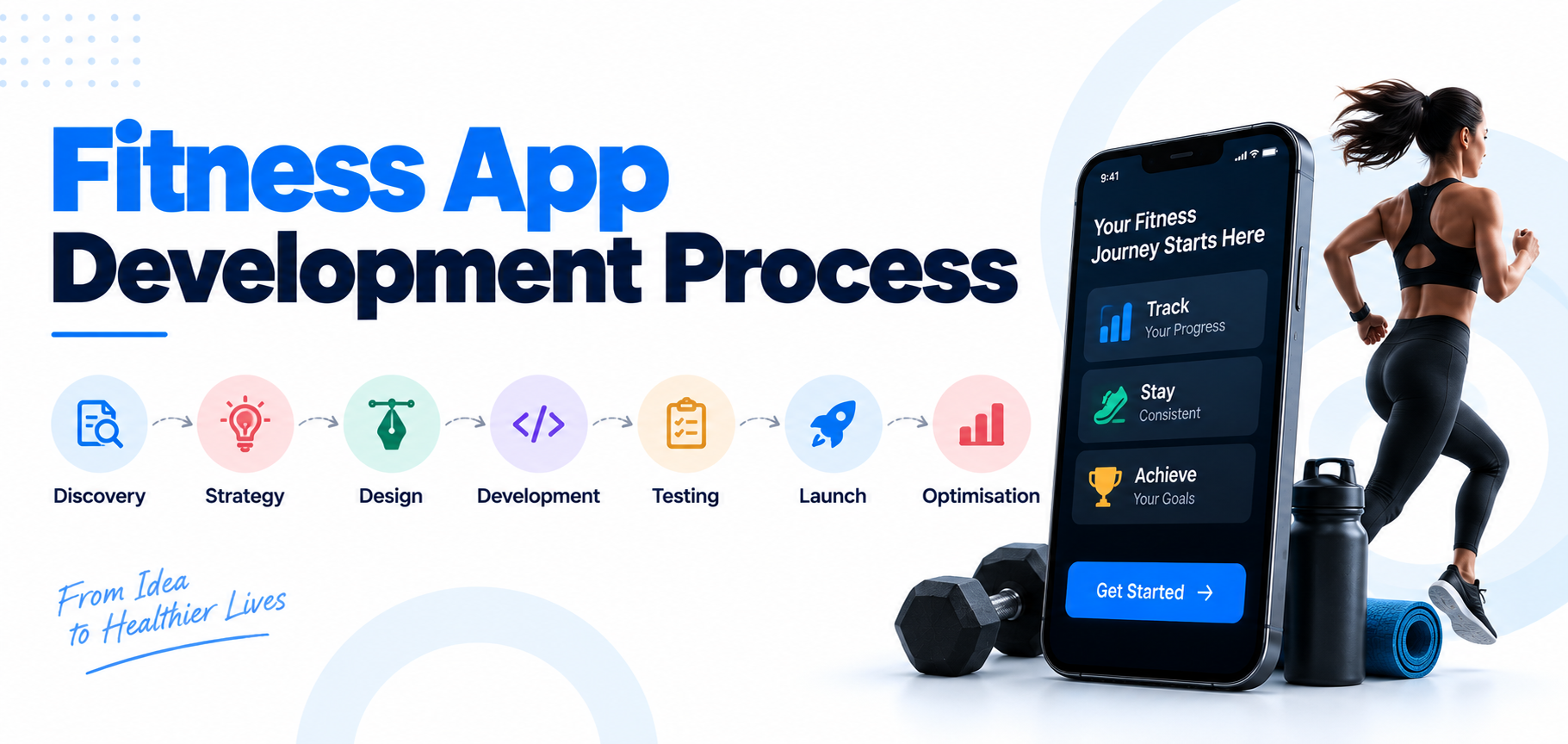
Initial Requirement Assessment
The first phase of custom fitness app development starts with a discovery phase where health and fitness app developers understand your requirements and organisational goals. It includes assessing your problems and expectations with the fitness app. This step also outlines the compliance requirements for the application if required. It helps in avoiding discrepancies in the future.
Strategy Development
Once requirements are gathered, the development team performs a thorough evaluation and co-creates a development strategy that aligns with your vision. It is a project management outline that includes a clear definition of key milestones, priorities, and KPIs for the development team.
Architecture Design
The next step comes in when the company creates wireframes for the UI/UX and builds the necessary modules for the application. As the development team builds modules, they concentrate on performance, scalability, compliance, and security as they design a system.
Staging and Testing
Before going live, the fitness application that is going to production will be thoroughly staged and tested. This approach is an essential step that helps to ensure performance, security, and compliance. It may also include user testing, adoption, and training if required.
Launch & Continuous Optimisation
Once the app becomes functional for end-users, our team deploys it to production and continuously monitors performance. They increase the workload and measure whether the response time fluctuates. This helps to ensure it remains scalable and reliable for a long period.
So, you know how a fitness app development process looks behind the scenes. Now let’s explore the costing factors.
How Much Does a Fitness App Development Cost?
You can expect anywhere between $30,000 and $300,000 for fitness app development costs in Australia. However, the accurate cost depends on multiple factors such as the app type, complexity of features, developer cost, and so on.
| Fitness App Type | Approx Development Cost in Australia (AUD) |
| Basic Workout App | $30,000 – $50,000 |
| Personal Trainer App | $50,000 – $90,000 |
| Gym/Fitness Club App | $50,000 – $120,000 |
| Nutrition & Diet App | $30,000 – $70,000 |
| AI-Powered Fitness App | $80,000 – $200,000 |
| On-Demand Fitness App | $70,000 – $150,000 |
| Advanced Fitness Ecosystem | $150,000 – $300,000+ |
How Long Does it Take to Develop a Fitness App?
The time to build a fitness app depends on the type and complexity of your app. The size of the development team also matters. However, a basic workout app could take 8-12 weeks, and an advanced fitness ecosystem can take more than a year. Here’s a detailed breakdown of the development timeframe with the app complexity.
| App Type | Complexity | Typical Timeframe |
| Basic Workout App | Low | 8-12 weeks |
| Personal Trainer App | Medium–High | 12 -18 weeks |
| Gym/Fitness Club App | High | 14-20 weeks |
| Nutrition & Diet App | Medium | 10-14 weeks |
| AI-Powered Fitness App | High | 16-24 weeks |
| On-Demand Fitness App | High | 14-22 weeks |
What is the Technology Stack for Fitness App Development?
The tech stack for a fitness app involves a combination of programming languages, development frameworks, database integration, cloud infrastructure, and a security toolkit. Here’s a breakdown:
Frontend
- React Native
- Flutter
Backend
- Node.js
- Laravel
- Python
Database
- PostgreSQL
- MySQL
- MongoDB
Cloud & Hosting
- AWS
- Google Cloud
- Microsoft Azure
Wearable Integration
- Apple HealthKit
- Google Health Connect
- Fitbit API
- Garmin API
Maps & GPS Integration
- Google Maps Platform
- Mapbox
- Apple Maps
Payments Integration
- Stripe
- Apple Pay
- Google Wallet
Notifications
- Firebase Cloud Messaging
- Apple Push Notification Service
AI/ML
- Python
- TensorFlow
- PyTorch
- OpenAI APIs
Authentication & Security
- OAuth 2.0
- OpenID Connect
- JWT
- HTTPS/TLS
So, these technologies are employed to build fitness apps in Australia. Now, let’s explore how these apps make money.
What are the Monetisation Models for a Fitness App?
Before investing in fitness app development, you should be aware of how they make money. Here’s the actual breakdown of their monetisation models.
Subscription-based Model
Probably the most common one for mobile fitness apps. Users pay on a monthly, quarterly, or yearly basis to use your services. And fitness is something that Australians stick with for a long period of time.
Freemium Model
Let people in for free with basic features, then charge for the good stuff such as advanced tracking, custom plans, whatever your premium tier looks like. Great for getting downloads and building a user base fast, but the real skill is figuring out exactly where the free version stops being useful enough that someone actually wants to upgrade.
In-app Purchases
The general usage of the app is free, but you charge for specific features of the app. It may involve specific workout programs, meal plans, or maybe a one-time personalised coaching session. Works well for users who don’t want a subscription hanging over them but are happy to pay for something specific they actually want.
Personal Training and Coaching
Charging directly for access to a real trainer, whether that’s through messaging, video calls, or custom plan delivery. This one tends to bring in more revenue per user, but it also means you need actual trainers in the loop.
Advertising and Brand Partnerships
Running ads or partnering with fitness brands for sponsored content is what it involves. Usually not the main way to make money on its own, but a decent add-on, especially for apps still building up a paying user base and needing some revenue in the meantime.
Pro Tip: Most successful fitness apps like Centr don’t just pick one of these models and stop there. They combine two or three, like subscriptions plus in-app purchases, so there’s more than one way for revenue to come in if one model underperforms.
What are Common Challenges in Fitness App Development and How to Overcome Them?
Almost every fitness app runs into some challenges at the start. But if you’re aware of them, it would be easier for you to plan accordingly from the start in order to overcome them.
People stop using the app after a few weeks
Happens to almost every fitness app, honestly. The initial motivation wears off, and suddenly nobody’s opening it anymore. The way around this is building stuff that gives people an actual reason to keep coming back, tracking that feels rewarding to look at, notifications that don’t feel like nagging, and a plan that changes as they progress, and so on.
Wearables don’t all play nice together
Apple Watch, Fitbit, Garmin & Samsung send data differently, and getting all of that to sync cleanly is one of the more annoying technical problems in this whole space. The best move is planning for this properly from the start and just focusing on whatever devices your actual users have rather than trying to support every wearable mostly used by Aussie people.
Real personalisation costs real money
Proper AI-driven personalisation isn’t cheap or simple to build. But a generic app that treats everyone the same doesn’t really compete anymore either. Most teams get around AI personalisation by starting simpler. You can start with basic rules-based personalisation for the MVP, then add smarter AI once there’s actual budget and a real user base to justify it.
Health data is a compliance headache if you ignore it.
Between the Privacy Act, wearable data, and payment info, there’s genuinely a lot of things to get right. Building security and privacy in from the start is just cheaper and way less painful than trying to fix it right before launch, which is what a lot of teams end up doing.
Bad workout content kills trust fast
If the exercise demos look cheap or the form cues are wrong, people notice immediately, especially since they’re trusting the app with their actual physical safety. It is worth putting the real budget into content quality once the app is going to launch.
How to Choose a Fitness App Development Company?
By this point, you have enough information about fitness platform development, from the types and process to cost and monetisation models. Now we are going to explore how you would find a fitness app development company in Australia.
Evaluate Their Portfolio
While searching for a fitness app development company in Australia, evaluate their portfolio to find out what fitness apps they worked on. Try to figure out what types of apps they are and what features they include. It helps you to have an idea if the company has already built something that you’re looking for.
Understand Their Development Process
A company that can walk you through their process clearly, something close to the steps we covered earlier, from requirements through to launch and maintenance, is usually one that’s done this enough times to build a successful fitness app.
Ask About Security and Performance
Security is important for public-facing apps. If the company just builds the app without proper security considerations in mind, you may incur significant losses in the future due to those mistakes. So, check whether the company is proficient in implementing security testing like SAST (Static Application Security Testing), DAST (Dynamic Application Security Testing), and even penetration testing.
Check Costs and Engagement Models
You should ask the development partner how much it costs to build your project. Compare that cost to the market rates or even other companies so that you can have a better idea of what you have to expect when it comes to your budget. Also, ask about what engagement models they provide and if these models align well with your requirements and budget.
Evaluate Post-Launch Support
An app isn’t finished the day it goes live. It requires maintenance and post-launch support as well. You need to determine who will fix it if something goes wrong in production and who will take care of updates. Ask whether this is included or billed separately.
After considering these steps, you can make an informed decision for your fitness software development project.
Wrapping Up
We have compiled all the necessary information in this guide that will help you shape your requirements accordingly. We discussed the fitness app types, common features, development cost ranges for different apps, and the factors you can consider while choosing a fitness app development company.
Having all this information beforehand, you can make your decisions wisely as per your requirements and business goals. Whether you want to build a wellness app, a gym management system, or AI fitness coach apps, this guide will help you research better, ask specific questions to the developer, and understand the entire process from quote to delivery.
Frequently Asked Questions
How much does it cost to develop a fitness app in Australia?
Fitness app development in Australia can cost from around $30,000 to $300,000, depending on the app type, feature complexity, integrations, technology stack, and development team.
How long does it take to build a fitness app?
A basic fitness app may take a few months to develop, while a complex platform with AI, wearable app integrations, streaming, payments, and advanced analytics can require significantly more development time.
What features should a fitness app have?
Common fitness app features include user profiles, workout plans, exercise libraries, progress tracking, wearable integration, nutrition tracking, notifications, subscriptions, and gamification. Advanced apps may also include AI-powered personalisation and social features.
How do fitness apps make money?
Fitness apps commonly generate revenue through subscriptions, freemium plans, in-app purchases, personal training services, advertising, and partnerships with gyms, trainers, or fitness brands.
Can I build an AI-powered fitness app?
Yes. AI can be integrated into fitness apps to personalise workout plans, analyse user progress, recommend exercises or recovery periods, and provide virtual coaching. The complexity and cost depend on the AI capabilities required.
Can a fitness app connect with wearable devices?
Yes. Fitness apps can integrate with platforms such as Apple HealthKit, Google Health Connect, Fitbit, and Garmin to collect relevant fitness and activity data, depending on the permissions and APIs supported by each platform.
How do I choose a fitness app development company?
Look for a development company with relevant mobile app experience, knowledge of fitness and wearable integrations, strong security practices, a proven development process, transparent pricing, and reliable post-launch maintenance and support.

Sundeep Mann

Get in touch
We'd love to hear from you.




 +61 (42) 108-3277
 contact@7pillars.com.au
 294A Station Street,