📌 Key Takeaways
-
- The foundations of successful dating app development.
- Essential and advanced features of a dating app.
- How AI is changing the way people use Aussie dating apps.
- Compliance requirements of dating app development in Australia.
- Technologies used in dating app development.
- Advanced technologies that can make a dating app better.
- Dating app development process.
- Cost involved in dating app development in Australia and factors that influence it.
- Reasons why 7Pillars is a great choice for SMBs.
As per the estimates of the Australian eSafety Commissioner, more than 3 million Aussie people use dating apps to find love, intimacy and sexual pleasure. However, the next successful app won’t be the one with the most swipes, matches and advanced features.
Today’s dating apps often lack trust, safety, privacy, meaningful matching, and a good user experience. As per the Australian Institute of Criminology, 72.3% of a total of 9,987 dating app users experienced sexual harassment and violence from a partner they found through these apps and websites.
For businesses, this changes the meaning of dating app development in Australia. It’s not difficult to replicate the interface of existing Aussie dating apps like Tinder. The real challenge is building an app that offers trust, provides meaningful matches, and protects users’ sensitive data.
Therefore, this dating app development guide will help you explore everything required to build a successful dating app in Australia. So, let’s start with what it takes to build a successful dating application.
What does it take to build a successful dating app in Australia?
Creating a popular dating app goes beyond developing features for matchmaking, swiping, and messaging. Before the actual development process, businesses must determine the app’s users, how users will be matched, what differentiates the app, and how the app prioritises users’ safety.
A successful dating app development starts with these foundations:
Target Audience
Identify the audience that will be the primary users of your app and their dating style and goals.
User Matching
Establish the framework that determines how users will be able to find and view potential matches.
Safety
Ensure user safety and app moderation by providing users the ability to verify, report, and block other users.
App Design
Build an app that is able to provide user communication in real time and is able to maintain user activity and provide location services.
Monetisation Models
It is important to determine the scope of your dating app. It involves the monetisation methods you’re going to use to maximise your profits.
Once you know these foundations, you can start outlining the basic features of your dating app as an MVP.
What are the Features of a Dating App?
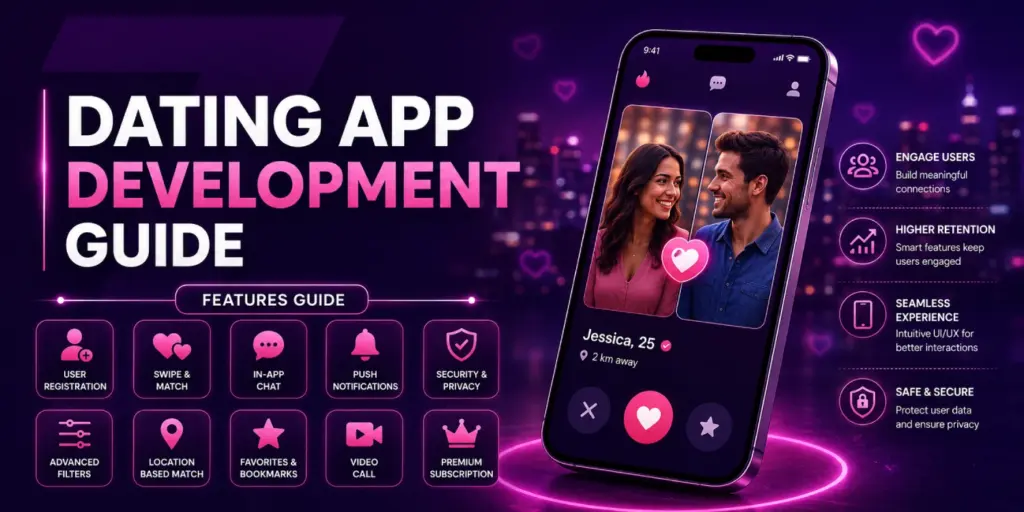
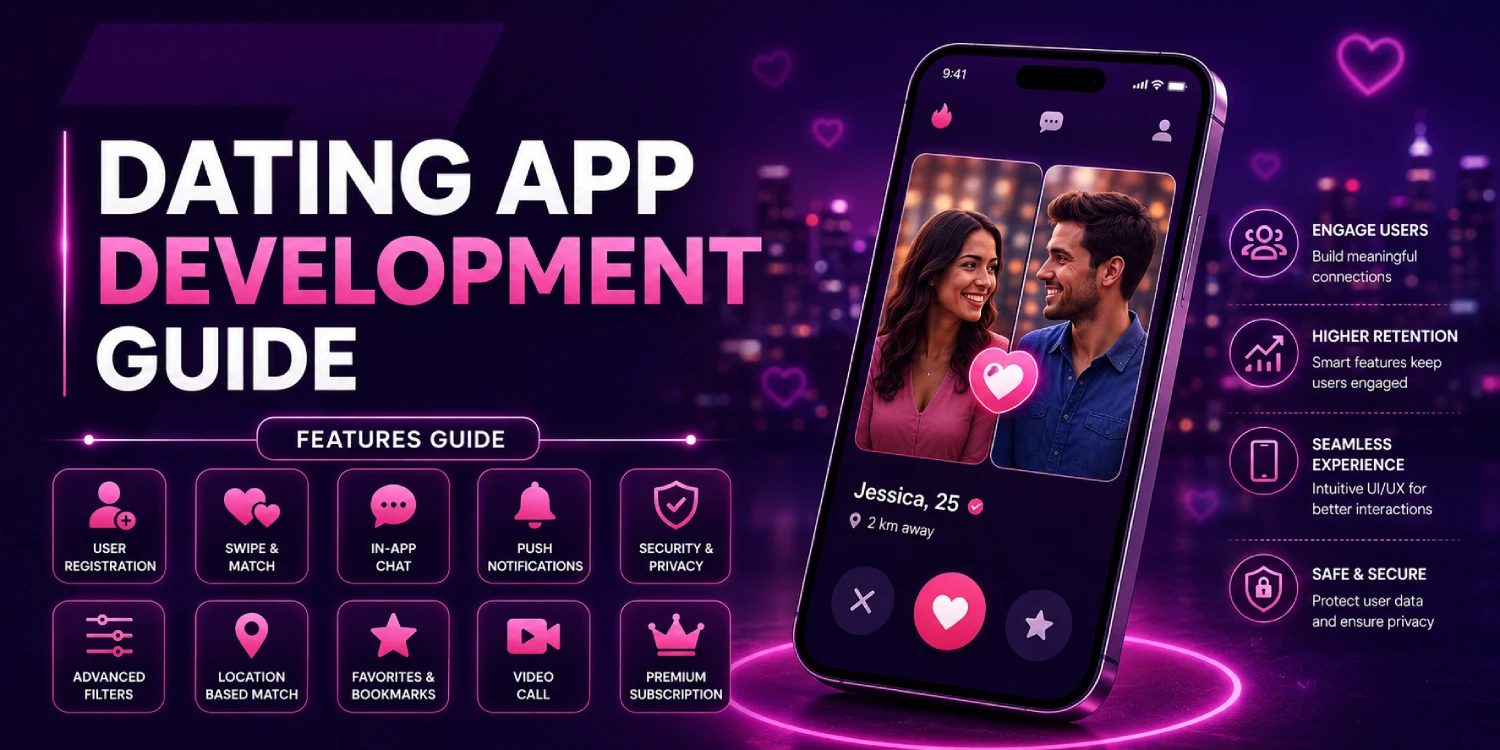
A dating app falls under the category of social networking. And social networking apps can have a multitude of features. However, we will break these features into two different sections: Core MVP Features and Advanced Features of a Dating app.
Essential Features
Here are the basic features you require for a basic dating app before full-fledged dating app development.
Profile Setup & Onboarding
The user can sign up using options like Google, Apple, and Facebook, etc. This feature should also include a user photo gallery, updating bios and interests, etc.
Matchmaking
The app should also be able to match profiles based on certain factors such as interest, goals, preferences, etc.
Filters & Discovery Tools
Location-based filters are essential for Aussie dating apps due to the size of the country. Basic filters (age, gender, distance) are also a must.
Chat & Communication
Dating apps require in-app-chatting features to chat with their matches. Some apps like Hinge use icebreaker prompts to help users who aren’t as talkative to jump-start the conversation.
Profile Verification
Increased safety and trust for users should be the highest priority. So the app should be equipped with verification systems like selfie checks and matching IDs to eliminate impostor accounts.
Saved Profiles or Favorites
Some users may not be ready to match with someone at some moment. Features that allow users to bookmark and easily return to a profile, such as “Save to Review Later” or “Favorites”, come in handy.
Match Reminders & Nudges
For passive users, the conversation can be engaged with light nudges. Features that remind users to say hi or to reconnect with a profile user who liked them can be useful in this case.
Block & Report Tools
Dating apps need to facilitate easily accessible controls to help users feel safe. Instant access to blocking/reporting someone, helps users feel safe using the app. These are the basic features a dating MVP should have, now have a look at some advanced features.
Advanced Features
With just the basic features, you can’t compete in the Australian dating market, which now operates with AI dating apps. That’s the reason why you should include some standout features that help you position your app better.
Video Intros
Quick video intros allow both Gen Z and Millennials to get snapshots of potential matches. Most people prefer to see a real video of potential matches to decide whether they can talk or not.
Voice & Video Chats
Voice and video chat are interactive elements of modern dating apps. A lot of users prefer virtual dates initially as they add an element of convenience and safety.
AR-Enabled Meetups & Events
Some dating companies are working on developing AR-enabled apps that allow users to virtually date before they actually meet in real life.
Gamified Match Challenges
Creating match challenges encourages more regular app use less conventionally through games, quizzes, and streaks.
Offline Mode for Events & Travel
Users can let others know they are in an ‘Event’ or ‘Travel’ mode to connect with people at concerts or festivals. It offers a fun way to meet people beyond the app’s usual day-to-day use.
Interest-Based Communities
This feature can be so effective for modern and AI dating apps. People with the same interests can connect based on their interests and hobbies. Additionally, they can also be matched if their chemistry suits well, as well as their interests and hobbies.
Mood-Driven Matching
Users can choose their mood before being recommended matches. They can opt for serious, casual chat, or browsing, and get adjusted results.
So these are the basic and advanced features for dating app development. Now let’s have a look at the impact of AI in changing online dating in Australia.
How is AI changing the way people use dating apps?
AI has transformed the way people use technology now. And online dating apps are no exception. AI helps with better matchmaking, conversations, and safety in Aussie dating app development. Here are some features of AI apps for dating:
AI-powered matchmaking
AI helps in matching profiles by providing more specific recommendations. AI algorithms learn by analysing user behaviour, swipe patterns, and profile views and then suggest better matches to a user.
AI profile optimisation
AI also helps users to optimise their profiles in order to get better matches. It helps by suggesting what to write in profile bios and how to shoot video introductions, etc.
Conversation assistance
Most online daters feel not so confident in initiating a conversation with a match. AI helps in initiating conversations based on their mutual interests, local slang, and details that have higher potential for a good start.
Fake-profile detection
AI algorithms help in flagging fake or bot profiles by analysing their usage patterns, activity logs, and other parameters.
AI content moderation
AI also helps in moderating the content all across the platform by analysing the media uploads, harmful language, etc.
What are the compliance requirements for a dating app development in Australia?
Aussie dating apps have more than basic account information. Dating app profiles have relationship preferences, photos, private conversations, app activity, location data, and personal information that may be sensitive. Because of all this information, dating mobile app development companies have to think about a user’s privacy and safety when building a dating app.
Therefore, Australia has a Privacy framework. For apps falling under this framework, the Privacy Act 1988 and Australian Privacy Principles (APPs) set the core of the obligations. The APPs specifically deal with the collection, use, and disclosure of personal information as well as the security and access of personal information and cross-border disclosures.
Key compliance considerations for dating apps
- Collect only what you need
If the app doesn’t require a piece of information to function, don’t collect it.
Users must clearly understand what is being collected, why, and how it will be used.
- Handle sensitive data with stronger controls
Profile details, private messages, preferences, and location data all require elevated protection.
Encryption, access controls, secure authentication, and ongoing monitoring are essential security features.
Payment providers, analytics tools, cloud infrastructure, verification services- each one is a data-sharing relationship that needs to be understood and managed.
- Account for overseas data flows
If personal information is transferred to or accessed from another country, the relevant APP obligations follow it there.
Adhering to these obligations helps you avoid any legal risks and hefty penalties. Now, let’s have a look at the tech stack for Aussie dating apps.
What technologies are used in dating app development?
Dating app development involves a combination of programming languages, frameworks, and tools to build a project. The tech stack involves:
| Frontend |
Backend |
Database |
Hosting |
Integrations |
| React Native |
Node.js |
MySQL |
AWS |
Stripe |
| Flutter |
Laravel |
MongoDB |
GCP |
Twilio |
|
Firebase |
|
Azure |
Google Maps |
So, this is the common tech stack used for dating app development. Now, have a look at some advanced technologies that are building the future of online dating.
What advanced technologies can make online dating apps better?
Advanced technologies provide dating apps with smart matching, user safety, and more personalised experiences.
AI & ML
User behavior and preferences can be assessed by AI and ML for better smart matching. AI and ML will help reduce scams and moderate content and profiles.
Blockchain
Blockchain-based apps can be used to fix certain security issues such as:
- Corporate data leaks due to system breaches
- Smart contracts for safe messaging and payments
- Crypto tokens to reward real user activity
Computer Vision
Verification of photos, spotting content duplication, and analysing inappropriate content can be done by computer vision.
Advanced Recommendation Engines
Recommendation Engines utilise user preferences, behavior, location, and interests. They improve matching as users engage with the classes.
Behavioral Analytics
User behavior is assessed by behavioral analytics to spot user and system-threatening actions, such as spam and harassment. Behavioral Analytics also assesses engagement and matching activity.
These advanced technologies not only help in making online dating more personalised and data-driven but also more secure. Now, let’s have a look at the process of dating app development.
What is the dating app development process?
The process for developing a dating app involves a structured and step-by-step process. The first step starts with:
Initial Requirement Assessment
The first phase of dating app development starts with a discovery phase where the developer understands your requirements and organisational goals. It includes assessing your problems and expectations with the dating app development. This step also outlines the compliance requirements for the application. It helps in avoiding discrepancies in the future.
Strategy Development
A dating app development company performs a thorough evaluation and co-creates a development strategy that aligns with your vision. It is a project management outline that includes a clear definition of key milestones, priorities, and KPIs for the development team.
Architecture Design
The next steps happen when the company creates wireframes for the UI/UX and builds the necessary modules for the application. As the development team builds modules, they concentrate on performance, scalability, compliance, and security as they design a system.
Staging and Testing
Before going live, the dating application that is going to production will be thoroughly staged and tested. This approach is an essential step that helps to ensure performance, security, and compliance. It may also include user testing, adoption, and training if required. Without testing the app
Implementation
Once the application is thoroughly tested, it goes to the implementation pipeline, where engineers make the application go live. During this process, developers ensure implementation through agile methodologies to minimise the operational disruption.
Launch & Continuous Optimisation
Once the app becomes functional for end-users, our team deploys it to production and continuously monitors performance. They increase the workload and measure whether the response time fluctuates. It helps to ensure it remains scalable and reliable for a long period.
So, you know how a dating app development process looks behind the scenes. Now let’s explore the costing factors.
How much does it cost to develop a dating app?
The average dating app development cost in Australia goes from $18,000 for a basic application, such as an MVP, to over $200,000 for sophisticated dating software. However, it is also important to understand the factors that determine or impact these costs. When you have a clear understanding of these factors, you can easily calculate your estimates for the budget.
Platform Selection
The app development cost is directly impacted by platform selection. For native mobile applications, developers need to develop separate codebases for iOS using Swift and Android using Kotlin. So, native development costs more if you want an app for Android, iOS, and web. However, cross-platform apps minimise this duplication of efforts because it uses a single codebase for both platforms using Flutter or React Native.
UI/UX Design
Another factor that considerably impacts the overall app development cost is the app design. Advanced features often require multiple screens to perform various tasks. This requires designers and developers to work together, increasing the effort, which leads to increased development costs.
Required Features
Apps with minimal features require less time and effort, so you do not need to spend more money. Similarly, if your app demands more advanced features and complex workflows, the cost eventually goes up the bar.
Integration Requirements
Integration is another important factor that significantly influences the dating app development cost. Third-party API integration (Google Maps, Apple Maps, Payment Gateways, etc) requires less time and effort, so it requires less amount of money.
However, if the app requires integration with custom backend services, hardware, and IoT devices, the developers need to build custom APIs for seamless data transfers, which requires more time and investment.
Maintenance and Support
Once the app is deployed, you are the one who has to look after its maintenance and upkeep. This is because when your app is launched, it will require specific security patches and bug fixes to stay operational and uninterrupted.
So, these are the primary factors that can have a direct impact on your pocket for dating app development. But wait, there are some hidden costs involved that most of the business owners often overlook.
What are the Hidden Costs Involved in Dating App Development?
Most businesses in Australia often overlook hidden costs that add to their overall investment for dating app development. It is not the cost incurred in development. It usually comes after the development of the product. These hidden costs involve:
Server Fees
Server fees involve the charges of hosting your application. Depending on the intricacy of the app’s services and the size of your user base, server expenses might range from $10 to $10,000 per month in Australia. Nonetheless, some businesses have their own in-house server infrastructure, which involves its own support and maintenance costs associated with firmware, hardware, and software.
Developer Accounts
You must have a developer account and be enrolled in the development programs to release an app on the App Store and Google Play Store. In Australia, you have to pay an annual subscription charge of around $143 (US$99) for a standard Apple Developer Program. On the other hand, a Google Play Console Developer Account costs you a one-time fee of around $30 – $40 (US$25).
Marketing Expenses
Once the dating app development project completes, you have to market it to reach its users. And for mobile apps especially, it doesn’t really matter how advanced your app truly is. It won’t succeed if not marketed properly with specific targeting and appropriate strategies. Consistent posting over social media platforms, AI-focused SEO/AEO optimisations, result-oriented copywriting for paid ads and campaigns, and digital PR raise brand awareness, build user engagement, and increase app user acquisition.
Third-Party Services
Dating app development also includes third-party services for functions that are too complex to build on your own and require a whole lot of money. While cutting development time and expenses, integrating third-party services will enhance the functionality and user experience of your app. But these integrations come with tokenised charges and subscription fees, which further add to the total cost of your dating app development.
Why 7Pillars is a good choice for your dating app development?
Dating app development in Australia extends beyond simply recreating the swipe-and-match model seen in other apps. Businesses must consider the balance between user safety/privacy and the technology/scalability needed to develop the app.
The correct strategy is to begin with a straightforward MVP and validate the product in the real world as quickly as possible, then gradually incorporate features such as AI-based matching, behavioral analytics, and fraud prevention as the product grows. During this time, safety and privacy considerations for users in Australia should be designed and built into the product, as opposed to being added on later.
If you are seeking dating app development in Australia and require assistance with creating a scalable and safe product, 7Pillars has the team to assist you with product planning and the design and development of a fully customised dating app. Our team can help define your MVP and assist with the integration of AI and safety components, as well as estimate the effort involved with development based on your specifications.
If you have a dating app idea, book a free consultation with our experts to receive a tailored development consultation.
Frequently Asked Questions
Q1. What should businesses consider before starting dating app development in Australia?
Ans: Define your target audience, matching model, MVP, safety requirements, privacy obligations, monetisation strategy and technology before starting dating app development. This also helps keep the dating app development cost under control.
Q2. How can a new dating app compete with established Aussie dating apps?
Ans: Focus on a specific audience or unmet need instead of copying existing Aussie dating apps. Better matching, stronger safety, privacy and a distinctive user experience can create meaningful differentiation.
Q3. What dating app features should be prioritised in an MVP?
Ans: Prioritise profiles, preferences, discovery, matching, messaging and reporting/blocking. Advanced dating app features can be introduced after validating user demand.
Q4. Is an AI dating app worth building in 2026?
Ans: Yes, if AI solves a genuine user problem. AI in dating apps can improve matchmaking, personalise recommendations, detect suspicious behaviour and support content moderation.
Q5. What does the dating app development process involve?
Ans: The dating mobile app development process typically includes planning, MVP definition, UX/UI design, development, integrations, testing, deployment and post-launch optimisation.
Q6. How do dating apps make money without hurting user retention?
Ans: Dating apps can use subscriptions, premium features, boosts, in-app purchases and advertising. The best model adds value without restricting the core user experience.
Q7. How do I estimate the cost to build an app like Tinder?
Ans: The cost to build an app like Tinder depends on its platforms, matching, messaging, location, verification, moderation and custom features. A custom dating app development company can provide a more accurate estimate after reviewing the scope.













 +61 42 108-3277


 +61 42 108-3277

 contact@7pillars.com.au
 Stay Inspired with our