Let's have a
Quick Chat
with you!
Quick Chat
with you!
You have our ear and we can't wait to hear about your idea! Share your details here and we will make sure to schedule a coffee date with you soon.





In 2026, cities are reduced to high-density networks that move at a rapid pace, where every inch matters, increasing the demand to build a car parking app that solves real urban challenges. With the increasing number of vehicles on the road and the inability of city infrastructure to keep up, parking has become a daily concern. Commercial districts, residential areas with a high demand, and other such places are now in urgent need of new mobility solutions.
The urban coverage is becoming scarce, and therefore, it is pivotal to optimise the available resources. Determining the demand efficiently, city planners rely on digital technologies. Interactive systems help optimise the parking process, minimising traffic due to unnecessary search, and enhancing the general functionality of the city for both residents and visitors.
One of the primary responses to these mobility issues has been car parking app development. These mobile applications have simplified the process of selecting a parking space, real-time monitoring, advanced booking, and cashless payments. These applications will also be fundamental for intelligent transportation networks, which will help in promoting stress-free city living by 2026. These applications will also be fundamental for intelligent transportation networks, relying on real-time on-demand systems to predict demand, reduce congestion, and improve urban mobility by 2026.
The urban population relies on pre-booking parking services, which have become their primary means of transportation in 2026. Drivers who want to book their parking space ahead of time will find it easier to deal with the rising traffic numbers, which affect all big cities.
Car parking app development has transformed them from a static database of all public/private parking spaces into an up-to-the-minute, accurate and predictive database giving users access to precisely where they are located and whether they can park there or not. It avoids frustration in congested streets and unnecessary fuel use. Higher space utilisation and predictable demand are also beneficial to businesses and operators.
With pre-booking features, entrepreneurs and companies producing apps can access robust monetisation prospects. The parking apps offer business opportunities to the city, subscription models, dynamic pricing, and collaboration with city councils, leading to improved mobility in urban areas.
Car parking apps are mobile solutions to help drivers find, book, and manage their parking spots. By 2026, they will be digital friends to users of the urban transportation system to provide live availability data, cost of parking and navigation.
On Android and iOS, parking applications help find available spots, reserve a parking place, and pay without cash securely. Superior applications have become AI-assisted, EV-charging visibility, and automatic reminders to prevent overstays or penalties.
Car parking apps simplify the parking process by connecting customers to publicly available parking, privately held parking, and city parking. They increase convenience, reduce traffic jams and support smart infrastructure in urban environments, making day-to-day life commuting an easy and headache-free experience.
The need for car parking apps in Australia is increasing dramatically as Australians continue to urbanise, own more cars and develop smarter cities. By the year 2026, drivers will want to find parking digitally and quickly to reduce traffic and avoid wasting time by not knowing where to park.
Additionally, the demand for smart mobility and cashless payments by government programs has added to this growth. The ability of councils to collaborate with app developers enables them to share real-time data, leverage parking spaces more efficiently and streamline traffic within cities.
The parking management market in Australia is growing at a compound annual growth rate (CAGR) of over 10%, primarily supported by investments in smart infrastructure and mobile-first urban mobility solutions.
More than 55% of urban Australians use parking applications regularly.
At this time, the annual revenue of various mobile parking applications is $300 million, illustrating a good measure of both the commercial viability of these applications and their overall acceptance within the marketplace.
Using digital parking platforms has created improvements in the utilisation of parking spaces, with an approximate 35% reduction in idle capacity across busy areas.
Smart parking solutions help to reduce a customer’s time spent looking for parking by more than 45%. Additionally, they will reduce both fuel use and emissions, as well as reduce traffic congestion.
These statistics have revealed the usefulness and role of parking apps in enhancing transportation and dealing with congestion issues in Australian cities.
However, when designing an AI application focusing on parking management as an example, some fundamental aspects need to be considered. Firstly, it is the user experience; the interface flow should be clear and understandable. Secondly, data accuracy is vital in real-time updates and efficient space management.
Robust security protocols also need to be included to stop the value of the user data from declining. Another feature is scalability in the application, and its functionalities are adjusted to accommodate user demand. Ultimately, system interoperability improves an application’s productivity and usefulness within an organization.
Ordinary developers of Android apps and companies developing iPhone apps consider user-oriented features that increase interaction when they build a car parking app. For example, the users can locate available slot machines near them because of the GPS feature, thereby increasing play. In addition, the ability of the users to choose a point in an app map and take them there is another feature that maximizes interactivity.
The same trend applies to rate parking applications, in which the support of location-based services allows one to identify where to find an empty parking slot. Here again, the developers are always on their toes concerning their users and experiences, which will enhance the total experience of using the products.
To make the user experience more pleasurable, you should incorporate filters as the primary feature in your application to assist users in finding the closest parking spots, reasonably priced parking spaces, safe locations, etc. You can also make the general experience of using your car-parking application more enjoyable for the user by offering them ample filters that would help the users find something they want.
Some attributes, such as proximity degree of location, parking fees, etc., must be well assimilated with the mobile application interface. This application would let users pick the cheapest and most accessible parking lot based on such factors while comparing them with each other during available parking lot selections. This feature ensures users may find safe parking options, besides saving them time, thus increasing their safety and satisfaction before using the app.
Wouldn’t you love it if you could pre-book your parking spot before reaching the lot like you reserve tables for a delightful meal? Your parking app must allow users to pre-book their parking spot before reaching the lot to make the entire process hassle-free. This would allow them to pick their favourite spot deemed safe by them to park their vehicles and go on with their day without worrying about their vehicles’ safety.
This step is essential when planning an app for Android or iOS devices. There is a need to accelerate mobile payment checkouts, OTP for payment confirmation, and booking confirmation to improve customer experience and the operation of apps. Both secure and minimal booking services will create value for the transaction by bringing more convenience to the operation and enhancing user participation rates and trust.
It is pivotal for you to offer multiple payment gateways to your users to ensure they remain loyal to your app, as everyone doesn’t like to carry cash to make payments or feel safe using their debit card in an app.
The Android and iPhone app development companies create parking apps that provide multiple payment options for customers to pay effortlessly with their chosen method. These applications offer integrated options such as a Unified Payment Interface, Debit and Credit card payment, Mobile banking and e-wallets for easy payments.
This flexibility allows users to control payment timings and parking fees according to their convenience, which is a key advantage when you build a car parking app with user-centric design.. People prefer to work or transact using the familiar method or tool, so by providing flexibility in such a way, the payment method not only simplifies many transactions but also increases the general level of satisfaction.
With the invention of GPS navigation, individuals no longer have to be concerned about getting lost in complex locations. I’m sure that everyone has had difficulty navigating unfamiliar places and locating safe parking lots once in their lifetime. Integrating a GPS navigation feature in your parking app will help users find safe parking lots in unknown locations.
It will also help people find the spot they have booked without wasting time. Integrating maps within the services encourages the smooth transfer of users into the reserved parking spaces within the app. Since it provides directions and the best routes as they happen, the feature improves convenience because people get to their destinations fast and without struggles.
Mobile parking application development fundamentally changes how the users engage in comparison to parking areas. Such applications work in real-time to present available parking spaces and allow the user to locate places effortlessly. The integrated payment options include transactions that can occur conveniently.
Convenient navigation includes specific leads to the required parking zones, which excludes the need to search for a place. Besides, user feedback and ratings are built-in to create a beneficial community app that syncs with its users and changes in cities and environments.
| Feature | What Does It Do? | User Benefit | Business Impact |
| Real-Time Parking Data | Shows live parking availability and pricing | Saves time, reduces stress, avoids overpaying | Higher app adoption and user trust |
| Enhanced Convenience | Enables instant parking search and selection | No need to drive around looking for spots | Improves user retention and engagement |
| Increased Revenue | Supports dynamic pricing and cashless payments | Faster, hassle-free transactions | Maximizes revenue and payment efficiency |
| Decreased Management Costs | Uses IoT sensors to track spaces and vehicle flow | Smooth parking experience | Reduces staffing and operational costs |
| Enhanced User Experience | Offers navigation, alerts, reminders, and updates | Stress-free, guided parking | Stronger brand reputation |
| Reduced Emissions & Congestion | Helps drivers find parking faster | Less fuel use and traffic | Eco-friendly operations and smart city alignment |
An app that manages parking spaces must be planned meticulously to satisfy users’ needs as they arise. The starting point entails identifying specific qualities like real-time space availability, reserve or payment options. Development is about choosing the right technology; for instance, GPS for tracking location, cloud services for data storage, smooth interfaces for easy navigation, etc.
For seamless and comprehensive integration, you must address the issue with work in progress, including municipal parking databases or payment systems. Such an approach excludes the risk of weak links or stagnant features that never get tested for improvement and updating, like the Honda Accord.
Planning is the first stage of developing a brilliant parking app that would solve a plethora of issues, including real-time space availability for parking, time saved for searching for parking spaces, reduction of traffic hold up, faster means of payment, customization for parking through reservation and timely notifications, data analytics benefits for end parking users and city planning authorities.
When the app successfully addresses these challenges, it can significantly improve urban mobility for residents while enhancing the overall parking experience for drivers, especially when you build a car parking app with a clear problem-solving focus. After you plan the type of app, you must research everything about your competitors, including their target audience, ideologies, marketing strategies, etc, to understand how you can stand out in the crowded market space.
Once satisfied with your research, start planning your target audience, marketing strategies, and problems your app will solve. Apart from researching, you must know that an idea isn’t enough to make your app successful post-launch. Hire a reputable app development company to help you with this step.
Your app features play a pivotal role in attracting and retaining your users, thus making choosing the correct features an essential step in your app development process. You need to offer unique features, like spotting nearby available parking spots, filters to search for affordable parking slots, safe spaces, etc., to your users.
The process would entail creating an attribute list that would specify the goals of the applications and the needs of the intended user base. Before deciding your features, you must determine your goals, visions, and issues your app will solve, as it will help you choose the features you must offer your users for your parking app to become successful.
Consider several user scenarios or how users may use the app in their daily lives when choosing features for your app. To help you include the newest features, collaborate with a reliable app development company.
Your technical stack heavily depends on the platform you plan to launch your app on, making it pivotal to decide the platform you are willing to launch on and then hire a car parking app development company skilled in integrating required technologies to ensure your app’s success.
Having been in the Android app development industry for years, we help you choose the right technology that is most relevant to developing your campus parking application. Before getting started, it helps to decide whether your target platform will be iOS, Android or both.
We help you choose the most appropriate programming language that suits your needs, like Java or Kotlin for Android, Swift for iOS, and the correct frameworks that correspond to your specific app needs. This approach is significant because it allows you to optimize your application for efficiency and get the best performance out of its ability to scale.
A user interface must be attractive, filled with bright colours, bold fonts, and unique icons to entice users and encourage them to choose your app over your competitors. A known app development company with a skilled design team is the perfect match for you, as they can help you design a page that will attract users. After settling on your target audience, you must start working on a user design interface that caters to their wants and needs.
Emphasizing usability will help you make a positive impression on app users, which is especially important in car parking app development. The speed at which a user interface loads is another pivotal factor that captures consumers’ attention. A clean, intuitive interface with effortless navigation is ideal for a car parking app because it improves overall user experience, thus enabling drivers to effortlessly find the available parking slots, book a spot and even pay without getting confused.
This kind of integration helps avoid unwanted situations and serves users as comfortably as possible, thus enhancing engagement and retention rates, as it receives only positive feedback. The app can assist users in solving their parking problems by focusing on usability, which makes the procedure more enjoyable and easy.
It will involve secure payment gateways that can support numerous payment options in place with skilled iOS or Android app developers. These developers would ensure functionalities such as entry and exit by using QR codes where users can effortlessly access parking facilities.
Online parking passes may further be integrated into the facilities and allow their users to book and pay for parking ahead of time. This assists in enriching the users’ experience and makes the back-office process smooth for business operators dealing with bookings and payments, so a secure process is efficient.
The testing and launch steps of developing a parking app include several critical stages that play a key role in car parking app development. First, internal testing is performed to determine and eliminate issues so an app works well on smartphones and tablet devices. It includes functional test cases, UAT, and performance tests under some circumstances.
Actual users are hired for beta testing to obtain usable feedback on the application and its features. The marketing strategy is used to announce the release of an application once it is perfected. It includes social media advertisement, collaborations, and deals. Lastly, the app is deployed on the app stores to look for bugs after the app launch and to provide users support to improve their experience.
After your parking app launches, the work is far from over. To ensure it remains on the market for a long time, you need to monitor user feedback, pay attention to how people USE your app, and incorporate it into your design. Ongoing Maintenance is the final step to developing a brilliant parking app that won’t disappoint users. It is pivotal to give the users feedback on their experience with your application.
A vehicle car parking app development company may also include a feedback component to obtain input through ratings, reviews, or forms. Proactive user feedback collection and analysis can help you see these gaps and better understand what the users want.
Otherwise, you feature their input to make incremental improvements that help optimize the apps’ experience, always keeping up with the user’s dynamic needs and wants. It makes users stick to your application and contributes to setting up your app as a market leader.
For anyone planning on creating or improving an enterprise, developing an AI-based parking application is a milestone. It can also greatly enhance new service opportunities and optimise the company’s performance. These features include the open parking space display, touchless payment options, and real-time booking.
Further, combining the features of friendly interfaces and data analysis can be beneficial in determining the frequency and other related usage characteristics to make the requisite actions by the concerned entities. Therefore, when developing your application, these should be implemented as the core options to ensure top quality, answer modern needs, and please customers.
| Feature | Core Function | User Benefit | Business Value |
| Login/Sign Up | Email or mobile-based registration and login | Quick onboarding, personalized access | Secure user data and profile management |
| Easy Search & Reservation | Finds and books nearby parking spots | Saves time, avoids roaming | Higher engagement and repeat usage |
| GPS Tracker | Provides real-time navigation to parking | Faster arrival, no detours | Improves app reliability and UX |
| Parking Alarm | Alerts for time expiry or vehicle movement | Avoids fines, improves security | Builds trust and app stickiness |
| Street Parking Alerts | Shows live street parking rules and zones | Prevents violations | Enhances accuracy and usability |
| Price Comparison | Compares nearby parking prices | Cost-effective decisions | Competitive advantage |
| Parking Bookings | Daily, weekly, or monthly reservations | Guaranteed parking availability | Predictable revenue streams |
| Simple & Quick Payments | Supports digital and cashless payments | Hassle-free checkout | Faster transactions, reduced friction |
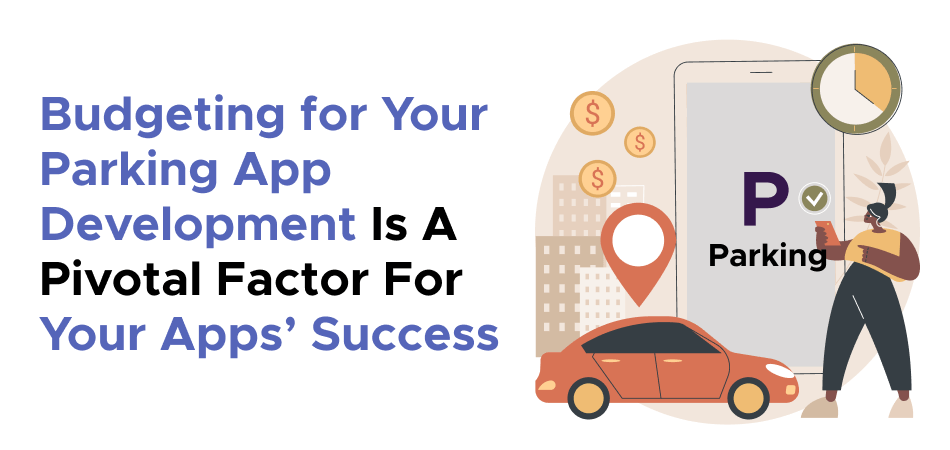
Due to several factors, the cost of developing a parking app in Australia can vary significantly. The development cost varies from AUD 30000 to AUD 150000 or even higher.
Features: Since most of it is relatively simple, an app with features like tracking location, payment, users, etc., will cost less to develop. Other features that can be as simple as real-time availability, reservation systems or functionalities that can connect it to other platforms will add to the cost.
The choice of developing for iOS, Android or both has dire consequences on the budget. While cross-platform apps may enjoy more benefits, especially at the beginning of app development, native applications bring more advantages in performance and interactivity.
A skilled UI UX designer is required, which raises the expenses to retain overall feasibility and make the unwieldy design enjoyable and straightforward.
It is usually more expensive to source locally a development team of programmers than to source overseas. Australian developers charge 100 to 200 AUD per hour.
It is pivotal for firms to allocate budgets for regular app updates, maintenance and future expansion post-launch. This can accrue 15-20% of the initial development costs in a year.
Thus, the essential budget of such a project implies accounting for all these factors for its successful launch and further usage of the parking app.
Digital car parking applications have become an essential part of contemporary urban mobility in 2026, driving rapid growth in car parking app development. Integrating live information, AI-based insights, and cashless payments, such apps help not only users but operators to manage parking more easily. They improve convenience, safety, efficiency, space use, and sustainable planning.
To develop an effective parking app, one needs a strategic plan, a scalable technology, and the appropriate development partner. 7 Pillars is a reputable mobile application development company that develops smarter, future-oriented parking applications for urban areas. When you are willing to turn parking obstacles into growth opportunities, contact the specialists at 7 Pillars now and use your intelligent parking app vision to make it happen.
FAQS
Q1. Why should businesses invest in a car parking app in 2026?
Ans 1. The car parking application will improve effective space management, reduce congestion, and boost revenue. It offers automation, analytics, smooth payments, and convenience to ordinary city drivers.
Q2. Can iOS app developers build scalable parking applications?
Ans 2. Yes, seasoned iOS app developers are creating secure, scalable parking apps leveraging real-time availability, GPS guidance, and cashless payment, designed with high-traffic urban settings in mind.
Q3. How does pos software integrate with parking apps?
Ans 3. Transaction tracking, billing automation and real-time payment processing are available through integrated pos software. It guarantees ease in financial operations and minimises manual errors among parking operators.
Q4. What technologies ensure smooth parking management?
Ans 4. With the collaboration of AI, IoT sensors, cloud solutions, pos software, and competent iOS app developers, it provides real-time data, secure payments, and effective parking processes.


Partner with us to bring your vision to life.



 +61 (42) 108-3277
 contact@7pillars.com.au
 294A Station Street,
