AI is no longer an extension of SaaS platforms, but a core component driving modern AI automation SaaS solutions. In Australia, a large portion of businesses work with manual processes and delayed data processing. The CSIO Data61 estimates that AI will add as much as AUD 315 billion by 2028. Companies hire the best mobile app development company in Australia.
It is important because SaaS is increasingly helping in finance, healthcare, and logistics in Australia. According to the Australian Bureau of Statistics, there is more than 90 per cent internet penetration, which puts more pressure on automated platforms. The mobile app developers in Melbourne are collaborating with businesses to create scalable systems.
This blog discusses the AI applications of automation in SaaS environments and implementation strategies. It demonstrates how mobile app developers in Melbourne develop systems that minimise manual labour and enhance operational efficiency with organised development strategies and scalable technologies.
Scaling SaaS With More Intelligent Automation
With the growth of SaaS capabilities, it becomes harder to control workflow, data flow, and system performance. The scale of systems leads to fragmented processes and increasing operational pressures in many organisations. To overcome this, teams collaborate with knowledgeable mobile app developers in Melbourne to develop organised workflows, data system integration, and ensure efficiency without creating unjustified complications.
Scalability and consistent performance are key in organisations which value scalability and precise execution. The collaboration with the best mobile app development company in Australia ensures effective integrations and delivery to organisations. This enables AI automation SaaS platforms to automate workflows, manage operational expenses, and maintain system stability as usage scales and complexity increases.
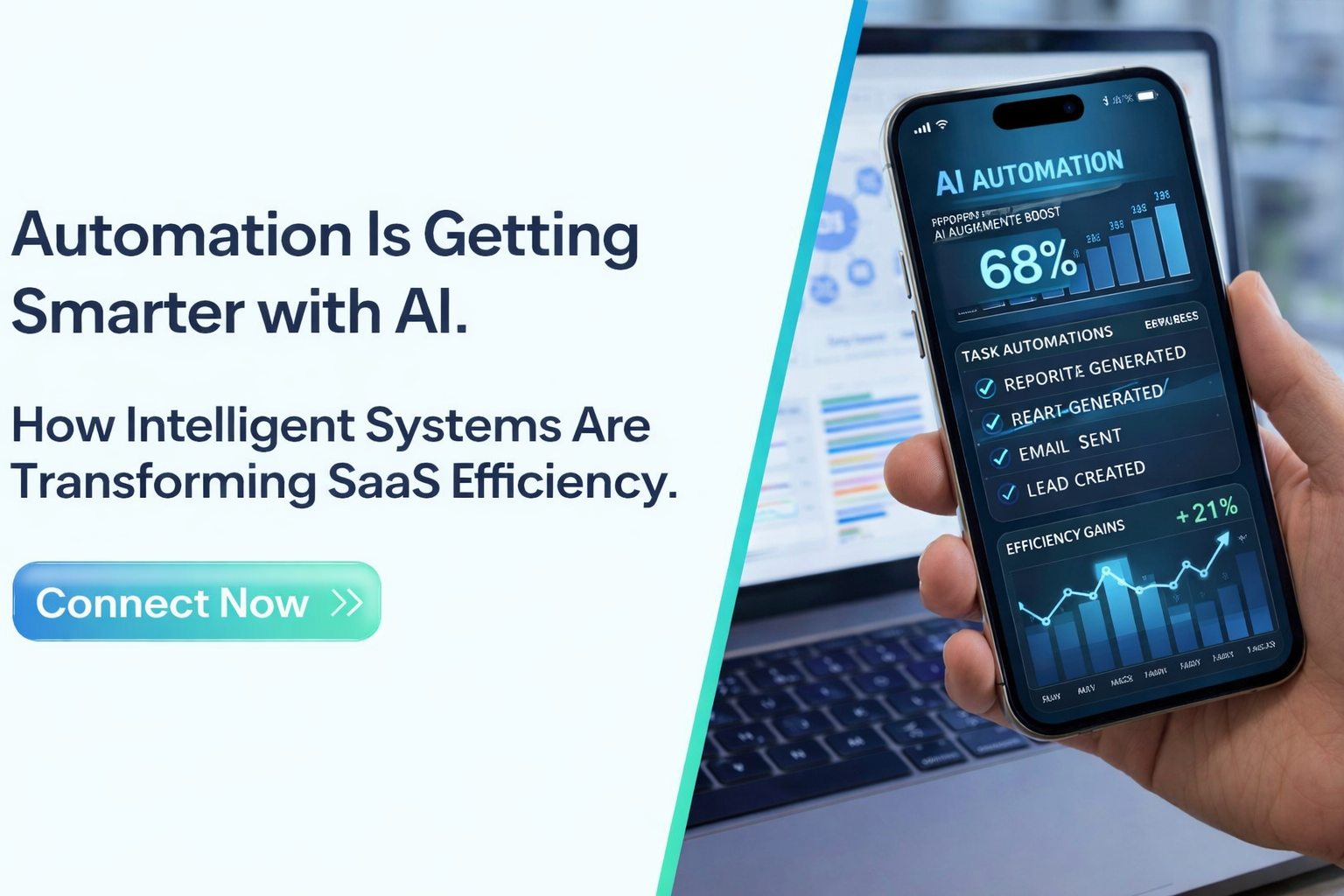
AI-Driven SaaS Growth in Australia
The rise of SaaS and AI uptake in Australia is driving the need to automate processes in scalable applications developed using scalable user-oriented development practices.
- Companies are increasing automation to simplify their processes, reduce manual labour, and improve efficiency with SaaS services.
- Finance, e-commerce and customer management are all common applications of SaaS tools in Australia.
- The competition is so stiff, and this fact presupposes that planning, data strategy, and organised development play a crucial role in avoiding inefficiencies that cost a lot.
- Domestic experience helps platforms address user expectations, preferences regarding devices, and performance standards.
- Properly done automation enhances scalability, precision and user experience in SaaS applications.
Working with established teams helps achieve long-term development, effective processes, and system stability.
AI-Powered Automation Transforming SaaS in Australia
The automation of the SaaS platforms in Australia is being changed by AI.
1. Operational Efficiency
- Eliminates manual processes.
- Improves speed and accuracy
- Releases work teams to more valuable work.
2. Decision Making
- Processes data in real time
- Creates practitioner information.
- Affirms quicker business choices.
3. Personalisation at Scale
- Changing experiences according to user behaviour.
- Increases interaction and retention.
- Provides more useful interactions.
4. Scalability For Growth
- Manages the growing user demand.
- Performs when subjected to load.
- Helps in long-term growth.
5. Faster Innovation Cycles
- Quickens testing and deployment.
- Allows for continuous improvements.
- Reduces time to market
6. Competitive Advantage
- Increases productivity and reactiveness.
- Favours smarter product strategies.
- Enables companies to remain in the markets.
- A start-up app development company can help you gain competitive advantage.
How AI Enhances Automation in SaaS Platforms?
AI upgrades automation of SaaS systems by allowing them to act intelligently and reduce manual work.
1. Data Collection & Processing
- AI systems gather and categorise vast data sources.
- This organised information is the basis of automation, and systems can react to user behaviour and inputs accurately.
- Managed and clean data pipelines are also a guarantee of reliability in outputs and stable system execution.
2. Intelligent Decision-Making
- AI interprets patterns to decide without human intervention.
- These systems can activate activities such as approvals, alerts or suggestions.
- It will minimise delays and ensure that processes flow even in high-demand environments.
3. Workflow Automation
- Onboarding, notification, and reporting are examples of repetitive automated processes by the AI-powered workflow.
- When properly configured, these workflows are self-sufficient, meaning they do not require human intervention in the work processes.
- It enhances the efficiency and consistency of various business functions.
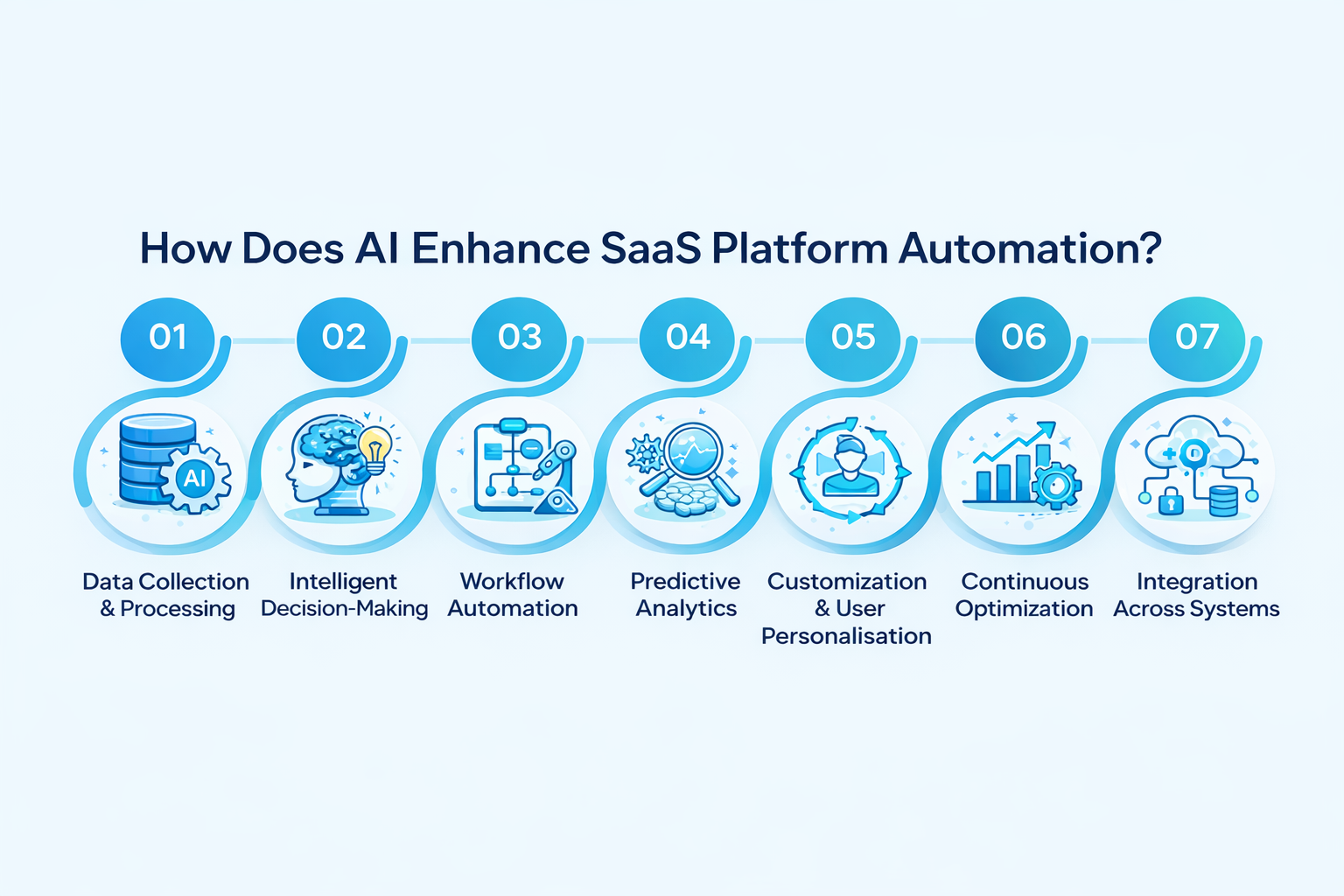
4. Predictive Analytics
- SaaS platforms can predict the future through AI, which analyses past and present data.
- Predictable trends include customer behaviour, demand, or the probability of risk for the business.
- It is a proactive strategy that enables organisations to act before a problem occurs.
5. Customisation & User Customisation
- Artificial intelligence personalises user experiences by manipulating content, features and interactions.
- It brings about more curious and interesting experiences for the users on the platform.
- The system would learn and perfect these experiences with time to enhance satisfaction and retention.
6. Continuous Optimisation
- AI systems are constantly updated as new data is available, and this is why SaaS can be enhanced without adjustment, as it can improve the performance.
- The system can adjust to changing conditions and user behaviour, making the processes more accurate and efficient.
- It ensures consistency across the years and maintains the platform in unison with changing business demands.
7. Integration Across Systems
- AI links disparate tools and modules across a SaaS ecosystem to facilitate the smooth movement of data and single-handed automation.
- It eliminates silos, and every component of the system collaborates effectively.
- It leads to a leaner and more integrated business operational environment.
Real-World Use Cases of AI in SaaS
Automation with AI is extensively used on SaaS services to assist companies in better organising their processes, increasing accuracy, and enhancing user experiences.
1. Automated Customer Support
- AI Chatbot systems use AI and blockchain technology to respond in real-time and resolve standard queries on an ongoing basis.
- The AI capability of these systems to record and refer to previous interactions enables them to provide solutions to more complex queries.
- Automate routine requests to support teams.
2. Sales & CRM Automation
- AI automation SaaS analyses user behaviour to rank leads and identify high-conversion opportunities.
- Automated follow-ups, email sequences and reminders also ensure that they actively engage without manual tracking.
- It enhances rates of conversion and minimises the effort of sales forces.
3. Billing And Subscription Management
- AI automates invocations, payment tracking and subscriptions renewals in SaaS environments.
- The systems can identify payment failures and automatically instigate retry procedures or notifications.
- It will stabilise the cash flow and minimise the mistakes in financial operations.
Benefits Of AI In SaaS
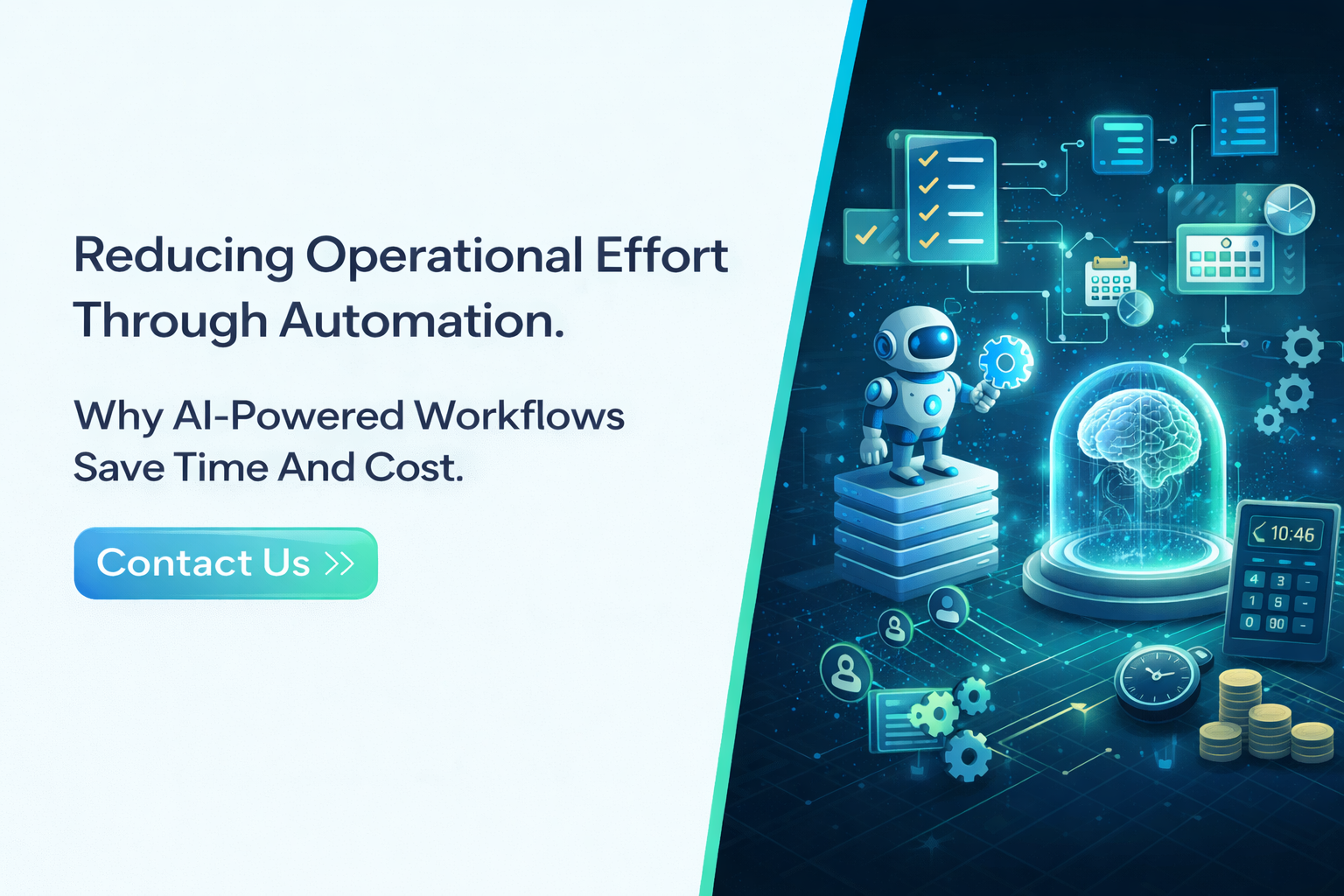
The AI automation provides quantifiable gains in SaaS platforms.
1. Enhanced Operational Efficacy
- AI automation SaaS eliminates repetitive data entry and system monitoring by handling tasks without human intervention.
- The processes are continuous and not delayed, ensuring consistent performance.
- It enables teams to utilise time and resources in strategic initiatives instead of normal operations.
2. Improved Precision And Minimised Mistakes
- Automated systems reduce human error, as they adhere to pre-established rules and constantly adapt to the input of data.
- AI guarantees uniformity in outputs, particularly in sensitive domains such as financial processing and reporting.
- The result is increased confidence in the operations and enhanced belief in the performance of systems.
3. Better Customer Experience
- AI facilitates quicker reaction time by automating support, onboarding, and communication processes.
- Individualised communication based on user behaviour.
- Customers enjoy fluid and usable experiences throughout the site.
Challenges Of Implementing AI In SaaS
Although AI has numerous advantages, automation of SaaS platforms is fraught with significant difficulties.
1. Data Quality & Availability
- The correct and properly organised data is essential to the work of AI systems.
- Inaccurate predictions and faulty automation results may be due to poor data quality.
- Companies have to invest in effective data collection and management.
- A start-up app development company can help you deal with wrong data.
2. Integration Complexity
- Adding AI to existing SaaS applications may be a technical challenge that requires time.
- Modern automation doesn’t support legacy systems without major upgrades.
- The aforementioned needs proper architecture planning to have a smooth integration.
3. Start-up Investment And Resources
- The use of AI can be expensive in terms of initial investment in equipment, infrastructure and skills.
- The development and maintenance require skilled professionals.
- Lack of clear planning increases costs and postpones anticipated returns.
The Future of AI In The SaaS Platforms
The latest trends determine how automation is applied and expanded.
1. Generative AI Integration
- Generative AI is also being actively implemented in SaaS platforms to generate content, respond more or less automatically, and improve user interactions.
- It enables systems to generate dynamically customised outputs according to user inputs.
- It goes a long way in enhancing efficiency in terms of marketing, support and documentation.
2. No-Code/ Low-Code AI Automation
- Companies are increasingly adopting no-code tools within AI automation SaaS, enabling automation without requiring deep technical expertise.
- It increases the availability of AI to non-technical individuals and start-ups.
- Quick implementation saves on development and the complexity of operation.
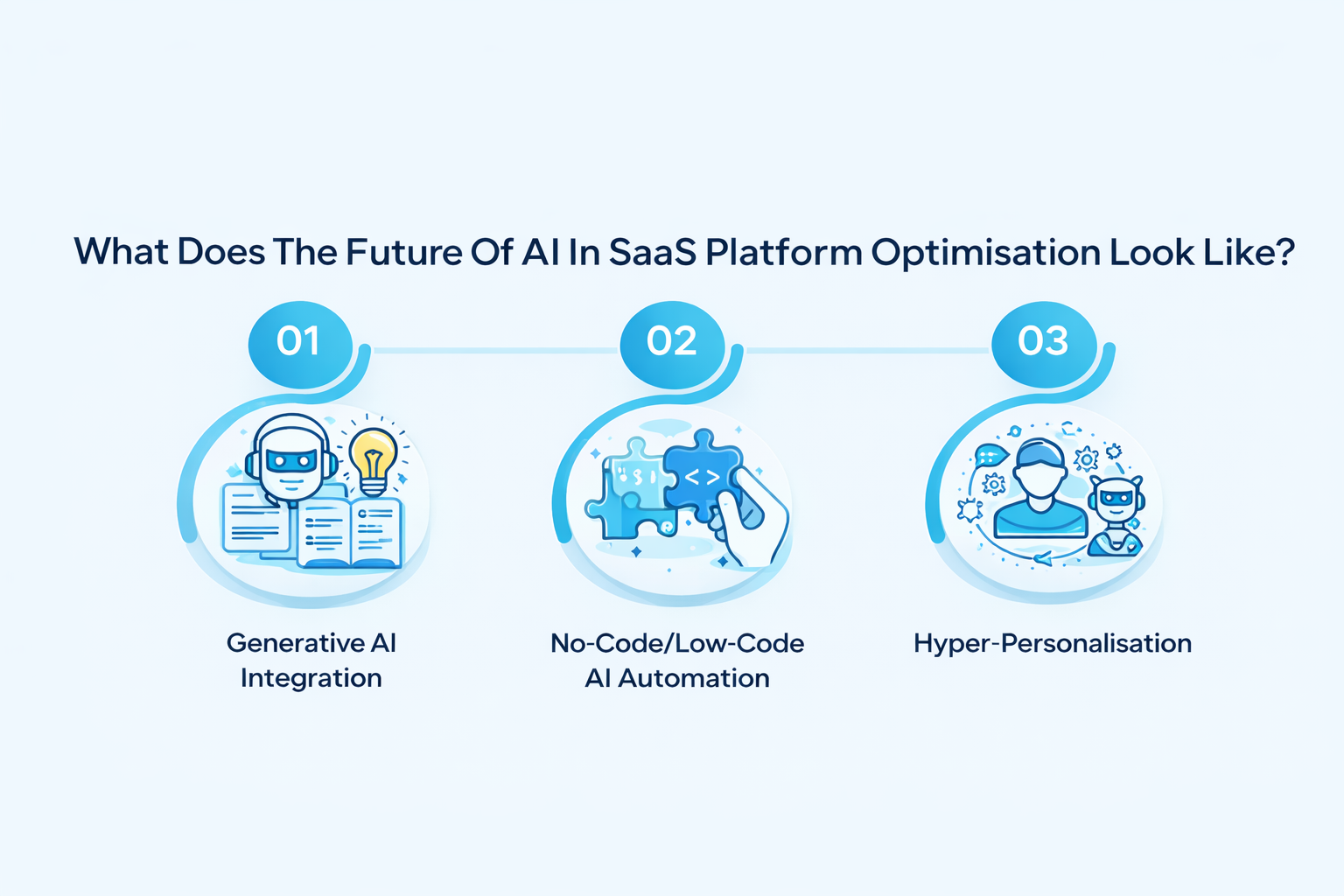
3. Hyper-Personalisation
- AI provides a more personalized direction through the analysis of user behaviour and depth preference.
- SaaS systems are capable of providing high customisation among user groups.
- It enhances their interaction, retention, and general customer satisfaction.
AI Automation in SaaS Platform
A SaaS business achieved efficiency, less manual work, and faster and more accurate user experiences with the assistance of AI automation.
Problem
The system was overly dependent on manual customer support reporting and subscription management.
It led to delays, higher operation costs and poor user experiences.
Solution
It has deployed AI automation to process support inquiries, billing processes, and real-time data processing.
Smart systems helped simplify the processes and minimise reliance on human efforts.
Result
- The operational efficiency increased.
- The response speed and error rate decreased in workflows.
- The platform had no performance problems.
Conclusion
AI automation is indeed transforming SaaS platforms by making them more efficient in real-time, increasing their capacity, and ensuring more natural and engaging user sessions. Companies adopting AI automation SaaS solutions can operate faster and reduce decision-making time by up to 50 per cent. A top iPhone app development company not only facilitates the integration process but also enhances the performance.
As more competitors join the market, AI-driven SaaS tools distinguish themselves through cleverer workflows and less tedious work. The people who invest at the beginning secure flexibility. A reliable iPhone app development company develops systems capable of scaling without failures, and choosing the right one will preserve the spirit of innovation for years to come.
FAQS
Q 1. What is the use of AI automation within a SaaS platform?
Ans 1. AI automation encompasses the use of machine learning to automate all aspects related to customer service or support, data analysis, and other related applications (such as analytics). An on-demand application development company allows them to integrate these capabilities directly into new SaaS systems.
Q 2. Why does AI improve the efficiency of existing SaaS applications?
Ans 2. AI will reduce the amount of work done manually, significantly speed up many processes through automation and increase accuracy. AI will assist in Android application development by integrating smarter features.
Q 3. Is it relatively expensive to integrate AI into a SaaS application?
Ans 3. Costs differ depending on complexity. The potential cost savings of long-term operations will be enormous. An experienced on-demand application development company can help you reduce your implementation costs.
Q 4. Is AI applicable to all types of mobile-based SaaS applications?
Ans 4. Yes, AI can help in nearly all mobile-based SaaS applications, especially in those that support Android application development through their application functions and usability.
Post Views: 9









 +61 (42) 108-3277
 contact@7pillars.com.au
 294A Station Street,
