



Let's have a
Quick Chat
with you!
Quick Chat
with you!
You have our ear and we can't wait to hear about your idea! Share your details here and we will make sure to schedule a coffee date with you soon.
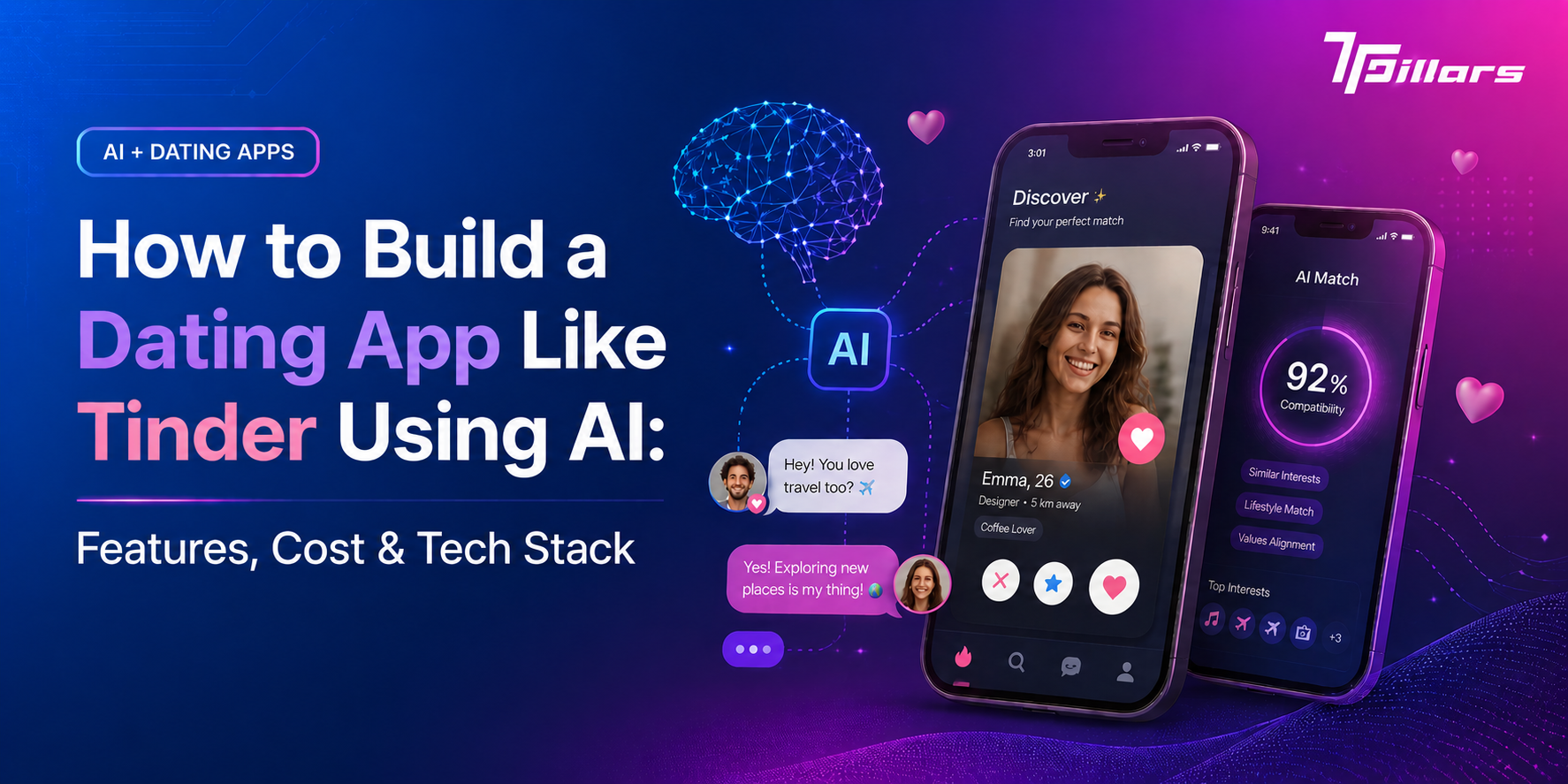
The trend in dating apps has evolved from a swipe-based approach to intelligent platforms driven by machine-learning-based behaviour analysis. There is nothing more disappointing for users than being presented with random matches, as they demand more relevant, appropriate, and valuable interactions. It is essential for you to understand how to build a dating app and the costs associated with it before making a decision.
Utilising AI when creating a dating app is critical and should not be missed. It has a direct impact on user engagement, match quality, and therefore customer retention.
From Australian and global perspectives, businesses have invested in personalised experiences through artificial intelligence applications.
This blog breaks down:
If your goal is to create a dating app that scales efficiently while maintaining high engagement, this guide offers a clear execution plan.
This blog is designed for:
Most businesses reach this stage when:
At this point, scaling requires intelligent systems, not additional standalone features.
Early platforms like Tinder relied heavily on swipe-based interactions and basic preference filters.
Today’s dating applications work through behavioural intelligence, rather than input-based intelligence.
When you create a dating app today, users expect:
This advancement allows your dating app to change its operations based on user intent to improve the user experience. An Android application development firm can help you create your dream project.
Artificial intelligence is the layer responsible for decision-making within today’s online dating platforms such as Tinder.
AI enables:
Instead of relying on manual inputs, the system predicts compatibility using behavioural signals and historical data.
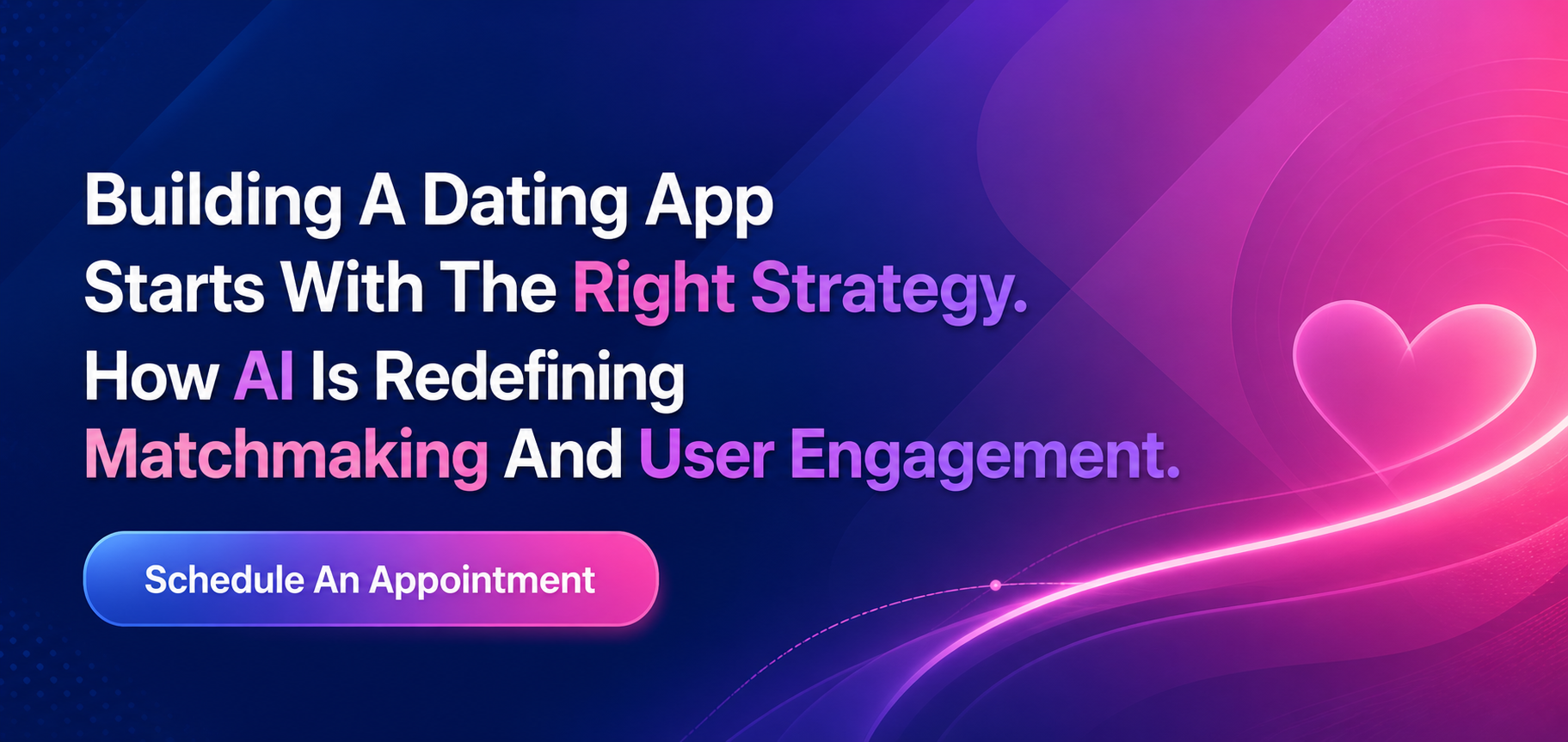 What is Tinder?
Tinder not only became a successful online dating app, but it also transformed how we make friends online.
In short, Tinder removed all of the complexities in the process. It eliminates all of the paperwork, forms, and long processes; one either slides right or left, and a common interest paves the way for connection.
Several factors drive its popularity:
Over the years, Tinder has transformed from just swiping into becoming an app that provides more intelligent suggestions and better profile representation. The best mobile app development company in Australia can lead you to success.
Dating apps like Tinder are widely popular in Australia due to changing user behaviour and digital adoption.
Profiles provide structured data layers that enable personalisation and AI processes.
The matching engine determines platform success by aligning user intent with behavioural insights, similar to how it ranks and surfaces profiles. A well-established mobile app development company in Australia can help you integrate matching algorithms into the app.
A major factor behind swipe-based UX appeal is the use of AI-powered feedback systems.
Real-time communication supports user retention and strengthens platform stickiness.
Recommender systems in these types of apps have transitioned from basic location-based suggestions to a ranking system based on the user behaviour.
Platform trust and sustainability hinge on safety.
A well-understood scope bridges business, technology and user needs.
A scalable architecture ensures performance consistency as user demand increases.
When a company develops a Tinder-like app, scalability must be built in.
Data Collection
Reliable data collection is critical to AI accuracy.
Data Processing
Structured data pipelines ensure reliability and actionable insights.
Machine Learning Models
Machine learning models power matchmaking precision and recommendation quality.
Continuous Learning
Adaptive systems enable the platform to adapt to users.
Choosing the appropriate technology stack guarantees scalability, speed and sustainability.
Frontend
Frontend technologies impact the user interface and responsiveness.
Backend
Backend technologies handle user and data requests.
Database
Databases allow for the storage and retrieval of user behaviour data.
AI and Machine Learning
AI frameworks support predictive modelling and intelligent automation.
 Cloud Infrastructure
Cloud computing offers scalable and efficient operation.
APIs and Integrations
APIs facilitate interoperability of internal and external systems.
This phase focuses on integrating all system components into a cohesive product.
A skilled dating app developer integrates system components to business objectives.
Thorough testing ensures reliability, security and performance in different environments.
Planned roll-out reduces risks and facilitates market entry
It’s essential to optimise it to drive engagement and growth.
Total cost varies based on features, AI and infrastructure complexity.
Basic apps are cheaper, but AI applications have higher returns.
Development Timeline
It depends on the complexity and level of system optimization.
Additional time may be required for:
The overall timeframe is around 4-8 months.
The biggest mistakes are made in the early stages of the process and affect scalability and user experience.
Lacking a distinct positioning, apps face competition with apps such as Tinder.
Late AI integration leads to higher costs and inconsistent performance.
More features lead to complexity and longer development times.
AI systems depend on strong data foundations.
Without retention strategies, growth becomes unsustainable.
AI-driven dating platforms create measurable business impact across multiple areas.
Improved engagement directly drives retention and growth.
Monetisation aligns with user behaviour and engagement patterns.
Scalable systems support growth without operational bottlenecks.
Data enables continuous optimisation and better decision-making.
New AI technology continually pushes user expectations and system capabilities.
Smart systems focus on behaviour, rather than preferences.
Richer interactions improve authenticity and trust.
AI enhances platform safety and compliance.
Customisation enhances user experience and engagement.
A start-up faced declining engagement and low match relevance.
The solution was developed with an experienced dating app developer.
Creating a Tinder-like app is about more than mimicking the swiping system. The key to success is to harness AI to provide meaningful pairing, enhance user interactions, and learn from user data. Apps that prioritise smart systems are more successful than those with static features or simple matching algorithms.
When developing a dating app, focus on scalable design, data strategy and optimisation. These are crucial to success, retention, and growth. Partnering with a dating app developer minimises risks, enhances execution, and positions your app for long-term growth in a highly competitive market.
Q 1. How long does it take to build a dating app?
Ans 1. Timelines depend on feature scope, AI complexity, and integrations. A skilled on-demand app development company will help you estimate your app’s development time period.
Q 2. What is the cost to build a dating app?
Ans 2. Costs vary based on system requirements and AI implementation.
Q 3. Is AI necessary for dating apps?
Ans 3. AI significantly improves performance and user experience. An iPhone app development company will help you understand the necessity for dating apps.
Q 4. Can a dating app scale easily?
Ans 4. Scalability relies on strong architecture, cloud support, and continuous performance optimization.


Partner with us to bring your vision to life.



 +61 (42) 108-3277
 contact@7pillars.com.au
 294A Station Street,
