Let's have a
Quick Chat
with you!
Quick Chat
with you!
You have our ear and we can't wait to hear about your idea! Share your details here and we will make sure to schedule a coffee date with you soon.




“Investing in AI for e-learning is straightforward. Choosing the right team to build it is where most organisations face real challenges.”
With the evolution of e-learning technology, expectations have moved from fixed course delivery to intelligent adaptive platforms integrated with artificial intelligence. Companies are looking for learning platforms that can provide personalised learning, automation, and results. Experienced e-learning software developers help you minimize costs without compromising on the product’s quality.
However, building such systems is not just about development. It requires a deep understanding of AI models, learning behaviour, system architecture, and scalability. Whether you are evaluating an app development company, an Android application development firm, or a specialised artificial intelligence mobile app development company, your choice will directly impact how effective and sustainable your platform becomes.
This blog breaks down:
This blog can help you make a well-informed and confident choice if you plan to develop or improve your e-learning platform.
This blog is ideal for:
Most organisations reach this stage when:
The discussion here moves from the tool’s application to selecting the best development partner for long-term success.
AI-Enabled eLearning software uses artificial intelligence to enhance the delivery of learning content and learner analysis.
While other learning systems operate on a fixed pattern, AI-enabled e-learning software adapts its operation based on the user’s behaviour and performance. This allows organisations to transition from general learning to more customised and efficient learning methods.
Core Capabilities:
AI is an intelligent overlay on existing technology, making it smarter and more efficient according to its user requirements. An e-learning software development service provider can offer you with the best solutions for your app.
 Why Choose The Best E-learning Software Developers?
 AI-based e-learning platforms are significantly more complex than standard applications.
They require coordination across:
Choosing the wrong development partner leads to issues that are expensive to fix later, such as:
This is why many businesses choose to partner with an Australian SaaS services provider and app development company that has experience in AI systems and learning platforms. The right team will ensure it works well in practice.
Developers must have real experience in:
In e-learning systems, AI is not an addition but an integral part of the system.
AI expertise alone is not enough.
Developers should understand:
This guarantees that the AI component positively impacts the learner’s results.
AI systems rely heavily on structured data.
Developers must be able to:
Data management is critical for ensuring the reliability of AI-generated results.
E-learning platforms rarely operate independently.
They must integrate with:
The best application development company ensures these integrations work seamlessly.
Your platform must grow with your organisation.
This includes handling:
The systems need to be designed to be robust despite increasing complexity.
User experience directly influences adoption and engagement.
Developers should deliver:
This is where experienced mobile app developers in Sydney play a key role in ensuring usability.
Look for evidence of:
Past work gives insight into real capability, not just theoretical knowledge.
Ask developers to explain:
Strong teams will explain these concepts clearly and confidently.
The right e-learning software developers will:
Avoid teams that only execute instructions without strategic input.
Clear communication ensures:
A structured approach typically includes:
It ensures consistency and quality at every stage.
Clearly outline:
This phase is critical to avoid costly changes later. You must describe your idea to an experienced e-learning software development firm to ensure its success.
A strong system includes:
Well-designed architecture ensures that the system stays scalable.
An AI system relies largely on the design of its data.
Data Integration
Data is gathered from many different sources, such as:
Combining this data allows AI systems to generate meaningful insights.
Real Time Processing
AI systems must process data instantly to:
Data Quality
Reliable data provides reliable outputs. Inadequate data leads to bad recommendations, hence low efficacy.
Scalable Infrastructure
Having more users allows a system to handle more data. This is where the cloud computing infrastructure is essential.
This phase includes:
AI e-learning platforms must connect with multiple external systems:
Data Synchronisation
All systems must align in real time to avoid inconsistencies.
API Limitations
Different platforms have varying capabilities, requiring custom integration approaches.
Testing must go beyond basic functionality.
It should include:
Continuous testing helps improve system accuracy over time.
Best practices include:
This reduces risk during implementation. An e-learning app development company can help you maintain your app.
AI systems require ongoing improvements:
Ongoing support helps keep the system updated.
Preventing e-learning software development supports organisational success, risk mitigation and the delivery of scalable learning systems.
Lower cost often results in reduced capability and weaker long-term platform performance.
Not all e-learning software developers have strong AI capability, leading to ineffective system design.
Systems must be designed to support organisational growth and increased learner demand.
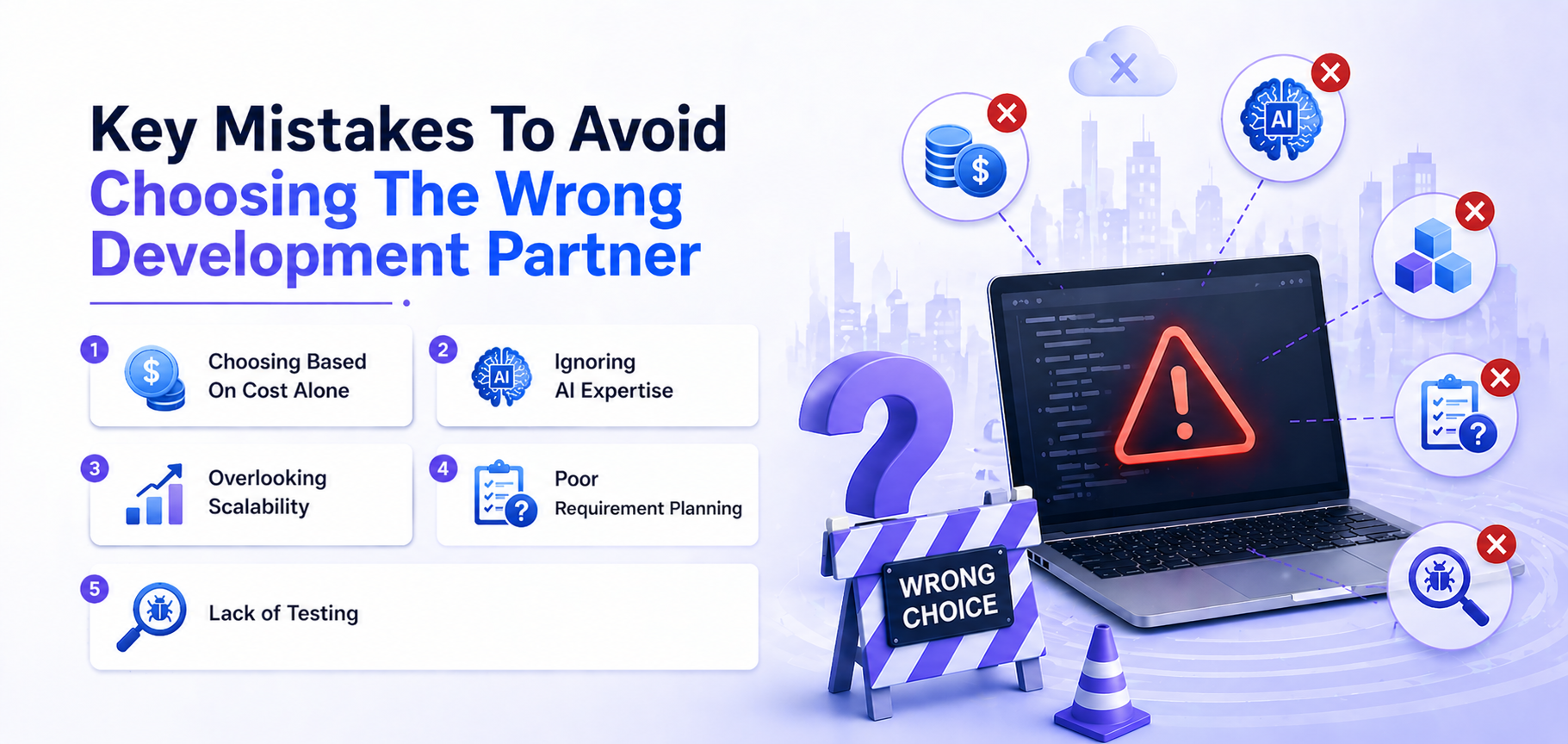 4. Poor Requirement Planning
Vague specifications create delays, inefficiencies and potential rework in project delivery.
AI systems need to be tested to ensure accuracy.
Collaborating with e-learning software developers helps minimise the total cost of ownership.
Efficient processes lead to enhanced system performance.
Effective platforms facilitate organisational growth and meet changing learner needs.
Reliable AI systems provide better insights and learning experiences.
Planning and strategy prevent waste of money and rebuilds in e-learning software development.
AI has helped e-learning evolve in Australia to enhance data-driven education.
AI supports personalised learning journeys based on learner progress and needs.
Automation improves the creation and assessment of content in e-learning systems.
AI systems provide real-time feedback and structured learner support mechanisms.
Learning analytics enables improved decision-making and training optimization.
AI will continue to shape the future of digital learning systems.
AI-enabled platforms are not just short-term upgrades but long-term strategic assets for organisations investing in digital learning.
AI continuously adapts to user behaviour, keeping learners engaged over time.
AI systems learn from data and improve without complete system redesigns.
An e-learning app development company can help you improve your business efficiency.
Automation reduces dependency on manual processes across the platform.
Data generated by AI platforms supports better organisational planning.
AI-driven eLearning systems become more valuable as they scale, delivering consistent performance improvements over time.
A mid-sized training organisation had low completion rates and engagement.
The platform was built with an artificial intelligence mobile app development company.
Choosing the right developers for AI-enabled e-learning software directly impacts how well the system performs and scales. Working with a mobile app development company in Australia or an artificial intelligence mobile app development company ensures the platform is built with strong technical and learning foundations.
A capable team brings expertise in AI technology, data systems, and user experience. Skilled mobile app developers in Sydney help deliver reliable platforms. Choosing the best mobile app development company in Australia helps reduce risk and ensures long-term success.
Q 1. Why is choosing the right e-learning software developer important?
Ans 1. It affects performance and scalability. An iPhone app development company can help you in choosing the best mobile app developers for your business.
Q 2. What skills should developers have?
Ans 2. They need AI and E-learning expertise.
Q 3. Is AI e-learning expensive?
Ans 3. Costs depend on complexity.
Q 4. Can AI improve learning outcomes?
Ans 4. Yes, significantly. An on-demand app development company in Australia can help you validate your learning outcomes.


Partner with us to bring your vision to life.



 +61 (42) 108-3277
 contact@7pillars.com.au
 294A Station Street,
