Sydney businesses are no longer asking whether they need a mobile app development solution. The real question now is whether that app is intelligent enough to compete.
As users’ expectations grow, applications need to do more than work. They must learn user behaviour, make decisions and optimise. This is driving the demand for AI apps in many industries.
Tech companies in Sydney and Australia are leveraging their ability to build intelligent applications to remain competitive and relevant.
Choosing a mobile application developer in Sydney is also important to your success. It may be what makes the difference between having an innovative application ready on time or not.
This blog breaks down:
- What AI-powered mobile app development involves
- How to evaluate the right development partner
- Key capabilities that actually matter
- Costs, timelines, and practical expectations
- Common mistakes businesses should avoid
If you are planning to build an AI-driven app, this blog will help you make a more confident decision.
When do apps stop growing smart?
This blog is ideal for:
- Startups building AI-based mobile products
- Businesses upgrading existing applications
- Enterprises investing in automation and data-driven platforms
- Organisations working with an App Development Company in Sydney
- Companies exploring mobile application development in Sydney solutions
Most businesses reach this stage when:
- Their current app lacks intelligence
- User engagement starts declining
- Manual processes slow operations
- Systems fail to scale with growth
- Data is scattered across tools
- Decision-making becomes slower
This is when working with the right application development Sydney partner becomes essential.
What is AI-Powered Mobile App Development?
AI-powered mobile app development refers to incorporating artificial intelligence technologies into mobile apps to enhance their intelligence, responsiveness, and efficiency.
Unlike traditional apps, AI-driven apps can:
- Analyse user behaviour in real time
- Personalise user experiences
- Automate repetitive processes
- Provide predictive insights
- Detect patterns across large datasets
- Continuously learn from interactions
This is because they help companies engage their customers, make sound business decisions, and save on human effort.
Why Choosing the Right Development Company Matters?
AI-enabled apps are more complex compared to ordinary mobile applications.
They require:
- Advanced data processing
- Machine learning integration
- Scalable architecture
- Seamless system integration
- Ability to refine AI models over time
- Experience handling real-world data variability
- Focus on long-term system performance
- Understanding of business workflows
- Ability to align technology with outcomes
- Experience working with Sydney-based businesses
Choosing the wrong Mobile App Development Company in Sydney can result in:
- Poor performance
- Inaccurate AI outputs
- Scalability issues
- Increased long-term costs
- Frequent rework
- Limited flexibility
This is one reason why most Android application development firms focus on expertise rather than price.
Key Qualities To Look For In An AI-Powered Development Partner
1. Experience With AI Technology
Developers must have hands-on experience with:
- Machine Learning
- Data Modelling
- Automation Systems
- Model Optimisation
- Data Training Pipelines
AI is the foundation of the system, not only a function. An Artificial Intelligence software development company can help you scale your services.
2. Strong Mobile Development Expertise
An experienced app development company in Sydney should be able to:
- Build Scalable Mobile Applications
- Ensure Cross-Platform Performance
- Optimise For Speed And Usability
- Handle Device Compatibility
- Maintain Performance Under Load
- Experience In Sydney Projects
3. Data Handling Capabilities
AI systems depend on data.
Developers must:
- Manage Large Datasets
- Maintain Data Accuracy
- Design Scalable Data Systems
- Handle Real-Time Data Flow
- Ensure Data Consistency
They must be able to manage Australia-specific compliance data.
 4. Integration Expertise
Apps often connect with:
- Third-Party APIs
- Third-party SaaS Services
- Payment Systems
- CRM Platforms
- Analytics Tools
- Enterprise Systems
- Cloud Services
- Integration With Australian Payment And Service Platforms
An experienced application development partner in Sydney ensures smooth integration.
5. Scalability Focus
Your app should grow with your business.
Developers must design systems that handle:
- Increasing Users
- Higher Data Loads
- Additional Features
- Multi-Region Expansion
- Growing Infrastructure Demands
6. UI UX Capability
User experience directly impacts success.
Developers should deliver:
- Intuitive Interfaces
- Smooth Navigation
- Responsive Design
- Minimal User Friction
- Clear User Journeys
How To Evaluate A Mobile App Development Company?
1. Review Their Portfolio
Look for:
- AI-Based Applications
- Scalable Platforms
- Industry-Specific Solutions
- Real-World Use Cases
- Long-Term Product Success
- Projects delivered by the best mobile app development company in Australia
2. Understand Their Technical Approach
Ask about:
- Architecture Design
- AI Implementation
- Data Management
- Scalability Planning
- Integration Strategy
3. Evaluate Problem-Solving Ability
Good developers:
- Identify Risks Early
- Suggest Improvements
- Think Strategically
- Anticipate Challenges
- Adapt To Changes
4. Check Communication
Clear communication ensures:
- Better Collaboration
- Faster Development
- Fewer Errors
- Aligned Expectations
- Smoother Execution
5. Assess Their Process
A structured process includes:
- Planning
- Design
- Development
- Testing
- Deployment
- Post-Launch Support
Development Approach for AI-Powered Apps
1. Define Requirements
Establish clear goals and expectations before starting development work.
- Target Users
- App Functionality
- AI Use Cases
- Integrations
- Expected Outcomes
- Scalability Goals
- Alignment With Local Market Expectations In Sydney
2. Design System Architecture
Plan a robust foundation to support performance and scalability needs.
- AI Models
- Backend Systems
- Mobile Interfaces
- Data Pipelines
- Cloud Infrastructure
- Security Layers
3. Data & AI System Design
Data Integration
Combine multiple data sources to enable intelligent system functionality.
- User Interactions
- App Activity
- External Systems
- Third Party Platforms
- Historical Datasets
Real Time Processing
Enable instant data handling for fast, responsive AI outputs.
- Low Latency Processing
- Instant Response Generation
- Continuous Updates
Data Quality
Ensure reliable outputs through accurate and consistent data management.
- Validation Mechanisms
- Error Handling
- Consistency Checks
Scalable Infrastructure
Build systems capable of handling growth without performance degradation.
- Distributed Systems
- Cloud Scalability
- Load Balancing
Data Governance
Maintain secure, compliant, and well-managed data across the system.
- Validation Rules
- Access Control
- Data Consistency Checks
- Compliance Standards
- Audit Tracking
Model Optimisation
Continuously improve AI models to enhance accuracy and efficiency.
- Retraining Strategies
- Performance Monitoring
- Continuous Improvement
- Accuracy Refinement
- Behaviour Tuning
4. Development Phase
Execute development tasks to build and integrate all system components.
- AI Model Implementation
- Backend Development
- Frontend Design
- Integrations
- Model Training And Validation
- Data Pipeline Setup
- Performance Tuning
- Feature Development
- System Configuration
Developers ensure all components work together efficiently.
5. Integration Layer
Ensure seamless communication between systems while handling technical complexities.
- APIs
- Enterprise Systems
- Analytics Platforms
- Payment Systems
- Cloud Services
Challenges include:
- Data Consistency
- API Limitations
- Security Requirements
- Handling API Failures
- Managing Data Latency
- Ensuring System Reliability
- Synchronisation Issues
A strong integration layer ensures stability.
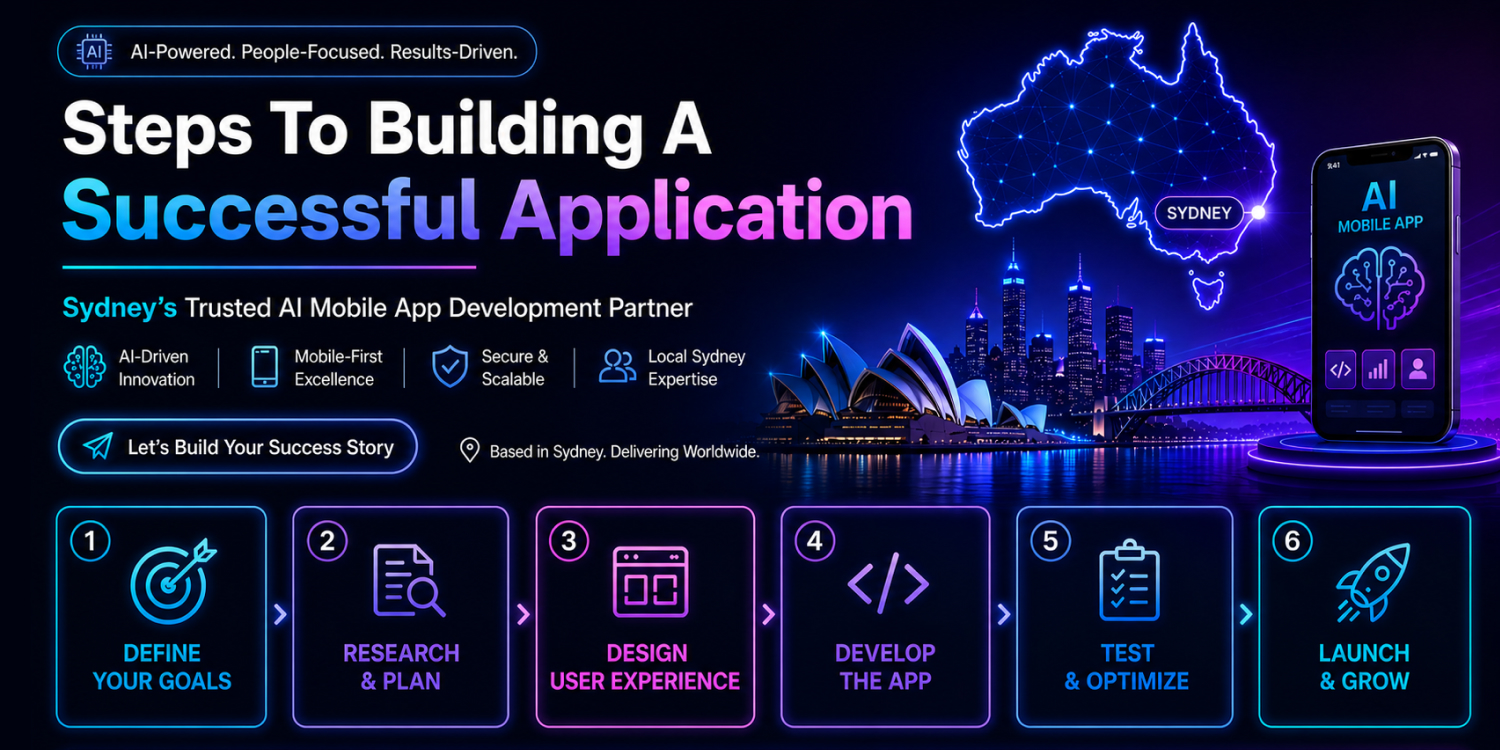 6. Testing & QA
Validate system performance, reliability, and accuracy before product release.
- Performance Testing
- AI Accuracy Validation
- Security Checks
- Reliability Testing
- Edge Case Validation
- AI Output Consistency Checks
- Regression Testing
- Stress Testing
- Usability Testing
7. Deployment & Launch
Release the product strategically while closely monitoring system performance.
- Phased Rollout
- Monitoring Tools
- Backup Planning
- Performance Tracking
- Issue Resolution Setup
8. Post Launch Support
Continuously improve and maintain the application after successful deployment.
- Performance Improvements
- Feature Enhancements
- AI Model Optimisation
- Model Retraining
- System Monitoring
- Feature Iteration
- Bug Fixes
- Scalability Updates
Cost to Develop an AI-Powered Mobile App in Sydney
Knowing these factors helps prevent cost surprises.
Cost depends on
- App Complexity
- AI Features
- Integrations
- Development Expertise
- AI Model Complexity
- Data Infrastructure
- Ongoing Optimisation
- Scalability Requirements
- System Architecture
Easy apps cost less, whereas sophisticated AI systems cost more.
Working together with an Australian mobile application developer guarantees compliance with the law.
Development Timeline
Timelines vary based on scope, complexity, and AI implementation requirements.
- Planning 2 To 4 Weeks
- Design 3 To 6 Weeks
- Development 12 To 24 Weeks
- Testing 3 To 5 Weeks
Timelines may increase due to:
- AI Training Requirements
- Integration Complexity
- Testing Depth
- Feature Expansion
- System Refinement
- Coordination Across Distributed Development Teams
Total 4 To 8 Months
Common Mistakes To Avoid
By avoiding common pitfalls, development and outcomes can be improved.
1. Building Without a Clear Usage Context
The technology must be suitable for its intended purpose to produce results.
- Features Do Not Support Daily Workflows
- Low Adoption Across Teams
- Misalignment With Operations
2. Overcomplicating Early Development
Starting simple helps maintain flexibility and faster delivery cycles.
- Slower Release Cycles
- Increased System Complexity
- Harder Maintenance
3. Ignoring Data Structure Early
Data integrity is essential for AI success.
- Fragmented Data Sources
- Inconsistent Data Formats
- Limited Learning Capability
4. Lack Of Internal Ownership
Ownership provides responsibility and continuous improvement in the system.
- Delayed Decision Making
- Slow Issue Resolution
- Dependency On External Teams
5. No Continuous Improvement Loop
AI technology requires continuous optimisation to succeed.
- No Performance Improvement Over Time
- Static User Experience
- Missed Optimisation Opportunities
ROI of AI-Powered Mobile Apps
AI-based apps add value by enhancing how systems assist decision-making in various business processes.
1. Operational Visibility
AI helps make processes clearer and easier to monitor across the system.
- Better Tracking Of Activities
- Improved Workflow Clarity
- Faster Issue Identification
- Improved Reporting Accuracy
2. User Retention
Smarter experiences increase how often users return and interact with the app.
- More Relevant Interactions
- Increased Engagement Time
- Stronger User Consistency
- Better Personalisation Impact
3. Faster Execution
AI reduces delays by streamlining actions and reducing dependency on manual input.
- Quicker Task Completion
- Reduced Bottlenecks
- Improved Turnaround Time
- Reduced Operational Delays
4. Resource Control
AI helps manage time and effort across operations.
- Better Allocation Of Tasks
- Reduced Inefficiencies
- Improved Output Consistency
- Efficiency Across Australian Businesses
Future Trends in AI Mobile Apps
AI mobile apps are moving towards more adaptive systems with less user interaction.
1. Adaptive Interfaces
Apps adjust their behaviour based on how users interact over time.
- Personalised Layouts
- Dynamic Content Delivery
- Behaviour-Based Responses
- Real-Time UI Adjustments
2. Self-Managed Processes
Systems are increasingly handling operations without constant user control.
- Automated Background Tasks
- Reduced User Intervention
- Continuous Processing
- Autonomous Decision Flows
3. Transparent AI Systems
There is a growing focus on making AI outputs easier to understand.
- Clear Decision Visibility
- Improved Trust
- Better Control
- Traceable Outputs
4. Connected Intelligence
Mobile apps are also becoming integrated with apps across different operating systems.
- Shared Data Environments
- Cross Platform Functionality
- Unified System Behaviour
- Unified Data Ecosystems
- Integration Across Australia-Wide Digital Ecosystems
AI-Powered Mobile App for Retail Automation
Background
A retailer in Sydney with manual inventory partnered with a mobile app development company in Australia.
Approach
- Implemented AI-Driven Recommendations
- Automated Inventory Tracking
- Integrated Analytics Tools
- Optimised Mobile Experience
Outcome
- Improved Customer Engagement
- Better Inventory Management
- Increased Sales Conversions
- Reduced Manual Workload
Sales and efficiency improved significantly after implementation.
Conclusion
Choosing the right development partner directly impacts how your AI-powered app performs under certain conditions. A well-built product supports scale, improves usability, and adapts as your business evolves. Teams with proven experience in SaaS services are better equipped to deliver stable, flexible, and reliable platforms.
If you are ready to move forward, focus on capability and delivery experience rather than just cost. The right team will guide decisions and reduce long-term risk. Partnering with experts who specialise in SaaS services helps ensure smoother execution and stronger results. Get in touch today to start your project.
FAQS
Q 1. How long does it take to build an AI-powered mobile app?
Ans 1. Yes, timelines vary based on complexity. A well-established on-demand app development company can help you understand the timeline for your app development.
- Typically 4 to 8 months
- Depends on integrations and scope
- Longer for advanced AI systems
Q 2. Is AI necessary for mobile apps?
Ans 2. Yes, for long-term scalability and performance.
- Improves efficiency
- Enhances user experience
- Enables automation
Q 3. What drives the cost of development the most?
Ans 3. Yes, costs depend on multiple factors. An iPhone app development company can help you understand the factors driving your development cost.
Q 4. Can AI-powered apps scale with growth?
Ans 4. Yes, if built with the right foundation.
- Scalable architecture
- Modular design
- Supports expansion
Post Views: 42









 +61 (42) 108-3277
 contact@7pillars.com.au
 294A Station Street,
