With digitalization taking the world by storm, the field of education continues to change as the process of learning gets transformed. For this reason, companies and startups alike are interested in developing an application to create educational content for their audience and create an educational app that enhances digital learning experiences.
Nevertheless, app development is not only about coming up with an amazing idea. The process implies many considerations, such as selecting appropriate technologies, creating the right plan, budgeting, etc. Moreover, not all organisations realise the true complexity behind creating an application for educational purposes, resulting in unnecessary costs and poor products.
That’s why choosing professionals who provide education app development services is vital. Top-notch specialists can develop applications with excellent performance characteristics.
If you are considering developing an educational application, it would be best for you to learn how cost and time affect its development.
This blog covers:
- Cost of building an educational app
- Timeline and development stages
- Key features and functionalities
- Factors that affect pricing
- Common mistakes to avoid
- Real case insights
- Future trends in education apps
If you aim to develop an educational application that offers high value and long-term growth, then this manual is what you need.
Digital Learning Blueprint
This blog is designed for businesses and individuals planning to build or scale digital learning platforms.
This blog is useful for:
- Startups entering education technology
- Schools and institutions going digital
- Coaching centres expanding online
- Businesses offering employee training programs
- Entrepreneurs launching learning platforms
- Companies investing in educational app development
Most businesses reach this stage when:
- Traditional learning methods become limiting
- User engagement begins to decline
- Manual systems reduce efficiency
- Scaling operations becomes difficult
- Competition in digital learning increases
- Technology decisions become complex
At this point, choosing the right approach to create an educational app becomes very important from a business perspective.
Educational App Development Process
The development of educational apps consists of creating applications that offer structured and engaging learning experiences.
Responsibilities of an educational app developer include:
- Turned learning goals into features
- Designed intuitive interfaces
- Built frontend and backend systems
- Integrated content tools
- Optimised speed and scalability
- Tracked user behaviour
- Secured data and compliance
- Rolled out updates
Engaging professional educational app developers guarantees that your application meets users’ requirements and your company’s objectives.
Types of Educational Apps You Can Build
Different types of applications serve different educational purposes and audiences.
1. E-Learning Apps
Designed for structured courses and professional learning.
- Video-based lessons
- Interactive quizzes
- Progress tracking
- Certification systems
- User dashboards
These apps are widely used by businesses and institutions that want to create an educational app for large-scale learning.
2. Language Learning Apps
Focused on improving communication and language skills.
- Speech recognition features
- Vocabulary tracking
- Gamified exercises
- Practice modules
- Interactive lessons
These apps are widely used by businesses and institutions looking to create an educational app for large-scale learning.
3. Classroom Management Apps
Used by schools and teachers to manage daily operations.
- Attendance tracking
- Assignment management
- Communication tools
- Performance monitoring
- Scheduling systems
These apps help digitise traditional education processes.
4. Skill Development Apps
Focused on professional and technical learning.
- Industry-specific courses
- Project-based learning
- Mentorship features
- Certification programs
- Practical simulations
Numerous companies invest in Flutter mobile app development to facilitate training and workforce development.
Cost of Building an Educational App
When planning to develop an educational app, understanding cost is critical.
Average Cost Range
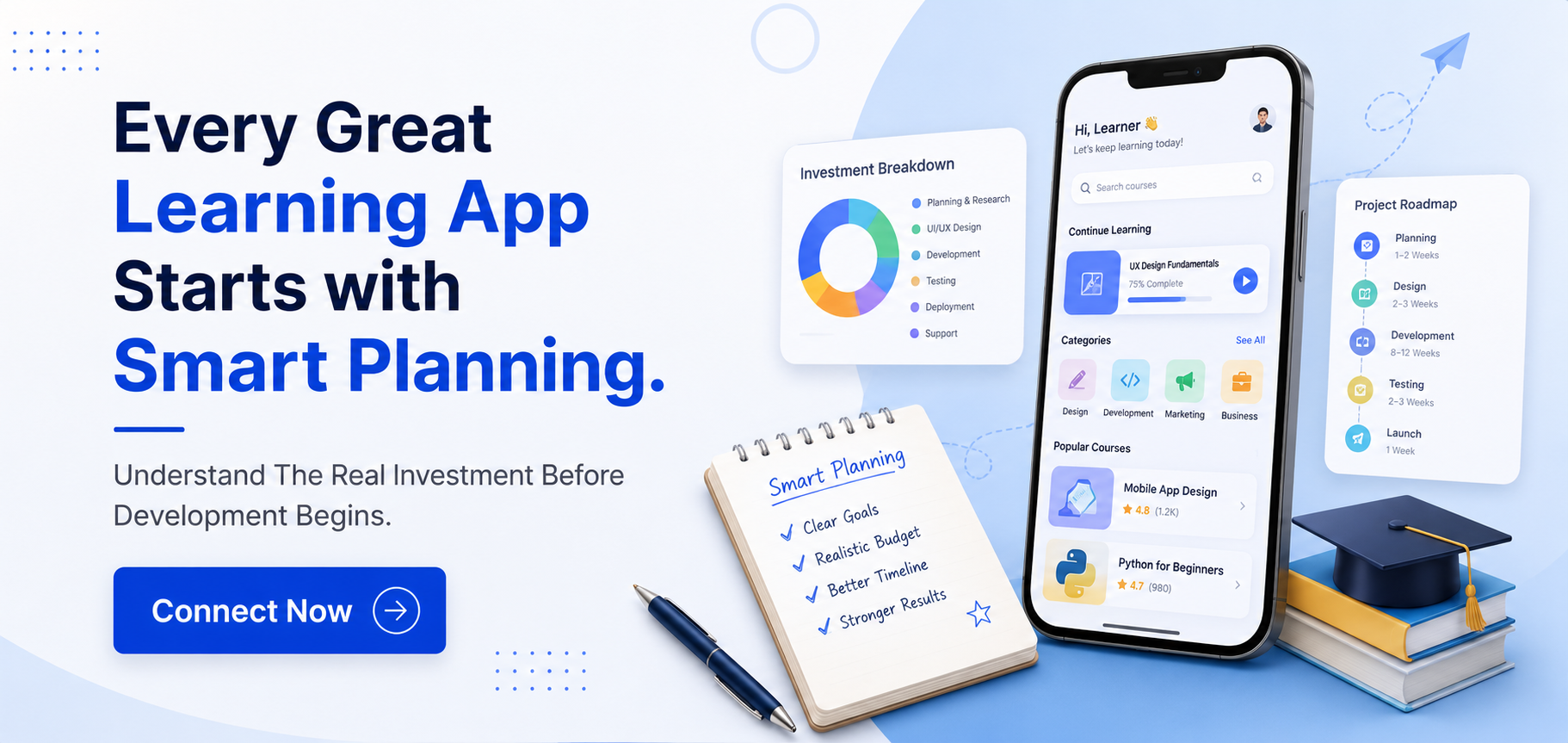
The cost of educational app development varies depending on complexity and functionality.
- Junior developers cost around AUD 40 to 80 per hour
- Mid-level developers cost around AUD 80 to 140 per hour
- Advanced apps will cost between AUD 150,000 and 350,000+.
Developer Cost in Australia
The employment of an educational app developer depends on experience and expertise.
- A junior developer’s salary ranges from AUD 40 to AUD 80 per hour.
- The salary of a mid-level developer is AUD 80-140/per hour.
- The cost of senior developers is approximately AUD 140-220 per hour.
The best education app developers can charge more, depending on specialisation and experience.
Factors That Affect Cost
Several factors influence the final pricing of educational app development projects.
1. Application Complexity
The level of complexity directly impacts development time and cost.
- Basic apps require fewer resources.
- Advanced apps need more development effort.
- Complex logic increases development time.
- Scalable systems require better architecture.
- Higher complexity leads to higher cost.
2. Number of Features
More features increase both cost and development effort.
- Core features cost less.
- Advanced features require more resources.
- Custom features increase development time.
- Too many features impact performance
- Feature prioritisation helps control cost.
3. Technology Stack
Technology choices affect performance and pricing when you create an educational app.
- Modern frameworks may cost more.
- Backend systems impact scalability.
- Cloud infrastructure adds cost.
- Cross-platform tools reduce expenses.
- The right stack improves efficiency.
4. Design Requirements
The quality of designs is important in user experience.
- Simple designs cost less.
- Custom user interfaces increase cost.
- User experience design requires expertise.
- Interactive elements add complexity.
- High-quality design improves engagement.
5. Content Management Systems
Content handling systems affect development effort.
- Basic systems are easier to build
- Advanced systems require integration
- Dynamic content increases complexity
- Admin panels add development cost
- Efficient systems improve usability
6. Third Party Integrations
External integrations increase overall complexity.
- Payment gateways require a secure setup.
- API integrations add development time
- External tools increase dependency
- More integrations increase testing effort
- Does integration quality impact performance?
7. Security Requirements
Security is critical for education platforms.
- Data encryption increases development effort.
- Secure authentication systems are essential.
- Compliance requirements add cost.
- Regular testing is required.
- Strong security improves trust.
8. Maintenance Needs
Continued support impacts the long-term investment.
- Regular updates require resources.
- Bug fixes add to the cost.
- Performance monitoring is essential.
- Scaling requires continuous effort.
Timeline to Create an Educational App
Planning the timeline is equally important when you create an educational app.
Average Timeline
- Basic apps take 2 to 4 months
- Medium complexity apps take 4 to 7 months
- Advanced apps take 7 months or more
Development Stages
An organised development procedure is a guarantee of efficiency and quality.
- Requirements analysis and planning.
- Design and prototyping
- Development and integration
- Testing and quality assurance
- Deployment and launch
- Post-launch updates
One step leads to another in developing a dependable and scalable application.
Key Features of a Successful Educational App
Features are essential in defining user interaction and learning experience.
Core Features
These features form the foundation of most applications.
- User registration and authentication
- Course and content management
- Video and content delivery
- Progress tracking systems
- Notifications and reminders
- Search and filtering options
Advanced Features
Enhanced features improve the user experience and scalability.
- AI-based recommendations
- Gamification and rewards
- Live classes and streaming
- Offline access capabilities
- Multi-language support
- Analytics and reporting dashboard
Top education app developers recommend building features in phases to optimize cost and performance.
How to Choose the Right App Developer?
Selecting the right educational application developer is the key to final success.
1. Evaluate Experience
Experience guarantees improved performance and minimal risks.
- Review previous projects
- Check domain expertise
- Assess similar applications
- Analyse client feedback
- Understand technical capabilities
2. Assess Technical Skills
Strong technical skills ensure scalability and performance.
- Framework expertise
- Backend development knowledge
- Integration capabilities
- Testing and optimisation processes
- Cloud infrastructure understanding
3. Understand the Development Process
A structured process improves efficiency.
- Agile methodology
- Defined milestones
- Regular updates
- Continuous testing
- Feedback integration
4. Check Communication
Effective communication ensures smooth collaboration.
- Clear timelines
- Transparent workflows
- Regular reporting
- Quick issue resolution
- Dedicated contact point
5. Consider Long-Term Support
Constant improvement is maintained through continuous support.
- Maintenance services
- Performance monitoring
- Feature updates
- Security upgrades
- Scalability planning
Working with top education app developers ensures consistent quality and reliable delivery.
Digital Learning App Success
A growing education startup partnered with an educational app developer to create an educational app focused on professional skill training.
The Challenge
- Low user engagement
- Limited scalability
- Inefficient content delivery
The Solution
- Custom educational app development
- Interactive course modules
- Scalable backend architecture
The Results
- User engagement increased by 50 per cent
- Course completion rates improved significantly
- The platform supported increased user traffic
Key Takeaways
- Custom solutions improve learning outcomes
- Scalable systems enable growth
- User experience drives retention
Common Mistakes to Avoid
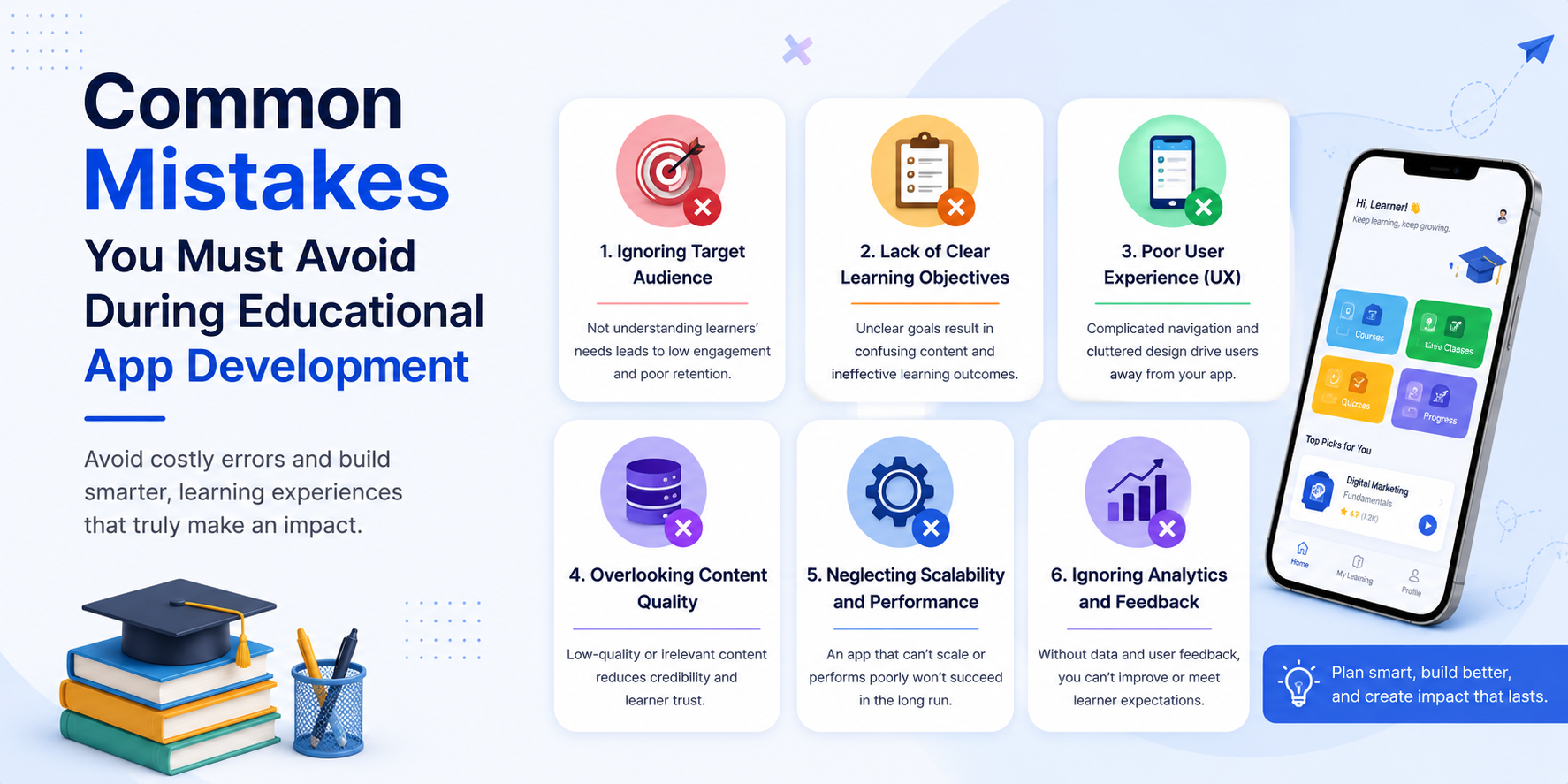
Preventing pitfalls enhances the project’s success.
1. Lack of Clear Planning
Lack of planning results in inefficiencies.
- Unclear requirements
- Project delays
- Budget overruns
- Misaligned outcomes
- Poor execution
2. Ignoring User Experience
User experience directly impacts engagement.
- Low retention
- Poor usability
- Limited interaction
- Reduced satisfaction
- Weak learning outcomes
3. Choosing the Wrong Team
Incorrect hiring leads to long-term issues.
- Poor code quality
- Scalability problems
- Delayed delivery
- Higher costs
- Lack of support
4. Overloading Features
Too many features reduce performance.
- Complex interfaces
- Performance issues
- Higher costs
- User confusion
- Maintenance challenges
5. No Long-Term Strategy
Lack of planning limits growth.
- Scaling issues
- Higher maintenance costs
- Difficulty adding features
- Inefficient systems
- Reduced lifespan
ROI of Educational App Development
Educational app development provides measurable business value.
1. Increased Reach
Apps allow access to a global audience.
- Wider reach
- Flexible learning
- Higher engagement
- Scalable growth
- Improved accessibility
2. Better Engagement
Interactive features improve learning outcomes.
- Higher retention
- Active participation
- Personalised learning
- Improved satisfaction
- Continuous usage
3. Revenue Opportunities
Apps create multiple monetisation options.
- Subscription plans
- Course sales
- In-app purchases
- Advertisements
- Premium features
4. Cost Efficiency
Digital platforms reduce operational costs.
- Lower infrastructure costs
- Automation of processes
- Reduced manual effort
- Efficient resource utilisation
- Long-term savings
Future Trends in Educational Apps
The future of learning platforms remains to be influenced by technology.
1. AI-Based Learning
AI enhances personalisation and efficiency.
- Adaptive learning paths
- Smart recommendations
- Performance tracking
- Automated assessments
- Improved outcomes
2. Gamification
Gamification improves engagement and motivation.
- Rewards and incentives
- Leaderboards
- Challenges
- Progress tracking
- User motivation
3. Cloud-Based Systems
Cloud technology supports scalability.
- Flexible infrastructure
- Secure storage
- Global accessibility
- Cost efficiency
- Easy management
4. Micro Learning
Short format content improves retention.
- Quick lessons
- Flexible access
- Higher completion rates
- Better engagement
- User convenience
Conclusion
Creating an educational application as part of your overall strategy can significantly improve the way students learn. Understanding development costs and cycles will also allow your company to develop efficient solutions for students.
Work in concert with an experienced Android application development team and adopt a systematic approach in transforming your idea into a solution. Identify your core objectives and choose suitable features; then begin creating an application that fosters innovative teaching. Do it now and make a positive difference in learning.
FAQS
Q1. How long does educational app development take?
Ans 1. Timeline depends on project scope. An iPhone app development company can help you understand and manage the development timelines.
- Basic apps take 2 to 4 months
- Complex apps take longer
- Includes testing and launch
- Depends on features
Q 2. What features should an educational app include?
Ans 2. Features depend on user needs and goals.
- User profiles
- Content delivery
- Progress tracking
- Interactive learning tools
Q 3. Should I hire freelancers or developers?
Ans 3. Choice depends on project requirements and scale.
- Freelancers for small tasks
- Developers for full projects
- Agencies for scalability
- Teams for long-term work
Q 4. How to choose the right educational app developer?
Ans 4. Selecting developers requires careful evaluation. An on demand app development company in Australia can help you choose the best developers for your project.

- Check experience
- Assess technical skills
- Review the development process
- Ensure ongoing support
Post Views: 14