










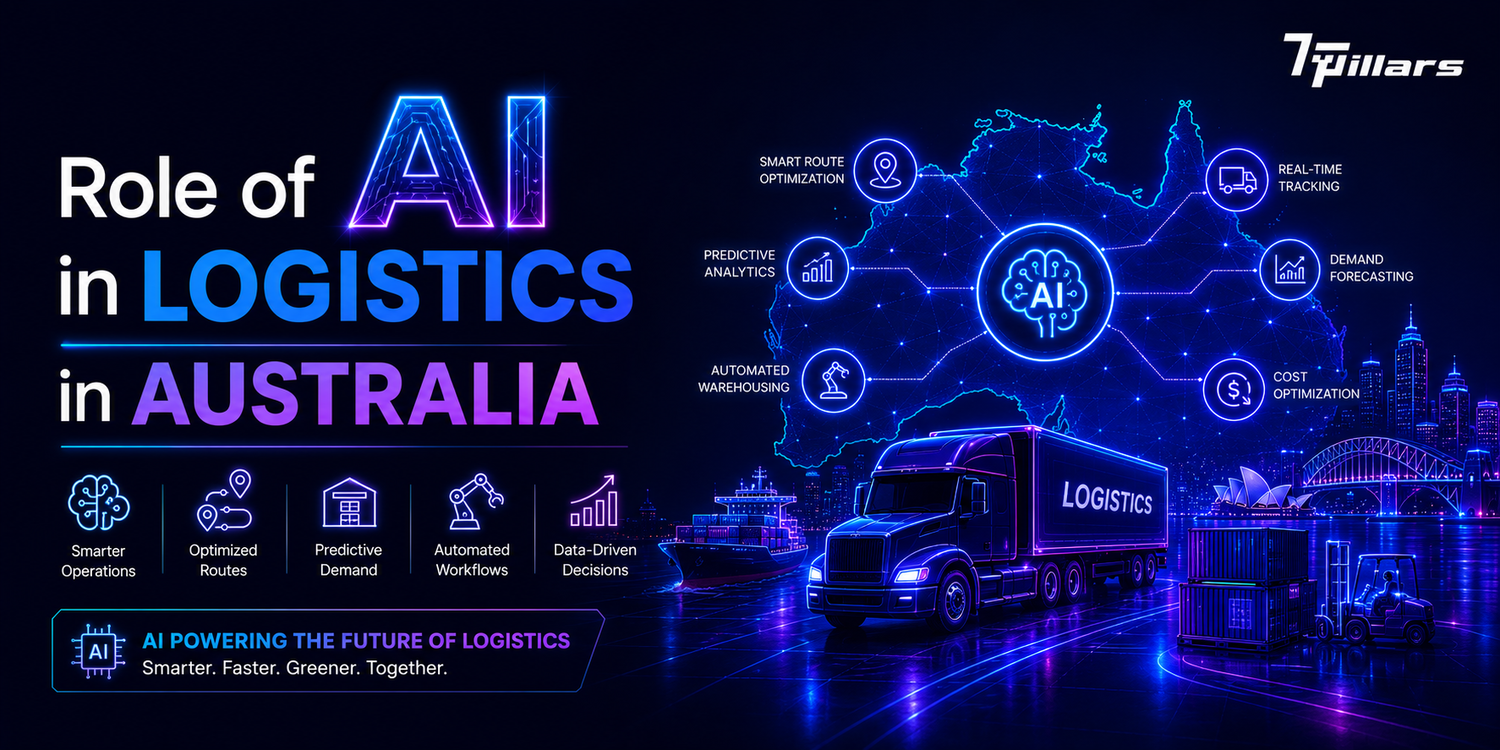



Many logistics businesses in Australia are reaching a point where traditional systems can no longer keep up with growing demand and operational complexity.
As the need for quicker delivery, lower costs and greater handling of large operational volumes increases, logistics organisations are looking at AI in Logistics to improve efficiency. Manual processes and static systems are insufficient in this fast-paced, accurate and dynamic decision-making environment.
Australia requires a transition to smooth operations due to sizable travel distances, regional logistics issues and increased customer demands, leading organisations to develop AI solutions and partner with an app-building or an artificial intelligence mobile app development company.
However, adopting AI in logistics is not just about adding new technology. It requires building systems that can support automation and scalable operations.
This blog breaks down:
- What does AI in logistics mean?
- Key applications of AI technology
- Step-by-step implementation approach
- Costs, timelines, and features
- Challenges and future trends
If you are planning to build or upgrade logistics systems, this will give you clear direction.
Who Can Benefit From This Blog?
This blog is ideal for:
- Logistics and transport companies
- Supply chain businesses
- Warehousing and distribution firms
- Startups working with an application development firm
- Businesses hiring mobile app developers in Melbourne or mobile app developers in Sydney
If your operations rely on manual tracking, disconnected systems, or outdated tools, this becomes highly relevant.
Most businesses reach this stage when:
- Tracking becomes inconsistent
- Delivery delays increase
- Systems fail to integrate
- Operational costs keep rising
This is typically when businesses start exploring AI-driven logistics systems. A well-known Flutter mobile application development firm can help you plan your business.
What Is AI In Logistics?
AI in logistics means the automation of tasks and data analysis (in supply chains) with the help of artificial intelligence.
Core Functions:
- Route optimisation
- Demand forecasting
- Warehouse automation
- Fleet management
- Predictive maintenance
- Real-time tracking
AI acts as a central intelligence layer that improves efficiency across all logistics processes.
Why Does AI Matters In Australia?
AI transforms logistics by managing rising customer expectations and boosting efficiency to stay competitive in the market.
1. Growing Operational Complexity
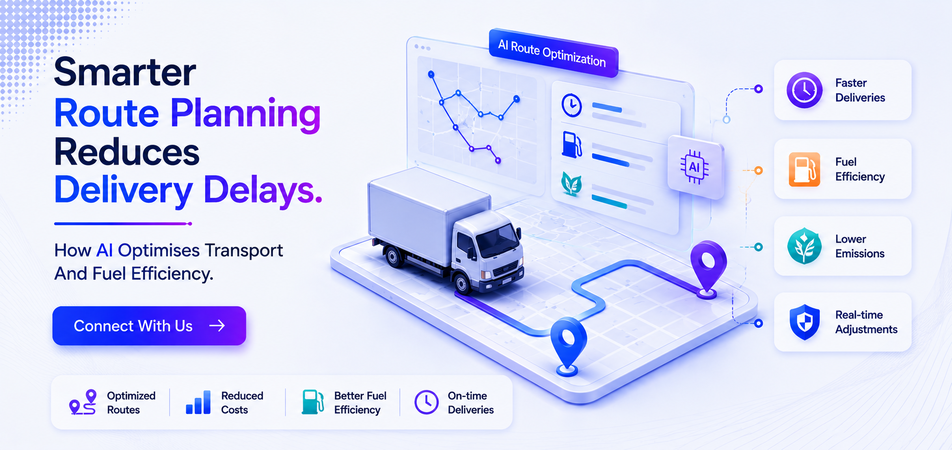
The Australian logistics network deals with city-to-city transportation over long distances, delivery routes to regions and the servicing of remote areas. Handling this manually usually leads to inefficiencies, making AI in Logistics essential for improving route management.
This results in:
- Reduced fuel consumption
- Better route planning
- Improved delivery timelines
- Optimised fleet usage
2. Rising Customer Expectations
User expectations have been evolving rapidly with time. Business and end users are demanding quicker deliveries, proper timelines and full visibility.
AI enables this by:
- Predicting delivery times
- Identifying delays early
- Providing real-time updates
Without AI-driven systems, meeting these expectations becomes difficult.
3. Competitive Market Pressure
The logistics market is extremely competitive. Even a tiny increase in efficiency can remarkably lead to profit growth.
AI provides advantages by:
- Reducing operational costs
- Improving delivery speed
- Increasing resource utilisation
Companies that adopt AI early gain a clear edge.
How to Implement AI in Logistics?
AI in logistics simplifies processes, optimises decision-making, and performance by effectively planning, designing and integrating with systems.
1. Define Requirements
Start by identifying:
- Operational challenges
- Available data sources
- Automation opportunities
- Integration needs
Clear requirements ensure the system is aligned with business goals. A top mobile app development company in Australia can help you filter your requirements for app development.
2. Choose the Right Approach
Options include:
- Basic AI Integration
- Limited automation
- Lower investment
Advanced AI Systems
- Predictive analytics
- Automation workflows
Custom Solutions
- Tailored to operations
Most businesses work with a mobile app development company in Australia to build custom AI systems.
3. Design System Architecture
A strong architecture includes:
- Data pipelines
- AI models
- Cloud infrastructure
- API integrations
Poor design can limit scalability and performance.
4. Data & AI System Design
AI systems depend heavily on data collected from multiple sources, such as GPS tracking, warehouse systems, and delivery records.
- Data Integration
Data from different systems must be combined into a unified structure. The insights cannot be reliable without being properly integrated.
- Real-Time Processing
Logistics operations require instant decision-making. AI systems must process live data to adjust routes and schedules.
- Data Quality
Precise and reliable data is necessary. Ineffective data results in inaccurate forecasting and wasteful practices.
- Scalable Infrastructure
As logistics operations grow, data volume increases. Systems must handle this without slowing down, often using cloud-based infrastructure.
These elements ensure reliable AI performance.
5. UI/UX Design
User experience plays a key role in adoption.
Key considerations:
- Simple dashboards
- Real-time insights
- Mobile accessibility
Clear interfaces help teams use the system effectively without extensive training.
6. Development Phase
Includes:
- AI model development
- Backend systems
- Frontend interfaces
- Integrations
AI models are trained using historical data to predict outcomes.
- Backend systems manage data processing.
- Frontend interfaces present insights clearly.
- Performance optimization ensures the systems can handle operations efficiently.
7. Integration Layer
AI logistics systems must connect with multiple external platforms:
- Fleet tracking systems
- Warehouse management tools
- ERP systems
- Third-party logistics platforms
1. Data Synchronisation
Data must remain consistent across all systems. Any mismatch can lead to operational errors in AI in Logistics operations.
2. API Limitations
Different systems have varying API capabilities, requiring custom integration solutions.
3. Security Risks
Each integration introduces potential vulnerabilities. Secure connections are essential.
A well-designed integration layer ensures smooth communication between systems.
8. Testing & QA
Testing must go beyond basic functionality.
It should include:
- Performance testing
- AI accuracy validation
- System reliability checks
- Data integrity testing
Proper testing ensures the system performs well under real conditions.
9. Deployment & Launch
Best practices include:
- Phased rollout
- Monitoring tools
- Backup and rollback plans
This reduces risks during implementation.
10. Post Launch Support
AI systems require continuous updates:
- Model improvements
- Performance tuning
- Feature enhancements
Ongoing support ensures long-term success.
Features To Offer In AI Logistics Systems
Core Features:
- Route optimisation
- Real-time tracking
- Analytics dashboards
- Automation tools
Advanced Features:
- Predictive analytics
- AI-driven decision making
- Dynamic routing
- Smart alerts
These features improve efficiency and reduce manual work.
Cost, Timeline & Complexity
Building AI logistics systems depends on system complexity and data requirements.
- Basic systems require lower investment
- Advanced AI platforms need higher budgets
- Integrations increase development effort
Timelines vary based on scope:
- Planning and design
- Development
- Testing and deployment
- Integration of third-party services like SaaS services
More advanced systems require additional time to ensure accuracy and scalability.
Challenges in AI Logistics Development
AI in logistics can help businesses operate efficiently. However, businesses that want to use AI in their logistics will first have to solve problems.
1. Data Dependency
AI needs clean, reliable data. Poor data leads to weak predictions.
- Inaccurate input undermines models.
- Data silos limit insights.
- Regular cleaning improves reliability.
2. Change Management
Teams must adopt AI systems smoothly.
- Training ensures staff understanding.
- Leadership support encourages adoption.
- Ongoing assistance prevents gaps.
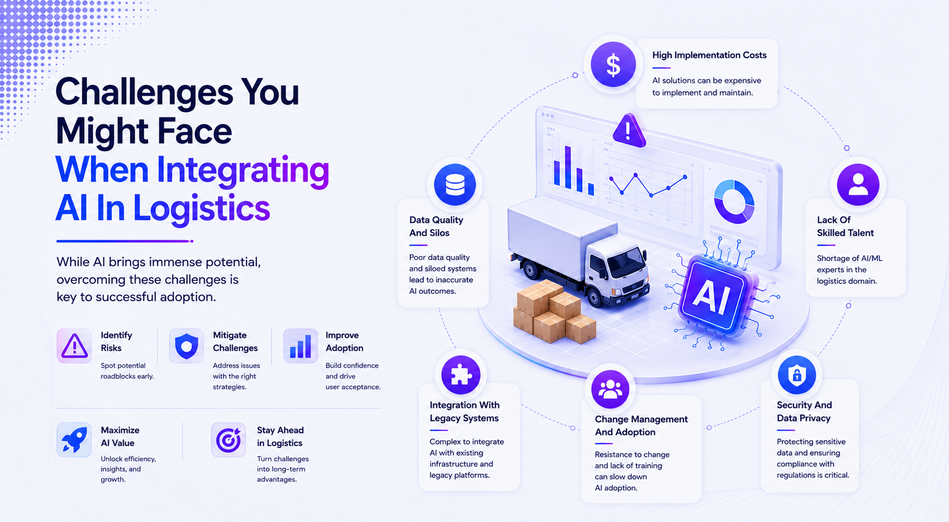 3. System Complexity
AI platforms are technically intricate.
- Complex architectures require coordination.
- Dependencies increase failure risk.
- Modular design aids scalability.
4. Ongoing Maintenance
Models must stay up-to-date.
- Retraining handles changing conditions.
- Monitoring ensures accuracy.
- Continuous updates boost efficiency.
How to Reduce Costs?
Smart planning and resource use cut AI development expenses. A well-known mobile app development service provider can help you reduce your development cost.
1. Start with MVP
Test ideas quickly with essential features.
- Focus on core functionality.
- Collect feedback early.
- Avoid low-value features.
2. Prioritise Use Cases
Tackle high-impact problems first.
- Rank initiatives by benefit.
- Avoid overcomplicating.
- Save time and resources.
3. Use Existing Tools
Leverage prebuilt frameworks.
- Open-source solutions speed deployment.
- Reduce integration errors.
- Faster implementation increases agility.
4. Work with Experts
Partnering with skilled professionals helps:
- Save time with experienced teams.
- Cut down on expensive trial-and-error.
- Strategic collaborations lead to better outcomes.
ROI of AI in Logistics
AI makes processes more efficient, cost-effective, and enhances supply chain visibility.
1. Cost Savings
Operational optimisation and cost savings.
- Automate routine tasks.
- Better route management.
- Reduce excess inventory.
2. Efficiency
Increase speed and accuracy in processes.
- Efficient scheduling reduces delays.
- Standardisation ensures uniformity.
- Real-time analysis detects inefficiencies.
3. Visibility
Gives total transparency in your supply chain.
- Trace shipments end-to-end.
- Anticipate disruptions.
- Make decisions with dashboards.
Trends in AI Logistics for the Future
AI will increase smartness, efficiency, and connectivity in logistics.
1. Autonomous Vehicles
Automation is changing the logistics space.
- Self-operating cars decrease dependence on human labour.
- Reduce expenses and enhance safety.
- Expand operations easily.
2. Prediction Analytics
Predictions help in forecasting.
- Avoid stock shortages.
- Schedule preventive maintenance.
3. Real-Time Decisions
Take immediate decisions on real-time data.
- Route optimisation on a real-time basis.
- Instant redistribution of inventory.
- Increases agility.
4. Interconnected Ecosystems
Connectivity enables integration of ecosystems.
- Connect suppliers, carriers, and warehouses.
- Exchange data for better collaboration.
- Build intelligent systems.
Logistics Company Improving Operations
Background
A logistics company handling regional deliveries faced delays and rising costs.
Approach
- Implemented AI route optimisation
- Integrated tracking systems
- Automated workflows
Outcome
- Reduced delivery time
- Improved efficiency
- Lowered fuel costs
The improvement came from optimising workflows using AI.
Conclusion
AI has transformed Australian logistics through enhanced efficiencies, reduced operational costs and improved decision-making processes. Companies that work with mobile application development companies in Australia can develop new capabilities to support their growing operational needs.
A well-built AI solution supports automation, real time insights, and scalable logistics operations. Skilled mobile app developers in Melbourne help deliver reliable systems. Partner with the best mobile app development company in Australia to build smarter logistics platforms.
FAQS
Q 1. How is AI used in logistics?
Ans 1. AI helps automate and optimize operations. An app development company can help you understand the role of AI in logistics apps.
- Route planning
- Demand forecasting
- Tracking systems
Q 2. Is AI expensive to implement?
Ans 2. Costs depend on complexity. An iPhone app development company in Australia can help you implement artificial intelligence technology into your app.
- Basic systems cost less
- Advanced systems cost more
Q 3. Can AI improve delivery efficiency?
Ansc3. Yes, significantly. A well-established on-demand app development company can help you improve your app’s efficiency.
- Faster routes
- Reduced delays
- Better planning
Q 4. Do logistics companies need mobile apps?
Ans 4. Yes, for real-time operations. A well-established app development company in Australia can help you understand whether your app meets the user’s expectations.
- Tracking
- Communication
- Management

Sundeep Mann

Get in touch
We'd love to hear from you.






 +61 42 108-3277

 contact@7pillars.com.au
 Stay Inspired with our