














Australian companies are bundling their services into an integrated platform that enables customers to get things done without switching between various applications, supporting the rise of digital transformation Australia initiatives.
By 2026, this trend will only become more pronounced, with advancements in AI leading to easy integration of services on digital platforms.
In the corporate world, organisations are adopting digital ecosystems as the new trend in app development.
This blog breaks down:
- What super apps are?
- Why are Australian businesses investing in them?
- Role of AI in super app ecosystems
- Key features and architecture
- Cost, challenges, and future trends
When Businesses Need A Super App?
Super apps become relevant when businesses manage multiple digital products and need to unify them into a single scalable ecosystem.
This blog is useful for:
These groups are actively exploring platform-based digital transformation.
- Startups building multi-service platforms
- Businesses expanding digital ecosystems
- Enterprises modernising legacy systems
- Teams exploring AI-driven applications
- Product companies scaling operations
Most businesses reach this stage when:
These signals indicate that fragmentation is limiting growth and efficiency.
- Users rely on multiple disconnected apps
- Engagement drops across services
- Operational complexity increases significantly
- Scaling drives higher infrastructure costs
- Competitors begin consolidating services
What is a Super App?
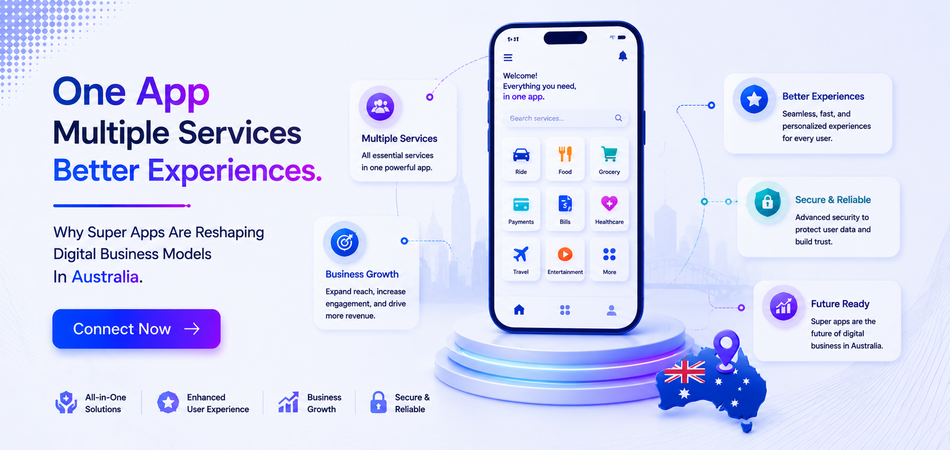
The super app is an all-inclusive platform comprising a variety of services that can be accessed from a single application interface without switching between applications.
Super apps typically include:
These represent the core service layers commonly integrated into a single ecosystem.
- Messaging and communication
- Payments and financial services
- E-commerce marketplaces
- On-demand services
- Content and engagement tools
Why Are Super Apps Growing in Australia?
Super app adoption is being driven by the need to simplify fragmented digital experiences and improve service integration across industries.
Why Does It Matter?
These factors explain why businesses are rapidly moving toward unified platforms.
- Reduce fragmentation across services
- Improve engagement through centralisation
- Increase retention through convenience
- Enable cross-service monetisation
- Simplify user journeys across platforms
- Strengthen unified data strategies
- Improve operational efficiency
- Accelerate product development cycles
Role of Artificial Intelligence in Super Apps
Super apps transform into smart ecosystems, where AI takes the lead in driving their operations.
How AI Powers Super Apps?
AI learns and evolves to make it more relevant to users during digital transformation Australia initiatives.
- Personalised recommendations
- Real-time behaviour analysis
- Predictive user modelling
- Automated customer support
- Fraud detection and prevention
- Cross-service intelligence
- Dynamic user journeys
- Real-time optimisation
Why Are Australians Investing In Super Apps?
Super apps are also gaining traction as they provide real value to businesses in engagement, monetisation and scaling.
Key Reasons:
These drivers are related to user expectation and/or business growth priorities.
1. Changing User Expectations
Customers’ behaviour has evolved into a more all-in-one digital experience.
- Less switching between apps
- Faster task completion
- Seamless service journeys
- Consistent experience across features
- Better accessibility across devices
2. Higher Engagement
Unified ecosystems naturally increase usage depth and frequency.
- Longer session durations
- Higher feature usage per session
- Increased return frequency
- Improved retention rates
- Continuous engagement cycles
3. Multiple Revenue Streams
Super apps enable diversified monetisation opportunities through services.
- Subscription models
- Transaction fees
- In-app purchases
- Advertising ecosystems
- Bundled service offerings
4. Data Driven Insights
Centralised platforms offer comprehensive and cohesive user behaviour analysis.
- Unified customer profiles
- Better segmentation accuracy
- Predictive analytics
- Personalisation improvements
- Data-driven decision making
5. Competitive Advantage
Owning an ecosystem raises the value of long-term market positioning.
- Full control over user journey
- Stronger brand loyalty
- Higher switching barriers
- Faster innovation cycles
- Clear market differentiation
6. Faster Time to Market
Shared infrastructure enables faster development and deployment of features.
- Reusable system components
- Faster deployments
- Reduced duplication
- Rapid experimentation cycles
- Shorter release timelines
 7. Stronger Customer Retention
Integrated ecosystems naturally increase user dependency and loyalty.
- Higher repeat usage
- Lower churn rates
- Continuous engagement loops
- Increased lifetime value
- Strong ecosystem dependency
8. Better Cross-Service Integration
Services offered by super apps reinforce each other, operating independently.
- Shared backend systems
- Unified user experience
- Reduced friction
- Consistent workflows
- Better coordination
9. Scalable Business Model
Super apps are designed to expand without structural redesigns, supporting long-term digital transformation Australia strategies.
- Modular service expansion
- Flexible architecture
- Scalable infrastructure
- Ecosystem growth
- Reduced rebuild costs
Key Features of a Super App
Super apps require a combination of strong foundational systems and advanced intelligence features to operate effectively at scale.
Core Features
These features ensure reliability and scalability across services.
- Multi-service integration
- Centralised authentication
- Secure payment systems
- Real-time notifications
- Scalable backend infrastructure
- Role-based access control
- Multi-language support
- Seamless onboarding
Advanced Features
These capabilities add to the user experience.
- AI recommendation engine
- Smart search and discovery
- Personalised dashboards
- Voice and chat interfaces
- Workflow automation
- Behaviour-triggered notifications
- Integrated analytics systems
Architecture of a Super App
A super app requires a modular and distributed architecture designed for high scalability and performance.
Key Components
These layers support multiple services operating within a single ecosystem.
- Frontend application layer
- Microservices backend architecture
- API gateway
- AI processing engine
- Data storage systems
- Cloud infrastructure
- Event-driven architecture
- Caching systems
- Monitoring and logging
Development Approach for Super Apps
To build a super app, you need a systematic approach to handle complexity.
Key Steps
Each phase ensures controlled development and long-term stability.
1. Define Scope
A clear scope definition aligns business goals with technical execution.
- Identify core services
- Define user journeys
- Prioritise features
- Set performance benchmarks
- Define AI use cases
2. Build Scalable Architecture
Scalable architecture provides for future expansion and growth.
- Microservices setup
- Modular system design
- High-load readiness
- API-first approach
- Flexible integration layer
3. Integrate AI Systems
AI is embedded to enable intelligence and automation across the platform.
- Behaviour tracking
- Recommendation systems
- Predictive models
- Automation workflows
- Real-time analytics
4. Develop and Test
This phase ensures system stability, performance, and reliability.
- Full-stack development
- Third-party SaaS Services
- Functional testing
- AI validation
- Performance optimisation
- Cross-platform testing
5. Launch and Optimise
Post-launch improvements ensure continuous performance enhancement.
- Performance monitoring
- User feedback analysis
- Feature refinement
- Infrastructure scaling
- AI model tuning
Cost of Building a Super App
Super app development costs vary depending on scope, complexity, and technology choices.
Cost Factors
These elements directly influence total investment requirements.
- Number of integrated services
- AI complexity level
- Technology stack selection
- Infrastructure requirements
- Development expertise
Challenges In Super App Development
Despite their benefits, super apps introduce significant technical and operational challenges.
Common Challenges
These issues must be addressed during planning and execution.
1. System Complexity
Multiple integrated services increase engineering complexity.
- Integration challenges
- Performance bottlenecks
- Longer development cycles
- Higher maintenance effort
2. Data Management
Large-scale systems require strong data architecture and governance.
- High data volume handling
- Processing efficiency
- Security enforcement
- Data consistency
3. User Experience
Complex systems must remain simple and intuitive.
- Simplified navigation
- Consistent design
- Reduced friction
- Fast performance
4. Scalability
Systems must support growth without performance degradation.
- Load balancing
- Infrastructure scaling
- Performance tuning
- Continuous monitoring
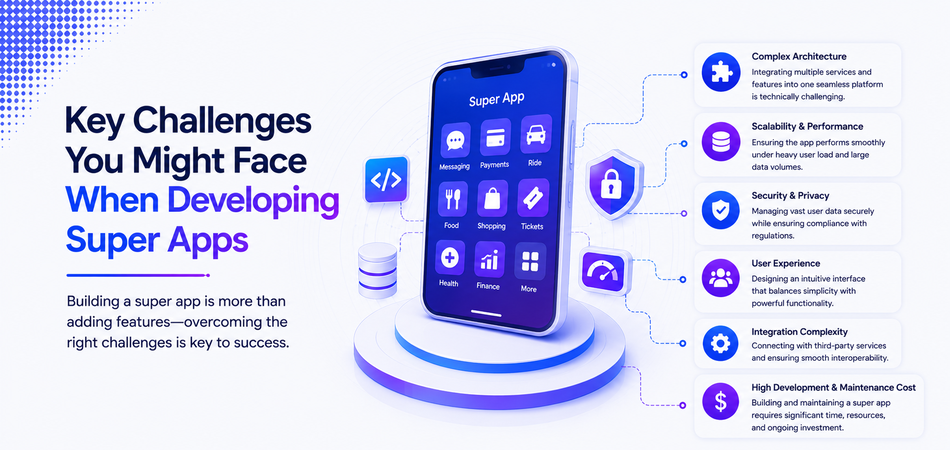 5. Security
Security becomes more critical as system integration increases.
- Data protection
- Fraud prevention
- Compliance requirements
- Risk management
6. Integration Complexity
Connecting multiple systems creates dependency challenges in digital transformation Australia projects.
- API mismatches
- Data synchronisation
- Service dependencies
- Testing complexity
7. Performance Optimisation
High usage requires continuous system optimisation.
- High traffic handling
- Response optimisation
- Resource efficiency
- Continuous tuning
Industry Use Cases of Super Apps
Super apps are revolutionising industries by offering a combination of multiple services.
Where Super Apps Are Used?
These industries benefit most from integrated platform models. A skilled Android application development team can help you understand which industries benefit from super apps.
- Fintech platforms
- E-commerce ecosystems
- Mobility services
- Healthcare platforms
- On-demand service networks
ROI of Super Apps
Super apps can provide tangible benefits in terms of engagement, revenue, and efficiency. The best mobile app developers in Australia can help you invest into the development of super apps.
Key Benefits:
The long-term benefits of ecosystem consolidation are these results.
1. Increased Engagement
Unified platforms naturally increase user activity levels.
- Longer user sessions
- Higher interaction rates
- Improved retention
2. Revenue Growth
Integrated ecosystems unlock multiple monetisation channels.
- More transactions
- Subscription expansion
- Advertising revenue
- Cross-selling opportunities
3. Operational Efficiency
Centralised systems minimise duplication and facilitate operations.
- Streamlined workflows
- Reduced duplication
- Lower costs
- Better resource use
4. Data Insights
Unified data enables stronger analytics and business intelligence.
- Behaviour analysis
- Better targeting
- Forecasting improvements
- Strategic decision-making
Future Trends in Super Apps
Super-apps will continue to evolve as AI and digital ecosystems develop.
Emerging Trends:
The above trends are what will drive the next wave of platform evolution.
1. AI-Powered Personalisation
User interactions will be increasingly personalised and timely through digital transformation Australia strategies.
- Real-time recommendations
- Adaptive interfaces
- Dynamic content
- Behaviour-based UX
2. Expansion into New Services
Super apps will expand into high-value service categories.
- Finance
- Healthcare
- Education
- Lifestyle
3. Advanced AI Applications
AI will evolve into deeper decision-making systems.
- Predictive systems
- Behaviour modelling
- Automation engines
- Decision intelligence
4. Ecosystem Growth
Platforms will increasingly rely on external integrations and partnerships.
- Third-party integrations
- Partner networks
- API marketplaces
- Scalable platforms
5. Voice and Conversational Interfaces
Interaction will shift toward natural and conversational systems.
- Voice navigation
- AI assistants
- Faster task execution
- Improved accessibility
6. Hyper Localised Services
Platforms will become more context-aware based on user location.
- Location-based recommendations
- Regional services
- Local integrations
- Context-aware experiences
Conclusion
Numerous services in a single app are a significant change in how digital ecosystems work through super apps. User expectations, competition and scale have driven the development of super apps in Australia and accelerated digital transformation Australia initiatives.
Organisations that have embraced the super app trend position themselves for success. Learn about how you can leverage the power of super apps to transform your digital future. Our mobile app developers can help you create a successful super app. Connect with us today and take the next step in your development.
FAQS
Q 1. What is a super app?
Ans 1. A super app is a unified platform that combines multiple services into one ecosystem.
- Reduces fragmentation
- Improves convenience
- Centralises services
Q 2. Why are businesses investing in super apps?
Ans 2. They improve scalability, engagement, and efficiency. A well-established on-demand app development company can help you stay within your budget.
- Higher retention
- Revenue diversification
- Better user experience
Q 3. How does AI improve super apps?
Ans 3. AI makes super apps intelligent and adaptive.
- Predictive insights
- Behaviour tracking
- Personalisation
Q 4. What is the cost of building a super app?
Ans 4. Cost depends on complexity and scale.
- Higher than standard apps
- Driven by integrations
- Architecture-dependent
Q 5. Are super apps scalable?
Ans 5. Yes, when built with the right architecture. An iPhone app development company can help you create a scalable super app.
- Microservices-based
- Cloud-native
- Continuously optimised

Sundeep Mann

Get in touch
We'd love to hear from you.






 +61 42 108-3277

 contact@7pillars.com.au
 Stay Inspired with our