




Let's have a
Quick Chat
with you!
Quick Chat
with you!
You have our ear and we can't wait to hear about your idea! Share your details here and we will make sure to schedule a coffee date with you soon.


Sydney is now among the most important technology centres of Australia, and enterprises in the areas of fintech, retail, logistics, and healthcare are investing in digital platforms. This expansion has led to a high demand for custom software development Sydney as businesses seek scalable solutions for their operations, workflows and business tactics.
Compared to general tools, bespoke software addresses particular organisational requirements. There is a reputable software development company Sydney that partners with numerous companies to make them secure and scalable. These solutions are a combination of cloud services, enterprise systems, and mobile technologies that enable businesses in Sydney to become more efficient, automate their processes, and deliver improved digital experiences.
However, none of it implies that the successful development of software is solely concerned with codifying. Planning, architecture design, testing and continued maintenance are all very important phases. Hiring a professional app development company in Sydney helps overcome these complexities.
Sydney businesses now demand scalable, secure, and long-term growth software. With the growing pace of digital transformation, there is a need to develop custom software in Sydney. organisations in various sectors are also investing in customised systems that transform the business, automate operations, and help meet the changing needs of customers in competitive markets.
The change in user expectations also exists. Businesses must deliver visually refined, quick and easy digital experiences. Skilled Sydney app creators are oriented to user-centric design, evolutionary development and constant enhancement.
Although several opportunities exist in digital transformation, a large number of software projects fail. Awareness of pitfalls helps prevent the costly errors organisations make.
Examples of common problems are:
Start-up app development firms that engage a reputable development firm in Sydney tend to have fewer problems, due to well-structured development practices and professional software development teams.
A well-planned development plan helps companies reduce risk and maximise investment.
By adhering to a well-defined development cycle with expert Sydney app developers, organisations will receive:
Collaboration with an established app development company in Sydney enables companies to translate ideas into high-performing digital products.
Custom software development refers to creating a software program that meets the business requirements.
| Custom Software | Off-the-Shelf Software |
| Built for specific business needs | Designed for general use |
| Highly scalable and flexible | Limited customisation |
| Higher initial investment | Lower upfront cost |
| Competitive advantage | Standardised features |
| Easy integration with systems | Limited integration capabilities |
Sydney’s tech industry is on the rise, with companies shifting towards the adoption of digital solutions, custom-made software, and mobile applications in all sectors.
Stats influencing the software industry include:
The majority of contemporary mobile applications comprise three major components, which collaborate.
A user interface is the visual aspect of a software system or application that allows for interaction between users and that particular software system/application.
Key elements include:
The back-end helps deal with the logic and infrastructure of the application.
Back-end roles involve:
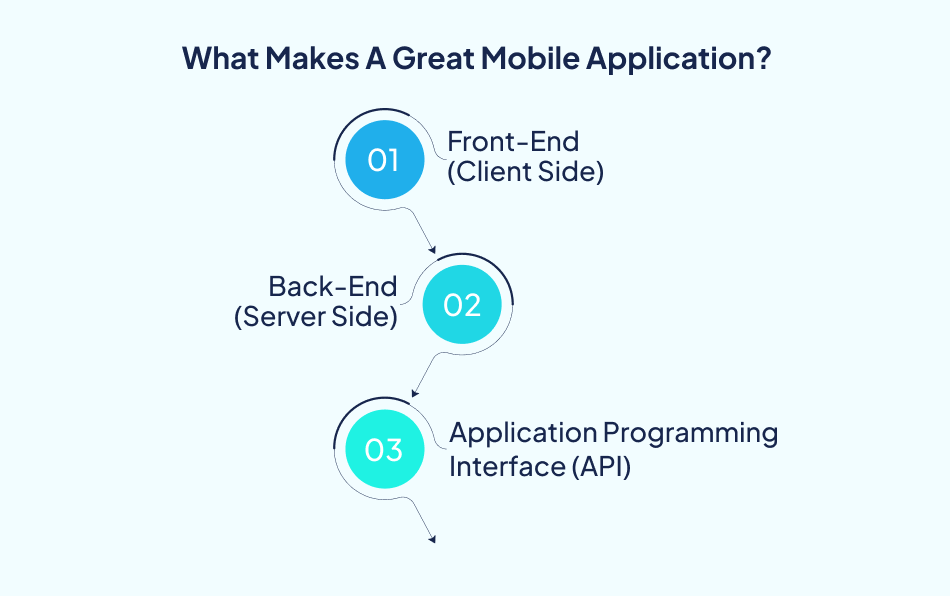
APIs enable front-end and back-end elements to interact with users.
An API architecture is well structured, which means:
Sydney app developers are professional and structure their API to ensure performance and security.
Over the past two decades, mobile applications have adapted to meet the changing user preferences.
Mobile applications are rapidly expanding in the global economy.
Several factors fuel this growth:
The need to develop iPhone apps in Sydney is highly sought after by companies that want to get high-end mobile experiences, especially when targeting premium markets, such as finance, retail, and healthcare.
Before venturing into projects, businesses should be aware of the different categories of mobile applications available. The right strategy depends on the budget.
The four broad classes of mobile applications popularly constructed today are listed below.
Native applications strictly run on one type of operating system: iOS or Android. Developers use platform-specific development tools and programming languages.
In the case of Apple, mobile app developers Sydney work with Swift and Xcode, which are common iOS application development sydney projects.
Native applications offer several benefits:
Native applications, however, need individual development on each platform, which adds to the cost and schedule. Most companies thus approach an app development agency Sydney to explore whether the investment is viable for their long-term objectives.
Advantages include:
A skilled application development team in Sydney can assess the technical needs of your program to test the applicability of cross-platform frameworks.
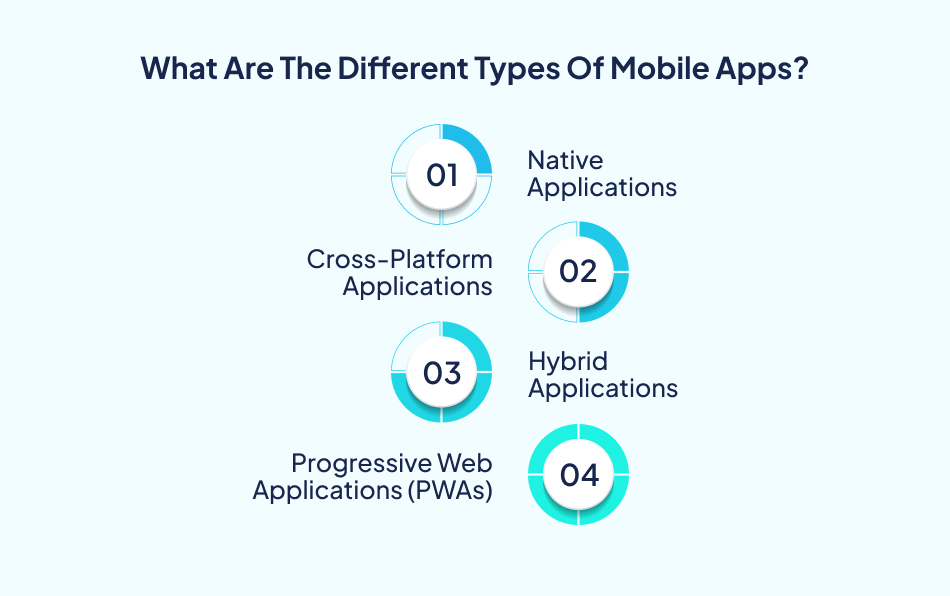
App development agency Sydney recommends hybrid development most often to:
Advantages include:
Advantages include:
When companies are interested in accessing users promptly without the need to spend a large sum of money on mobile infrastructure, professional Sydney app developers are likely to suggest PWAs.
Custom software development in Sydney is where businesses invest in building (i.e., a customized solution) a new digital solution to support their operation, customer support, and long-term business development plan.
Mobile applications have become an asset for businesses seeking to invest in their development, providing them with access to Sydney’s untapped market.
Key benefits include:
Good app design in Sydney is what keeps the apps simple and easy to use.
Benefits include:
Numerous start-up mobile app development firms collaborate with a reputable software development firm in Sydney to build their apps to enterprise-grade requirements.
Businesses have new monetisation opportunities through mobile apps.
Revenue models include:
A professional application development company in Sydney assists firms in selecting monetisation strategies.
Benefits include:
Most businesses subcontract with a reputable Android application development firm in Sydney to develop internal business applications.
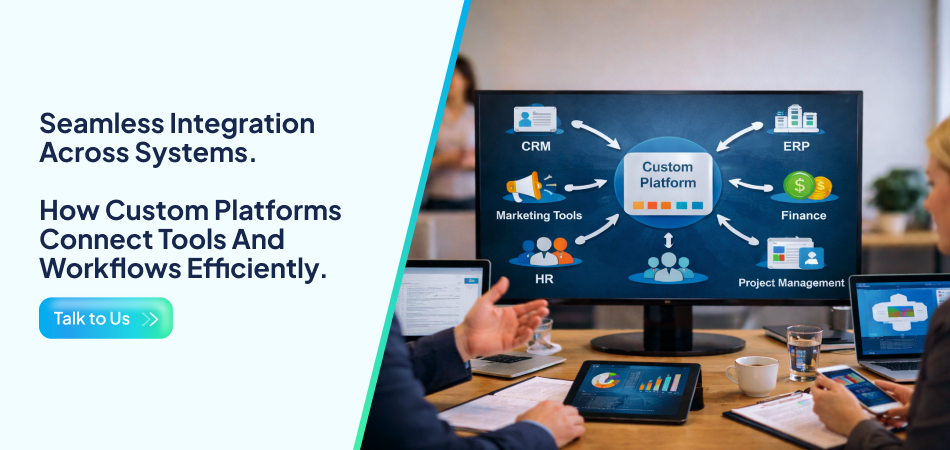
Benefits include:
A skilled mobile app development company in Sydney can help grow your business.
All successful software projects start with goals.
Businesses must identify:
Having clear goals will keep the project on track with business objectives during the development lifecycle.
Market research is another aspect that ensures that software products meet actual customer demands.
Among the important research activities are:
Research ensures that app development projects are developed based on facts, not speculations. A Flutter mobile application development team can help you conduct detailed research.
After research, define the main characteristics of the application.
Important steps include:
A methodical process helps software development Sydney to deliver products effectively without exceeding budgets.
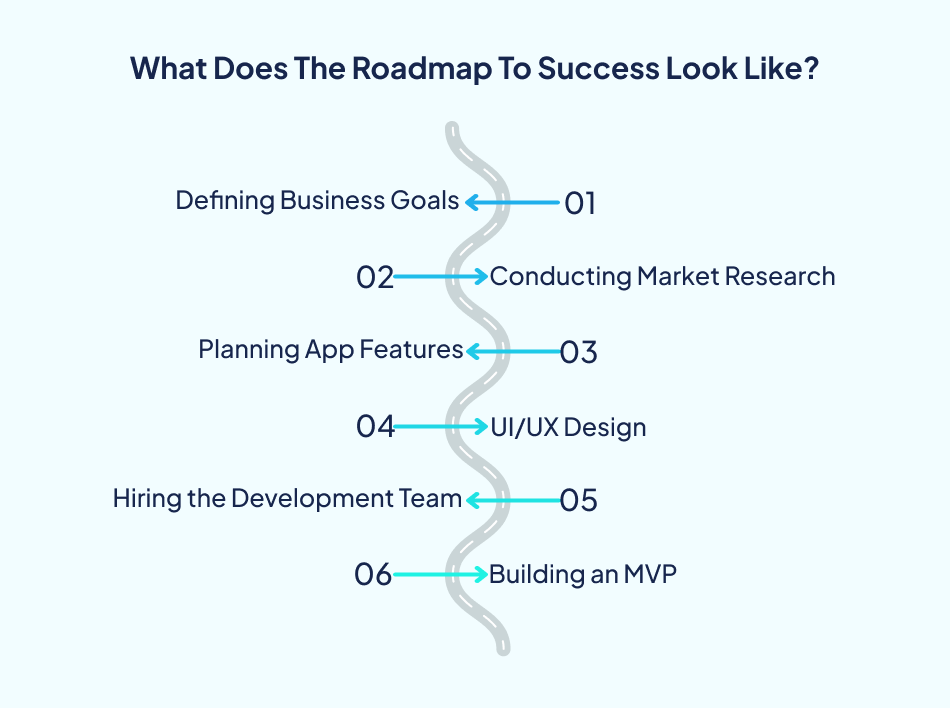
The success of mobile applications is dependent on user experience.
Design activities include:
User experience is at the top of the list of priorities for a professional app development company to enhance retention and engagement.
Selecting an appropriate development partner is a key factor in the success of projects.
A good development team will offer:
Strategic guidance is also present in experienced app builders in Sydney who assist with the development.
It can be a risk to launch a full-featured product at once.
Benefits include:
Sydney app developers assist companies with MVP optimisation by using real-world data.
App developers specialising in application development Sydney apply modern technology stacks to develop scalable and secure software solutions, facilitating business growth and high-performance digital platforms.
Front-end technologies develop the interface to be displayed to the users with a responsive design, well-developed navigation, and cross-platform consistency.
Common examples of front-end technologies include:
Constructs rapid, dynamic interfaces to new-fangled web applications.
Scalable enterprise Web applications framework.
Develops soft and mobile interfaces.
Develops cross-platform applications on a single code base.
Back-end technologies drive server operations, business logic, and system integration, providing efficiency in platforms’ processing data and reliability.
Common technologies of back-end include:
Operates JavaScript on servers for scalable applications.
Encourages data processing, automation and support of back-end systems.
Enterprise software- used to support secure and large systems.
Guide to creating safe business applications.
Application data is stored and manipulated in databases, allowing software systems to access and retrieve data fast, keep it secure and ensure scalability.
Common database technologies consist of:
Dependable relationship database of complicated applications.
Website and platform popular database.
Manages big data volumes of flexible data.
Application cloud database in real time.
| Category | Technologies | Purpose |
| Frontend Development | React, Angular, Vue.js | Build responsive and interactive user interfaces |
| Backend Development | Node.js, Python, Java, .NET | Handle business logic and server-side operations |
| Mobile Development | Swift, Kotlin, Flutter, React Native | Develop native and cross-platform mobile applications |
| Database Management | MySQL, PostgreSQL, MongoDB | Store, manage, and retrieve application data |
| Cloud Platforms | AWS, Microsoft Azure, Google Cloud | Provide scalable hosting and infrastructure |
| DevOps Tools | Docker, Kubernetes, Jenkins | Enable deployment automation and system scaling |
| APIs & Integrations | REST APIs, GraphQL | Connect systems and enable data exchange |
| Security Technologies | OAuth 2.0, JWT, SSL/TLS | Ensure secure authentication and data protection |
Cloud infrastructure provides deployment, scalability, and maintenance capabilities, whereas DevOps practices enable efficient system updates for different applications.
Common cloud and DevOps technologies are:
Offers infrastructure and reliable cloud hosting.
Powerful integrations on the enterprise cloud platform.
Provides back-end and analytics services.
Deploys container technology applications.

Security models secure sensitive data, control unauthorised access, and maintain secure communication between the systems and users.
Popular security technologies are:
Obtain permission to access by third parties.
Secure data exchange by use of tokens.
Allow fingerprint and facial recognition.
Secrecy of data carried over the internet.
Testing ensures that the software is stable, performant, and secure; bugs and issues with the system are detected before the software deployment.
Certain techniques of testing would be:
Cross-platform application testing automation.
Regression testing and web functional testing.
Conducts unit testing of the back-end.
Test execution on actual equipment.
Software analytics can track the performance of software, user behaviour, and errors, allowing a business to enhance digital platforms.
The following are some examples of analytics tools:
Tracking user behaviour and interaction.
Identifies crashes and stability problems.
Supervises the performance of the back-ends.
Stresses the user engagement and retention.
Secure apps help safeguard confidential information and regulatory standards, and enhance business confidence among customers to invest in tailor-made software development Sydney.
Key focus areas include:
Secures confidential data when storing and transmitting across the network.
Utilises tokens to make software system communication safe.
Granted system access based on user permissions.
Frequent testing reveals security threats and vulnerabilities.
Operated by a reputable software development firm in Sydney.
The selection of the appropriate development model influences project cost, scalability, and deployment speed of businesses intending to launch custom software development in Sydney.
The common patterns of development are:
A professional software development firm in Sydney provides scalable services.
Native apps are compatible with a single operating system, e.g. iOS or Android. They suit companies that need a high level of performance, sophisticated features and a high level of security in their application programs.
Key characteristics:
Most often, in enterprise-grade custom software development, Sydney projects require performance and scalability.
By using a cross-platform development approach, organisations have the opportunity to develop applications that can run on multiple operating systems while utilising one common source of code. It finds wide application in quicker development and lower engineering costs.
Key characteristics:
Sydney app developers frequently recommend it to businesses with fast product launches.
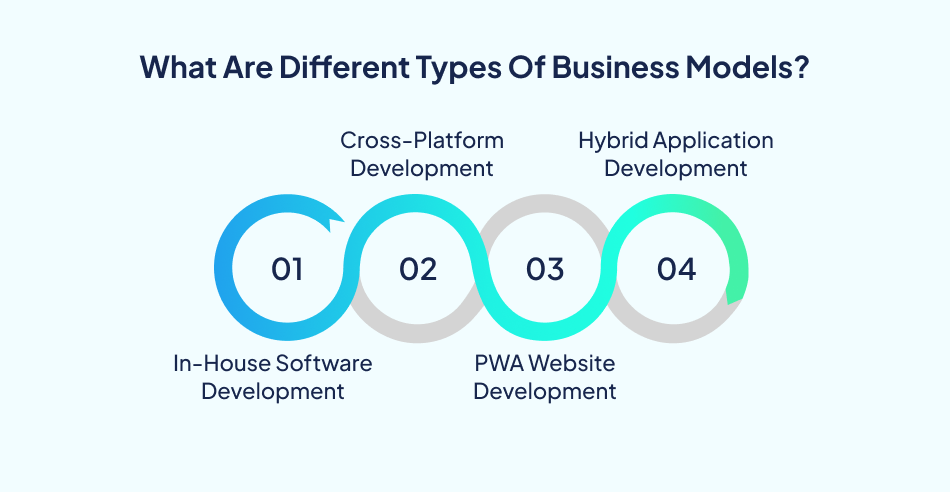
Progressive Web Applications (PWAs) are web applications that have features. They suit well with light software-dependent businesses that do not rely on application stores.
Key characteristics:
Weaves of lightweight digital platform development in modern custom software development in Sydney.
Hybrid applications integrate web technologies and native containers to speed up performance.
Key characteristics:
Typically used by new businesses and startups introducing new digital products.
Generative AI is changing the automation of software applications, content creation, and personalization of digital experiences for users and businesses.
A well-established mobile app development company in Sydney can help you understand the benefits of Generative AI.
IoT allows tangible items to connect to computer systems using software.
5G networks considerably enhance the performance of software by allowing the transmission of data at higher speeds and decreased latency on real-time digital applications.
AR/VR helps businesses develop an interactive online experience that gives their customers a visual representation of their products and utilises technology to enhance the customer experience.
| Trend | Business Impact |
| Generative AI | Automation and personalisation |
| IoT | Real-time data and device integration |
| 5G | Faster and low-latency systems |
| AR/VR | Immersive digital experiences |
| Predictive Analytics | Data-driven decision making |
| Edge Computing | Faster processing |
| Blockchain | Secure and transparent systems |
| Voice & NLP | Improved accessibility |
| Cloud-Native | Scalable infrastructure |
Predictive analytics helps software systems anticipate user behaviour and trends in the business by using historical and real-time data provisions.
Edge computing processes data on devices or near users, which makes the data transmission faster and enhances the functionality of applications in real-time systems.
Blockchain ensures clarity and security of digital systems, decentralised networks and inaccessible records.
Voice technology allows users to interact with digital applications.
Cloud-native software is also compatible with the cloud and can scale, be reliable, and run faster.
The choice of software development method in application development Sydney impacts the quality of software, project schedule, cost, scalability and long-term maintenance of business software solutions.
In-house software development in app makers Sydney offers organisations close control over the architecture, security practices and product strategy, enabling organisations to collaborate with internal stakeholders.
Offshore development companies help recruit global talent, reduce development costs and expedite project execution time with scalable engineering solutions.
| Approach | Best For | Advantages | Limitations |
| In-House Team | Large enterprises |
|
|
| Offshore Agency | Growing businesses |
|
Communication challenges |
| Freelancers | Small projects |
|
Limited scalability |
Freelance mobile app developers Sydney assist with small software projects, MVPs, or prototypes when companies need flexible development resources and small budgets.
A well-known mobile app development company in Sydney can support your demands for independent hire.
Selecting a reliable vendor will provide quality software, consistent architecture, effective project management, and the ability to support business systems in the long run.
Key characteristics:
Profiling the development companies helps businesses gauge technical skills, experience, dependability, and competence.
Key characteristics:
Posing detailed questions during assessment aids companies in gaining insight into how development processes and security practices, project ownership, and long-term maintenance work.
Key characteristics:

In the creation of tailor-made software, one can evade the common methodology of planning and, consequently, prevent project delays, unforeseen expenses, scalability complications and maintenance troubles.
Key characteristics:
The development of bespoke programs takes longer than programming. Businesses ensure that architecture, security, scalability, integrations, and long-term integrations are well thought out.
Selecting the appropriate technologies will define the software performance, scalability, and complexity of maintenance and integration.
Scheduling and development of explicit budgeting can help businesses set expectations and reduce risks in software development.
Security provides encryption for important business information, helping organisations comply with government regulations and gain user confidence.
The software accommodates business development in terms of traffic, new functionality and technology demands.
Useful experience in the usability of the software, customer satisfaction and adherence to digital platforms in the long term.
A well-established mobile app development company in Sydney can help you design the best interface.
The software functionality is backed by infrastructure integration with other systems, APIs, and external services.
The constant testing and prolonged maintenance ensure stability of the system, security upgrades, and compatibility with developing technologies.
Custom software must align with business objectives by revenue, enhancing efficiency.
The prices of custom software development depend on the project complexities, the technology base, integrations, and long-term maintenance.
Key characteristics:
Complex systems need a high-level architecture, integrations, and development cycles, which boost the overall investment in software development. A determined mobile app development company in Sydney can help you understand different software complexities.
The prices vary based on programming languages, web frameworks, cloud systems, and specialized technologies to develop the solution.
Both bespoke interfaces, animations, dashboards, and branding add to design work and development schedules.
| Factor | Impact On Cost |
| Software Complexity | More features and logic increase development time and cost |
| Technology Stack | Advanced technologies and frameworks increase expenses |
| UI/UX Design | Custom designs and animations require more effort |
| Backend & Integrations | APIs and third-party services increase development scope |
| Maintenance | Ongoing updates and support add long-term costs |
Detailed back-end infrastructure, APIs, databases and third-party integrations add to the time spent on development and the cost of system infrastructures.
Software updates, monitoring, patches and management are part of long-term investments.
An effective monetisation strategy would ensure that businesses get their development investment back and also provide stable digital revenue streams.
Sub-software enables users to access services via recurring payments, but with constant updates and capabilities.
Freemium-based services offer the simplest free functions, but these applications involve offering premium features that users pay for.
| Model | Description | Best For |
| Subscription | Recurring payment model | SaaS platforms |
| Freemium | Free basic features, paid upgrades | Productivity apps |
| Advertising | Revenue through ads | High-traffic platforms |
| Partnerships | Brand collaborations | Niche platforms |
Monetisation of advertising is a revenue-generating process that shows advertisements on digital platforms or content systems.
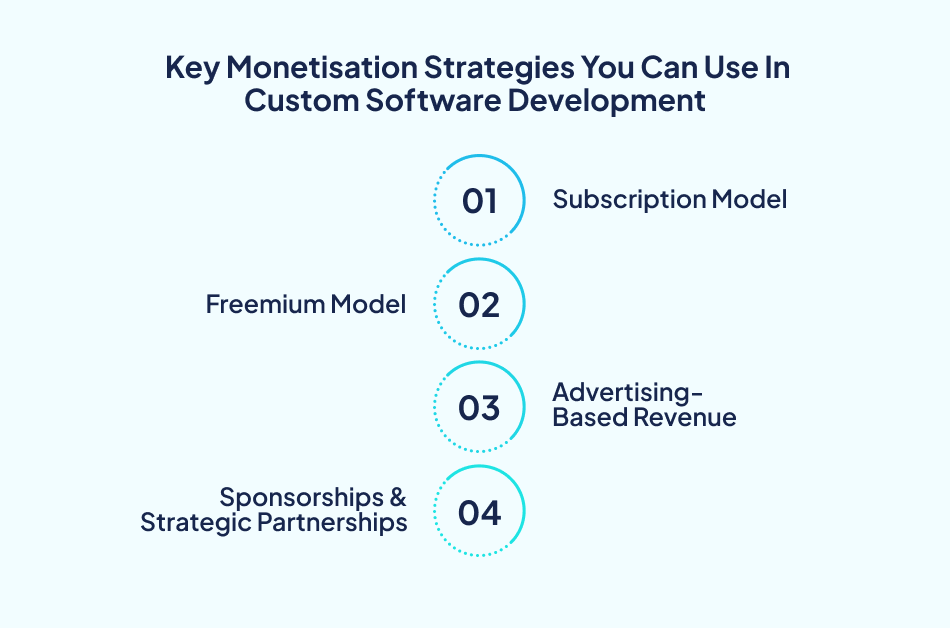
Partnership models are business models that collaborate with brands, vendors or service providers within the software ecosystem.
Projects related to custom software development can encounter typical business challenges, such as technical, operational, and financial transactional issues.
Tailored software development is an expensive undertaking, particularly when systems involve high-end features, integration and infrastructures.
Solution
Security vices pose a threat to business information, customer confidence, and regulatory compliance on online platforms.
Solution
| Challenge | Solution |
| High Development Cost | MVP approach and modular planning |
| Security Risks | Encryption and regular audits |
| Deployment Issues | Pre-launch testing and compliance checks |
| Scalability Problems | Cloud-based architecture |
| System Compatibility | Cross-platform development and testing |
The products can be delayed in launching due to deployment problems or an increase in development.
Solution
As software usage increases, poor system architecture leads to performance bottlenecks.
A logistics firm in Sydney collaborated with a team of software developers to develop a digital platform that had the potential to automate fleet movements, orders and delivery arrangements.
Customizing software allows businesses to design their digital platforms according to their specific business, clients, and growth strategies requirements. By following a methodical approach, the process from design to development, launching to expansion stages is made much easier and more productive. Working with a reputable iOS app development company is a way for companies to bring their intricate concepts to life.
As the phase of technological advancement is an ongoing one, companies must get systems that are not only adaptable but can facilitate their innovativeness and growth. Hence, a top iOS app development company will be able to organize the process of designing and developing the software for optimisation. If you plan to invest in mobile app development, get started with us.
Q 1. How long is the average duration of a custom program to build?
Ans 1. Designing tailor-made programs can take one to nine months, depending on client requirements, internal integration, and final functionality requirements. Businesses looking for faster build cycles often recruit the best app developers Sydney.
Q 2. What kind of technology is more commonly used to develop custom programs?
Ans 2. React, Node.js, Python, and cloud-based technologies are the technologies that companies often rely on to develop software programs. Additionally, most of these types of enterprise systems include integrations with point-of-sale systems to facilitate financial transactions and support the actual day-to-day operation of a business.
Q 3. How can a company keep their custom software application scalable?
Ans 3. Creating a custom software application that can continue to expand with a company for several years requires the development of scalable architecture, cloud infrastructure, and modular development. Experienced on-demand app developers establish systems that can grow with the company.
Q 4. What are the reasons for integrating digitally in a platform environment?
Ans 4. The connection between applications, analytic tools, payment processors and POS applications creates integration. Businesses typically turn to on-demand app developers to build unified operational platforms.

Partner with us to bring your vision to life.



 +61 (42) 108-3277
 contact@7pillars.com.au
 294A Station Street,
