









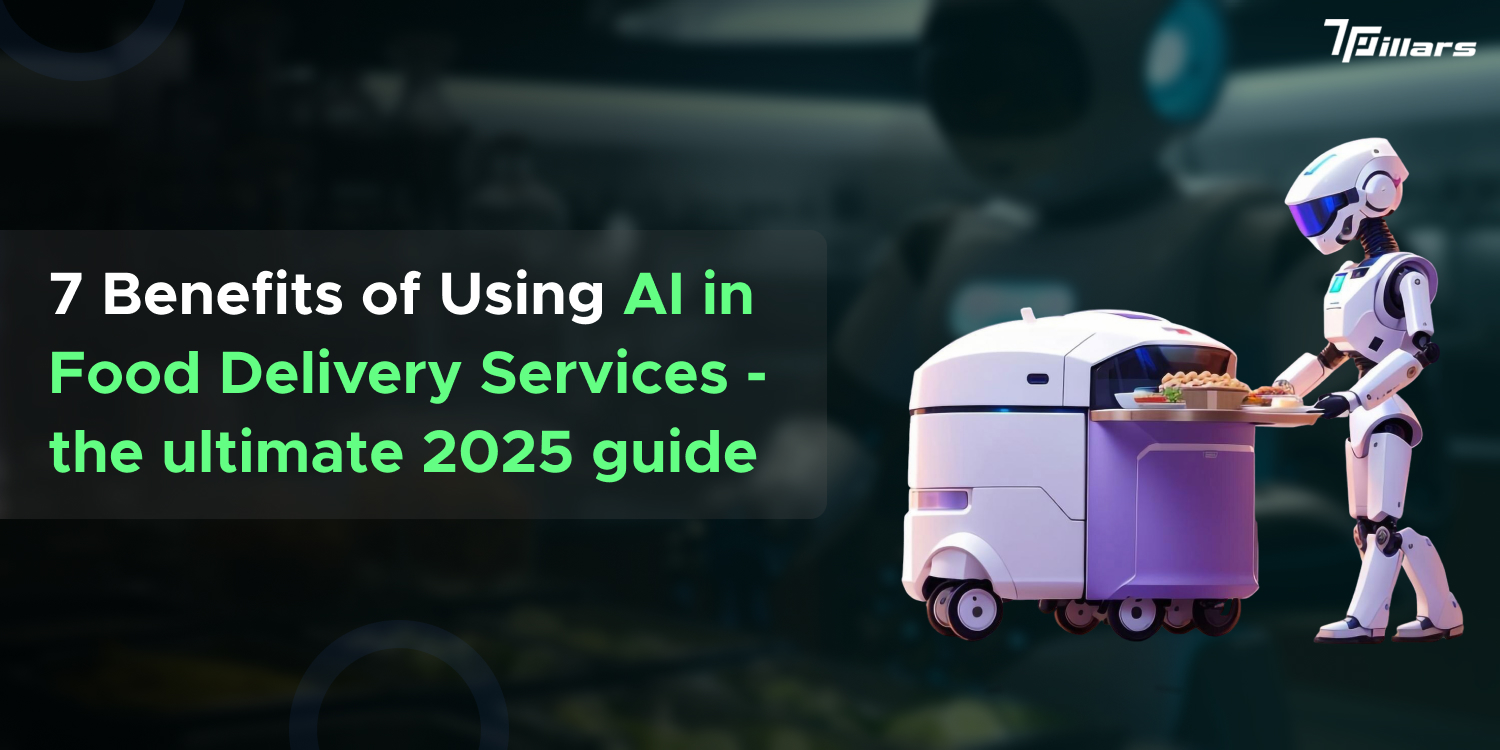



Speed is no longer sufficient in 2026 in the ever-changing environment of food delivery app development. The modern AI in food delivery applications focuses on accuracy, customisation, and foresight. Understanding the benefits of AI in food delivery apps helps you decide if you want to invest in it or not. Artificial intelligence can now decipher user desires, anticipate high demand and streamline delivery strategies with almost human precision. Being futuristic is a competitive requirement for all food delivery mobile app development companies.
In 2026, modern food delivery solutions remove uncertainty throughout the order lifecycle. AI-directed dispatch systems adjust to current traffic conditions, weather variations, and order density. These intelligent systems guarantee quicker fulfilment and less expenditure on delivery. It has led to the best food delivery app solutions that are both cost-effective and high-performance.
AI-based recommendation engines are considerably advanced. The technology constantly studies the browsing tendency, food inclinations, and time-based routines to present hyper-personalised food suggestions. Together with the innovations of a grocery delivery app development company, food and grocery platforms can now offer end-to-end AI-driven experiences in a variety of services.
What Is AI In The Food Delivery App Industry?
Utilising artificial intelligence (AI) within a food delivery app via machine learning, predictive analytics and automation will help improve the decision-making process for food deliveries. With artificial intelligence in food delivery apps will have the capabilities to grow successfully by 2026 through the ability to deliver more customer satisfaction with improved services. The benefits of AI in food delivery play a significant role in convincing clients to invest in their development.
When food delivery app users open it, AI evaluates past orders, location on the fly, time of the day, and behavioural indicators to offer applicable food choices. High-tech forecasting solutions generate the best routes to deliver meals to consumers hot and fresh. Most customer queries are being resolved immediately by AI chatbots, enhancing the response time and service reliability. In 2026, the development of food delivery apps will rely on AI to provide high-quality customer experiences.
Why Is It Important?
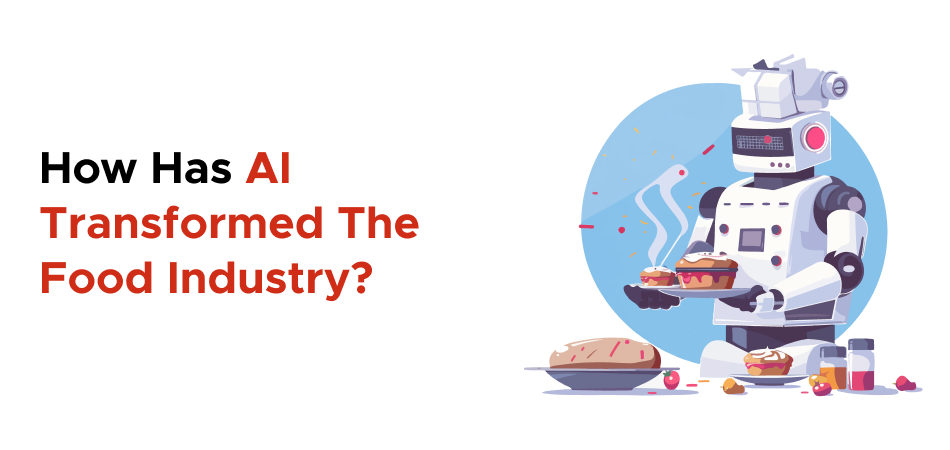
AI transforms food and enables new ways to improve operational efficiency, environmental sustainability, and customer service quality. Upgrading supply chains is the basis for individualized nutrition since AI affects how we cultivate, process, and consume food. This tremendous wave of technology will define the future of food—a more intelligent, safer, and faster innovation. AI-powered optimizations enhance the efficiency and reduce costs associated with the cheapest food delivery app solutions and creating a food delivery app. A dedicated food delivery mobile app development company can provide you with customized solutions.
1. Faster Delivery with Smart Routing
Artificial intelligence routing systems in 2026 utilise real-time traffic information, congestion forecasting and weather information to find the shortest delivery routes. These systems are flexible, real-time, and they maintain delivery times. Partnership with a food delivery app development firm reinforces automation in food and grocery logistics, such as react native food delivery app development.
2. Personalized Customer Experience
AI is providing highly customised food discoveries. The recommendation engine studies the patterns of dieting habits, recurring orders, budgeting, and seasonal trends. Menus, promotions, and restaurant recommendations are personalisation. These AI-driven optimisations enhance user interaction and operational cost savings with the cheapest food delivery apps.
3. Operational Efficiency for the Restaurant
Automation of kitchen workflow, demand forecasting and inventory management are three areas where AI is helping restaurants. By using predictive analytics, restaurants can minimise food wastage and staff levels in relation to demand during busy and slow periods. In 2026, AI will play a significant role in the development of food delivery apps that improve restaurants’ productivity and seamless delivery of orders to customers.
4. Cost Reduction
AI is an effective way to save money by eliminating human-managed inventory management, delivery path planning, and human resource optimisation. Such efficiencies enable businesses to provide competitive prices and maximise profits. The development of a food delivery app depends on the complexity of AI features and the approach to implementation.
Which 7 benefits do artificial intelligence systems deliver to food delivery companies?
The food industry receives positive influence from artificial intelligence through enhanced customer management and improved inventory handling systems. Food businesses benefit from AI technology because they deliver improved customer service while running operations more efficiently and helping maintain sustainability. AI in the food delivery application development company produces seven substantial advantages that benefit the food business as follows, also aiding those looking to build food delivery apps. A dedicated food delivery mobile app development company can turn your vision into a reality.
1. Independent Dispatch and Self-Healing Logistics
- By 2027, AI-based food delivery systems autonomously cope with disruptions without human involvement.
- AI redistributes orders immediately, recalculates ETAs and informs customers in real-time.
- Such self-repair logistics systems reduce failed deliveries, refunds and customer complaints.
- In the case of food delivery app development companies, autonomous dispatch enhances customer trust, operational efficiency, and reliability.
2. Hyper-Local Demand Forecasting
- By 2026, AI can hyper-localise demand based on micro-location data to be analysed and predict demand.
- Pre-positioning of delivery drivers and modifying restaurant availability on food delivery apps prior to orders.
- This active strategy will minimise delivery time, order success rates, and promote affordable food delivery application patterns, reducing idle time and transportation.
3. Voice & Multimodal Ordering
- In 2026, voice recognition, image upload, and chat ordering are 3 features of AIs used in food delivery applications.
- Customers can order through speech, pictures of food or AI assistants in natural communication.
- It enhances accessibility, improves ordering and conversion rates.
- Voice and multimodal interfaces are emerging as a significant component of food delivery applications, especially in the wake of smart gadgets and hands-free interaction.
4. AI-Driven Dynamic Pricing
- To render AI-based dynamic pricing models ethical, transparent, and regulation-conscious in 2026.
- The pricing is modulated based on the demand, distance, time taken to prepare meals, and whether it can be delivered without unnecessary surges.
- The strategy enhances profitability for businesses without losing customer trust.
- These AI systems help food delivery application development firms to strike a balance between revenue maximisation and user satisfaction and retention.
5. Personalized Marketing Campaigns
- Through AI customer data analysis, food businesses can produce specific marketing techniques for assessing market patterns.
- Organizations that examine their customer base understand their preferences and habits, so they develop custom offers that appeal directly to specific audiences.
- Tailored marketing approaches produce more vigorous customer participation, which brings better sales performances for organizations and their clients.
- The evolution of food delivery app development benefits from AI-driven technologies to achieve higher-quality and safer food delivery service, supporting those looking for an on-demand food delivery app development company.
6. Reduced Operational Costs
- Food businesses benefit from AI technology through operation streamlining, which reduces costs in various aspects of the company.
- AI-based inventory management systems, together with self-operating customer support tools and optimized delivery route systems, make businesses significantly more efficient and allow them to reduce their operational expenses.
- AI systems that analyze future customer activity periods help companies optimize their workforce schedule, decreasing operational costs.
- By working with a grocery delivery app development company these AI-powered food and grocery experiences can help you reduce the costs.
- The cost to develop a food delivery app depends heavily on the choices you make.
7. Carbon-Conscious Delivery Optimisation
- Food delivery optimised by AI not only in terms of speed but also in terms of carbon emissions.
- In 2026, AI systems organise orders efficiently, choose greener routes and even promote green delivery services.
- This carbon-conscious optimization can help food delivery companies reduce their environmental footprint without eliminating appeal to sustainability-oriented users.
- It also supports the development of food delivery apps in accordance with international sustainability objectives and regulatory requirements.
- Carbon conscious delivery optimisation is one of the benefits of AI in food delivery that has encouraged clients to invest in the growing technology.
7 Food- Industry Specific Benefits
1. AI for Food Safety
The detection of contaminants, monitoring, storage conditions, and prediction of food risks occur through Artificial Intelligence systems to ensure food safety. Computer programs examine data patterns to identify harmful elements that lead to health regulation compliance. AI-based inspection technology surpasses human inspections by detecting spoiled foods and contaminants at higher speeds, which assists in reducing the occurrence of food illness outbreaks, including react native food delivery app development.
2. AI for CPG Companies
Research shows that consumer packaged goods (CPG) companies implement artificial intelligence (AI) to enhance their supply chain operations, consumer-oriented supply chain services, and demand predictions. AI analytical capabilities help companies perfect their future products because they assess market and consumer behavior statistics. Through automation, companies achieve enhanced manufacturing capabilities, which deliver decreased prices alongside superior quality management systems. The performance of cheapest food delivery app solutions increases through AI optimization resulting in lower costs and enhanced operational effectiveness.
3. AI for Supply Chain Management
Through artificial intelligence systems, supply chains can predict market changes, optimize stock management, and eliminate waste, gaining better performance. Real-time tracking through automated logistics systems can prevent delivery delays and product spoilage. AI-related insights allow organizations to cooperate with retailers, suppliers, and manufacturers to improve food supply efficiencies, including creating a food delivery app.
4. AI for Crop Management
Farm operations benefit from AI by modelling system assessments of soil conditions, predicting weather patterns, and observing plant health. Field monitoring through AI drones and other sensors in precision agriculture finds real-time errors, leading to reduced losses and better operational results. New technology will allow farmers to decrease pesticide and water usage and develop better-quality harvests. The cost to develop a food delivery app changes with the choices you make.These benefits of AI in food delivery helps encourage clients to invest in it.
5. AI for Food Delivery
By implementing optimized route planning systems, demand prediction software, and personalization features, food delivery services increase operational efficiency through AI. By analyzing customer behavior, machines understand order trends, further assisting food delivery app industries in suggesting dishes. With the help of chatbots and voice assistants, AI systems improve user service for smooth and efficient experience delivery to consumers, making it easier to build food delivery apps with the support of an on-demand food delivery app development company.
6. AI for Restaurant Management
The algorithm applied here is envisioned as a solution in hospitality operations, assisting with automating inventory management and recommendation systems for family consumers. Menu analytics provide visibility into the nature of the items sought after to ensure the constant availability of popular items. Restaurants enhance efficiency through robotic chefs alongside automated cooking systems, which reduce waiting periods and generate better guest satisfaction. Food and grocery services benefit from AI-driven experiences when they work with a grocery delivery app development company, including react native app development.
Challenges of Implementing AI in the Food Delivery App Industry
AI is transforming various sectors, including food delivery apps. Yet, the effective implementation of AI for food delivery apps is not without its challenges. These must be addressed to facilitate smooth technology adoption and improve the customer experience for those looking to build food delivery apps. The utilization of AI-powered optimizations in cheapest food delivery app solutions leads to improved operational efficiency and decreased expenses.
|
Challenge |
Description |
AI Impact |
Key Consideration |
|
Data Privacy & Security |
AI apps collect sensitive user and payment data |
User trust, compliance |
Strong encryption and data protection |
|
Delivery Prediction Accuracy |
AI predicts routes using traffic, weather, history |
Logistics efficiency |
Continuous model updates for accuracy |
|
System Integration |
AI must work with legacy systems |
Operations stability |
Smooth compatibility and minimal disruption |
|
Implementation Cost |
High cost of AI tools, training, and maintenance |
Budget management |
Focus on high-ROI AI features |
|
Customer Satisfaction |
AI-driven recommendations must match user expectations |
Personalization |
Adaptive learning for changing preferences |
|
Ethical & Bias Issues |
Biased training data may affect fairness |
Service equality |
Bias-free models and ethical AI design |
Future Of AI In The Food Industry
The food application development company uses artificial intelligence as an advanced technological power that alters food production through all process stages, from cultivation to consumption. In the future, the food industry will evolve further with AI technology by improving sustainability, production, and customer interactions to become more efficient and more innovative, including react native food delivery app development.
1. Artificial Intelligence in Food Manufacturing
AI has enhanced food production to an even greater level than previously, improving crop health status and yield forecasts, as well as optimising the use of fertilisers and water. Immediate decision-making, output, sustainability, and AI-controlled robots work together to increase harvesting accuracy and minimise labour, which is facilitated by machine learning. Understanding the future helps you enjoy the benefits of AI in food delivery apps.
2. Food Safety and Quality
The quality and safety of food depend on the use of AI systems that will identify contaminants, anomalies, and packaging flaws using high-resolution imaging. Predictive analytics detects the risk patterns at the very beginning, allowing manufacturers and creators of food delivery apps to overcome problems and fulfil the standards.
3. Personalized Nutrition and Customer Experience
In the food delivery application development company, AI advancement will prioritize individualized service development in the future. Artificial intelligence enables companies to process consumer data to develop customized dietary suggestions that match client nutrition standards and health requirements. AI currently services restaurants and food delivery platforms through chatbots and virtual assistants, thus creating more efficient customer interactions. Companies that choose to work with on-demand food delivery app development specialists will gain enhanced capabilities through artificial intelligence systems.
4. Sustainable Practices for a Growing World Population
AI is an essential tool in creating sustainable production for the world’s increasing population through inventory management, minimising food waste, and innovative packaging techniques to extend shelf life. The use of AI allows food delivery services to meet the growing demands of their users.
Conclusion
By 2026, AI will have transformed food delivery into an interactive, faster and more sustainable ecosystem. Intelligent systems now bring efficiency, personalisation, and scale-resilient systems, based on autonomous dispatch to hyper-local demand prediction. To contemporary businesses, AI has ceased to be an option but a strategic pillar in long-term development and competitive strength amidst dynamic digital food platforms. Understanding the benefits of AI in food delivery helps you prepare for the future innovations.
By collaborating with the appropriate food delivery application development firm, these AI capabilities can help in a safe and efficient way. A brilliant plan can help companies reduce costs, impress clients and grow rapidly in competitive markets. Exempt from future-proofing your platform? Get in touch with Contact 7 Pillars today to create an AI-based food delivery system to meet your business objectives.
FAQS
Q 1. What about iOS developers who support AI-driven food delivery apps?
Ans 1. An expert iOS app developer with AI capabilities such as intelligent routing, personalisation, and safe payments into scalable iOS development to ensure easy functionality, high levels of security, and seamless user experiences across Apple devices.
Q 2. Why use POS software on food delivery platforms?
Ans 2. Modern POS software helps restaurants align their orders, inventory, and payments in real-time and find the best fit with delivery apps, eliminating errors, maximising speed, and streamlining operations in high-volume food businesses.
Q 3. Can iOS app developers integrate POS systems with delivery apps?
Ans 3. Yes, competent iOS app developers will have the ability to incorporate sophisticated software into food delivery apps, allowing real-time order processing, automated inventory management, and accurate sales tracking across multiple restaurant locations.
Q 4. How does POS software improve scalability in food delivery apps?
Ans 4. Pos software can help on a scale as it manages large volumes of orders, multi-outlet, and analytics, allowing food delivery networks to expand effectively without interfering with restaurant or customer business.

Sundeep Mann

Get in touch
We'd love to hear from you.





 +61 42 108-3277

 contact@7pillars.com.au
 Stay Inspired with our