






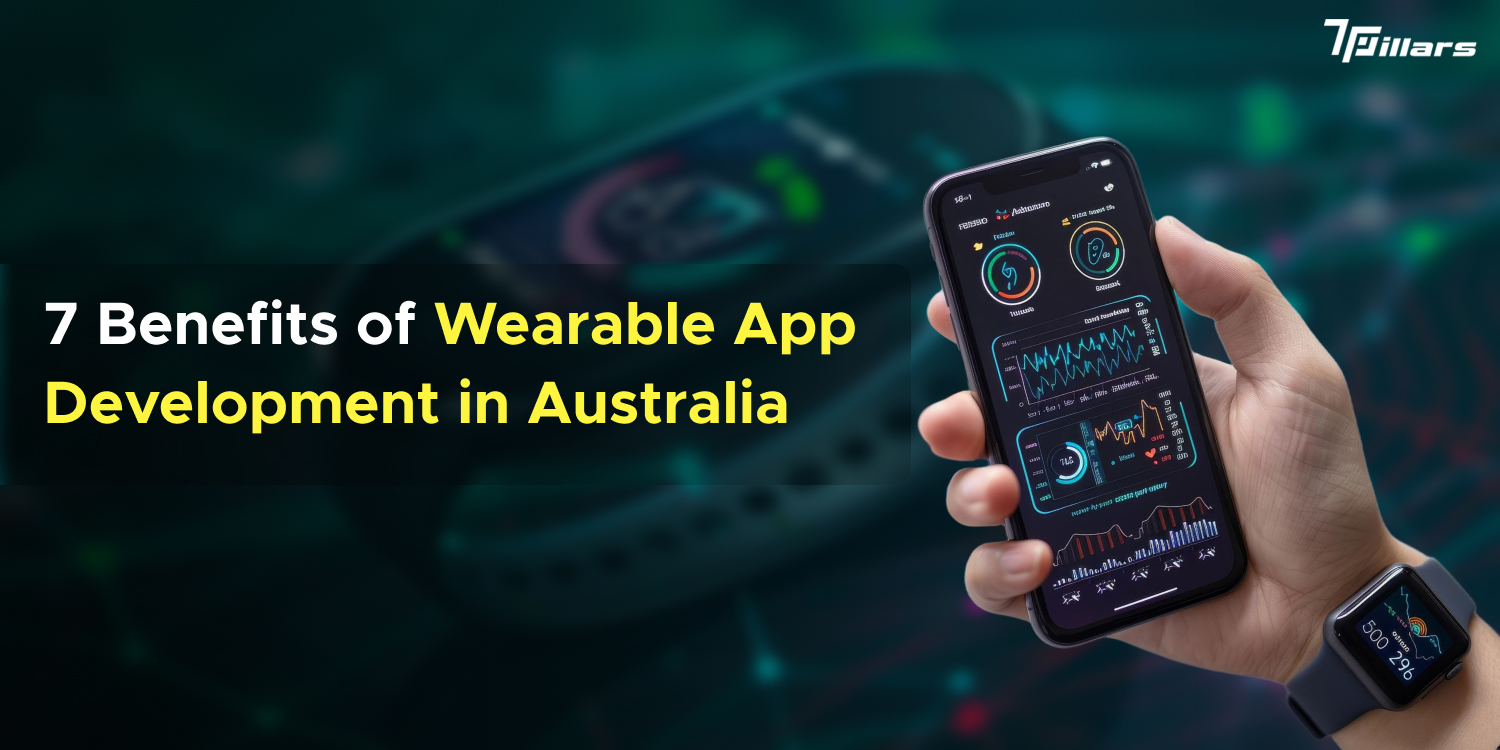



The use of wearable technology gadgets has gone on to redefine human-technology interaction into 2026. What was regarded as experimental has been integrated into the daily Australian way of life. Wearables are transforming the interaction patterns of digital ecosystem usage with AI-enabled fitness trackers analysing heartbeats and sleep patterns, through to higher-end smartwatches that allow real-time connectivity. Wearable app development in Australia has shaped the world of healthcare in 2026.
Wearable computing has ceased to be a luxury. By 2026, one wearable wrist device will record stress levels, identify abnormal heart conditions, predict medical risks depending on AI algorithms, and automatically respond without a human operator. Spatial computing has built into smart glasses, which provide an overlay of digital insights on the real world to improve productivity in healthcare, logistics, and field operations.
Wearable technology has become intelligent, efficient, and predictive automation. The developers of wearable apps are key players optimising device performance, incorporating cloud-based solutions, and providing a usable user experience. Their skills enable wearables to operate as active digital assistants, not passive devices.
AI and Cloud Integration: The Key to Personalized Wearable Technology
Wearable app development in Australia will mature by 2026, with the use of artificial intelligence, cloud computing, and real-time analytics. Fitness analytics, biometric data, AI-based applications and cloud computing have now been integrated to form a single body-mind digital ecosystem.
- The integration enables very personalised healthcare advice, personalised fitness plans, predictive injury prevention and intelligent enterprise applications.
- Wearables offer preventive healthcare, wellness in the workplace, immersive learning, and scale retail personalisation.
- Nevertheless, with the increasing sophistication of wearable technology, the issues of data privacy, ethical use of AI, and the digital frontiers are subject to further expansion.
Although healthcare wearable apps promise boundless opportunities, they also come with a set of challenges associated with data ownership, consent, and compliance with the constantly changing laws of Australian privacy.
What Is Wearable Technology?
Wearable technology encompasses devices meant for body-worn use that integrate advanced sensor capabilities, connectivity features, and applications to execute multiple tasks. Companies produce three main types of wearable technology: fitness trackers and smartwatches, smart glasses, and health monitoring wearables. Wearable technology exists to streamline everyday activities with enhanced health monitoring systems that operate through interconnected devices that adapt quickly to user lifestyles.
Developers now create high-end wearable applications that track vital signs while monitoring physical movement and trigger live notifications. The growing need for personalized wearable technologies requires companies to collaborate with specialists who develop wearable applications. Wearable app developers create optimized applications that exploit wearable hardware specifics while delivering enhanced user interactions.
A partnership with an expert wearable mobile app development company provides businesses and individuals with secure, innovative applications tailored for wearable technology optimization. These companies define a vital segment within the wearable tech industry, enabling the development of the upcoming generation of healthcare wearable apps and connected brilliant experiences.
Key Stats Showing The Growth Of Wearable Apps and Technology In Australia
1. Growing Market Adoption
The Australian wearable technology market is expected to keep growing rapidly in 2026, with more than 6.5 million Australians consistently wearing smartwatches and fitness trackers. It is driven by increasing health awareness and demand for hands-free digital activities. The industry is projected to grow 18% in 2026. A wearable mobile applications development firm is an essential factor in helping this growing market.
2. Explosion in Smartwatch Sales
Ownership of smartwatches in Australia has risen by over 35% as compared to 30% a few years ago. Customers appreciate high health capabilities, such as ECG, sleep and AI-guided health insights. Such smartwatch functions are crucial health partners and not accessories.
3. Increasing Health and Fitness Trend
Health and fitness are what make wearables popular. Wearable technology helps Australians track health, chronic illness, and overall well-being. Today, there is also an increase in the use of wearable technology to monitor mental health, improve rehabilitation, and develop preventive health care plans over an extended period.
The Need For Wearable Technology
Modern life consists of wearable technology, which delivers crucial benefits that reduce barriers such as inefficiencies and promote wellness and increased performance levels. Wearable health apps and other medical devices observe vital signs and record physical movements and health statistics to help people achieve improved health and enhanced work scope. Which components make us need wearable device technology? Let’s dive into the reasons.
1. Health Monitoring and Wellness
The major strength of wearable technology stems from its capability to track personal health indicators. The combination of fitness trackers alongside smartwatches gives users comprehensive monitoring powers to track heart rate alongside blood oxygen levels and sleep patterns simultaneously. Real-time health data on your wearable tech devices allows users to track their health status and identify developing medical issues ahead of time. Wearable technology delivers a crucial proactive health system that empowers users to better deal with chronic diseases and achieve better general wellness outcomes.
2. Enhanced Productivity and Connectivity
Modern wearables enable users to enhance work efficiency by delivering valuable data at their fingertips. Modern smartwatch technology lets people view notifications, check their emails, and set events without the need to handle their smartphones. Constant connectivity lets users stay updated on everything anywhere they go, improving their daily operational effectiveness. The increasing market requirement for wearable mobile app development company solutions has emerged to build uninterrupted integrated experiences that users need across numerous industries.
3. Fitness and Activity Tracking
Wearables function as fundamental fitness-tracking instruments that help users monitor their progress. These wearable devices track your steps, calorie expenditure, and workout intensity to deliver instant performance improvement data. Healthcare wearable apps and other wearable tech devices supply key data to various fitness levels, including everyday gym enthusiasts and competitive athletes who need them to reach their movement objectives.
4. The Role of Wearable App Development
The development of wearable technology drives an increased requirement for applications tailored to these devices. A wearable app development service provides customized solutions that align wearables with exclusive user needs. Companies specializing in wearable app development take a key role in building applications and features to enhance wearable devices beyond their basic capabilities toward personalized, seamless operations.
5. Safety and Emergency Assistance
Wearable technology has developed new capabilities to help users maintain personal safety. GPS tracking capabilities, fall detection, and emergency alerts are also built into various devices. Wearables contain a safety mechanism that triggers automatic notifications to emergency services and preselected contacts if their wearer experiences a fall or needs help. The emergency notification feature ensures safety for several user groups, including senior citizens, active users, and people with medical requirements, since it lets them reach help instantly.
6. Entertainment and Media
Wearable technology is reshaping our relationship with entertainment, fitness management, and productivity enhancement. Through smart glasses or smartwatches, a user can access media without a screen and instantly access music, podcasts, and probably other media. With hands-free entertainment, users can maintain continuous engagement with media while working out, traveling, or performing regular chores, free from the entrenched tether to smartphones and tablets.
Planning a Wearable App?
Get clarity on device integrations, sensors, battery performance and estimated development cost before you start building.
Role Of Wearable App Development Company
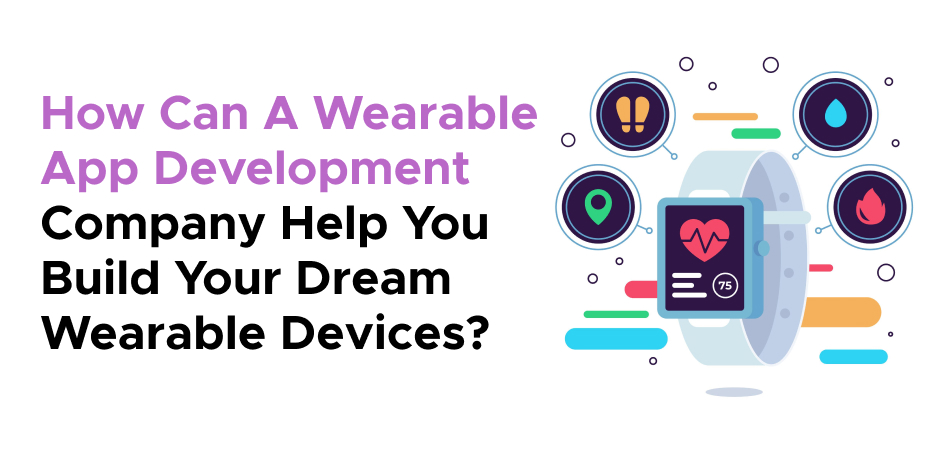
A wearable mobile app development company builds applications for wearable device technology that operate smoothly with smartphone integration and other platforms. These companies enhance consumer experience, system functionality, and application speed. Under their custom solutions, these companies deliver wearable technology that improves business efficiency, monitoring, and user engagement. Wearable app developers contribute to developing innovative solutions by ensuring smooth device connectivity and performance optimization among multiple devices.
Introduction to Wearable App Development
Digital technology experiences transformation because wearable innovations allow users to interact with smart devices across various medical tools, fitness monitors, and smartwatches. The demand for wearable gadgets has triggered a corresponding surge in requirements for specific applications that function properly with these devices. A wearable app development service develops innovative software solutions that deliver the maximum value potential for wearables.
|
Focus Area |
What Do They Do? |
Business Benefit |
|
Seamless UX Design |
Optimize interfaces for small wearable screens |
Smooth user interaction |
|
Device & Platform Integration |
Connect wearables with mobiles and cloud systems |
Unified digital experience |
|
Custom Business Solutions |
Build apps for wellness, healthcare, logistics |
Industry-specific efficiency |
|
Real-Time Notifications |
Enable instant alerts and updates |
Faster user response |
|
Support & Maintenance |
Provide updates, fixes, and security patches |
Long-term app stability |
Benefits of Wearables for Different Industries
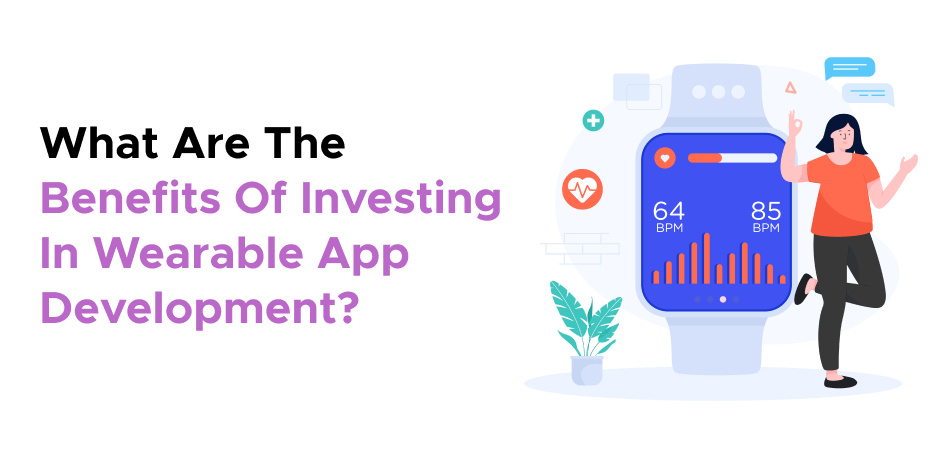
Wearable technology has become a widespread solution that delivers efficiency enhancements, user experience improvements, and innovation solutions to various industries. It is a fundamental operational tool across healthcare and retail infrastructure to remake procedural systems and delivery models. This section presents significant advantages of wearables across multiple sectors.
1.
1. AI-Driven Predictive Health & Mental Wellness
Wearable technology advances to predictive health intelligence in 2026. High-tech AI processes long-term biometric data, sleep patterns, stress levels, and heart rate variability, to identify developing health threats. Wearables have become the origin of proactive notifications and custom wellness advice, recovery advice and mental health counselling.
It assists users to avoid burnout, chronic conditions and balance health. For businesses and healthcare providers, predictive wearables can facilitate early intervention, enhance results, and implement effective data-driven wellness programs.
2. Manufacturing: Enhancing Worker Safety
Manufacturing facilities utilize wearable technology to monitor employees’ health and safety status. Smart helmets and safety vests possess built-in detection systems that signal workers about dangers like loud operational conditions or toxic chemical environments. Healthcare wearable apps and other wearables automatically monitor worker fatigue, prompting workers to schedule rest breaks before accidents occur. Companies that integrate wearable technology into their safety protocols will boost workplace safety levels while lowering accident counts.
3. Retail: Personalizing the Shopping Experience
Customer polling through wearables allows retailers to deliver individualized products that improve their shopping experience. Augmented reality glasses on smart devices enable customers to preview products visually through virtual demonstrations and test products virtually while receiving location-specific deals. Wearables use tracking features to observe customer activities, providing retailers with valuable information about their tastes to launch directed promotional activities. A wearable application development organization develops these tailored experiences by creating intuitive and secure applications within the retail infrastructure.
4. Fitness and Sports: Optimizing Performance
The fitness sports field depends heavily on wearable technology because these devices make it possible to track athletic achievements while monitoring workout development and facilitating injury protection. Tracking metrics like heart rate with smart wearables allows athletes to refine their training schedules by measuring their heart rate, calorie consumption levels, and step counts.
These wearable technologies show when recovery is needed, which helps athletes avoid overtraining and stay injury-free. Hence, these modern tech systems allow athletes and their trainers to base their choices upon data for reaching peak results.
5. Logistics: Streamlining Operations
Logistics breakneck operations benefit from the real-time tracking capabilities of shipments, workforce members, and inventory components that wearables provide. Workers using smart glasses and wearable scanners can access vital information without manual hand involvement, which improves workplace efficiency. The devices offer warehouse and loading dock navigation features that decrease task execution duration and enhance operational effectiveness. The development of tailored solutions for wearable technologies in the logistics sector relies heavily on the expertise of a wearable app development company.
6. Education: Enabling Interactive Learning
Travel technology revolutionizes education by delivering interactive digital learning platforms that fully engage students. Through smart glasses and virtual reality headsets, students can enter virtual domain structures that provide improved education in history, science, and engineering. Wearable device technology tracks students’ physical activities and mental focus within the educational space to generate critical knowledge for academic staff.
7. Finance: Enhancing Mobile Payments
The finance industry uses wearable smartwatches to support immediate mobile payment transactions. Wearable technologies can embed advanced security systems and fast eCommerce capabilities to enable immediate digital transactions that eliminate physical payment methods. The technology protects the security of transactions by employing biometric identification methods, including fingerprint or face recognition, which combines superior safety with user-friendliness.
8. Context-Aware Wearables for Smart Environments
By 2026, wearable technology will adapt automatically to a user’s surroundings, whether that is their environment, location, or activity. This adaptation occurs in real time through the utilisation of artificial intelligence and environmental sensors built into wearable technology, which allows wearables to automatically adapt to notifications, security access, and health alerts.
Without any added complexity, wearables will enable users to interact seamlessly with one another throughout their smart premises, smart cities, and connected digital environments.
Challenges in Wearable App Development In Australia
Wearable device app development faces complex roadblocks because these devices restrict developers and present specific functional needs. A wearable app development company encounters the following fundamental problems when developing optimized applications.
|
Challenge |
Core Issue |
Why Does It Matter? |
|
Limited Screen Size |
Designing clear, clutter-free interfaces |
Easy data interpretation |
|
Battery Life |
Balancing performance with low power use |
Longer device usability |
|
Device Compatibility |
Supporting multiple devices and OS versions |
Wider user reach |
|
Data Security |
Protecting sensitive personal data |
Privacy and compliance |
|
User Experience |
Ensuring smooth use during movement |
Higher engagement |
Future Of Wearable App Development In Australia
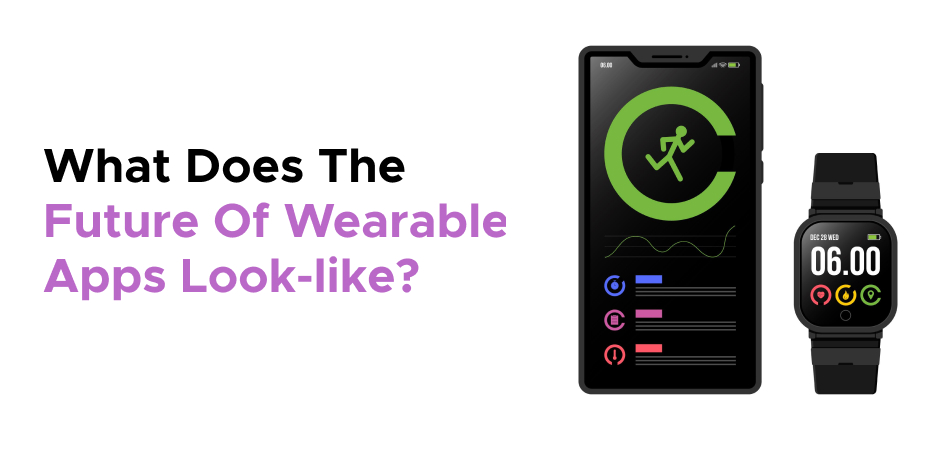
The Australian wearable technology market is expanding quickly thanks to continuous advancements in therapeutic, fitness, and lifestyle applications. Wearable app development service has promising prospects as demand continues to rise exponentially.
1. Growth in Healthcare Applications
Wearable devices continue to establish their importance as essential healthcare instruments for remote patient care throughout Australian health networks. Digitalization is transforming Australia as wearable application development companies must establish themselves as critical developers of healthcare monitoring applications that assist with real-time disease management and vital sign tracking between patients and healthcare providers.
2. Integration with Smart Cities
The next stage of wearable application development in Australia will mean deep integration with innovative city systems. Wearable technology can link to city systems, improving transportation services and delivering on-demand public information while enhancing urban living. A wearable device technology and application development organization plays a fundamental role in creating solutions that connect wearable gadgets with innovative city platforms.
3. Enhanced Fitness and Sports Tracking
Australia’s expanding fitness culture influences wearable applications toward the ongoing development of health-tracking features. The future of wearable apps will bring heightened sophistication with capabilities that deliver analytical performance metrics and adapted workout plans that enable users to monitor their improvement more effectively. Wearable tech devices will be the major catalysts in delivering those capabilities to users with much lengthier accuracy and personalized health insights.
4. Improved Data Security
Because they store sensitive user information, future wearables demand robust data privacy and security protection solutions. Device security will advance in the future of wearable app creation, including flutter apps, by implementing increased protection through encryption concepts and enhanced security measures to accompany privacy regulation standards.
Build a Wearable App People Actually Wear Daily
From device SDKs to health data, notifications and companion app design, we help you make the right decisions from the start.
Conclusion
There is also strong evidence that wearable tech has potential for substantial growth in all aspects of health and fitness, logistics, and enterprise operations in Australia. Current challenges to adoption do not outweigh the benefits of continual innovation and increased affordability. The experience and credibility of skilled wearable mobile app development companies enable your company to turn concepts into commercially viable, secure, performance-based digital solutions.
7 Pillars is an app development company that specialises in designing low-cost, future-proof wearable devices. If your company plans to create a new or additional wearables application, 7 Pillars is the place to go for all of your development needs. We have the professional expertise and innovative ideas to assist your business throughout the entire process of developing wearable applications.
FAQS
Q 1. How do wearable apps integrate with healthcare systems?
Ans 1- Secure APIs are the means by which wearable apps can be linked to healthcare platforms, allowing them to monitor their health in real time, synchronise data, and analyse the data. Experienced iOS app developers ensure that it easily integrates with the hospital systems and patient management tools.
Q 2. Will wearable applications allow for enterprise automation in 2026?
Ans 2- Wearable application solutions help to form the basis of enterprise automation through a hands-free interface with real-time data and the ability to integrate other systems. IOS application developers connect wearables to POS applications to improve workflows, increase accuracy, and provide decision support to users.
Q 3. Why should businesses hire professional wearable app developers?
Ans 3- Professional developers develop scalable, secure and high-performance apps on wearables. Expert iOS app developers provide compatibility, easy design, and long-term support for Apple wearable ecosystems.
Q 4. How does wearable technology benefit business operations?
Ans 4- Wearables technology helps companies become more efficient, create a safer workplace, and accurately collect data across industries. In addition, once integrated with POS systems, wearable technology provides companies with quicker transaction capabilities, real-time access to data, and improved decision-making capabilities for contemporary organisations.

Sundeep Mann

Get in touch
We'd love to hear from you.



 +61 42 108-3277

 contact@7pillars.com.au
 Stay Inspired with our