



📌 Key Takeaways
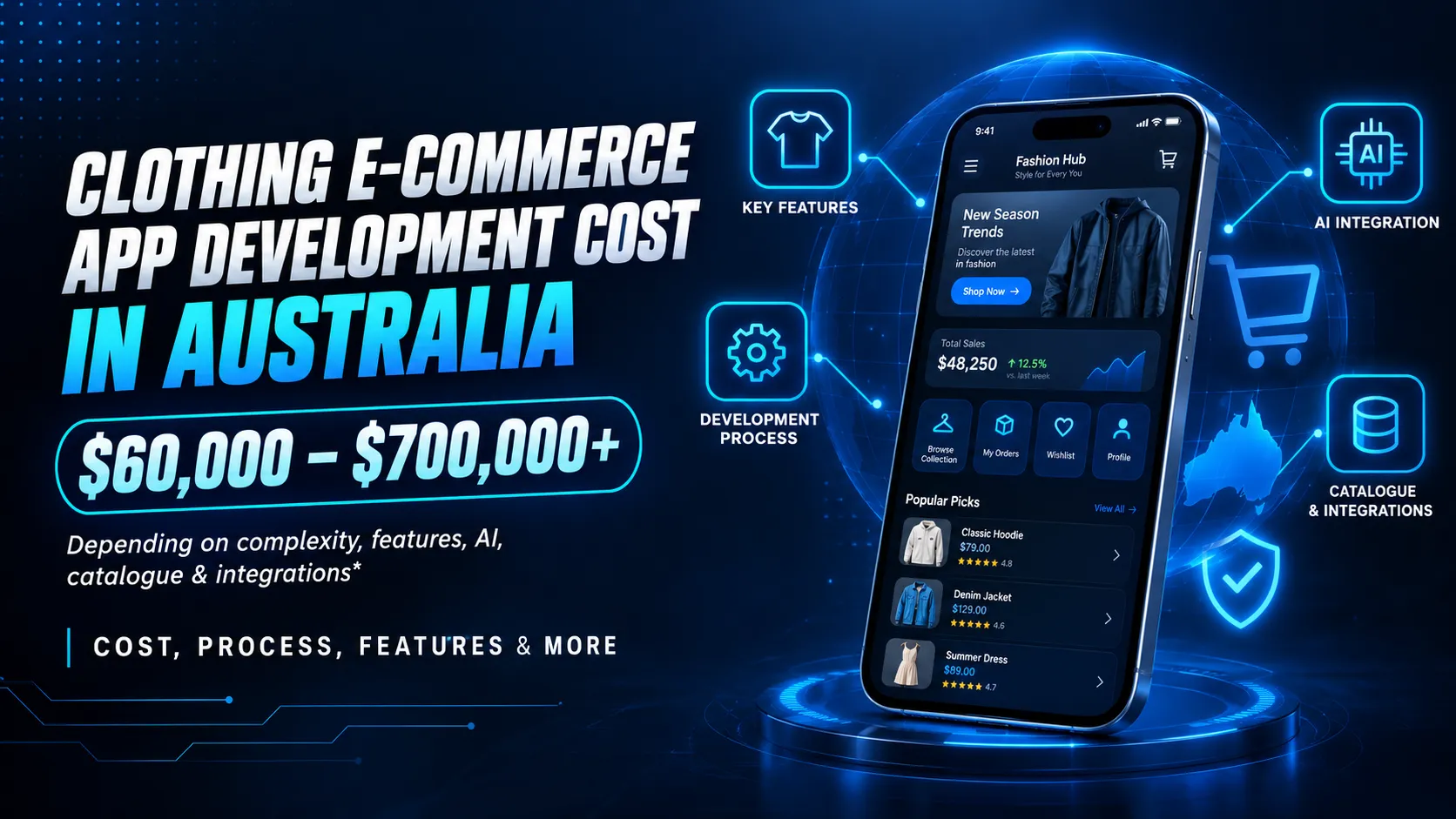
- Building a clothing ecommerce app like Shein in Australia can cost $40,000 to $700,000+, depending on complexity.
- A basic clothing store app can start from around $25,000, while advanced Shein-style apps can exceed $200,000.
- AI personalisation, large product catalogues, backend architecture, UI/UX, integrations, and platform choice are major cost drivers.
- Budget for ongoing expenses such as hosting, payment fees, APIs, security, catalogue management, and post-launch maintenance.
- An MVP, cross-platform development, established APIs, and phased AI implementation can help control the initial investment.
The cost to develop clothing e-commerce apps like Shein typically ranges from $40,000 to $700,000+ in Australia. However, the cost does not have fixed criteria to be calculated. It depends upon several factors such as the catalogue size, required AI features like a recommendation engine, UI/UX, integrations and the cost of the development team.
In this blog today, we shed light on the topics revolving around the cost to develop an ecommerce app like Shein. We’ll cover the following:
- Typical cost ranges for major clothing app types.
- Factors affecting the overall ecommerce app development cost.
- Hidden costs after the ecommerce application development.
- Ways to reduce ecommerce mobile app development cost.
- How a reliable developer can help you build a successful ecommerce app within your budget.
Before delving into factors, let’s have a quick look at the types of online clothing apps like Shein and their prices based on their complexity.
| App Type | Complexity | Indicative Cost Range (AUD) |
| Basic Clothing Store App | Low to Medium | $25,000 to $50,000 |
| Mid Tier App with Personalisation and Wishlist | Medium | $50,000 to $90,000 |
| Jewellery or Niche Shopping App | Medium | $40,000 to $80,000 |
| Full Shein Style App (AI recommendations, large catalogue, multi-vendor) | High | $100,000 to $700,000+ |
These are indicative price ranges to develop different online shopping apps. Accurate estimates depend on the catalogue size, design, integrations and the engagement model. Moreover, the table below shows the approximate share of cost as per all development stages.
| Development Stage | Approx. Cost Share |
| Research & UI/UX | 10–15% |
| App & Backend Development | 40–50% |
| AI & Data | 15–25% |
| Testing & Deployment | 10–15% |
| Post-launch maintenance | 15–25% annually |
Now, let’s discuss the factors that affect overall cost calculations.
Key Factors That Affect the eCommerce Mobile App Development Cost
The exact cost to develop an ecommerce app like Shein depends upon certain factors, such as:
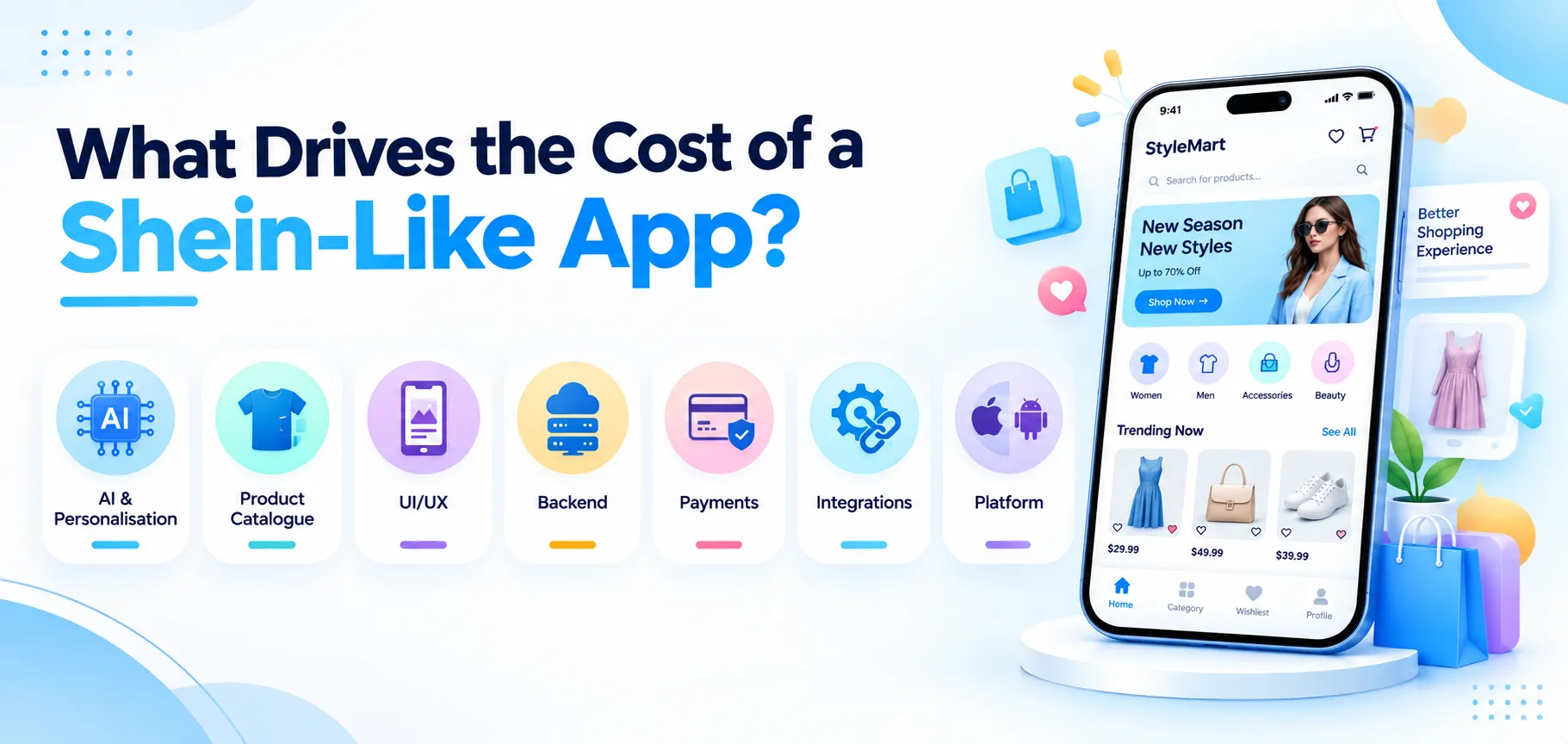
Shein runs thousands of products with variants for size, colour, and style. The bigger and more complex your catalogue, the more backend work goes into search, filtering, and inventory management, and that adds to the costs of developing such applications.
AI-Powered Recommendations and Personalisation
This is one of the features that made Shein feel almost addictive to browse. Building a recommendation engine that actually learns from browsing and purchase behaviour is a genuinely complex piece of ecommerce app development, not a simple add-on feature.
Number of Features
The features you decide to include in your app are another major cost driver. The more features, the higher the cost. Moreover, the complexity of these features also ends up influencing the overall ecommerce mobile app development cost.
Platform Choice
Choice of platform also determines what you will pay in the end. Native apps require duplicate efforts for each platform, whether it’s for Android or for an iOS app development project. Nevertheless, a cross-platform option is more cost-effective, as it requires a single codebase to be used for both platform builds.
Payment Gateway and Checkout Complexity
A smooth one-tap checkout, multiple payment options, and buy support now pay later services all add to ecommerce application development time, but they’re also exactly what keeps cart abandonment low in a fast fashion style app.
Backend and Inventory Architecture
A large, fast-moving catalogue needs a backend built to handle constant stock updates without breaking. This matters more here than in a typical ecommerce mobile app development project, since fast fashion inventory turns over so quickly.
UI and UX Design
Shein’s interface feels effortless to scroll through, and that’s the result of serious design work that might have taken months or years to evolve. Custom UX built around how people actually browse fashion tends to cost more than a template, but it also tends to convert better.
Third-Party Integrations
Shipping providers, payment processors, and marketing tools all need integrating, and each one adds a bit more time and sometimes ongoing fees on top of the base build.
Development Team Location
If you’re working with an Australian ecommerce mobile app development company or have hired an offshore team, the cost may vary. Developers charge as per their expertise and experience, so their charge rates may vary.
Picking the right combination of these factors is really what decides whether your project lands closer to the basic end of that table or the full Shein-style build at the top. Now, let’s have a look at how much it will take to develop an ecommerce app like Shein.
How Long Does It Take to Build an App Like Shein?
The timeline to develop an online shopping app like Shein typically takes anywhere from 8 weeks for a basic store app to over a year, depending on your requirements.
| App Type | Complexity | Typical Timeframe |
| Basic Clothing Store App | Low to Medium | 8 to 12 weeks |
| Mid Tier App with Personalisation and Wishlist | Medium | 12 to 18 weeks |
| Full Shein Style App (AI recommendations, large catalogue, multi vendor) | High | 20 to 30 weeks |
| Jewellery or Niche Shopping App | Medium | 10 to 16 weeks |
What are the hidden costs involved in developing an ecommerce app?
The quote you get for building the app rarely covers everything you end up spending once the app is actually live. So, let’s have a look at the hidden costs involved in ecommerce mobile app development.
Hosting and Server Costs
A growing product catalogue and rising order volume both need more storage and bandwidth, and that bill climbs quietly as your app gets more popular, which is necessarily a good kind of problem to have.
Payment Gateway Fees
Most payment gateways take a percentage per transaction. It seems small on one sale, but across thousands of monthly orders it becomes a meaningful ongoing cost that’s easy to underestimate at the planning stage.
App Store Fees
Apple and Google both take a cut of certain transactions, and store policy changes occasionally force updates you didn’t plan for on a timeline you didn’t choose.
Third-Party API Costs
Shipping calculators, tax tools, and marketing integrations often run on usage-based pricing rather than a flat one-time fee, so the more your app actually gets used, the more these costs add up.
Security Updates and Monitoring
An ecommerce mobile app development project handling customer payment details needs ongoing security patching to keep the app secure. Skipping this to save money is exactly the kind of shortcut that becomes expensive fast if something goes wrong.
Content and Catalogue Management
Keeping product listings updated, especially for a fast fashion style catalogue that changes constantly, often needs dedicated staff time or tools, and that’s an operational cost most people forget to budget for.
Customer Support Infrastructure
Orders, returns, and sizing questions all generate support volume. Live AI chatbot development or a growing support team is a cost that stays invisible until ticket numbers actually show up.
Bug Fixes After Launch
Real users on real devices tend to find issues testing never caught. Leaving zero room in the budget for post launch fixes is one of the more common planning mistakes businesses make.
Pro Tip: You also have to reserve 10-25% of your ecommerce app development budget for its annual maintenance. This way, you can rest assured and focus on priorities better.

Ways to Reduce Ecommerce Mobile App Development Cost
You can optimise or reduce the expenses involved in developing this project. To do so, you have to follow some strategic moves that help you to invest your money efficiently and reduce unnecessary expenses.
Start With an MVP
Launch with the core shopping experience first rather than every feature you can imagine. A lean first version gets real user feedback before you spend on things nobody actually uses. Thus, you can start by considering developing an MVP first and explore how much it costs to build an MVP.
Prioritise Must-Have Features Over Nice-to-Have Ones
Wishlist and loyalty points can wait for later. A smooth browsing and checkout experience can’t. Ranking features this way keeps the initial build focused and the budget under control.
Use a Cross Platform Framework
Building separately for iOS and Android roughly doubles frontend work. Cross-platform app development using Flutter or React Native cuts that cost while still covering both app stores.
Choose Established APIs Instead of Custom Builds
Payment processing and shipping calculations are already solved problems. Building your own version from scratch instead of integrating a proven, reliable API adds cost and risk for very little benefit for your ecommerce mobile app development project.
Pick a Tech Stack That Matches Your Actual Needs
The newest or trendiest stack isn’t automatically the right choice. A stack that fits the app’s real complexity, and that your development team already knows well, avoids paying for an unnecessary learning curve.
Roll Out AI Features in Phases
Personalised recommendations are powerful but expensive to build well. Launching with a solid core app first, then layering AI in once there’s real user data to train it on, tends to work better anyway and spreads the cost out over time.
Work With a Dedicated Ecommerce App Development Service
A team that specialises in ecommerce app development services already has reusable components and experience with the exact problems this type of app runs into, which usually means fewer expensive surprises than starting from scratch with a generalist team.
How 7Pillars Can Help You Build a Successful Ecommerce App Within Your Budget?
Building something like Shein isn’t about copying a feature list. It’s about understanding what makes fast fashion shopping feel effortless, then building that experience in a way that actually fits your budget.
That’s where a dedicated ecommerce mobile app development company can help. Rather than quoting every feature under the sun, the process starts with figuring out what your business actually needs, whether that’s a lean MVP to test demand or a fuller build with personalisation from the start.
7Pillars brings hands-on experience across ecommerce app development, from catalogue-heavy platforms to niche shopping apps like a jewellery shopping app with a smaller, curated catalogue. Cost control is a major part of the process. So, cross-platform builds, phased AI rollouts, and established third-party integrations are used in order to avoid spending resources on unnecessary or less-important things. As a result, the budget goes toward what actually moves the needle for your app.
If you have any queries or doubts about this opportunity, you can talk to our experts for free by booking a free consultation call.
Frequently Asked Questions
How much does ecommerce mobile app development cost in Australia?
It depends on complexity, but basic apps start around $25,000, while a full Shein style build with AI features can go past $200,000.
What makes clothing apps like Shein expensive to build?
Large product catalogues, AI powered recommendations, and fast inventory turnover all add development complexity that a standard clothing store app doesn’t need.
Is online shopping app development cheaper with a template?
Templates lower upfront cost but limit customisation and scalability. Custom ecommerce application development costs more but fits your specific business model better long term.
What affects shopping app development cost the most?
Catalogue size, AI personalisation, platform choice, and backend complexity are usually the biggest cost drivers, more so than basic design work.
Can I build a smaller version of a clothing app like Shein first?
Yes. Starting with an MVP covering core browsing and checkout features is a common way to test demand before investing in a full featured build.

Sundeep Mann

Get in touch
We'd love to hear from you.




 +61 (42) 108-3277
 contact@7pillars.com.au
 294A Station Street,