









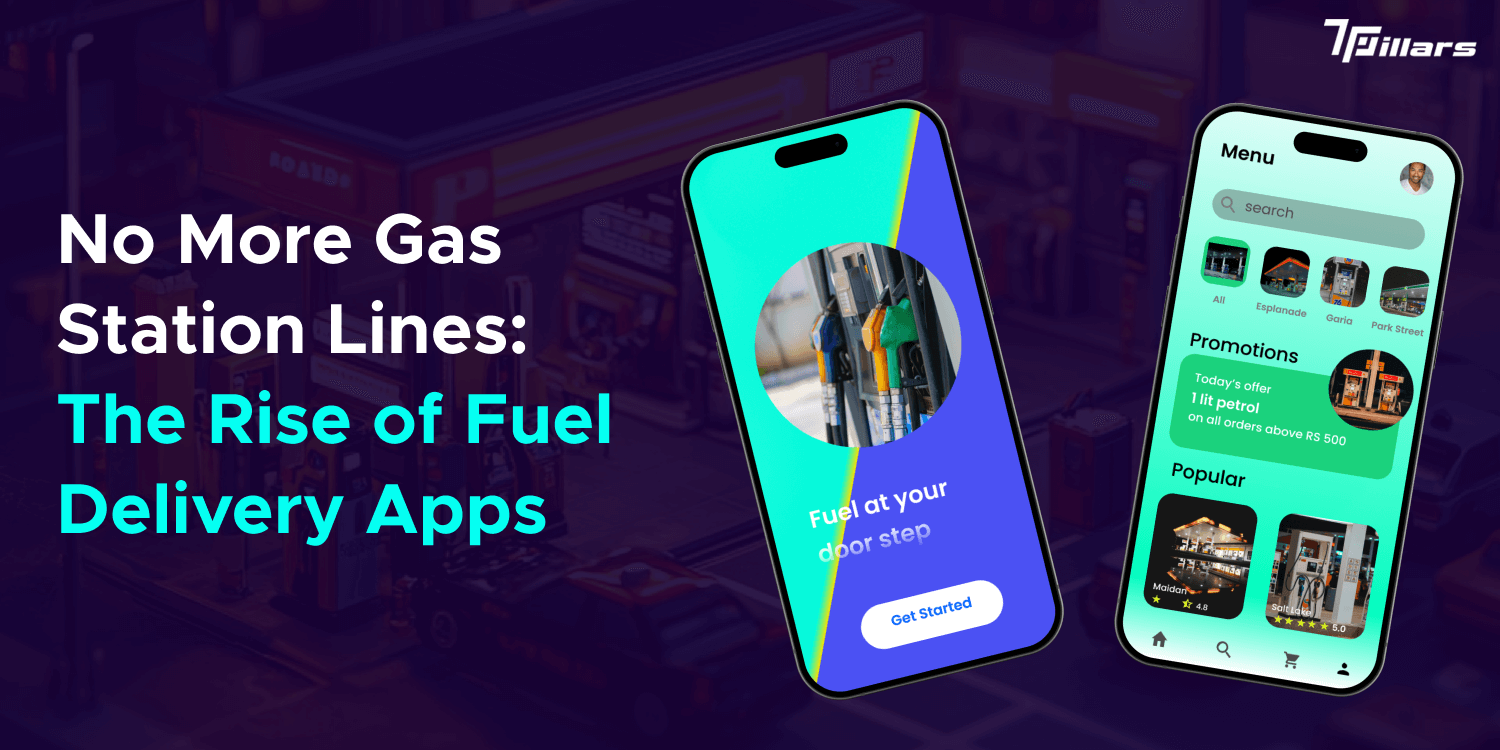



Isn’t it a breeze that you no longer have to panic, waste time and find the nearest gas station when you run out of fuel? By 2026, technology will have wholly changed how people conduct their daily activities, and one of the highly viable technologies that has contributed to this shift is the rise of fuel delivery apps. On-demand fuel delivery apps have transformed the transportation industry.
With digital convenience becoming a new standard of life, the rise of fuel delivery apps are no longer necessary. What was initially unfamiliar has become a trusted solution to which people and corporations alike are turning. Fuel is delivered right to you with a couple of taps, changing the way contemporary drivers fuel.
Convenience and time efficiency have become a must. Rather than spending hours in a queue or driving without purpose, fuel delivery applications help in maintaining continuous mobility. In the present quick-paced world, gas does not determine the timetable you follow.
Convenience Redefined: Fuel Delivery at Your Finger Tips
On-demand fuel delivery apps have considerably extended beyond food and grocery items, considering the changing mobility trends in 2026. Fuel delivery applications have become a mandatory aspect of the market for people who believe in having a fast and convenient way of filling up their cars.
You can order the fuel with your smartphone and be in the comfort of your home, office, construction site, or the roadside. It is also beneficial to working people, fleet proprietors, travelling families, and companies with multiple vehicles and tight schedules.
Fuel delivery platforms have had a chance to align themselves with the concept of sustainability. Several suppliers can provide cleaner fuel sources, route optimisation, and reductions of emissions. Users can enjoy the comforts of modern technology without reliability and safety, and make the process of refuelling solutions more environmentally responsible.
What Is A Fuel Delivery App?
Aren’t you petrified at the thought that halfway to the other city, your entire tank is empty? Thanks to on-demand fuel delivery apps, you no longer need to worry about getting fuel for your vehicles immediately, as these apps allow you to get premium quality fuel delivered to your location in no time.
A smartphone application designed for fuel delivery allows consumers to order gasoline to be delivered directly to their residence or business. Customers can now order gasoline (petrol or diesel) 24 hours a day, seven days a week, rather than having to visit a petrol station, which is very useful in emergencies, during busy work hours and when using commercial vehicles.
These applications enable users to pick fuel type, delivery time, and location, tracking and secure online purchases. Focused on individual users and businesses, the rise of fuel delivery apps will streamline the refuelling process, minimise downtimes, and enable the requirement of modern and on-demand mobility in 2026.
Most apps ensure secure payments and track the delivery process in real-time so users can monitor the ongoing process.
Do you know the number one reason why people observe such high request rates for fuel delivery apps? What is the reason fuel delivery apps are experiencing such a high rate of adoption in 2026? The answer is quickness, relief, and unparalleled convenience. These portals eliminate downtimes and make refuelling a hassle-free affair for millions of users.
In Australia, fuel delivery has experienced a robust growth in the past few years. As lifestyles evolve, city centres become congested, and vehicle numbers rise, old-fashioned refuelling practices are becoming obsolete.
With people working, travelling, and having personal obligations in Australia, fuel delivery applications have become a hassle-free solution.
Growth Of Fuel Delivery Apps-
Do you know the number one reason why people observe such high request rates for fuel delivery apps? What kind of relief and speed do such applications offer to the users is the question, indeed? With this technology, millions of lives become greatly more accessible as people can deliver fuel to their doorstep without much hassle.
Australia isn’t a stranger to witnessing such sudden growth, which is currently seen in the fuel delivery system. There has been a very active growth of fuel delivery apps in Australia in the past couple of years owing to societal requirements for change and variety in daily life. But, as the
Australians’ standard of living declines and they spend more and more time on their heels, refuelling is not as much fun. This is why fuel delivery apps have come along to enable customers to have fuel delivered straight to their doorstep or workplace through their mobile phones.
Winning Loyalty: Marketing Campaigns That Matter to Consumers
This has been driven by more significant technological growth, particularly the ability to use mobile applications. Modern stakeholders see long-term opportunities for improvement and have developed applications that target the market for better usability. Other advantages have surfaced, including tracking, the option to pay for the shipment, and eco-friendly fuel.
Moreover, the increased availability of fuel delivery services is also due to the emergence of remote work, as using cars and their fuel would allow many people to avoid additional trips. Fleet owners have adopted these services because they appreciate convenient operations and minimal breakdown periods.
Given the growing level of competition, on-demand fuel delivery apps are developing promotions and loyalty programs to attract consumers.In sum, Australia’s fuel delivery app market will continue to grow for a long time ahead and will change how Australians think about refuelling.
Key Stats Showing The Growth Of Fuel Delivery Apps In Australia-
Recent market studies suggest that the fuel delivery industry in Australia has a CAGR of about 10% in the next five years, showing growing demand for on-demand fuel delivery apps.
Over two-thirds of Australian consumers indicate their readiness to adopt fuel delivery services. The downloads of apps in this category have increased by 200% annually.
Large operators claim high participation, and 40% of fleet operators now depend on fuel delivery to decrease idle time and enhance logistics efficiency, noting its increased presence in commercial mobility.
How Does A Fuel Delivery App Work?
A fuel delivery app can be considered a navigation app since the latter helps users locate a suitable fuel vendor. This means that users can arrange to have fuel supplied to their desired place instead of going to the gas station. Occasionally, the application will offer a choice of fuel types and delivery of such fuel to the customer’s own or business use. Real-time tracking and secure payment options allow users to feel as comfortable as ever, and refueling has never been easier.
Probably, at one time or another, you’ve ever experienced being stuck somewhere because you ran out of fuel or waiting in a long, endless line just to get your vehicle refueled. If you have experienced that, you know how frustrating it would be.
This is where a fuel delivery app steps in to prove nothing less than gold. Because the fuel arrives right at your doorstep, you don’t have to waste valuable time sitting through long lines at the petrol pump. Suppose you must make an appointment or don’t have much time to wait for this exhaustive exercise while at the petrol pump. This app will also be a means of seamlessly continuing the process without using up your time.
Location Detection-
This is because fuel shipment can also be easily ordered through mobile applications. One of the easiest ways to produce is since the product can merely be a customer’s with a button on the customer’s phone. This aids ordering because clients are not forced to enter the address individually.
However, the application offers a manual entry for extra convenience. Users can set up several addresses if necessary. A two-tier strategy is in place to reach as many of them as possible out of their needs, so wherever it may be, home, work, or in-between, people can gas up whenever they require it.
Selecting Fuel Type-
In the following step, the customer marks what type of fuel he needs and how much he needs. Most fuel delivery applications already exist in the App Store and Google Play, which allows ordering various types of fuel: regular petrol, premium gasoline, diesel, and even ‘green’ fuels.
This also means that users can buy the fuel type that best works for the car in question and their tastes. Besides, the app may contain information about each fuel type to help customers make the right decisions. These apps make it possible to pick a particular fuel type, which also favours the sort of car application, thus increasing its actual value.
Refuelling-
After placing the order, the customer waits for the delivery agent to come to the agreed-upon location. They can use mobile gas filling services like most gas or petrol filling stations. Isn’t that interesting?
However, cashless payments are made after the car refuelling has been completed to offer prompt and efficient services. In addition, it is recommended that an individual seeking to undertake a business venture of transporting fuel analyze the internal and external factors of the business—the strengths, weaknesses, opportunities, and threats.
Knowing how the service will help your target customers makes your strategy easier since you have to be assured that your customers will adequately fulfill their needs in the marketplace.
Why Should You Invest In Developing A Fuel Delivery App?
Investing in a fuel delivery app taps into a trend, an escalating shift of consumer behaviors, and continuous technological advancement. The change to convenience and on-demand fuel delivery app is also redefining markets, thus creating an opportunity for innovation. When the city gets more crowded, and lifestyles get busier, an app that delivers fuel addresses needs and opportunities in the marketplace.
Moreover, your brand will be captured and relevant through these sustainable practices. With such an application, you reach potential customers and focus on the dynamic market’s pulse.
| Feature | Description | User Benefit | Business Benefit |
| Saving on Expenses | Displays fuel prices with secure digital payments. | Lower costs and flexible payment options | Improves trust and repeat usage |
| Convenience | Fuel ordered anytime, anywhere via the app. | No station visits or waiting | Increases customer adoption |
| Fuel Tracking | Real-time GPS tracking of delivery. | Accurate arrival time visibility | Builds transparency and reliability |
| Time Saving | Eliminates travel and queue time. | More time for daily activities | Boosts user retention |
| Emergency Support | Fuel delivery in unexpected situations. | Safety and peace of mind | Strengthens brand credibility |
| Sustainability | Controlled and eco-friendly fuel handling. | Reduced environmental impact | Supports green initiatives |
| Lower Setup Cost | No physical fuel stations required. | Cost-efficient service | Faster market entry |
| Wider Customer Reach | Location-independent delivery model. | Access from any place | Expands market share |
Steps To Developing A Successful Fuel Delivery App-
Fuel delivery mobile application development requires different kinds of serious contemplation. The most effective method covers customer requirements and the general environment only.
We will launch a highly secured payment solution, a live tracking service, and a first-tier interface designed for a user. Among the features that ought to be showcased are the GPS navigation, the fuel type, and the delivery time. Encourage safety and adherence to neighbourhood laws and regulations, offer good customer relations to earn respect, and further ascertain the application.
1. Research And Planning
This fuel delivery application development cycle includes the following steps: studying the needs of users, market trends, and competitors. It involves acquiring needs from clients through questionnaires as well as from the human resource department, identifying features within an app, and developing a character for its users as well.
It also involves technical analysis of feasibility, budgeting, and time required to complete the project. Planning helps lay the frame for the app’s design and primal development. At the same time, suggested solutions resonate with the clients and overall expectations of the app’s utility in the market.
2. Features And Functionalities-
The features and functionalities phase of designing a fuel delivery application involves:
- Defining key components such as user registration.
- Tracing users’ location.
- Real-time order placing.
- Access to secure payment options.
- Order history of those particular users.
It should have a Windows driver interface to bring the orders and order notifications to the users, a rating window to feed in the response, and chat support. This phase is usually more concerned with creating an easy-to-use end product for users and drivers. A steadfast app development company can help you incorporate tje latest trends in the app.
3. Technological Stack-
The technological stack development phase is when choosing and implementing required technologies to create a united interface for fuel delivery applications. This also refers to programming paradigms for the user interface, such as the front-end frameworks (React or Angular), back-end solutions such as Node.JS or Python, and databases such as MongoDB or PostgreSQL.
Besides, APIs for payment operations and geographic location services are entirely vital. SG also has security measures and scalability considerations since the study establishes that the system can grow to accommodate the increasing number of users.
4. Hire Well-Trained Drivers
Transporting hazardous substances like fuel demands a professionally trained truck driver. These drivers can be well-trained and aware of managing possible risks so that they can stick seriously to standard safety rules.
There is always a very important saying that one cannot overemphasize the importance of timely, more often, early fuel supply; the faster fuel gets to the customer, the more services one’s company by the customer, which means customer loyalty and satisfaction. Adding safety on top of efficiency at the end forms your reputation for the facility and operational success.
5. Collaborate With Fuel Carriers
When planning for fuel distribution, you might need the best collaboration, so you should try to find one. This way, you may share the opportunities of fuel carriers willing to fulfill logistic and transport functions to deliver fuel at the right time and cost.
On the other hand, you may benefit from direct access to the final consumer if you are ready to cooperate with fuel station owners, helping the brand become more well-known and consumers more loyal. Analyse market trends, competition, and demand in regions to identify which alignment is best for the business with its goals and operational capabilities and ultimately maximize reach and profitability within a fuel market.
6. Quality Assurance
Quality assurance is the last check on a new application, a process of testing the functionality, performance, and security of the app in creating the fuel delivery application. These are unit, integration, and user acceptance testing to identify bugs. QA also includes measurements of user-friendliness and the application’s customer requirements.
While testing can be done with tools, the testing ensures that the test cases developed represent real-life situations. Basement is to provide users with an appealing application that offers increased reliability and quality of experience while at the same time adhering to safe norms.
7. Follow The Protocols
It is prudent to document your business heavily to make it legitimate. In addition to registration and fee payment, wherever applicable, you should follow government orders that differ from region to region, including local laws, licensing, and compliance measures.
Proper documentation saves your business while simultaneously gaining customer confidence. Against this background, you can design your fuel delivery app based on the requirements and associated costs for a successful launch. Collaborate with a brilliant app development company in Sydney to ensure you comply with set protocols.
8. Launch And Maintenance
The acquisition phase of a fuel delivery app may best describe getting the application out before people through app stores and encouraging their use. This translates to finding feedback on the user interface and identifying the first attractions and mistakes that need a change.
Deployment refers to the last phase in maintaining the application’s objective: continuous preservation and rejuvenation of the application. This includes adding more features and equipment to the application with new features based on the feedback provided by its users and fixing various bugs as may be identified in the marketplace. Users’ satisfaction and consistent app reliability require constant performance and security assessments.
Key Feature To Offer In Your Fuel Delivery App-
Hence, this fuel delivery application would need the best features to boost its functionality in safety, reliability, and other areas. Proper processes must be set and implemented, such as user identification, protection in financial transactions, and good tracking and monitoring systems, to conform with set safety measures and provide the best and safest customer environment.
| Feature | Purpose | Key Benefit | Brief Description |
| User-Friendly Interface | Easy navigation | Better user experience | Simple layout for quick service discovery and order placement |
| Location-Based Services | GPS-based access | Saves time & fuel | Helps users find nearby delivery or fuel services |
| Real-Time Tracking | Live delivery updates | Builds trust | Shows order status: confirmed, dispatched, arriving |
| Multiple Payment Options | Secure transactions | Higher convenience | Supports cards, wallets, and safe payment processing |
| Schedule Options | Planned deliveries | Flexibility | Enables scheduled and recurring fuel deliveries |
| User Profiles & History | Faster reorders | Personalization | Saves preferences, payments, and order history |
| Fuel Type Selection | Choice & clarity | User control | Allows selection of petrol, diesel, LPG, etc. |
| Promotions & Loyalty | User retention | Repeat usage | Discounts, referrals, and reward points |
| Customer Support | Issue resolution | Reliability | In-app chat, tickets, and helpline support |
| Security & Compliance | Safe operations | Risk reduction | Driver verification and regulatory compliance |
| Analytics & Reporting | Data insights | Better decisions | Tracks fuel usage, costs, and demand trends |
| Feedback & Ratings | Quality control | Service improvement | Users rate deliveries to improve standards |
How Much Does It Cost To Build A Fuel Delivery App?
Numerous considerations define the price for developing the fuel delivery app in Australia. Here’s a breakdown of the key elements:
1. Development Costs
The most significant cost is the creation of the app. The cost of building an app will depend on the team’s formation, the complexity of the functions included, and the location. Software development in Australia can cost between $100 and $250 an hour if one hires a skilled development team.
A simple fuel delivery application is at least adequate work and would generally take 800 – 1200 hours to complete and cost approximately between AUD 80000 and AUD 300000 to develop.
2. Design
It has been observed repeatedly that user experience (UX) and user interface (UI) design are essential to customers. Good design can cost between AUD 5,000 and AUD 30,000, depending on the app and the designer. A dependable app development company can help you design your apps’ user interface.
3. Backend Infrastructure
You can only be assured that your back end matches the order area, users and payment processing. Backend development costs are between AUD 15000 to AUD 50000 inclusive of technology and integration and scalability chair.
4. Third-Party Services
Other components, including the online payment solution, Maps API, and SMS notification, include premium billing. The services will range from AUD 5,000 to AUD 20,000.
5. Maintenance and Updates
After the app’s launch, maintenance and updates will be needed, and new functions may always need to be added. Worse still, this could be about 15-20% of the total cost of developing the game annually. A trustworthy app development company can help ypu maintain your app post-launch.
6. Marketing and Launch
For users to be attracted the company must allocate a budget to market the product. The initial marketing preparation depending on the strategies to be followed may take as low as ten thousand Australian dollars up to fifty thousand Australian dollars.
Conclusion
A fuel delivery app in Australia in 2026 demands a strategic approach, market research, and a top technology partner. Depending on features, platform and scalability needs, development costs differ in the long term, the benefits return the investment. It should prioritise customer experience, compliance, and good working relations with fuel suppliers to succeed.
We are 7 Pillars, the developers of secure, scalable and future-driven fuel delivery apps. Our professional team understands your wants and provides quality solutions that meet your business objectives. Connect with 7 Pillars, the reputable mobile application development company in Australia and make your idea of fuel delivery a reality today.
FAQS
Q 1: What are the benefits of the rise of fuel delivery apps in modern business?
Ans 1: Fuel delivery applications save time, enhance logistics, and automate the refuelling process. Companies utilising these applications in conjunction with pos software are in a better position to achieve enhanced monitoring, billing and operational visibility through fleet and fuel usage platforms.
Q 2: What is driving the rapid growth of fuel delivery apps in 2026?
Ans 2: Adoption is driven by increased demand for on-demand fuel delivery apps, smart mobility and remote operations. Partnering with seasoned iOS app developers will provide scalable and secure applications that are responsive to the changing user demands and compliance needs.
Q 3: Are fuel delivery apps compatible with existing systems?
Ans 3: Yes, modern fuel delivery applications are integrated with fleet systems, analytics systems, and Pos software to ensure real-time reporting, automatic invoicing, and centralised control by the enterprise and service provider.
Q 4: Who ought to have a fuel delivery application?
Ans 4: A collaboration with experienced iOS app developers guarantees performance optimisation, high security, and usability. Integrations, testing, and scalability help an app become sustainable in the future.

Sundeep Mann

Get in touch
We'd love to hear from you.





 +61 42 108-3277

 contact@7pillars.com.au
 Stay Inspired with our