



📌 Key Takeaways
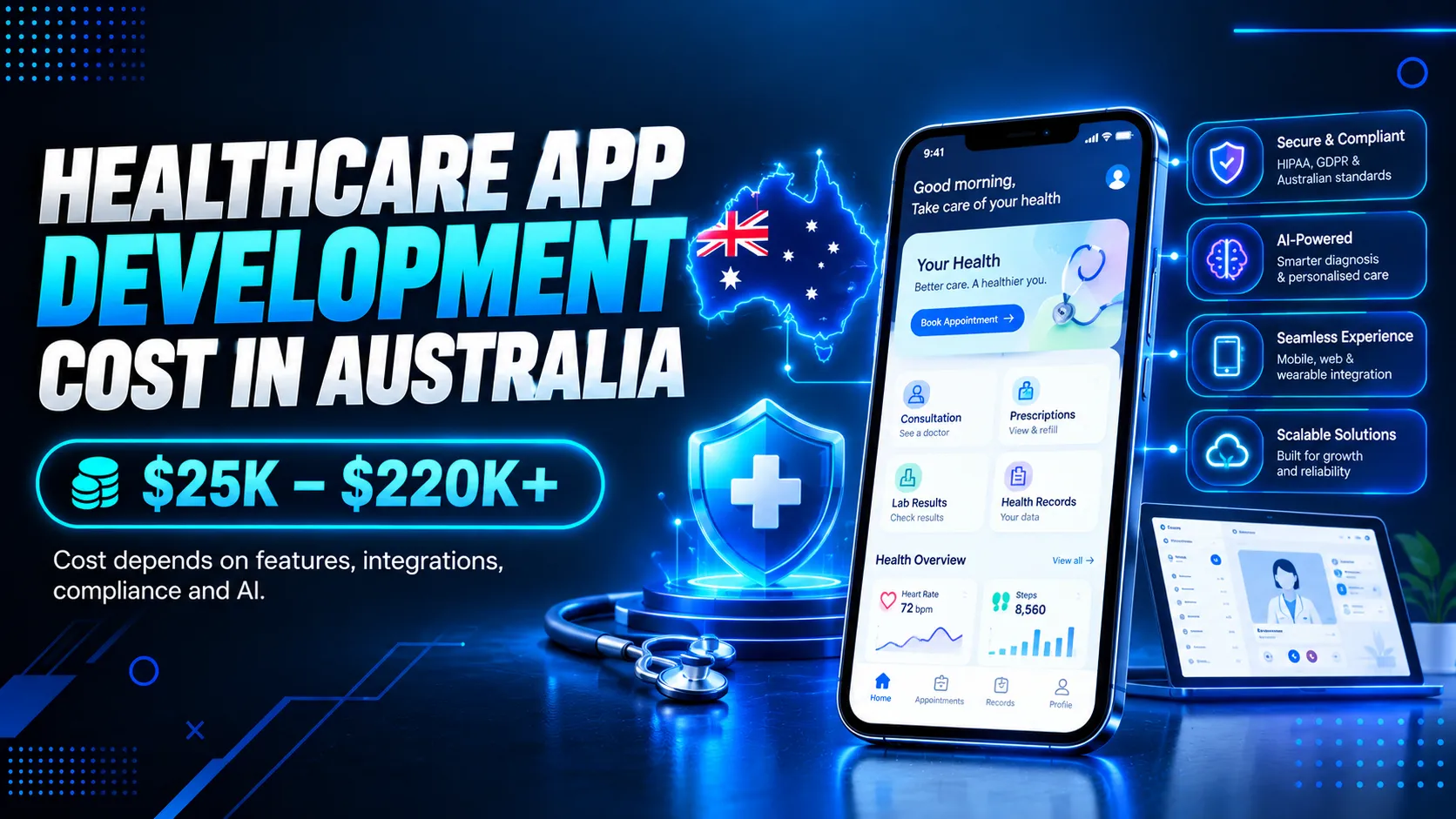
- Healthcare app development costs range from around $25,000 for a basic reminder app to $220,000+ for a full MedAdvisor-type platform with pharmacy integration and AI features.
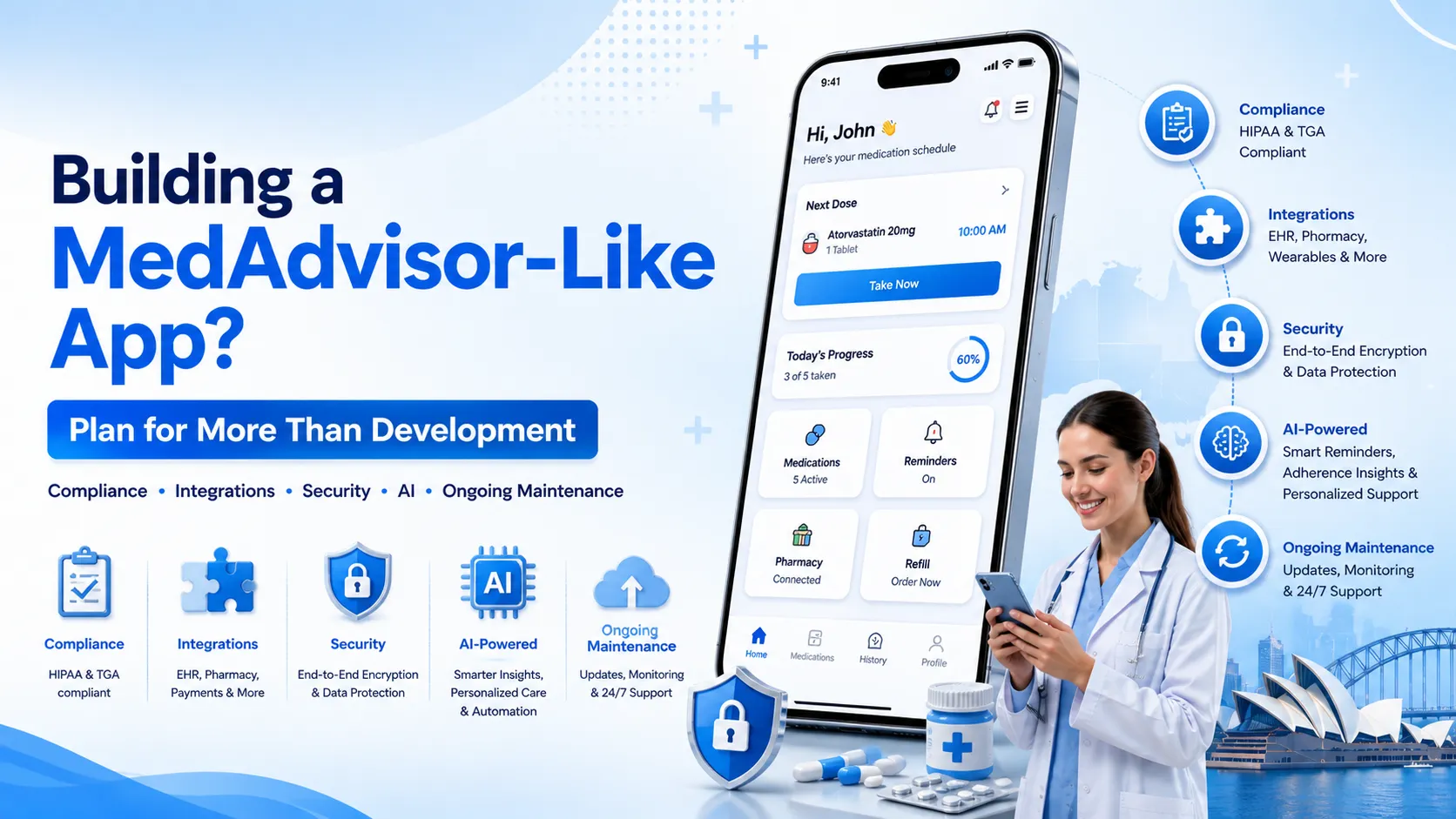
- Compliance involves TGA classification, the Privacy Act 1988, and FHIR interoperability that shapes your development process.
- Timelines run 8 weeks for a basic app up to 36 weeks for a full platform, and skipping compliance planning upfront usually extends this further.
- Hidden costs like ongoing compliance reviews, integration maintenance, and security monitoring continue well after launch.
- Starting with a focused MVP and phasing in AI features later is the most reliable way to keep costs under control without cutting corners on compliance.
MedAdvisor built its business around a simple idea to make medicine management easy. Features like automated script lists, reminders, pharmacy connections, and carer accounts made this possible. Millions of Australians now use it, and it’s easy to see why healthcare businesses keep asking the same question. What would it actually cost to build something similar?
Healthcare app development isn’t like building a typical business app. You’re dealing with patient data, medical accuracy, and regulatory approval, and all three of those push cost and timeline up before even the wireframing. Here’s what actually goes into it.
How Much Does Healthcare App Development Cost in Australia?
Healthcare app development costs typically range from $25,000 for a basic medicine tracker to over $220,000 for an advanced application like MedAdvisor in Australia. Here is an overview of development costs for different healthcare app types based on their complexity.
| App Type | Complexity | Indicative Cost Range (AUD) |
| Basic Medication Reminder App | Low | $25,000 to $45,000 |
| Mid Tier App with Pharmacy Integration | Medium | $50,000 to $90,000 |
| AI Healthcare App Development (personalised adherence insights, predictive alerts) | High | $120,000 to $220,000+ |
| Full MedAdvisor Style Platform (carer mode, pharmacy network, GP integration) | High | $100,000 to $220,000+ |
What Factors Affect Healthcare App Development Cost?
There are several factors that influence the cost of healthcare app development. Let’s have a look:
Integration with Pharmacy and Provider Systems
There is no doubt that healthcare apps have significantly improved patient care. With the help of innovations, apps like MedAdvisor have improved usability with their integration with pharmacy systems to retrieve and update patient medication records. Building software with such integrations is complex and can drive up healthcare app development costs.
Number of User Roles
Supporting carers managing someone else’s medications, alongside standard individual users, means building multiple account types and permission structures rather than one simple user flow.
Compliance and Data Security Requirements
Healthcare apps deal with sensitive patient data. So, it becomes non-negotiable to ignore compliance checks while building such apps. To comply with these regulations, developers build the backend architecture and APIs accordingly, which influences the load in your pocket.
AI Personalisation
AI development in healthcare apps is not something novel. Features such as personalised reminders based on app usage, or a chatbot for general user queries, are experience enhancement features but add to the overall development cost.
Platform Choice
Native iOS and Android app development costs more upfront than a cross-platform approach, though the trade-off is sometimes worth it for performance in a health context where reliability really matters.
Third Party Integrations
Healthcare apps rarely operate in isolation. They constantly need to interact with third-party services for various things such as retrieving a patient’s past medical data and processing transactions. Such integrations require complex work in the development process, which drives the cost up.
Planning a Healthcare App?
Get a clearer picture of your app’s features, integrations, compliance needs and estimated development cost before you start building.
What Compliance Requirements Apply to Healthcare Apps in Australia?
Compliance adherence is something healthcare providers can’t afford to skip. Here are compliance requirements for healthcare apps in Australia.
TGA and Software as a Medical Device
Depending on what the app actually does, it might fall under Therapeutic Goods Administration (TGA) rules as Software as a Medical Device (SaMD). A plain medication reminder tool usually sits outside this. Anything offering clinical decision support, diagnosis, or treatment recommendations probably doesn’t, and that changes the whole regulatory pathway before development even starts.
Privacy Act 1988 and the Australian Privacy Principles
Medication history, health conditions, personal identifiers, all of it counts as sensitive information under Australian privacy law. This isn’t something you bolt on right before launch. It needs to shape how data gets collected, stored, and shared from the very first architecture decision.
My Health Record and FHIR Standards
If the app is meant to connect with Australia’s national health record system at some point, it needs to speak FHIR, the interoperability standard that lets health systems actually talk to each other. Planning for this early saves a painful retrofit later.
Data Encryption and Access Controls
Health data sitting unencrypted, even briefly, is a real risk. Encryption in transit and at rest, plus strict internal access controls on who can actually view patient information, isn’t optional here the way it might be treated as a nice-to-have elsewhere.
Get this section wrong, and it’s not just a compliance headache; it’s the kind of mistake that can delay a launch by months while things get fixed properly.
How Long Does It Take to Build a MedAdvisor-Like App?
Timeline follows the same logic as cost. More integrations, more compliance work, more time. Have a look:
| App Type | Complexity | Typical Timeframe |
| Basic Medication Reminder App | Low | 8 to 12 weeks |
| Mid Tier App with Pharmacy Integration | Medium | 14 to 20 weeks |
| Full MedAdvisor Style Platform | High | 24 to 36 weeks |
| AI Powered Healthcare App | High | 20 to 30 weeks |
These numbers assume compliance requirements are scoped out properly before development starts. Skip that step, and it’s fairly common to see timelines blow out well past these ranges, since going back to rework data handling after the fact costs more time than getting it right from the beginning.
What Are the Hidden Costs Involved in Healthcare App Development?
The build quote almost never covers everything a healthcare app ends up costing once it’s actually live. Here’s what tends to catch people off guard.
Ongoing Compliance Reviews
Regulations around health data and TGA classification shift over time, and each shift can mean another compliance review or app update. This isn’t a one-time cost; it keeps showing up.
Pharmacy and Provider Integration Maintenance
APIs connecting to pharmacy systems or health providers don’t stay static. When those systems update on their end, your app needs updating too, and that’s an ongoing dependency most people don’t budget for upfront.
Security Monitoring and Patching
Health data is a genuinely attractive target, which means security can’t be a one-time setup. Ongoing monitoring and patching is a real, recurring cost.
Server and Hosting Costs That Scale
More users means more medication records, more data, more storage and bandwidth. The hosting bill grows quietly right alongside your user base.
Customer Support Infrastructure
People managing medications for themselves or someone they care for tend to have real questions. Support volume for a healthcare app is often higher than for a typical consumer app, and that needs people or systems behind it.
Bug Fixes From Real-World Use
However thorough the testing, real users on real devices with real medication schedules tend to surface issues nobody caught beforehand. Leaving zero budget for post-launch fixes is a common and costly mistake.
How Can a Healthcare App Development Company Reduce Development Costs?
There are several considerations to reduce healthcare app development costs, such as:
Start With a Focused MVP
Launch with core medication tracking and reminders before building out the full carer and pharmacy network system. Real usage data should guide what gets built next, not assumptions made upfront.
Use Proven APIs Instead of Custom Builds
Notifications, payments, and some pharmacy integrations are problems that are already solved well by established providers. Reinventing them from scratch adds cost without much real benefit.
Pick a Tech Stack That Actually Fits
The newest stack isn’t automatically the right one. A stack matched to the app’s real complexity, that the development team already knows well, avoids paying for an unnecessary learning curve.
Go Cross-Platform Where It Makes Sense
Not every healthcare app needs fully native performance from day one. A cross-platform build can cut frontend costs significantly while still delivering a solid experience.
Roll Out AI Features Later, Not First
Predictive adherence insights and personalisation sound great in a pitch, but they’re expensive to build properly. Getting the core app right first, then adding AI once there’s real usage data, tends to work out better and cheaper.
Choose a Team With Real Healthcare Experience
A healthcare app development company that already understands compliance and pharmacy integration avoids the expensive rework that comes from a generalist team learning these requirements mid project.
Build a Healthcare App Without Unnecessary Costs
From MVP planning and integrations to compliance, security and scalability, we help you make the right technical decisions from the start.
How Can 7 Pillars Help You Develop a Healthcare App Like MedAdvisor Cost-Effectively?
Building a healthcare app isn’t just about getting the features right, it’s about getting the compliance and data handling right from the very first decision, since fixing that after the fact costs far more than planning for it upfront.
That’s the approach 7 Pillars brings to healthcare app development. Rather than quoting every possible feature and hoping it fits your budget, the process starts with understanding what your business actually needs first, whether that’s a lean MVP to validate demand or a fuller platform with pharmacy integration built in from day one.
On the technical side, that means building with Australian privacy requirements and TGA considerations factored in from the architecture stage. It also means being upfront about where AI features genuinely add value versus where they just add cost, and phasing in the expensive, data-hungry features only once there’s real usage data to justify them.
Cost control isn’t treated as an afterthought either. Established APIs, the right tech stack for the app’s actual complexity, and cross-platform development where it fits are all used deliberately, so your budget goes toward what actually matters for a healthcare app.
And because healthcare apps carry ongoing compliance and security obligations that don’t stop at launch, support continues well past the release date, covering security patching, compliance updates, and feature development as your user base grows.
Frequently Asked Questions
How much does healthcare app development cost in Australia?
It depends heavily on complexity, but costs typically range from $25,000 for a basic app to $200,000 or more for a full platform with pharmacy integration and AI features.
What makes healthcare app development more expensive than a regular app?
Compliance requirements, data security obligations, and integrations with pharmacy or provider systems all add complexity that a standard business app doesn’t need to deal with.
Do I need TGA approval to build an app like MedAdvisor?
It depends on what the app actually does. A basic medication reminder tool usually doesn’t require TGA classification, but anything offering clinical decision support likely does. This is worth confirming early with your healthcare app development company.
How long does it take to build a healthcare mobile app?
A basic app can take 8 to 12 weeks, while a full platform with pharmacy integration and compliance built in can take 24 to 36 weeks.
Can AI features be added to a healthcare app after launch?
Yes. Many healthcare app developers recommend launching with a solid core app first, then adding AI powered personalisation once there’s real usage data to work with, which often produces better results at a lower upfront cost.

Sundeep Mann

Get in touch
We'd love to hear from you.





 +61 (42) 108-3277
 contact@7pillars.com.au
 294A Station Street,